Buc-ee’s Expansion Update: Colorado Groundbreaking Delayed as Texas Travel Giant Moves North
Buc-ee’s massive Johnstown, Colorado location faces a new construction timeline, pushing back the regional debut of the Texas-born travel center.
Editorial disclaimer: Opinions and analysis on Keep TX Red are editorial content — not statements of fact. See our editorial standards.
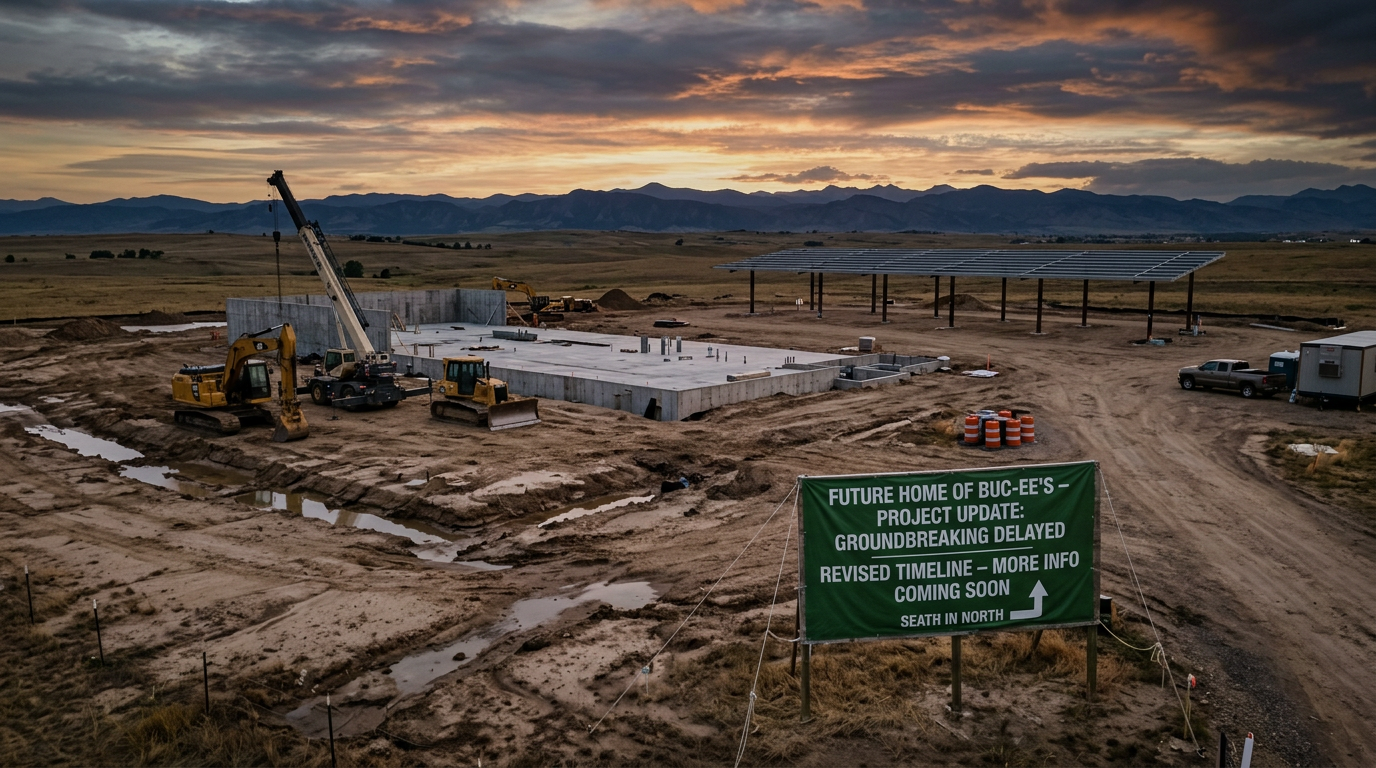
The highly anticipated northern expansion of Texas iconic travel terminal, Buc-ee’s, has encountered a shift in its construction timeline. Originally slated to bring the beaver-branded snacks and massive fueling stations to Johnstown, Colorado earlier than projected, local reports and company updates indicate that the opening of what will be the northernmost Buc-ee’s has been pushed back. This delay affects one of the company's most ambitious projects outside of the Lone Star State, where the brand has long served as a cultural landmark and economic driver. The project represents a significant step in the brand's national strategy, moving beyond the familiar landscapes of the South and into the Rocky Mountain region. Historically, Buc-ee’s has transformed from a humble convenience store founded in Lake Jackson, Texas, in 1982 into a multi-state empire known for record-breaking floor space and pristine facilities. The company’s move into Colorado follows successful expansions into Alabama, Florida, Georgia, and Kentucky. Traditionally, these projects involve massive local coordination, as the sheer scale of a Buc-ee’s location—often exceeding 70,000 square feet—requires substantial infrastructure improvements involving roads, water lines, and electricity. The delay in Johnstown is indicative of the complexities inherent in exporting the Texas-sized travel center model to regions with different climate demands and construction hurdles.
Texas relevance
As a Texas-based institution headquartered in Lake Jackson, the success and strategic movement of Buc-ee’s serves as a barometer for the health of Texas-grown enterprise. When a Texas company expands, it exports the state’s unique service culture and business philosophy to the rest of the nation. For Texans, the Johnstown location is a point of pride and a logistical landmark for those traveling from the Panhandle or North Texas toward the Rockies. Furthermore, the operational challenges faced in Colorado provide insights for Texas developers regarding labor availability and material supply chains that currently affect large-scale commercial projects across the American West.
Infrastructure and Site Preparation Challenges
The development of a Buc-ee’s is not merely the construction of a retail space; it is a major civil engineering undertaking. In Johnstown, the project requires the integration of high-volume traffic management systems to handle the thousands of vehicles expected to exit the interstate daily. This often involves the expansion of highway off-ramps and the installation of complex signaling systems that must be coordinated with state departments of transportation.
Delays in such projects are frequently linked to the specialized equipment needed for the signature 'mega-station' footprint. With over 100 fueling positions and massive underground storage tanks, the environmental and safety permitting processes are more rigorous than those for a standard convenience store. The Johnstown site is positioned to be a flagship for the region, meaning any deviation from the rigorous Texas-standard blueprint must be carefully managed to maintain brand consistency while adhering to local Colorado building codes.
Furthermore, the labor market in the construction sector remains tight. Building a facility of this magnitude requires a coordinated effort between various trades—electrical, plumbing, masonry, and specialized kitchen installation. If one critical path in the project management flow is interrupted by a delay in material delivery or a shortage of specialized labor, the entire timeline must be recalibrated to ensure the structure meets the company's high durability standards.
The Strategic Importance of the Colorado Market
Colorado represents a high-priority target for Texas businesses looking to scale. The Interstate 25 corridor, where the Johnstown location is situated, serves as a primary artery for tourism, commuting, and freight. By establishing a presence here, Buc-ee’s is positioning itself to capture the market of travelers moving between Denver, Fort Collins, and the various recreational destinations in the mountains.
This northernmost expansion is a test of the brand’s 'cult' appeal outside of the South. In Texas, the brand is a household name, but in the West, it must compete with established regional players and prove that its massive scale provides a superior value proposition. The delay, while frustrating for eager fans, allows the company more time to finalize its local supply chain for the fresh food items—such as brisket and kolaches—that are staples of the Texas experience.
The economic impact on Johnstown is expected to be significant, with hundreds of permanent jobs promised at wages typically higher than the industry average. For the local municipality, the tax revenue generated by a Buc-ee's can fund years of public works projects. Consequently, both the company and the city are incentivized to ensure the facility opens properly, even if it means waiting for the right conditions.
Maintaining the Texas Identity Abroad
A central challenge for Buc-ee’s as it moves north is maintaining its 'Texas' identity while appealing to a new demographic. The company has built its entire marketing strategy around the idea that 'Everything is Bigger in Texas,' and they bring that philosophy to every state they enter. The Johnstown store will feature the same beaver nuggets, high-end restrooms, and wall-to-wall merchandise that define the Texas locations.
Management has historically been very hands-on with new openings, often sending experienced teams from the Lake Jackson headquarters or other established Texas sites to train new hires in the 'Buc-ee’s Way.' This internal transfer of knowledge is critical for maintaining the brand's reputation for cleanliness and friendliness. A delay in the opening gives the corporate training team more leeway to ensure the Colorado staff is fully prepared for the opening-day surge.
The delay also reflects a broader trend among Texas companies expanding nationally: the importance of getting the first location in a new region 'right' rather than 'fast.' For many Coloradans, the Johnstown site will be their introduction to the brand. If the experience is marred by construction flaws or operational hiccups, it could damage the brand's long-term prospects in the Western United States.
Weather and Seasonal Impact on Construction
Unlike the year-round construction season often enjoyed by project managers in coastal or central Texas, Colorado projects must contend with significant winter weather windows. Breaking ground and completing exterior shells must be timed carefully to avoid the worst of the Rocky Mountain snow season. A delay of several weeks in the spring or summer can have a cascading effect, pushing critical interior work into months where logistics become much more difficult.
Engineers working on the Johnstown site have had to account for different soil compositions and frost lines compared to the Gulf Coast plains where Buc-ee's originated. These geological factors require different foundational techniques and materials, which can occasionally lead to schedule adjustments. The company’s commitment to building 'generational' structures—buildings designed to last decades without major renovation—means they rarely cut corners when environmental challenges arises.
The shift in the timeline suggests that the project managers are prioritizing the integrity of the build over a fixed calendar date. By ensuring that the parking lots, fueling islands, and the main retail hall are cured and finished under optimal conditions, the company avoids the high maintenance costs that could result from rushing a project through a Colorado winter.
Community Expectations and Future Growth
The anticipation in Johnstown and surrounding Weld County has been building since the project was first announced. Local residents frequent social media groups to track the progress of the iconic beaver sign and the massive roof structure. While the delay is a setback for those hoping for a summer road trip stop, it has not dampened the overall enthusiasm for the project’s completion.
Looking forward, the Johnstown location is likely just the beginning of a larger Western footprint for the company. Successful navigation of the hurdles in Colorado will provide a blueprint for potential future sites in states like Utah, Wyoming, or even further west. Each new location serves as a rolling advertisement for Texas convenience and hospitality.
Ultimately, the story of the Colorado Buc-ee's is a story of Texas ambition. It showcases a brand that is willing to leave its comfort zone and tackle the logistical complexities of a new frontier. While the doors may open later than once hoped, the sheer scale of the investment demonstrates that Buc-ee’s is playing a long game, betting that their Texas-sized vision will resonate just as strongly in the shadow of the Rockies as it does on the banks of the Brazos.
Analysis
The delay of the Johnstown site highlights the growing pains associated with being a regional powerhouse attempting to nationalize. While Buc-ee’s remains a private entity with significant capital, the logistics of a Colorado winter combined with current national supply chain volatility likely played a role in this scheduling adjustment. From a brand perspective, Buc-ee’s cannot afford to rush an opening; their reputation is built on a specific, high-standard customer experience that requires a fully trained staff and a flawless facility. Waiting a few extra months ensures that the first impression for Colorado residents matches the legendary status the brand enjoys in Texas.
Source attribution
This story was reported using a public release from the Buc-ee's (Google News). Keep TX Red rewrote the coverage independently and links to the official statement for verification.
Frequently Asked Questions
- Where is the new Buc-ee's location in Colorado?
- The new travel center is located in Johnstown, Colorado, situated along Interstate 25. This location was chosen specifically for its high traffic volume and its role as a gateway between the major metropolitan areas of the Front Range and the recreational areas to the north.
- Why is the Colorado opening delayed?
- While specific reasons can vary for such large-scale projects, delays are typically attributed to infrastructure coordination, weather windows, and the complex logistics of building a 74,000-square-foot facility with over 100 gas pumps in a new climate zone.
- Will the Colorado location have the same food as Texas stores?
- Yes, Buc-ee’s maintains a standardized menu across all its locations. This includes their famous Texas brisket, beaver nuggets, fudge, and wide selection of jerky, ensuring that the 'Texas experience' is consistent regardless of the state.
- How many jobs will the new location bring to the area?
- Buc-ee’s locations typically employ between 200 and 250 full-time workers. The company is known for offering competitive wages and benefits, which often makes it one of the largest and most sought-after employers in the small towns where it builds.
Official Sources
Take the next step
Browse the Newsroom →Read more about Keep Texas Red → Our full guide to what Keep Texas Red means and why Texans support it.
Get Texas updates delivered weekly.
Independent Texas reporting on politics, policy, and daily life. One email a week. Unsubscribe anytime.
Keep TX Red Newsroom
The Keep Texas Red Editorial Staff produces nonpartisan explainers, policy breakdowns, and educational resources to help Texans understand how their government works. All content is reviewed for accuracy and updated regularly.
About Keep TX Red →