Abbott Issues Statewide Disaster Declaration as Flooding Response Intensifies
Governor Greg Abbott has formalized a major disaster declaration to streamline recovery resources following severe flooding across Texas.
Editorial disclaimer: Opinions and analysis on Keep TX Red are editorial content — not statements of fact. See our editorial standards.
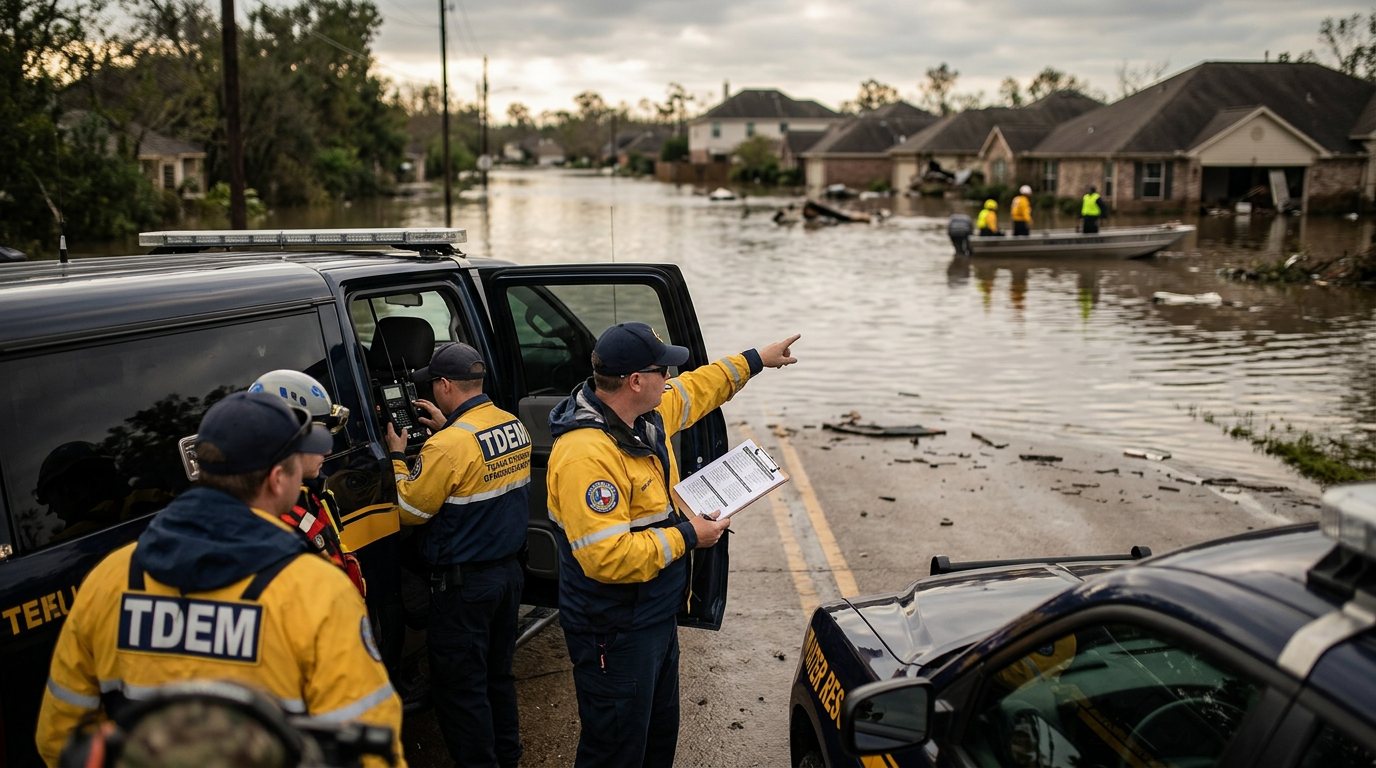
Governor Greg Abbott formalized a major disaster declaration for the state of Texas on July 17, 2026, in response to persistent flooding that has impacted multiple regions. This executive action is intended to mobilize state resources and provide a legal framework for local governments to seek broader assistance as they move from active water rescues to long-term recovery operations. While the immediate threat of rising water has stabilized in certain areas, the Governor noted that the emergency response remains a live operation due to the saturated ground and the need for infrastructure assessments across the state’s massive highway and local road network. Historically, Texas disaster declarations serve as the primary trigger for the Texas Division of Emergency Management (TDEM) to deploy personnel and equipment beyond standard municipal capacities. This specific declaration follows a pattern of extreme weather events in the state where localized storms rapidly evolve into regional crises. By declaring a disaster at the state level, the Governor allows for the suspension of certain administrative rules that can often hinder the speed of debris removal and the restoration of essential utility services in flooded zones.
Texas relevance
The flooding and subsequent declaration directly affect every resident of Texas, as the state’s interconnected transit and energy grids are often vulnerable to sustained water damage. From the Hill Country to the Gulf Coast, the legal status of a 'state of disaster' determines how quickly local county judges and mayors can secure funding and specialized equipment from Austin. This declaration ensures that Texas taxpayers' resources are prioritized for the stabilization of flooded communities, ranging from rural townships to major metropolitan hubs.
The Scope of the Disaster Declaration
The disaster declaration signed by Governor Abbott covers several counties that have faced the brunt of recent torrential rains. This status allows for the activation of the Texas State Emergency Operations Center to its highest readiness levels, ensuring that teams from the Department of Public Safety and the Texas Military Department are on standby if further evacuations become necessary. The primary goal is to protect life and property while providing a clear directive for state agencies to assist local law enforcement and fire departments currently overextended by the flooding.
The declaration also serves as a warning to residents that the danger has not fully passed. Saturated soil conditions mean that even moderate rainfall in the coming days could lead to renewed flash flooding. State officials are emphasizing that 'turn around, don't drown' remains the primary safety directive for Texas drivers. The state's response infrastructure is now shifting its focus toward assessing the structural integrity of bridges and culverts that were submerged during the peak of the storm surges.
State Agency Mobilization and Logistics
With the declaration in place, the Texas Division of Emergency Management takes a lead role in coordinating the logistics of the recovery. This involves the deployment of high-water vehicles, air assets for damage surveys, and mobile communications units to areas where towers may have been compromised. The coordination ensures that resources are not duplicated and that the hardest-hit rural areas receive the same level of attention as the more visible urban centers. This logistical framework is essential for maintaining the supply chain for food and water in cut-off communities.
State technicians are also working alongside local utility providers to monitor the electrical grid and water treatment facilities. Flooding often threatens the purity of local water supplies, and the disaster declaration allows the state to expedite testing and the delivery of clean water if municipal systems fail. This proactive stance is designed to prevent secondary public health crises that often follow significant natural disasters, such as waterborne illnesses or long-term power outages in nursing homes and hospitals.
Infrastructure Assessment and Road Safety
A significant portion of the post-declaration workload involves the Texas Department of Transportation (TxDOT). Inspectors are currently tasked with evaluates thousands of miles of state-maintained roadways. The declaration provides the necessary funding to hire emergency contractors to clear mudslides, repair washed-out shoulders, and replace signage. Until these assessments are complete, several major thoroughfares may remain closed or restricted to essential travel only.
For Texas residents, this means that commute times and travel across the state will likely be impacted for several weeks. The Governor’s office has urged patience as crews work to ensure that roads are safe for the general public. In many cases, the damage to the roadbed is not visible from the surface, requiring ground-penetrating radar or manual bore holes to check for subterranean erosion caused by moving floodwaters.
Economic Implications for Local Communities
Flooding of this magnitude often has a cooling effect on local economies, particularly in the agricultural and small-business sectors. The disaster declaration is the first step in qualifying these sectors for low-interest disaster loans and other financial relief mechanisms. By documenting the extent of the damage under the umbrella of a state-sanctioned emergency, local officials can build a stronger case for economic recovery grants. This is vital for maintaining the stability of the Texas economy in the face of unpredictable climate events.
In the agricultural regions of Texas, flooded fields can mean the loss of an entire season’s crop and damage to expensive machinery. The state’s disaster response includes agricultural extensions that provide guidance to farmers on how to salvage what remains and how to document their losses for insurance and state aid purposes. This comprehensive approach aims to bolster the resilience of the state’s food production capabilities, which are a cornerstone of the Texas identity.
Future Readiness and Mitigation Strategies
While the current focus is on the immediate aftermath of the July floods, the declaration also informs future mitigation strategies. Each disaster provides new data points for flood mapping and the design of drainage systems. The Governor’s office has indicated that lessons learned from this response will be integrated into the state’s long-term infrastructure planning. This includes investing in more resilient materials and larger-capacity spillways in areas identified as high-risk during this event.
Texas continues to refine its emergency response protocols with every storm. The swiftness of this declaration reflects an evolution in state policy toward early intervention. By locking in state support while the water is still receding, the Abbott administration seeks to minimize the duration of the 'emergency phase' and transition as quickly as possible to the 'rebuilding phase,' ensuring that Texas remains open for business and safe for its citizens.
Analysis
This move by the Governor is a procedural necessity that underscores the severity of recent weather patterns. By centralizing the disaster response under a formal declaration, the state effectively bypasses much of the bureaucratic friction that can occur during inter-agency coordination. It also sets the stage for a potential federal disaster request, though the immediate focus remains on state-level autonomy and the utilization of the Texas Disaster Contingency Fund to address the most pressing repairs to public works.
Source attribution
This story was reported using a public release from the Texas Emergency Video (Google News). Keep TX Red rewrote the coverage independently and links to the official statement for verification.
Frequently Asked Questions
- What does a major disaster declaration actually do?
- A disaster declaration by the Governor legally recognizes that the severity of an event exceeds the capability of local authorities to manage alone. it allows for the use of state funds, the activation of the Texas National Guard if needed, and the suspension of certain state laws or regulations that might slow down the emergency response. It also serves as the necessary prerequisite if the state decides to ask the federal government for a Presidential Disaster Declaration.
- Is the flooding still happening in Texas?
- While the heaviest rainfall has moved out of certain areas, many rivers and streams remain at or above flood stage. Because the ground is fully saturated, the risk of flash flooding from even minor additional rain is very high. Response teams are still in the field monitoring at-risk communities and managing ongoing water issues.
- How can residents get help if their property was damaged?
- Residents should first contact their insurance providers to document damage. Under the state disaster declaration, local emergency management offices will begin collecting data on residential and business losses. This information is used to determine if the area qualifies for specific state or federal individual assistance programs. Residents are encouraged to keep all receipts for repairs and take photos of all damage before beginning clean-up.
Official Sources
Take the next step
Browse the Newsroom →Read more about Keep Texas Red → Our full guide to what Keep Texas Red means and why Texans support it.
Get Texas updates delivered weekly.
Independent Texas reporting on politics, policy, and daily life. One email a week. Unsubscribe anytime.
Keep TX Red Newsroom
The Keep Texas Red Editorial Staff produces nonpartisan explainers, policy breakdowns, and educational resources to help Texans understand how their government works. All content is reviewed for accuracy and updated regularly.
About Keep TX Red →