Texas Targets Birth Tourism: Governor Abbott Directs State Agencies to End Citizenship Exploitation
Governor Abbott issues executive order to investigate and dismantle unlawful birth tourism schemes and hold healthcare providers accountable across Texas.
Editorial disclaimer: Opinions and analysis on Keep TX Red are editorial content — not statements of fact. See our editorial standards.
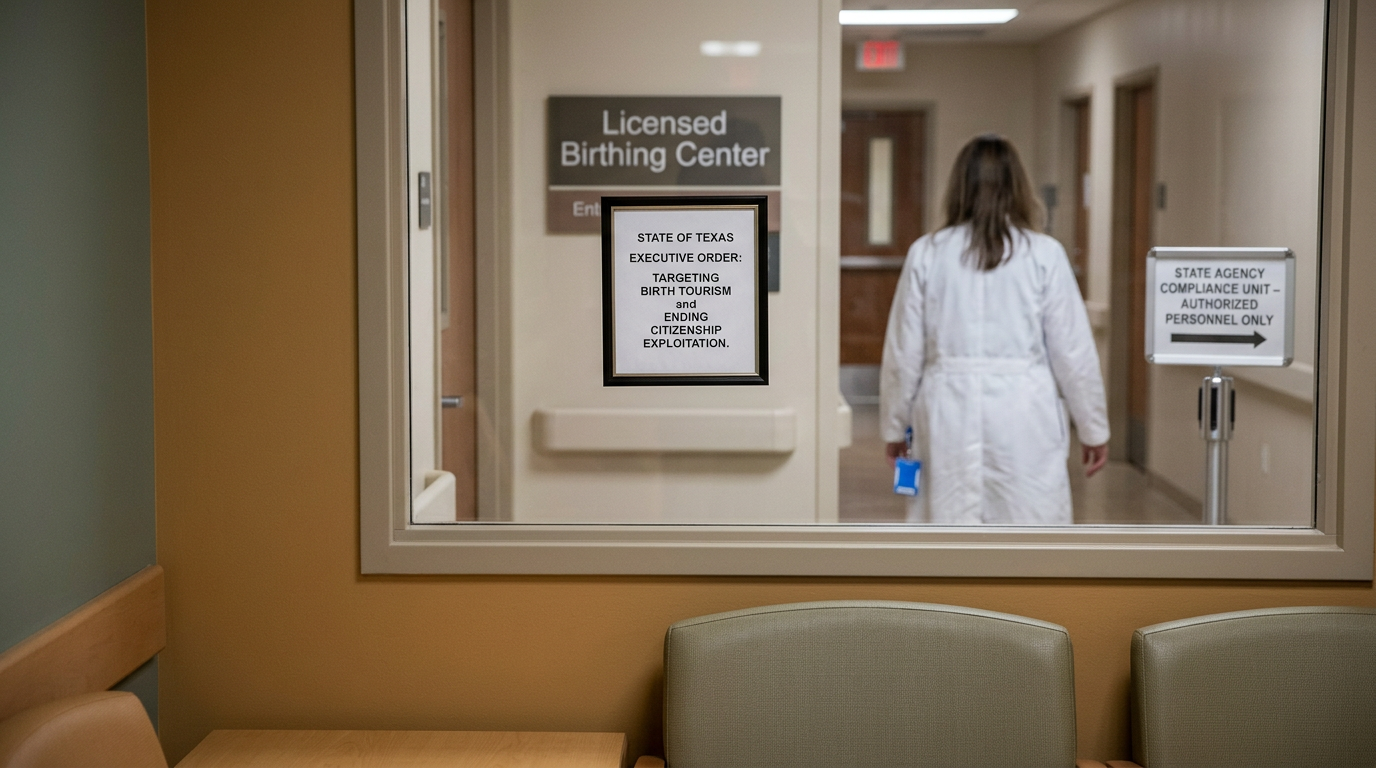
Governor Greg Abbott has initiated a major state-level crackdown on 'birth tourism' by issuing a new executive order aimed at identifying and dismantling schemes that exploit U.0.S. citizenship laws. Historically, birth tourism refers to the practice where foreign nationals travel to the United States temporarily for the specific purpose of giving birth on American soil, thereby securing birthright citizenship for their child. While various federal administrations have attempted to address this through visa restrictions, Texas is now taking a proactive state-led approach. This new directive focuses on the infrastructure that supports these practices within Texas borders, specifically targeting the commercial entities and licensed professionals who facilitate these arrangements for profit. The Governor’s office emphasizes that Texas will no longer permit the commodification of legal status through fraudulent or exploitative means. The executive order mobilizes a broad range of state regulatory bodies to investigate potential illegal activities. In addition to identifying the organizers of these schemes, the order places a significant emphasis on the role of the healthcare industry. Licensed providers, including hospitals, clinics, and individual medical practitioners who are found to be complicit in coordinating these births as part of a commercial scheme, will face intense scrutiny. This move represents a shift in strategy, moving beyond just immigration enforcement at the border and toward the regulation of internal services that make Texas a destination for international birth-for-hire operations. By coordinating multiple agencies, the state aims to create a hostile environment for those who treat American citizenship as a transactional product.
Texas relevance
This policy change is particularly impactful for Texas due to its extensive international border and its status as a premier global hub for medical services. Major Texas metropolitan areas like Houston, Dallas, and McAllen contain world-class medical facilities that are attractive to international travelers. The presence of 'maternity hotels' or specialized concierge services catering to foreign nationals in these regions has been a point of contention for lawmakers for years. This order puts local Texas healthcare administrators and licensing boards on high alert, potentially changing how hospitals verify information and report suspicious patterns to state regulators. For Texas residents, this signifies an effort to protect state resources and ensure that medical infrastructure is not being burdened by organized international exploitation.
Mobilizing the Regulatory Front: Agency Roles
The newly issued executive order does not act in a vacuum; it enlists a multi-agency task force to root out birth tourism infrastructure. The Texas Health and Human Services Commission (HHSC) and the Department of State Health Services (DSHS) are at the forefront of this effort. These agencies are tasked with reviewing facility data and identifying trends that suggest a coordinated effort to bring foreign nationals into Texas specifically for delivery services. This data-driven approach is designed to reveal hidden networks that may be operating under the guise of standard medical tourism.
Furthermore, the HHSC Office of Inspector General (OIG) will play a critical role in investigating potential fraud. The OIG is typically responsible for protecting the integrity of state-funded programs, and its inclusion suggests the state is concerned about the financial impact these schemes have on public infrastructure. By involving the Inspector General, the Governor is signaling that birth tourism will be treated as a form of institutional fraud rather than an isolated personal choice by individual parents.
Holding Licensed Professionals Accountable
A cornerstone of this directive is the direct instruction to the Texas Medical Board (TMB) and the Texas Board of Nursing (TBON). These entities hold the power to revoke or suspend the licenses of doctors and nurses who are found to be participating in birth tourism schemes. The state’s position is that facilitating these arrangements constitutes a violation of professional ethics and state standards of conduct. This creates a powerful deterrent for medical staff who might have previously turned a blind eye to the true nature of their patients' stays.
The Texas Department of Licensing and Regulation (TDLR) is also involved, which suggests a broader net being cast. This could include oversight of non-medical facilities like the 'maternity hotels' or short-term rentals specifically marketed to foreign mothers. By targeting the entire business ecosystem—from the realtor to the nurse to the hospital administrator—the state hopes to dismantle the financial incentives that make Texas a preferred location for these international operations.
The Legal Concept of 'Citizenship for Sale'
Governor Abbott’s rhetoric surrounding this order emphasizes that U.S. citizenship should not be treated as a commodity for sale. This perspective aligns with a broader national debate regarding 'jus soli,' or birthright citizenship. While the 14th Amendment grants citizenship to those born on U.S. soil, the Governor argues that the commercialization of this right undermines the rule of law. By labeling these activities as 'schemes,' the state is distinguishing between emergency medical care and pre-planned commercial ventures designed to bypass traditional immigration channels.
The legal foundation for this crackdown rests on state authorities' power to regulate commerce and professional behavior within Texas. While the state cannot unilaterally change citizenship laws, it can certainly make it difficult for commercial enterprises to facilitate their exploitation. This approach is intended to signal to the international community that Texas is no longer a 'soft target' for those looking to purchase American status for their offspring through organized medical routes.
Impact on the Healthcare Ecosystem
Texas healthcare facilities will likely see a shift in administrative procedures as a result of this order. Hospitals may be required to implement more rigorous screening tools or reporting mechanisms when dealing with international cash-pay patients exhibiting specific red flags. This could include vetting the sources of payment or investigating whether a patient was referred by an agency known for coordinating birth travel. These additional layers of bureaucracy are meant to protect the institution from state-level liability and potential loss of funding or licensure.
There is also the matter of resource allocation. The Governor's office has expressed concerns that birth tourism places unnecessary strain on Texas medical professionals and physical infrastructure. By discouraging these pre-planned arrivals, the state aims to ensure that hospital beds and specialist time are reserved for residents and those entering the state through authorized legal means. The economic impact of birth tourism is often debated, but this executive order proceeds from the premise that the long-term cost to the integrity of the state's systems outweighs the short-term financial gains of individual hospitals.
Historical Context and Precedent
This is not the first time birth tourism has been in the crosshairs of government officials, but South Texas and other border regions have seen unique challenges. In the past, federal authorities have conducted raids on 'birth hotels' in other states like California, but this Texas initiative is distinct for its focus on state-level professional licensing. Texas has historically taken a firm stance on border-related issues, and this order serves as an extension of that philosophy from the physical border into the state's regulatory and healthcare domains.
Comparable state precedents include Texas' aggressive stance on sanctuary cities and its 'Operation Lone Star' border security initiative. By treating birth tourism as a component of the broader immigration crisis, the Governor is consistent with his policy of utilizing every available state mechanism to fill perceived gaps in federal enforcement. The goal is to establish a comprehensive state-wide deterrent that is not dependent on shifting winds in Washington D.C.
Future Enforcement and Long-term Goals
The long-term success of this executive order will depend on the vigilance of the state agencies named in the directive. The Governor expects regular reporting on investigations and the outcomes of disciplinary actions taken against violators. As agencies begin their work, we can expect to see new guidelines issued to healthcare facilities regarding their reporting obligations. This will likely spark a conversation within the medical community about the balance between patient privacy and the legal mandate to report organized fraud.
Looking forward, this order could pave the way for additional legislative action in the next Texas legislative session. If the agencies find widespread evidence of these schemes, lawmakers may introduce bills to codify these penalties and provide even more resources for enforcement. The ultimate goal is a total cessation of organized birth tourism activities in Texas, reinforcing the state's reputation as a jurisdiction that prioritizes the rule of law and the protection of its own citizens' interests.
Analysis
Opinion: Governor Abbott's decision to target the supply side of birth tourism—the providers and facilitators—is a strategic pivot that bypasses some of the jurisdictional hurdles often associated with federal immigration law. By using the state's licensing and regulatory power over healthcare, Texas is leveraging its own authority to curb a practice that many constituents view as an end-run around the intent of the 14th Amendment. While federal law generally dictates who can enter the country, the Texas Medical Board and the Texas Board of Nursing have direct oversight over localized professional conduct. This order effectively warns the medical community that financial gain from birth tourism schemes is now a high-risk activity that could result in the loss of professional credentials. Critics may argue this places an undue burden on staff to act as immigration agents, but the administration clearly views this as a necessary step to protect the sanctity of the legal naturalization process.
Source attribution
This story was reported using a public release from the Office of the Governor. Keep TX Red rewrote the coverage independently and links to the official statement for verification.
Frequently Asked Questions
- What exactly is 'birth tourism'?
- Birth tourism refers to the practice of foreign nationals traveling to a country like the United States specifically to give birth. Because of the 14th Amendment, children born on U.S. soil are typically granted automatic citizenship. A 'birth tourism scheme' refers to organized businesses that charge fees to coordinate these trips, including housing and medical care, for the express purpose of gaining legal status for the child.
- Which state agencies are involved in the new Texas crackdown?
- The Governor has directed the Texas Health and Human Services Commission (HHSC), the Department of State Health Services (DSHS), the HHSC Office of Inspector General (OIG), the Texas Medical Board (TMB), the Texas Board of Nursing (TBON), and the Texas Department of Licensing and Regulation (TDLR) to work together on this initiative.
- Can healthcare providers be punished under this order?
- Yes. The order explicitly instructs licensing boards, such as the Medical Board and Board of Nursing, to hold providers accountable. This can include disciplinary actions or the permanent revocation of their professional licenses if they are found to be facilitating unlawful birth tourism arrangements.
- Is this a new law passed by the Texas Legislature?
- No, this is an executive order issued by Governor Greg Abbott. It uses existing authority over state agencies and professional licensing to enforce strict oversight and investigations into these practices without requiring a new statute from the legislature.
Official Sources
Take the next step
Browse the Newsroom →Read more about Keep Texas Red → Our full guide to what Keep Texas Red means and why Texans support it.
Get Texas updates delivered weekly.
Independent Texas reporting on politics, policy, and daily life. One email a week. Unsubscribe anytime.
Keep TX Red Newsroom
The Keep Texas Red Editorial Staff produces nonpartisan explainers, policy breakdowns, and educational resources to help Texans understand how their government works. All content is reviewed for accuracy and updated regularly.
About Keep TX Red →