Music Licensing and Culinary Innovation Highlighted at 2026 Texas Restaurant Show
The Texas Restaurant Association and BMI partnered to demonstrate how live music drives revenue and customer loyalty for Lone Star dining establishments.
Editorial disclaimer: Opinions and analysis on Keep TX Red are editorial content — not statements of fact. See our editorial standards.
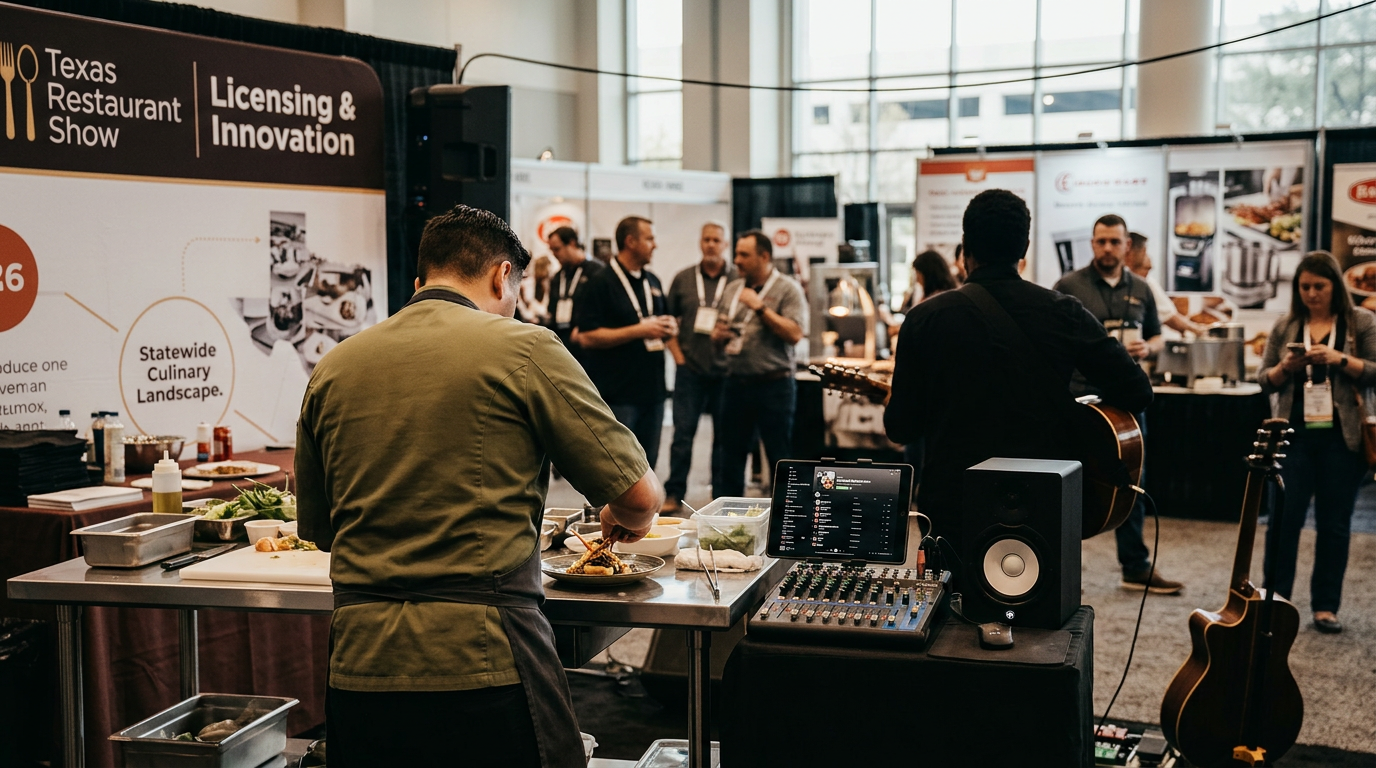
In July 2026, the Texas Restaurant Association (TRA) joined forces with Broadcast Music, Inc. (BMI) to spotlight the critical role of music within the state’s food service industry. As the 2026 Texas Restaurant Show unfolded, both organizations focused on how curated audio environments and live performances directly influence patronage and brand identity for local eateries. Historically, the TRA has worked to bridge the gap between regulatory requirements and business growth, and this partnership serves as a modern extension of those efforts. By integrating music experts into the state's premier industry event, the organizations aimed to provide restaurant owners with actionable strategies for enhancing the customer experience while navigating the legalities of public performance rights. The atmosphere of a dining establishment determines its market longevity just as much as the quality of the food. In the competitive landscape of the 2020s, Texas restaurateurs are looking for every possible edge to maintain margins. The 2026 event emphasized that music is not merely background noise but a sophisticated marketing tool. Through data-driven presentations, BMI demonstrated that the right tempo and genre can influence everything from table turnover rates to the amount of premium beverages ordered. This collaboration marks a shift toward a more scientific approach to hospitality management in the Lone Star State. Furthermore, the event served as a critical educational forum for small business owners who may be unaware of the complexities of federal copyright law. Without proper guidance, family-owned diners and independent cafes often face significant financial risks. By bringing these issues to the forefront of the Texas Restaurant Show, the TRA ensures its members are protected from litigation while maximizing their creative potential. The synergy between these two entities underscores a broader movement to professionalize all aspects of the guest experience, ensuring that Texas remains a leader in the global hospitality sector.
Texas relevance
Texas is home to one of the most robust hospitality markets in the United States, with cities like Austin, Houston, and Dallas serving as global hubs for both culinary innovation and live music. The Texas Restaurant Show is the primary gathering point for thousands of stakeholders who operate within the state's multibillion-dollar dining sector. For Texas entrepreneurs, the intersection of music and dining is not just an aesthetic choice but a significant driver of local economic activity. Ensuring that these businesses can leverage Texas's rich musical heritage while remaining in compliance with federal licensing laws is essential for the long-term sustainability of the state's unique entrepreneurial ecosystem. The state's economy relies heavily on the success of these small and medium-sized enterprises, making this partnership a vital component of statewide economic health.
The Strategic Intersection of Dining and Sound
At the core of the 2026 show was the understanding that a restaurant's atmosphere is defined as much by its acoustics as its menu. Representatives from BMI and the TRA emphasized that the presence of music can lead to longer dwell times and higher average check totals. This economic phenomenon is particularly relevant in Texas, where dining culture often overlaps with the 'Live Music Capital' brand of Central Texas and the diverse cultural landscapes of West and South Texas.
The showcase allowed attendees to see firsthand how different genres and tempos of music can alter the perception of a dining space. From high-energy urban bistros to laid-back barbecue joints, the selection of music acts as an invisible hand guiding the customer's pace and mood. Industry leaders at the event suggested that failing to curate a soundscape is a missed opportunity for revenue generation and brand differentiation in a highly competitive market.
Moreover, the psychological impact of audio cannot be overstated. Studies presented at the show indicated that customers are more likely to return to a venue where the music matches the brand's 'personality.' In a state as large and diverse as Texas, this means tailoring music to fit the local community, whether that involves Tejano music in the Rio Grande Valley or country-western in the Panhandle.
Navigating Public Performance Licensing
While the creative benefits of music are clear, the administrative reality of music licensing remains a complex hurdle for many Texas business owners. BMI used the platform of the 2026 Texas Restaurant Show to educate operators on the necessity of securing proper licenses to play copyrighted works. This educational component is vital for preventing legal disputes and ensuring that the songwriters behind the music are fairly compensated for their intellectual property.
The partnership between the TRA and BMI seeks to simplify this process, offering resources that explain how a single license can cover millions of musical works. For many small-town Texas restaurant owners, the intricacies of performance rights organizations are often opaque. The 2026 showcase provided a transparent look at how licensing fees are distributed and how being 'music-compliant' protects a business from the risks of infringement litigation.
Owners were also briefed on the differences between various licensing bodies. Understanding the roles of organizations like BMI, ASCAP, and SESAC is crucial for full legal coverage. The TRA has taken an active role in negotiating group rates and simplified billing structures to ensure that even the smallest taco stand can afford to operate within the bounds of the law.
Supporting the Local Creative Economy
Texas restaurants are among the largest employers of local musicians, particularly in metropolitan areas where live entertainment is a nightly staple. By fostering a closer relationship between the TRA and BMI, the industry is essentially supporting a circular economy. When restaurants flourish and invest in music, they provide a stage for Texas-based artists, who in turn drive foot traffic back to the restaurants.
This synergy was a recurring theme during the event’s panel discussions. The participants noted that the cultural identity of Texas is deeply rooted in this partnership. Whether it is a solo guitarist at a taco stand or a full band at a large-scale steakhouse, music creates a sense of place that cannot be replicated by food alone. This connection helps solidify Texas as a destination for culinary tourism, drawing visitors from around the world.
The ripple effect of this support extends to recording studios, instrument retailers, and sound engineers across the state. By prioritizing music in the hospitality space, the TRA is effectively subsidizing the broader Texas arts scene. This holistic approach ensures that as the restaurant industry grows, it carries the state's cultural heritage along with it.
Stakeholders and the Regulatory Framework
The primary stakeholders in this initiative include the thousands of individual restaurant owners who belong to the TRA, as well as the hundreds of thousands of songwriters represented by BMI. These two groups, while operating in different industries, find common ground in the protection of intellectual property and the promotion of commercial growth. State legislators also keep a close eye on these developments, as hospitality tax revenue is a major contributor to the Texas budget.
Regulatory compliance is more than just a legal hurdle; it is a matter of business ethics and sustainability. The TRA has been vocal about the importance of 'fair play' in the industry, where businesses pay their fair share for the services and creative works they use. This helps level the playing field, ensuring that law-abiding businesses are not undercut by those who ignore licensing requirements.
The 2026 show also featured a 'compliance clinic' where owners could have their current music setups reviewed by experts. This hands-on approach demystified the process and removed the fear factor often associated with copyright audits. By turning a potential point of conflict into a collaborative educational experience, the TRA and BMI have strengthened the bonds of the Texas business community.
Innovations in Audio Technology for Eateries
The 2026 show also highlighted technological advancements that allow restaurant owners to manage their music more effectively. New digital platforms showcased at the event integrate licensing compliance with smart-pairing technology that suggests music based on real-time data such as time of day, weather, or occupancy levels. These tools are designed to take the guesswork out of atmosphere management for busy managers.
For the Texas restaurant industry, adopting these technologies is a way to modernize operations without losing the 'homegrown' feel that customers expect. The demonstration of these systems proved that even traditional mom-and-pop establishments can utilize sophisticated audio branding to compete with larger national chains. The focus remains on making these professional-grade tools accessible and affordable.
Connectivity and cloud-based management mean that an owner with multiple locations across Texas—say, in El Paso and Tyler—can manage the audio profile of both stores from a single smartphone. This scalability is essential for the growing number of Texas-based restaurant groups that are expanding rapidly within and beyond state lines.
Timeline and What Changes Next
Following the 2026 Texas Restaurant Show, the TRA plans to roll out a series of webinars and local workshops throughout the fall. These sessions will dive deeper into the specific licensing needs of different business models, from food trucks to large-scale event centers. By the end of the year, the goal is to have a significant percentage of new TRA members fully licensed and integrated into the BMI catalog.
In 2027, the association expects to release a comprehensive report on the economic impact of music in Texas restaurants. This data will be used to advocate for hospitality-friendly policies at the Texas Capitol in Austin. As the legislative session nears, the strength of the TRA-BMI partnership will serve as a testament to the industry's commitment to self-regulation and community support.
Looking further ahead, we can expect to see more 'integrated experiences' where menu items and music playlists are marketed together. Think of a 'Texas Hill Country' night featuring regional wines and local folk music, promoted as a single sensory package. This evolution of the dining experience will keep Texas at the forefront of national hospitality trends for years to come.
Impact on the Texas Hospitality Sector
The collaboration at the Texas Restaurant Show represents a long-term commitment to the health of the hospitality sector. By addressing both the artistic and legal sides of music, the TRA and BMI are providing a roadmap for future business success. This initiative is expected to reduce friction between copyright holders and business owners, leading to a more harmonious environment for all stakeholders.
Looking ahead, the Texas Restaurant Association intends to continue these dialogues at the regional level, taking the lessons from the 2026 show to local chapters across the state. This grassroots approach ensures that the message of music’s economic power reaches beyond the major cities and into the heart of every Texas community. As the industry evolves, the integration of sound and service will remain a cornerstone of the Texas dining experience.
Ultimately, the success of the 2026 show proves that when Texas industries collaborate, they create more than just profit—they create culture. The ability to dine well while enjoying great music is a foundational part of the Texas way of life, and this partnership ensures that tradition continues in a way that respects both the law and the artists.
Analysis
The partnership between the Texas Restaurant Association and BMI is a savvy acknowledgment of the changing consumer landscape. In a post-pandemic economy, diners are looking for 'experiences' rather than just meals. By formalizing the relationship between the music industry and the culinary world, Texas is setting a national standard for how state trade associations can provide tangible value to their members. This move likely pre-empts more rigorous enforcement of intellectual property rights in digital spaces, positioning Texas businesses to be ahead of the curve rather than reactive. Furthermore, it reinforces the 'Texas Brand'—one that is synonymous with cultural richness and business-friendly environments.
Source attribution
This story was reported using a public release from the Texas Food Stories (Google News). Keep TX Red rewrote the coverage independently and links to the official statement for verification.
Frequently Asked Questions
- Why is BMI involved with the Texas Restaurant Association?
- BMI is a performance rights organization that represents songwriters and publishers. They partner with the TRA to ensure restaurant owners understand how to legally play music in their establishments and to explain the economic benefits of doing so. This partnership helps bridge the gap between creative copyright and commercial business operations.
- What is the Texas Restaurant Show?
- It is an annual event hosted by the Texas Restaurant Association, serving as the largest food service and hospitality convention in the Southwest. It brings together industry leaders, vendors, and business owners to discuss trends, technologies, and innovations that drive the Texas dining economy.
- Do small restaurants in Texas really need a music license?
- Yes, federal law requires that any business playing copyrighted music for the public—whether live, streamed, or on the radio—must have permission from the copyright owners. Licenses from organizations like BMI provide this permission for a vast catalog of music, protecting the restaurant from potential fines and legal action.
- How does music affect restaurant revenue?
- Research shows that music influences heart rate and mood, which can dictate how quickly guests eat and how much they spend. Fast-tempo music can increase turnover during busy shifts, while slower, low-volume music can encourage guests to stay longer and order more desserts or drinks.
- What happens if a Texas restaurant plays music without a license?
- Playing music without a license is a violation of federal copyright law. This can result in significant statutory damages and legal fees, which can be devastating for a small business. The TRA and BMI partnership aims to prevent these outcomes through proactive education.
Official Sources
Take the next step
Browse the Newsroom →Read more about Keep Texas Red → Our full guide to what Keep Texas Red means and why Texans support it.
Get Texas updates delivered weekly.
Independent Texas reporting on politics, policy, and daily life. One email a week. Unsubscribe anytime.
Keep TX Red Newsroom
The Keep Texas Red Editorial Staff produces nonpartisan explainers, policy breakdowns, and educational resources to help Texans understand how their government works. All content is reviewed for accuracy and updated regularly.
About Keep TX Red →