Marshawn Kneeland CTE Finding Renews Safety Debate for Texas Football Culture
A Stage 1 CTE diagnosis for former Dallas Cowboys player Marshawn Kneeland highlights ongoing risks in high-impact contact sports in Texas.
Editorial disclaimer: Opinions and analysis on Keep TX Red are editorial content — not statements of fact. See our editorial standards.
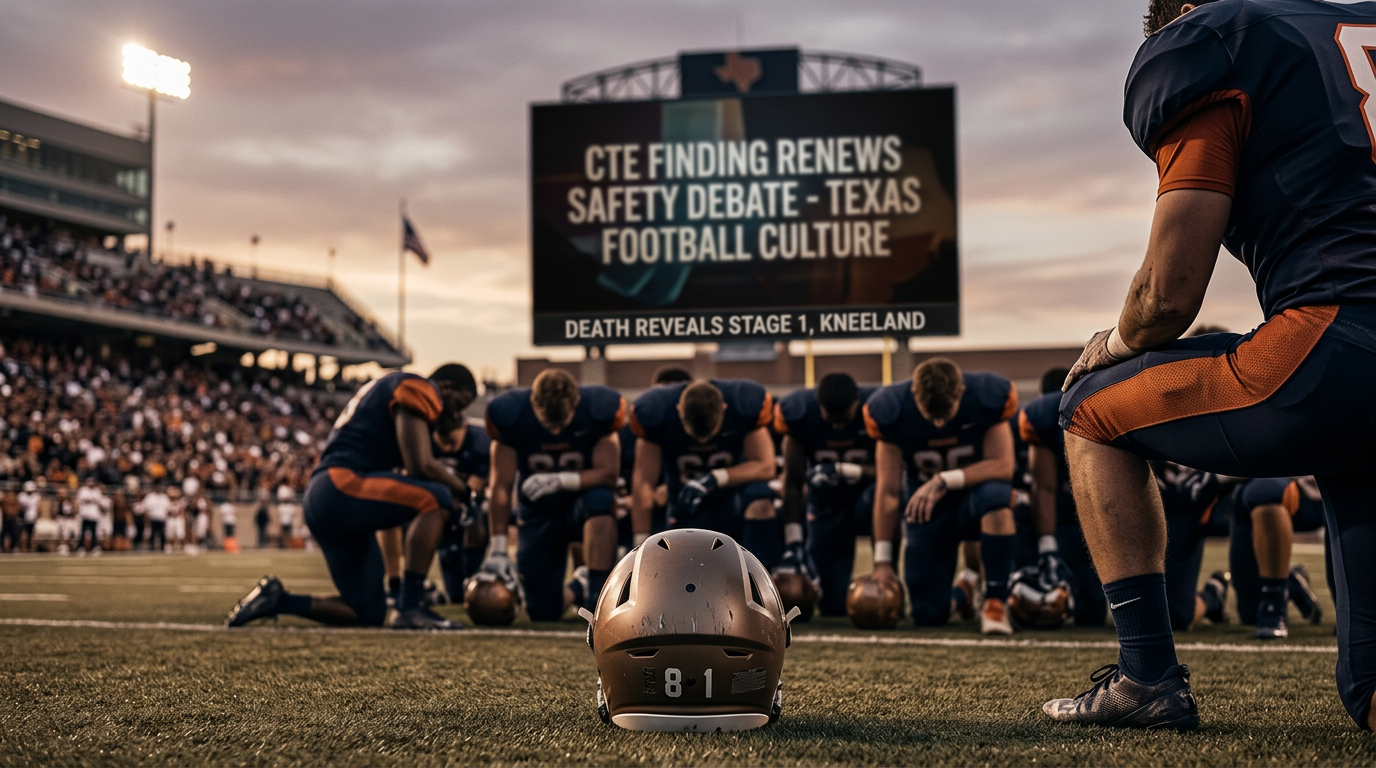
The medical community and the football world have received a sobering update regarding the health of former Dallas Cowboys defensive end Marshawn Kneeland. Following his tragic death, which authorities ruled a suicide, a post-mortem examination revealed that Kneeland suffered from Stage 1 Chronic Traumatic Encephalopathy (CTE). This progressive brain disease is uniquely linked to repetitive head trauma, including both sub-concussive hits and major concussions sustained during a sports career. Historically, CTE has been difficult to track in active players because a definitive diagnosis currently requires an examination of brain tissue after death. Kneeland’s case adds to a growing body of evidence regarding the long-term neurological costs of professional football, even for younger athletes or those in the early stages of the disease. Historically, the conversation around CTE began with Dr. Bennet Omalu’s discovery in 2002, but it has hit the state of Texas particularly hard given the region's deep cultural ties to the gridiron. Previous high-profile cases involving former NFL stars have led to massive settlements and changes in tackling technique across all levels of play. By identifying Stage 1 CTE in a relatively young veteran of the Cowboys organization, medical professionals are once again warning that the cumulative impact of the sport reaches far beyond the final whistle of a Sunday afternoon game. This development forces a re-evaluation of how the sport manages player wellness and mental health support both during and after their professional tenure.
Texas relevance
Texas is often considered the heart of American football, where the sport is more than a game—it is a central pillar of community identity from the smallest towns to the largest metropolitan areas like Dallas and Houston. The diagnosis of a Dallas Cowboy with CTE resonates deeply across the state because it touches on the safety of youth leagues, high school programs, and the major collegiate powerhouses found in the Big 12 and SEC. Whenever a member of 'America's Team' is linked to a degenerative brain condition, it sparks local debate among Texas parents and coaches regarding the trade-offs between the state's beloved pastime and the long-term cognitive health of its participants. This specific case in North Texas serves as a critical data point for local researchers at institutions like UT Southwestern and the various sports medicine clinics that lead the nation in concussion protocol development.
Understanding Stage 1 CTE
Chronic Traumatic Encephalopathy is categorized into four stages, with Stage 1 being the initial onset of the disease. At this level, the brain begins to show small clusters of tau protein, which disrupt normal neurological processing. While the physical symptoms might not be as pronounced as the tremors or advanced dementia seen in Stage 4, Stage 1 is frequently linked to behavioral issues, including loss of concentration, headaches, and significant shifts in emotional stability.
For a defensive end like Kneeland, whose role involved constant physical engagement at the line of scrimmage, the frequency of head contact is significantly higher than that of skill positions. Research suggests that it is not necessarily the big, televised hits that do the most damage, but the thousands of smaller 'micro-traumas' that occur over years of practice and play. This diagnosis highlights that even the early stages of the disease can have a profound impact on a player's mental well-being.
Medical experts at the VA-BU-CLF Brain Bank, where many these studies are conducted, note that the presence of tau protein in Stage 1 is often localized to the frontal lobe. This area of the brain is responsible for executive function and impulse control. When this region is compromised, athletes may struggle with everyday tasks or emotional regulation, often without realizing that their internal chemistry is being fundamentally altered by their career history.
The Dallas Cowboys and Player Wellness
The Dallas Cowboys organization has long been at the forefront of the NFL’s commercial success, but this diagnosis brings a different kind of scrutiny to the Star in Frisco. The team has invested heavily in modern facilities and medical staff, yet the biological realities of high-speed collisions remain a hurdle that technology has yet to fully overcome. Kneeland’s time with the team is now being viewed through a lens of 'what could have been done' to detect his struggles earlier.
In recent years, the NFL has moved toward a more proactive stance on mental health, mandating that every team have a behavioral health clinician on-site for at least 8 to 12 hours a week. However, the stigma surrounding mental health in a high-stakes, hyper-masculine environment often prevents players from seeking the help they need. The Cowboys, as a flagship franchise, serve as a bellwether for how the league handles these delicate issues.
The loss of a former player to suicide, followed by a CTE diagnosis, usually triggers a review of the support systems available to alumni. Many former players report feeling a sense of abandonment once their playing days are over, missing the structured environment of the locker room and the immediate access to world-class medical care. Addressing the 'post-NFL' transition is now seen as just as important as on-field safety protocols.
The Scientific Search for a Living Diagnosis
One of the most frustrating aspects of the CTE crisis is the inability to diagnose the condition in living patients. Currently, families must wait for a post-mortem analysis to receive answers about a loved one’s behavior. Scientists across Texas and the world are working on PET scans and blood biomarkers that might one day allow doctors to see the accumulation of tau protein in real-time.
If a living diagnosis becomes possible, it would revolutionize the sport. Players could be 'retired' by medical staff once they hit a certain threshold of brain trauma, much like a pitch count in baseball. Until that day, diagnoses like Kneeland’s serve as a retrospective warning rather than a preventative tool. This gap in medical technology remains the primary obstacle to making football a truly 'safe' high-impact sport.
The push for more research funding is often championed by the families of those affected. By donating your brain to science, as was done in this case, families provide the essential data points needed to map the disease. This selfless act is the primary driver behind the medical community's understanding of how football specifically contributes to certain patterns of brain decay.
Impact on Youth and Amateur Leagues
While the headline focuses on a professional athlete, the ripples of a CTE diagnosis are felt most strongly at the grassroots level. In Texas, where 'Friday Night Lights' is a way of life, parents are increasingly questioning the age at which children should begin tackle football. The Kneeland case provides further evidence that the cumulative nature of the hits is the primary problem, suggesting that starting later in life may reduce the total 'load' on the brain.
Many Texas school districts have already begun implementing 'no-contact' or 'limited-contact' practice rules. These regulations are designed to minimize the number of hits a player takes during a week of preparation, saving the high-impact collisions for game day. The goal is to reduce the overall exposure to sub-concussive incidents that are now known to be the precursor to CTE.
Despite these changes, the psychological allure of the sport remains strong. Football provides scholarships, community prestige, and a path to professional wealth. For many Texas families, the risks of the game are weighed against the life-changing opportunities it provides. News of a Stage 1 diagnosis in a former Cowboy serves as a reminder of the 'hidden' price that might be paid years down the line.
The Evolution of Protective Gear
The NFL's introduction of the Guardian Cap—a padded shell that fits over the standard helmet—is a direct response to the data surrounding CTE. During the 2024 season, more players than ever were seen wearing these during practices, and even some during preseason games. These caps are designed to absorb a significant percentage of the force in a collision, ideally preventing the brain from rattling against the skull.
However, experts warn that gear alone cannot eliminate the risk. The physics of football involve rapid deceleration, which causes the brain to move regardless of how much padding is on the outside of the head. Texas-based tech companies are currently experimenting with 'smart helmets' that utilize sensors to track the G-force of every hit, sending real-time data to the sidelines so trainers can pull a player for evaluation.
Even with the best equipment in the world, the fundamental mechanics of a defensive end's job involve using the head and shoulders to shed blocks. As long as the head remains a point of contact in the sport, the risk of CTE will persist. The industry is currently in a race to see if engineering can solve a biological vulnerability that has been part of the game for over a century.
Legal and Financial Implications for the League
The ongoing litigation between former players and the NFL continues to be a major background theme in every new CTE diagnosis. The original billion-dollar settlement was intended to cover many of these cases, but disputes remain over how the money is distributed and which stages of the disease qualify for compensation. A Stage 1 diagnosis like Kneeland’s often falls into a complex gray area regarding benefits.
Insurance companies are also taking note. The cost of insuring football programs from the collegiate level down to the youth level has skyrocketed as the long-term liabilities of brain injuries become clearer. In some parts of the country, this financial pressure has led to the shuttering of smaller programs, though Texas has largely maintained its programs through robust community funding and booster support.
The financial reality is that the NFL is a multi-billion dollar entity that can afford these settlements, but the reputational cost is harder to quantify. Every time a beloved figure like a Dallas Cowboy is linked to this disease, it erodes the 'product's' prestige. The league’s survival depends on its ability to convince the next generation of parents that the game can be played without a guaranteed neurological decline.
Analysis
The diagnosis of Marshawn Kneeland provides a stark reminder that the 'warrior culture' of the NFL can have a silent, devastating cost. While the league has implemented 'Guardian Caps' during training camps and stricter concussion protocols, the underlying issue of repetitive sub-concussive contact remains inherent to the trenches of the offensive and defensive lines. Critics and advocates alike point out that Stage 1 CTE, while the earliest form, is often associated with the mood swings and depressive symptoms that lead to tragic outcomes. For the Dallas Cowboys and the broader Texas sports community, the challenge lies in balancing the preservation of a legendary sports tradition with an evolving medical reality that suggests the game, as currently played, poses an existential risk to the longevity of its stars.
Source attribution
This story was reported using a public release from the Texas Standard. Keep TX Red rewrote the coverage independently and links to the official statement for verification.
Frequently Asked Questions
- What exactly is Stage 1 CTE?
- Stage 1 is the earliest detectable phase of Chronic Traumatic Encephalopathy. It involves the formation of small spots of tau protein in the brain's cortex. Common symptoms include headaches and difficulty maintaining focus, though many individuals may also experience significant depression or aggressive outbursts.
- Can CTE be prevented with better helmets?
- While modern helmets and Guardian Caps help reduce the force of impact, they cannot completely prevent the brain from moving inside the skull during a collision. Current medical consensus suggests that reducing the total number of hits is more effective than gear alone.
- How does this impact Texas high school football?
- The diagnosis of professional players often leads to changes in UIL (University Interscholastic League) rules in Texas. This includes stricter limits on contact during practices and more rigorous return-to-play protocols for students who sustain concussions.
- Why was the diagnosis only made after his death?
- As of now, there is no FDA-approved test or imaging technique to diagnose CTE in a living person. The disease is identified by staining thin slices of brain tissue to reveal specific patterns of tau protein that are not visible on standard MRIs or CT scans.
Official Sources
Take the next step
Browse the Newsroom →Read more about Keep Texas Red → Our full guide to what Keep Texas Red means and why Texans support it.
Get Texas updates delivered weekly.
Independent Texas reporting on politics, policy, and daily life. One email a week. Unsubscribe anytime.
Keep TX Red Newsroom
The Keep Texas Red Editorial Staff produces nonpartisan explainers, policy breakdowns, and educational resources to help Texans understand how their government works. All content is reviewed for accuracy and updated regularly.
About Keep TX Red →