James Talarico Issues Televised Debate Challenges to Texas Attorney General Ken Paxton
State Rep. James Talarico has officially challenged Texas Attorney General Ken Paxton to three televised debates ahead of the upcoming election cycle.
Editorial disclaimer: Opinions and analysis on Keep TX Red are editorial content — not statements of fact. See our editorial standards.
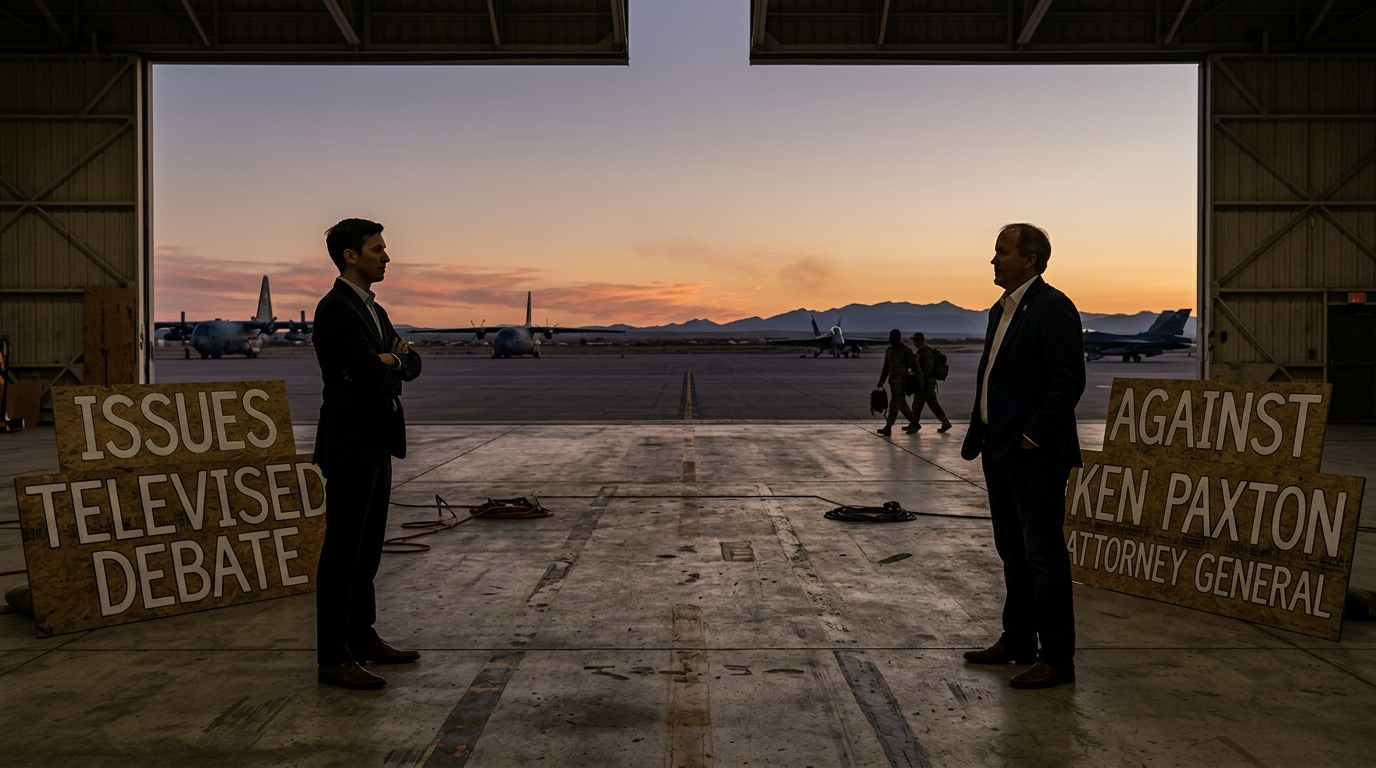
State Representative James Talarico, a Democrat from Austin, has formally extended an invitation for three televised debates to Republican incumbent Attorney General Ken Paxton. This challenge comes as the two figures represent diametrically opposed visions for the state's legal department and law enforcement priorities. Talarico is positioning himself as a primary challenger to Paxton’s long-held seat, emphasizing the need for public accountability and direct discourse. Historically, Texas incumbents in high-profile executive offices have often avoided debates to minimize risks to their polling leads, whereas challengers utilize these platforms to boost name recognition and contrast policies. The proposed debates would ideally be broadcast to a statewide audience, allowing voters from the Panhandle to the Rio Grande Valley to assess the candidates side-by-side. Talarico’s move is seen by political analysts as an attempt to force the Attorney General onto a stage where he must address his ongoing legal battles and policy decisions in a real-time, unscripted environment. For Paxton, who has survived numerous political and legal hurdles over the last decade, a debate represents both a potential pitfall and an opportunity to solidify his base by defending his record against a rising progressive star in the Texas House.
Texas relevance
This development is central to the future of the Texas judicial system and the state's executive branch. As the Attorney General of Texas, the office holder is responsible for representing the state in all legal matters, including major litigation against the federal government, consumer protection, and child support enforcement. Every Texan is impacted by the priorities of this office, particularly regarding immigration enforcement and constitutional interpretations. The political rivalry between Talarico and Paxton highlights the deepening ideological divide within the Texas Legislature and the broader voting population.
The Strategic Timing of the Challenge
The timing of Rep. Talarico's challenge is not accidental. By issuing the call for debates now, Talarico is looking to capitalize on the momentum of the legislative session and the lingering headlines surrounding the Attorney General's office. He is attempting to secure commitments from major news networks and non-partisan organizations early, making it more difficult for the incumbent to decline without appearing to avoid scrutiny.
In Texas politics, the 'incumbent's advantage' is a powerful force. High-ranking officials like the Attorney General often have substantial war chests and high name ID, which often makes them hesitant to share a stage with a challenger. Talarico’s strategy aims to bridge the visibility gap by creating a high-stakes media event that demands public attention.
Historical Precedent for Statewide Debates
Texas has a storied but inconsistent history with televised political debates. While gubernatorial races often see at least one televised meeting, down-ballot races for offices like Attorney General or Land Commissioner frequently bypass them altogether. Talarico is pushing for a series of three events, which would be an unusually high number for this specific office, suggesting he wants to cover a wide array of topics including reproductive rights, border security, and corporate regulations.
Comparing this to previous cycles, many remember the 2018 debates between Ted Cruz and Beto O'Rourke as a turning point for political engagement in the state. Talarico seems to be modeling his approach after that high-octane campaign style, hoping to spark a similar level of enthusiasm among the Texas electorate. The Attorney General’s office, however, carries a different weight, focusing more on the technicalities of law than the broad legislative stroke of the Senate.
Core Issues at the Center of the Conflict
If these debates occur, they are expected to center on several key Texas-specific issues. Representative Talarico has been a vocal critic of the state’s current school voucher proposals and the Attorney General’s role in defending restrictive abortion laws. He is likely to use the platform to argue that the OAG has become overly politicized at the expense of everyday legal services for the public.
On the other side, Ken Paxton’s defense would likely lean heavily on his record of suing the Biden-Harris administration. Paxton has positioned his office as the primary firewall against federal overreach, particularly regarding EPA regulations and border enforcement policies like SB4. A debate would force a collision between Talarico’s focus on internal state social policy and Paxton’s focus on federalism and state sovereignty.
Impact on the Texas Legal Landscape
The Attorney General is often referred to as the 'top lawyer' for Texas. The outcome of this political contest—and how the candidates perform in public forums—will signal the future direction of the Texas Solicitor General's office. Under Paxton, the office has been a laboratory for conservative legal theories that have successfully reached the U.S. Supreme Court on multiple occasions.
A shift in leadership to someone with Talarico’s profile would likely lead to a wholesale dismantling of several ongoing lawsuits against the federal government. This contrast is exactly what Talarico wants to highlight on television. By framing the election as a choice between 'activism' and 'accountability,' he hopes to appeal to suburban moderate voters who might be weary of the constant legal battles championed by the current AG.
The Role of Media and Public Perception
The role of the media in these proposed debates cannot be understated. Talarico has invited major networks to host, ensuring that the reach extends beyond just the political junkies in Austin. In a state as large as Texas, where local news markets are fragmented between Dallas, Houston, San Antonio, and El Paso, a televised event is one of the few ways to create a unified 'statewide' moment.
For Paxton, the risks are primarily centered on his temperament and his ability to pivot away from his legal history toward his policy wins. For Talarico, the risk is being seen as too young or too progressive for the broader, more conservative Texas electorate. The debates would serve as a 'stress test' for both men's personas as they move toward the general election.
What Happens if the Challenge is Declined?
If the Attorney General's team declines the invitation, the Talarico campaign will almost certainly use that refusal as a centerpiece of their advertising. They will frame the rejection as a sign of weakness or a fear of transparency. This is a common tactic in modern campaigns, where the 'empty chair' debate becomes a visual metaphor for an incumbent's perceived detachment from the voters.
However, historically, declining a debate has rarely resulted in a significant loss of support for an incumbent in a solidly red state. Paxton’s team may calculate that the base already knows where he stands and that giving Talarico free airtime only helps the challenger. The decision to accept or decline will reveal much about the internal polling and the perceived vulnerability of the Paxton administration.
Analysis
From a strategic perspective, Talarico’s early challenge is an aggressive play to frame the narrative of the race before the general election cycle hits full swing. Paxton has traditionally relied on a strong grassroots conservative base and endorsement from high-level figures like Donald Trump to overcome controversy. By demanding a televised confrontation, Talarico is betting that Paxton’s legal baggage—ranging from his impeachment acquittal to his securities fraud settlement—will be a liability under the bright lights of a television studio. Conversely, Paxton may view these challenges as a distraction, choosing instead to focus on his 'Texas vs. The World' litigation strategy which has made him a hero to many national conservatives.
Source attribution
This story was reported using a public release from the AG Ken Paxton — Video Moments (Google News). Keep TX Red rewrote the coverage independently and links to the official statement for verification.
Frequently Asked Questions
- Has Ken Paxton agreed to the debates yet?
- As of the latest reports, the Attorney General’s office has not officially accepted the three-debate challenge. It is common for incumbents to take time to review such invitations or to decline them if they feel it provides too much of a platform for their opponent.
- What are the main issues James Talarico wants to debate?
- Talarico has indicated he wants to discuss the Attorney General's handling of consumer protection, the office's legal challenges against federal policies, and the ethics controversies that have surrounded Ken Paxton's tenure in office.
- Why does the Attorney General position matter to Texans?
- The Texas Attorney General is the state's legal representative. The office decides which lawsuits the state joins, how it defends state laws (like those regarding the border or elections), and manages critical services like child support and crime victim compensation.
Official Sources
Take the next step
Browse the Newsroom →Read more about Keep Texas Red → Our full guide to what Keep Texas Red means and why Texans support it.
Get Texas updates delivered weekly.
Independent Texas reporting on politics, policy, and daily life. One email a week. Unsubscribe anytime.
Keep TX Red Newsroom
The Keep Texas Red Editorial Staff produces nonpartisan explainers, policy breakdowns, and educational resources to help Texans understand how their government works. All content is reviewed for accuracy and updated regularly.
About Keep TX Red →