Hill Country Flood Mitigation Strategies Show Early Results Following Legislative Reforms
Texas lawmakers evaluate the impact of new safety laws as seasonal flooding tests updated emergency response systems in the Hill Country region.
Editorial disclaimer: Opinions and analysis on Keep TX Red are editorial content — not statements of fact. See our editorial standards.
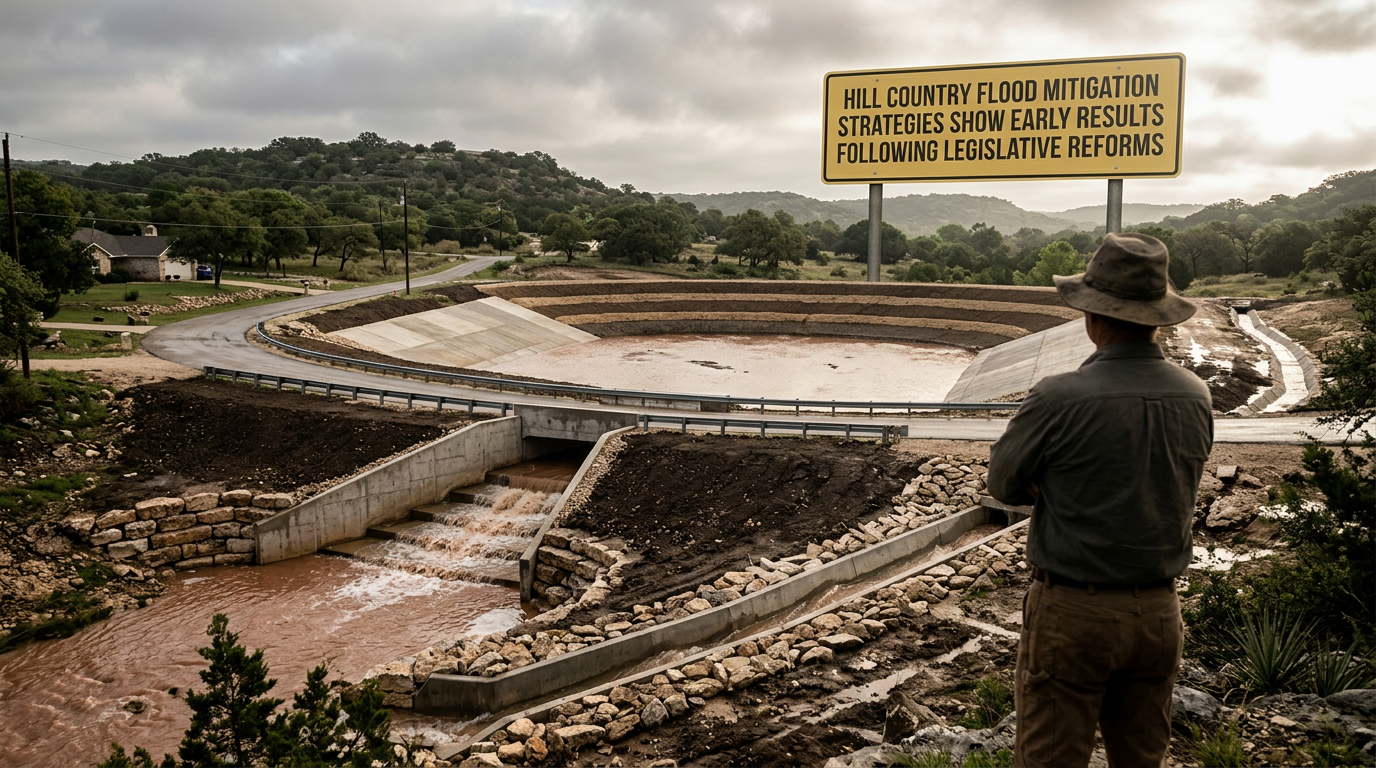
In the wake of recent heavy rainfall across Central Texas, state officials are drawing attention to the early performance of flood safety legislation passed during the most recent legislative cycles. Historically, the Texas Hill Country has been known as 'Flash Flood Alley' due to its unique topography, thin soil, and limestone bedrock, which cause rapid runoff during storm events. The new framework, which emerged following catastrophic events that caused significant loss of life and property, focuses on modernizing warning systems and regulating high-risk recreational areas along major river basins. Legislators contend that the integration of localized sirens and enhanced communication protocols have already begun to shorten response times during sudden rises in water levels. Historically, Texas has managed flood risks through a patchwork of local ordinances and county-level emergency management plans. This decentralized approach often led to communication gaps when floodwaters crossed jurisdictional lines, particularly between upstream rural areas and downstream urban centers. The current shift toward a more unified state oversight model represents a significant evolution in how the Lone State handles natural disasters. By utilizing real-time sensor data and standardized evacuation orders, the state aims to reduce the fatalities traditionally associated with the Guadalupe and Llano River systems. As the 2026 flood season progresses, the efficacy of these systemic upgrades remains a primary focus for both public safety advocates and budgetary committees.
Texas relevance
Texas is particularly vulnerable to flash flooding because of its diverse geography and the prevalence of low-water crossings in rural counties. In the Hill Country specifically, the economy relies heavily on river-based tourism, meaning thousands of visitors are often present in flood zones without the local knowledge required to navigate rising waters. These new state laws are designed to bridge that information gap by mandating specific safety infrastructure in unincorporated areas where previous oversight was minimal. The success of these measures in Central Texas serves as a benchmark for potential statewide expansion in the coming years.
Modernizing Alert Systems and Infrastructure
A cornerstone of the recent legislative push has been the deployment of advanced early warning sirens in high-traffic river zones. Previously, many of these areas relied on cell phone notifications, which often failed due to poor reception in deep canyons or overwhelmed networks during emergencies. The new installations provide an audible backup that does not rely on cellular infrastructure, ensuring that everyone within earshot is aware of an immediate threat.
Beyond sirens, the state has invested in automated river gauges that feed data directly to emergency command centers. These sensors provide minute-by-minute updates on flow rates and water depth, allowing officials to issue evacuation orders with greater precision. By reducing the 'false alarm' rate, authorities hope to increase the public's trust in and compliance with official warnings when a genuine life-threatening event occurs.
Infrastructure improvements are not limited to electronics. Several counties are now utilizing state grants to improve the signage and physical barriers at low-water crossings. By implementing 'Turn Around, Don't Drown' technology—such as automated arms that drop when water reaches a certain level—Texas is taking human error out of the equation for motorists who may underestimate the power of flowing water.
Regulatory Changes for Recreational Campsites
One of the most contentious yet impactful aspects of the new laws involves stricter safety requirements for commercial campsites located within floodplains. Owners are now required to maintain comprehensive evacuation plans that must be approved by local emergency management coordinators. This shift ensures that businesses are held accountable for the safety of their guests, moving away from a 'buyer beware' mentality that previously existed in some rural jurisdictions.
Under the new statutes, camp operators must also establish a primary and secondary means of egress that remain passable during a flood event. In the past, many campsites became isolated islands when a single access bridge or low-water road was submerged. By mandating multiple exit routes or higher-elevation refuge areas, the state is significantly lowering the risk of visitors becoming stranded in dangerous conditions.
Implementation has seen varying degrees of pushback from small business owners who cite the high cost of infrastructure upgrades. To address this, lawmakers have explored low-interest loans and tax incentives for those who proactively enhance their safety protocols. The goal is to reach a balance where the hospitality industry can thrive without sacrificing the lives of those who come to enjoy the Texas outdoors.
The Role of the Texas Water Development Board
The Texas Water Development Board (TWDB) has taken on a central role in the state's new flood planning strategy. The board is now responsible for maintaining a statewide flood plan, similar to the state's long-standing water supply plan. This comprehensive document identifies the most vulnerable regions and prioritizes state funding for projects that offer the greatest reduction in flood risk across regional boundaries.
By moving toward a regional planning model, the TWDB ensures that flood mitigation projects in one county do not inadvertently increase flooding in a neighboring county. For example, building a levee or a retention pond upstream can have significant impacts on flow rates downstream. The state’s involvement provides the necessary oversight to coordinate these multi-jurisdictional engineering projects effectively.
The TWDB also manages the Flood Infrastructure Fund (FIF), which provides financial assistance for flood control and mitigation projects. Municipalities and counties can apply for these funds to correct long-standing drainage issues or to purchase property in high-risk areas to create natural buffer zones. This financial backing is the engine that allows the legislative mandates to become physical realities on the ground.
Enhanced Coordination Between Agencies
A major failure identified in past flood events was the lack of real-time communication between different government agencies. The new laws have mandated better synchronization between the Texas Department of Transportation, the Texas Division of Emergency Management, and local law enforcement. This ensures that road closures and evacuation orders are disseminated through all channels simultaneously, reducing confusion during the critical first hour of an event.
Inter-agency training exercises have also become more frequent. These drills simulate severe weather scenarios to test the chain of command and identifying potential bottlenecks in the communication hierarchy. When state and local officials have a working relationship before a disaster strikes, the efficiency of the response improves dramatically. This 'unity of effort' is a core principle of the recent reforms.
Furthermore, the integration of social media and emergency broadcast systems has been refined. The state is now utilizing geo-fencing technology to send hyper-local alerts to mobile devices within a specific geographic radius of a flood threat. This targeted approach prevents 'alert fatigue' among residents who are not in the immediate path of danger, ensuring that those who do receive an alert take it seriously.
Economic Impact of Improved Safety Standards
Proponents of the flood safety laws argue that they are not just life-saving measures but also economic protections. Major flooding events in the past have caused hundreds of millions of dollars in property damage and long-term disruptions to local businesses. By investing in mitigation now, the state is essentially buying down the future cost of disaster recovery and insurance premiums for residents in affected areas.
Tourism in the Hill Country creates thousands of jobs and generates significant tax revenue for the state. If the region becomes perceived as unsafe, that revenue stream is threatened. Demonstrating a proactive stance on safety helps maintain the area's reputation as a premier travel destination, even in an era of more frequent and intense weather patterns.
Additionally, the construction and maintenance of new flood infrastructure create local jobs. From engineering firms to construction crews, the push for better drainage and warning systems provides a steady stream of work. This reinvestment into Texas communities ensures that the money spent on safety also serves as an economic stimulus for the very regions it is designed to protect.
Future Challenges and Evolving Risks
Despite the progress made, challenges remain as Texas experiences rapid population growth. As more people move into the Hill Country, development often encroaches on areas that were traditionally considered wild floodplains. Managing this growth while adhering to new safety standards requires constant vigilance from county commissioners and planning boards who must balance property development with long-term safety.
Climatic shifts are also presenting new variables. The intensity of rainfall events in Texas has been trending upward, meaning that historical data may no longer be a perfect predictor of future floods. The state must remain flexible in its approach, updating its models and infrastructure to withstand 'thousand-year' floods that are occurring with much higher frequency than their name suggests.
Finally, the human element continues to be the most difficult factor to control. Public education campaigns are essential to ensure that new residents, who may be unfamiliar with the dangers of Texas flash floods, understand how to respond when sirens sound or roads are closed. Constant communication and community engagement are the final pieces of the puzzle in creating a truly flood-resilient Texas.
Analysis
Opinion: While the early data suggests a positive trend in emergency response, the true test of these laws will be their long-term funding and the willingness of private landowners to comply with new regulations. The tension between private property rights and public safety mandates often surfaces when the state dictates how campsites and recreational properties must be equipped. However, the move toward data-driven, centralized alerts is a necessary step to protect both permanent residents and the vital tourism industry that fuels the local economies of Wimberley, New Braunfels, and Llano.
Source attribution
This story was reported using a public release from the Texas Standard. Keep TX Red rewrote the coverage independently and links to the official statement for verification.
Frequently Asked Questions
- How do the new sirens work if there is no cell service?
- The new sirens are designed to operate independently of the cellular network. They are often triggered via radio frequency or satellite links directly from emergency operations centers. This ensures that even in remote canyons where mobile phones do not work, an audible warning can be heard by anyone in the immediate area.
- What should I do if I am caught in a flash flood while camping?
- The most important rule is to seek higher ground immediately. Do not attempt to pack up your belongings or move your vehicle if water is rising. Under new state laws, campsites are required to have marked evacuation routes; follow these signs to designated safety zones and wait for official word from emergency responders before attempting to leave the area.
- Are these safety measures being applied outside of the Hill Country?
- Yes. While the Hill Country is a primary focus due to its unique geography, the legislative reforms and the Texas Water Development Board's statewide flood plan cover all regions of Texas. Coastal areas and urban centers like Houston and Dallas also benefit from the updated infrastructure funding and improved inter-agency coordination protocols.
Official Sources
Take the next step
Browse the Newsroom →Read more about Keep Texas Red → Our full guide to what Keep Texas Red means and why Texans support it.
Get Texas updates delivered weekly.
Independent Texas reporting on politics, policy, and daily life. One email a week. Unsubscribe anytime.
Keep TX Red Newsroom
The Keep Texas Red Editorial Staff produces nonpartisan explainers, policy breakdowns, and educational resources to help Texans understand how their government works. All content is reviewed for accuracy and updated regularly.
About Keep TX Red →