Governor Abbott Breaks Fundraising Records with Texas-Based High-Profile Donors
Governor Greg Abbott has raised $25.5M, vastly outperforming Gina Hinojosa with help from Elon Musk and Jerry Jones.
Editorial disclaimer: Opinions and analysis on Keep TX Red are editorial content — not statements of fact. See our editorial standards.
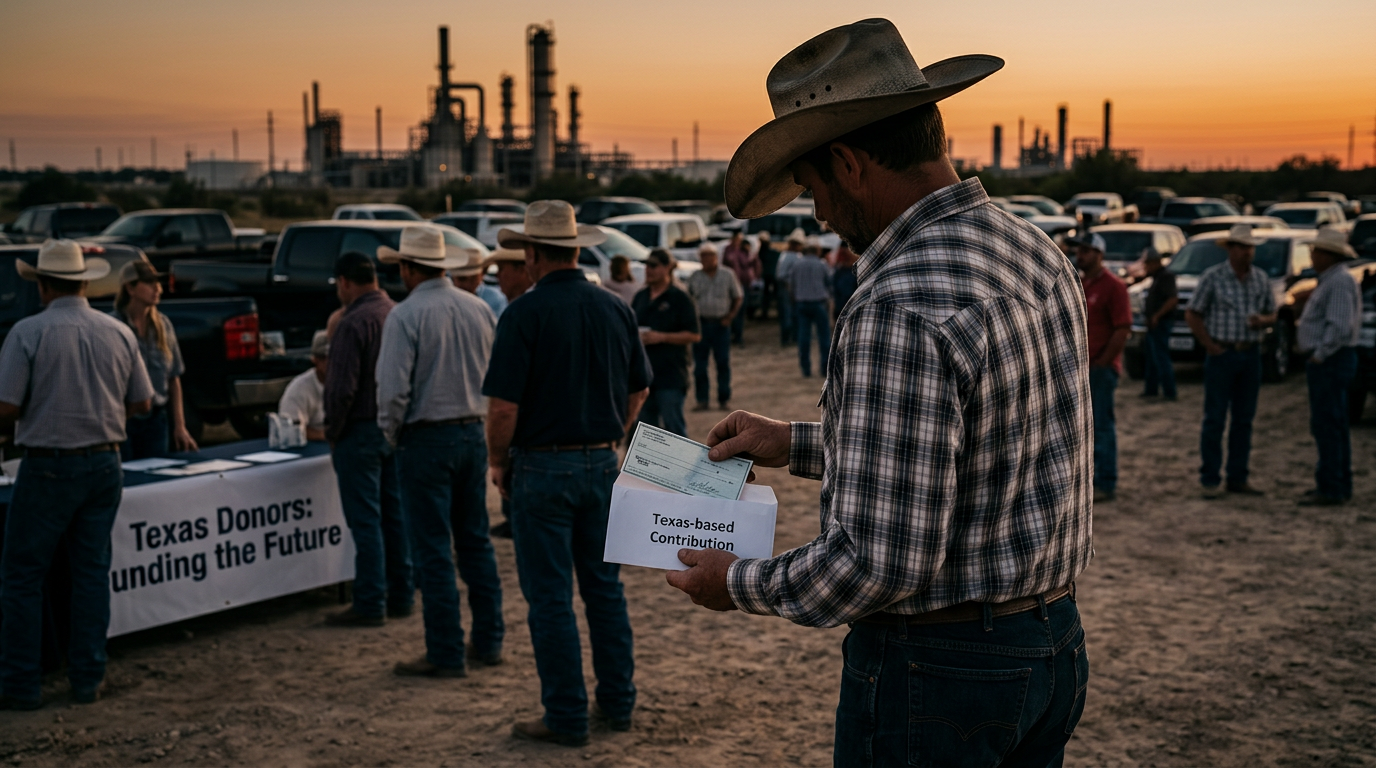
Recent campaign finance reports from the Texas Ethics Commission highlight a significant financial disparity in the current gubernatorial race. Governor Greg Abbott has successfully amassing a war chest that dwarfs the resources of his Democratic challenger, Gina Hinojosa. Between the months of March and June, the incumbent Governor secured approximately $25.5 million in contributions, establishing a formidable lead in the race for campaign capital. Historically, Texas high-office races are among the most expensive in the nation, and this latest cycle continues a trend of Republican incumbents leveraging a robust network of industry leaders and private investors to maintain institutional stability. This fundraising cycle specifically illustrates the solidification of Abbott’s support among the state's economic titans and new technological transplants who have recently made the Lone Survey state their home base. By contrast, State Representative Gina Hinojosa reported raising $6.2 million during the same four-month window. While this figure represents a notable effort for a challenge campaign, it leaves her significantly behind the incumbent’s pace. The discrepancy extends to the total cash-on-hand availability, where Abbott’s reserves have grown to a massive $67 million, while Hinojosa’s balance sits at roughly $3 million. This financial gap creates a strategic imbalance in the ability to purchase media airtime, fund statewide travel, and maintain localized boots-on-the-ground operations across Texas’s 254 counties. The sheer scale of Abbott's funding ensures that his message will likely dominate the airwaves as the general election approaches, providing him with a substantial cushion to absorb unexpected political shifts.
Texas relevance
As the governing power of the second-largest economy in the United States, the leadership of Texas impacts everything from energy policy to the national border security debate. The ability of a candidate to raise tens of millions of dollars in a single quarter reflects the high stakes involved for Texas residents and corporate entities alike. Historically, Texas shifted to a Republican stronghold in the late 1990s, and the financial dominance seen in this report suggests that the state’s traditional power structures remain firmly behind the incumbent Governor. This financial activity is not just about the election; it signals which policies—ranging from the state’s hands-off regulatory approach to its aggressive stance on property tax relief—continue to receive the backing of the state’s wealthiest stakeholders and job creators.
The Mega-Donors Driving the Abbott Machine
A closer look at the quarterly filings reveals a strategy reliant on both traditional Texas wealth and the 'New Texas' tech industry. Alex Fairly, a prominent businessman from Amarillo, led the surge with a staggering $1 million contribution. Fairly has long been a key player in Panhandle politics and his investment underscores the governor’s sustained popularity in the more conservative regions of the state. These large-scale donations allow the campaign to invest in long-term infrastructure, such as advanced data analytics and massive digital advertising buys that smaller campaigns simply cannot mirror.
Joining Fairly were Elon Musk and Jerry Jones, each providing half a million dollars. Musk’s involvement is particularly noteworthy as he has become increasingly vocal about political issues since relocating Tesla and SpaceX operations. His financial backing serves as a vote of confidence in the regulatory environment that Abbott has cultivated. For Jerry Jones, the contribution is a continuation of his long-standing participation in the state’s political landscape, ensuring that the intersection of business and governance remains favorable to the diverse industries he represents ranging from sports to real estate.
The Financial Headwinds for Hinojosa
Gina Hinojosa faces a steep uphill climb that is common for Democratic challengers in Texas statewide races. Despite raising over $6 million—a respectable sum that shows a motivated base—the sheer scale of the opposition's resources makes it difficult to achieve parity. In a state as geographically vast as Texas, the cost of reaching voters in diverse markets like the Rio Grande Valley, the Permian Basin, and the DFW Metroplex is astronomical. Without a significant infusion of capital, challengers often find themselves relegated to social media and grassroots organizing while incumbents blanket the television markets.
The $3 million Hinojosa has remaining in the bank will likely be prioritized for high-impact urban areas where the Democratic party traditionally performs well. However, this leaves little room for the 'every county' strategy that some political analysts believe is necessary to flip a state as large as Texas. The current report suggests that Hinojosa will need to rely heavily on national PACs or a sudden surge in small-dollar donors if she hopes to remain competitive during the final months of the campaign cycle.
Historical Context of Texas Gubernatorial Fundraising
To understand the current figures, one must look at the history of previous cycles. In 2022, the race between Greg Abbott and Beto O'Rourke set national records for gubernatorial spending, with both candidates raising hundreds of millions. Abbott’s current $67 million cash balance indicates that he is maintaining his status as one of the most prolific fundraisers in Republican history. He has consistently outperformed predecessors like Rick Perry and George W. Bush in terms of raw dollar amounts adjusted for inflation.
This level of funding acts as a deterrent to political rivals, often referred to in political circles as 'clearing the field.' By amassing such a significant lead early on, the Abbott campaign signals to both donors and potential opponents that any challenge will be met with a multi-million dollar counter-offensive. This has historically consolidated power within the executive branch, allowing the Governor to exert significant influence over the legislative agenda in Austin.
Geographic Distribution of Influence
The fundraising data also reveals a geographic shift in where the power lies. While traditionally Houston and Dallas were the epicenters of political check-writing, the rise of the Austin-San Antonio corridor as a tech hub is evident in the support from Musk and other high-tech executives. This diversification of the donor base protects the incumbent from downturns in any single sector, such as the volatility often seen in the oil and gas markets found in West Texas.
However, the Panhandle remains a critical pillar of support, as evidenced by the million-dollar donation from Amarillo. The ability to pull significant capital from both the rural heartland and the modern tech-driven suburbs is the hallmark of the current Governor’s political durability. It reflects a broad coalition that spans legacy industries like ranching and energy, as well as the emerging frontiers of aerospace and electric vehicle manufacturing.
The Role of Corporate Strategy in Political Giving
Corporate leaders often view political donations as an investment in a stable business environment. For figures like Jerry Jones, whose business interests are deeply rooted in the state's economic health, supporting an incumbent who advocates for low taxes and limited regulation is a logical business decision. These donations are rarely about individual social issues and more about long-term economic predictability, which has been a central theme of Abbott’s tenure.
Similarly, Elon Musk's transition into a major Texas political donor reflects his public frustration with the regulatory hurdles he faced in California. By supporting the current Texas administration, he is helping to ensure that the environment which attracted his companies to the state remains intact. This trend suggests that as more companies move to Texas, the Republican fundraising advantage may actually grow stronger as new residents seek to protect the economic conditions that prompted their relocation.
Looking Ahead to the General Election
With the financial filings now public, both campaigns will likely adjust their rhetoric to match their fiscal realities. The Abbott campaign will use these numbers to project an image of inevitability and strong statewide mandate. They will likely begin an aggressive media blitz well before the traditional Labor Day kickoff, aiming to define the opponent before she has the funds to introduce herself to the wider public.
On the other hand, the Hinojosa campaign might use the disparity to frame the race as a 'people vs. special interests' narrative. This is a common tactic for candidates facing a large financial gap, aiming to mobilize small-dollar donors by highlighting the influence of billionaires in the political process. Whether this narrative can overcome the sheer volume of Abbott’s war chest remains the central question of the 2026 election cycle.
Analysis
The inclusion of names like Elon Musk and Jerry Jones on a donor list is more than just a financial boost; it is a high-profile endorsement of the 'Texas Model.' Musk’s $500,000 contribution, following his highly publicized move of his corporate headquarters to the Austin area, signals that his interests are now inextricably linked with those of the current state administration. Jerry Jones, a long-time fixture of the Dallas business community, reinforces the traditional alignment between Texas sports-business empires and the Republican establishment. From a strategic standpoint, Abbott has essentially built an insurmountable firewall. With $67 million in the bank, he can afford to ignore traditional fundraising for the rest of the year if he chooses, focusing instead on mobilizing voters and supporting down-ballot candidates who can help maintain a Republican majority in the State Legislature.
Source attribution
This story was reported using a public release from the r/TexasPolitics. Keep TX Red rewrote the coverage independently and links to the official statement for verification.
Frequently Asked Questions
- How does Abbott's fundraising compare to his previous campaigns?
- Governor Abbott continues to maintain a record-breaking pace, consistent with his 2022 campaign against Beto O'Rourke. His ability to maintain $67 million in the bank nearly a year before the main election push demonstrates a level of financial stability that few other governors in U.S. history have achieved.
- Why is the cash-on-hand figure so important in Texas?
- Texas is one of the most expensive states for political advertising due to its twenty distinct media markets. Cash-on-hand represents a candidate's ability to react to late-breaking news or launch large-scale television campaigns across the entire state without running out of resources.
- Who are the major donors mentioned in the report?
- Key donors include Alex Fairly from Amarillo ($1 million), Elon Musk of Tesla and SpaceX ($500,000), and Dallas Cowboys owner Jerry Jones ($500,000). These individuals represent a mix of traditional Texas business interests and the new technology sector.
- Can Gina Hinojosa close the fundraising gap?
- While possible through a surge in national interest or small-dollar grassroots giving, closing a $60 million gap is historically difficult in Texas politics. Most challengers focus on efficient spending and targeting specific swing districts to maximize their more limited resources.
Official Sources
Take the next step
Browse the Newsroom →Read more about Keep Texas Red → Our full guide to what Keep Texas Red means and why Texans support it.
Get Texas updates delivered weekly.
Independent Texas reporting on politics, policy, and daily life. One email a week. Unsubscribe anytime.
Keep TX Red Newsroom
The Keep Texas Red Editorial Staff produces nonpartisan explainers, policy breakdowns, and educational resources to help Texans understand how their government works. All content is reviewed for accuracy and updated regularly.
About Keep TX Red →