East End Houston Residents Respond to Fatal ICE Incident Involving Federal Agents
Houston's East End navigates the aftermath of a fatal confrontation involving federal agents, sparking a revitalized local focus on community resilience.
Editorial disclaimer: Opinions and analysis on Keep TX Red are editorial content — not statements of fact. See our editorial standards.
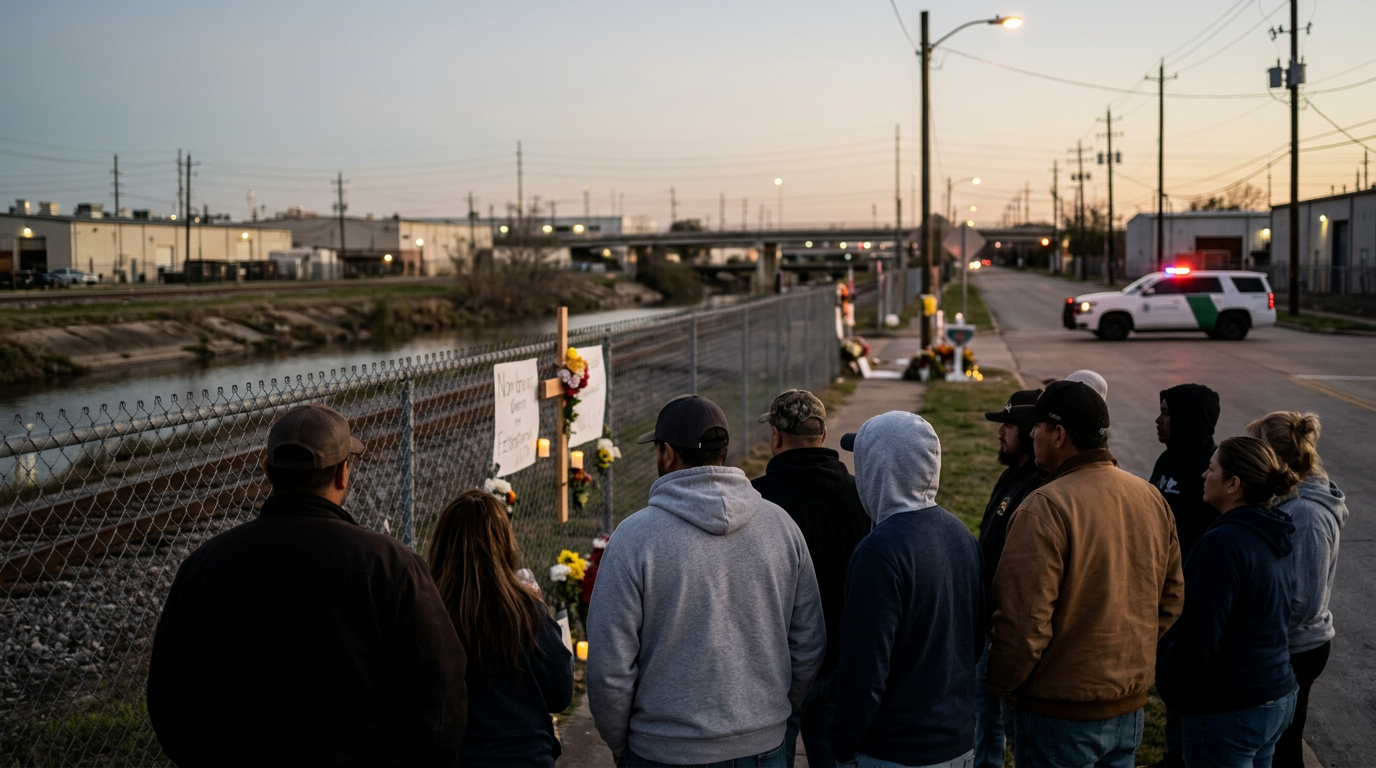
The Second Ward and surrounding East End neighborhoods in Houston are currently navigating a period of introspection and localized response following a lethal interaction involving federal immigration authorities. In mid-2026, a confrontation occurred involving Lorenzo Salgado Araujo and agents from U.S. Immigration and Customs Enforcement (ICE). The incident resulted in the death of Araujo, an event that has reverberated through a district known for its deep-rooted cultural heritage and historical significance to the city’s Hispanic population. Historically, the East End has served as a cultural anchor for Houston, maintaining a distinct identity even as the surrounding metropolitan area undergoes rapid urbanization. This recent event has placed a spotlight on the friction that can arise during federal enforcement operations within dense, established residential zones where families have lived for generations. Local residents have responded not with silence, but with a mobilized effort to document the event and support the affected family. The neighborhood, often referred to as 'El Segundo Barrio,' has a documented history of grassroots organizing dating back to the mid-20th century civil rights movements. This tradition of community-led advocacy is now being channeled into a demand for transparency regarding the protocol used by federal agents during the operation. While federal authorities typically manage investigations into agent-led discharges of firearms, the local impact in Houston has prompted a larger conversation about the presence of federal forces in domestic residential settings and how these actions affect the perceived safety and stability of the area.
Texas relevance
This event is specifically localized to Houston, Texas, one of the most diverse and influential hubs in the state. The East End represents a critical demographic and economic sector of the city, and the fallout from this incident touches on Texas-specific issues regarding jurisdictional boundaries between local Houston residents and federal agencies. Texas has frequently been the center of national debate regarding immigration policy and enforcement tactics, and this specific incident serves as a primary example of how federal policies manifest as real-world consequences in Texas ZIP codes. The reaction of the Houston community reflects a broader Texan tradition of localized resilience and the historical importance of the barrio in the state's social fabric.
Historical Context of the Second Ward
Houston’s East End, and specifically the Second Ward, has long been a bastion of Hispanic culture and political organizing in Texas. Established as one of the city's original four wards, the area evolved over the twentieth century into a primary gateway for families seeking economic opportunity in the ship channel and surrounding industries. This history is not just one of habitation but of active participation in the shaping of Houston’s civic life.
The neighborhood’s response to the killing of Lorenzo Salgado Araujo is deeply influenced by this legacy. In the 1960s and 70s, the East End was a focal point for the Chicano Movement in Texas, where residents organized to improve local schooling, infrastructure, and legal representation. This historical muscle memory allows the community to react quickly to modern crises, transforming grief into organized civic action and public discourse.
Details of the Federal Enforcement Operation
The operation that led to the death of Lorenzo Salgado Araujo was conducted by federal agents tasked with immigration enforcement. According to preliminary reports, the encounter took place within the residential confines of the East End, a location characterized by narrow streets and closely packed housing. The specifics regarding what prompted the escalation to lethal force remain a subject of intense scrutiny by both local activists and federal oversight bodies.
Standard operating procedures for federal agents usually involve internal reviews following any loss of life. However, the proximity of the shooting to homes and small businesses has raised questions about the safety protocols governing such high-stakes operations in high-density areas. Residents have expressed concern that the conduct of the operation posed a risk not just to the target, but to the surrounding community that was merely going about its daily business.
Community Mobilization and Resilience
In the days following the event, the East End has seen a surge in community gatherings, vigils, and town hall meetings. These events serve a dual purpose: providing a space for collective mourning and establishing a platform for demanding accountability. The phrase 'This is our barrio' has become a rallying cry, emphasizing that the residents view their neighborhood as a sacred space where the safety of their neighbors is a top priority.
This resilience is also reflected in the practical support being offered to the Araujo family. Local organizations are working to provide legal guidance and emotional support, ensuring that the family is not left to navigate the complexities of a federal investigation alone. This highlights the self-reliant nature of Houston’s heritage neighborhoods, which often develop their own support systems in the absence of perceived external protection.
The Role of Local vs. Federal Authority
One of the most complex aspects of the incident is the tension between local city governance and federal law enforcement jurisdiction. The Houston Police Department often has to balance its relationship with federal agencies like ICE while maintaining the trust of the local immigrant population. This balance is frequently tested when federal actions lead to violence, leaving local officials to manage the community's emotional and social fallout.
Advocates in the East End have called for greater transparency regarding how federal agencies coordinate with local Texas authorities. They argue that without a more integrated approach that respects the local context, the potential for tragic misunderstandings remains high. This debate is central to the ongoing Texas political landscape, where the limits of federal power are constantly being challenged and redefined in both the courts and the streets.
Impact on Neighborhood Identity and Future Safety
The fatal shooting has inevitably left a mark on the psychological landscape of the East End. For many, the incident serves as a stark reminder of the visibility and vulnerability of their community. There is a palpable concern that such events could lead to a 'chilling effect,' where residents become fearful of engaging with any form of law enforcement, thereby making the neighborhood less safe for everyone.
However, the prevailing sentiment remains one of defiance and persistence. Cultural leaders in the area are doubling down on efforts to celebrate the barrio's identity through arts and public gatherings. By reclaiming their space, they aim to ensure that the narrative of the East End is defined by its people and their shared history, rather than by a single moment of violence or the presence of outside enforcement agencies.
Looking Forward: Advocacy and Policy Reform
As the investigation continues, the focus of local leaders is shifting toward long-term policy changes. There are growing calls for federal agencies to adopt more stringent de-escalation tactics and to increase communication with community leaders before conducting operations in sensitive areas. The goal is to prevent similar tragedies in other Texas neighborhoods that share the East End’s demographic profile.
Ultimately, the death of Lorenzo Salgado Araujo has become a catalyst for a renewed examination of civil rights and immigration enforcement in the 21st century. The East End of Houston stands as a testament to the fact that while federal policies are crafted in Washington D.C., their consequences are felt most acutely on the doorsteps of Texas residents. The community’s commitment to resilience ensures that these issues will remain at the forefront of the state’s political and social agenda.
Analysis
While law enforcement agencies emphasize the necessity of their operations for maintaining legal order, the recurring friction in neighborhoods like the East End suggests a procedural gap in how these operations interact with civilian populations. The reliance on community activism in the wake of such incidents highlights a distrust that may hinder future cooperation between the public and federal entities. Observers note that without a clear, transparent debriefing of the events leading to the discharge of weapons, the tension between federal mandates and local community safety in Texas is likely to persist. The strength of the East End’s response demonstrates that despite the pressures of federal oversight, the residents of Houston maintain a powerful, self-sustaining social network that prioritizes neighborhood solidarity over external narratives.
Source attribution
This story was reported using a public release from the Texas Standard. Keep TX Red rewrote the coverage independently and links to the official statement for verification.
Frequently Asked Questions
- Where exactly did the incident occur?
- The incident took place in the East End of Houston, a historic district also known as the Second Ward or 'El Segundo Barrio.' This area is a significant cultural hub for the city's Latino population.
- Was the Houston Police Department involved in the shooting?
- The shooting involved agents from U.S. Immigration and Customs Enforcement (ICE), which is a federal agency. While local police often cooperate on various matters, the primary actors in this specific fatal encounter were federal officers.
- What is the community doing in response to the event?
- The community has organized vigils, town hall meetings, and support networks for the victim's family. They are using their established tradition of grassroots activism to push for more information and to ensure the neighborhood remains a united front against perceived federal overreach.
Official Sources
Take the next step
Browse the Newsroom →Read more about Keep Texas Red → Our full guide to what Keep Texas Red means and why Texans support it.
Get Texas updates delivered weekly.
Independent Texas reporting on politics, policy, and daily life. One email a week. Unsubscribe anytime.
Keep TX Red Newsroom
The Keep Texas Red Editorial Staff produces nonpartisan explainers, policy breakdowns, and educational resources to help Texans understand how their government works. All content is reviewed for accuracy and updated regularly.
About Keep TX Red →