Debate Challenge Issued in Texas Senate Race as Talarico Targets Paxton’s Record
State Rep. James Talarico challenges AG Ken Paxton to multiple debates in the 2026 Texas Senate race, focusing on corruption and public policy.
Editorial disclaimer: Opinions and analysis on Keep TX Red are editorial content — not statements of fact. See our editorial standards.
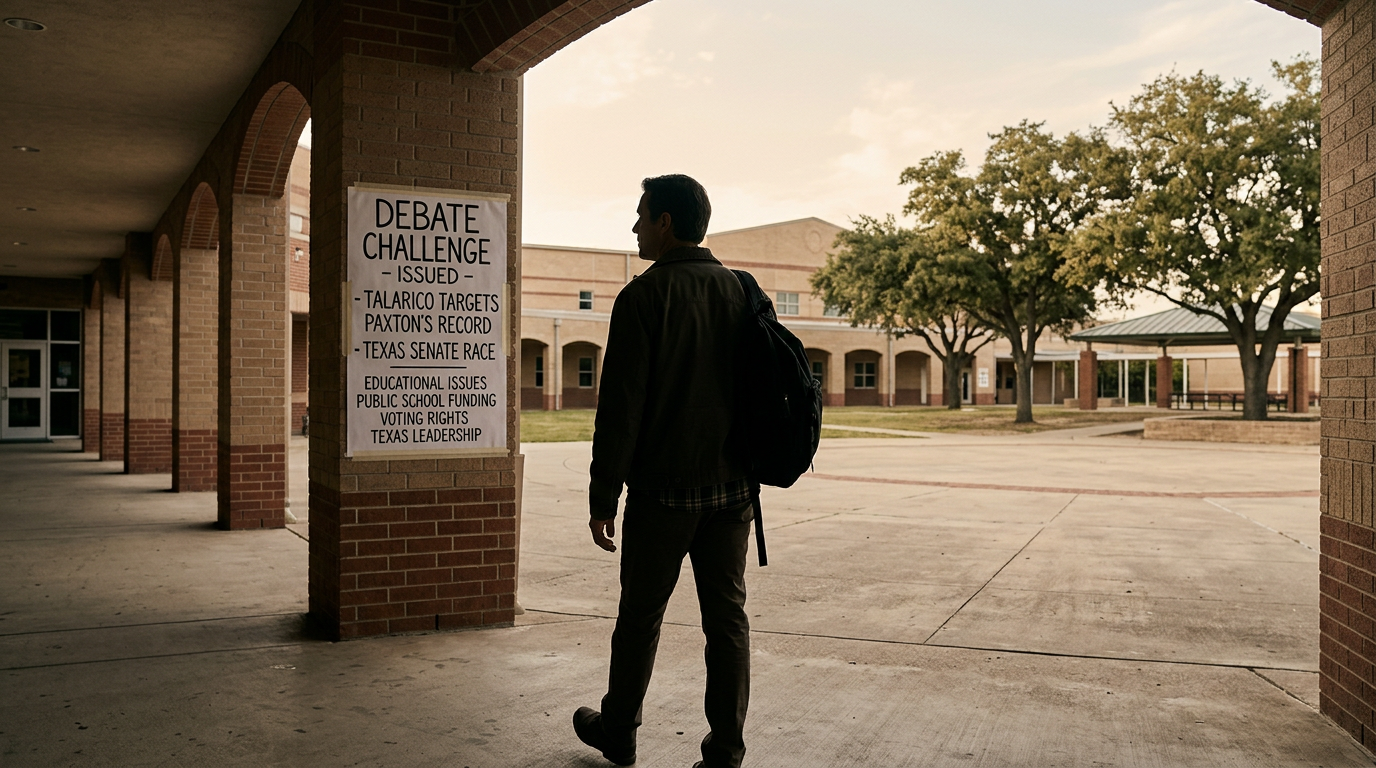
The political landscape for the 2026 Texas Senate cycle has intensified following a formal challenge for a series of public debates. State Representative James Talarico, an Austin-area Democrat, has publicly called upon incumbent Republican Attorney General Ken Paxton to participate in multiple televised forums. This move follows a period of heightened partisan friction in the Texas Legislature, where both figures have frequently clashed over education funding, secularism, and executive authority. Talarico’s strategy appears designed to force an early direct confrontation on policy and legal standing, a tactic often utilized by challengers seeking to increase name recognition against established statewide incumbents. Historically, Texas statewide races have seen a fluctuating commitment to the traditional debate format. While gubernatorial candidates often limit their appearances to a single highly controlled event, legislative and judicial candidates occasionally utilize these platforms to highlight ideological divides. In this instance, the challenge is specifically aimed at Paxton’s long-standing legal battles and his influential role within the state's conservative coalition. By pushing for a public accounting of Paxton's tenure, Talarico is attempting to shift the campaign narrative toward institutional accountability and away from strictly partisan social issues that typically dominate the Texas primary and general election cycles.
Texas relevance
This development is central to Texas voters because it involves two of the most recognizable figures in the state's current political infrastructure. As the Attorney General, Ken Paxton wields significant power over how Texas interacts with federal mandates, particularly regarding border security and election law. His influence extends deep into the Texas GOP, making this Senate race a potential bellwether for the direction of the party. Simultaneously, James Talarico represents a growing progressive movement within the Texas suburbs, specifically the corridor between Austin and Round Rock. The outcome of this exchange and the potential debates will set the tone for legislative priorities in the 40th Senate District and beyond, impacting every Texan from school children to small business owners who rely on stable state governance.
The Strategic Timing of the Debate Challenge
The timing of the debate request is not a coincidence. By calling for multiple debates well in advance of the general election, Talarico is attempting to corner the incumbent before the campaign season reaches its peak saturation. This early move allows the challenger to define the initial terms of engagement, focusing on specific grievances such as the 2023 impeachment proceedings and Paxton’s ongoing litigation with the federal government.
Furthermore, by requesting 'multiple' debates rather than a single event, the Talarico campaign is signaling that a one-off town hall will not suffice. This creates a recurring news cycle where the incumbent must repeatedly decide whether to engage or decline, keeping the issue of transparency in the headlines for months. It is a classic underdog strategy aimed at exhausting the incumbent's ability to control the narrative through traditional advertising and social media dominance.
Legislative Friction and Foundational Disagreements
James Talarico and Ken Paxton represent two fundamentally different visions for the future of Texas. Talarico, often noted for his background as a former teacher and seminarian, has built his platform on what he calls the 'moral center' of politics, frequently criticizing the use of religion in public policy. His presence in the House has been marked by vocal opposition to school vouchers and efforts to integrate chaplaincy into public schools, issues where Ken Paxton has been a primary legal defender of the conservative position.
Paxton, on the other hand, views his role as the primary defender of Texas's sovereignty against federal overreach. His supporters see him as a hero who has successfully blocked dozens of Biden administration policies ranging from environmental regulations to immigration protocols. A debate would bring these two distinct philosophies into direct conflict, providing voters with a rare opportunity to see the legal and moral arguments for each side presented without the filter of campaign consultants or TV soundbites.
The Role of Impeachment and Legal Challenges
One of the primary drivers behind this challenge is the fallout from Ken Paxton’s impeachment trial in the Texas Senate. Although he was acquitted of all articles by the body, the process left deep scars within the Republican party and provided Democrats with a wealth of opposition research. Talarico is likely to use any potential debate to revisit the testimony provided by Paxton's former deputies, who alleged various forms of misconduct and bribery.
Paxton has consistently dismissed these allegations as a 'politically motivated witch hunt' led by liberal Republicans and Democrats. In a debate setting, he would be forced to defend his actions in front of a live audience, an environment much harder to control than the courtroom or a friendly talk radio studio. How he handles these direct questions could determine his ability to maintain hold over the moderate wing of his own party, which remains skeptical of his legal history.
Demographic Shifts and Suburban Voters
The Senate race in question is being fought in a state that is rapidly changing. The suburban rings around major cities like Austin, Dallas, and Houston have become the primary battlegrounds for Texas politics. Talarico’s focus on these debates is a direct appeal to the educated suburban voters who often decide close elections in the House and Senate. These voters frequently cite government stability and integrity as their primary concerns, making the topic of 'debates' particularly resonant.
For Paxton, the challenge is to prove that his combativeness with the federal government yields tangible results for these suburban districts. He must convince voters that his legal battles are not just political theater but are necessary protections for the Texas economy and the safety of its citizens. The debates would provide a forum to translate complex legal filings into relatable policy successes, provided he chooses to step onto the stage with his opponent.
Communication Strategies and Media Impact
In the modern era of Texas politics, debates serve as more than just a source of information for voters; they are the raw material for digital media campaigns. Both camps are aware that a single slip-up or a particularly sharp retort can be clipped and distributed to millions of voters within minutes. This high-reward, high-risk environment is likely why statewide incumbents often hesitate to agree to unscripted formats.
A series of debates would also force local news outlets across Texas to cover the race more extensively. By rotating the locations of these debates—as Talarico has suggested—the candidates would be forced to address the unique concerns of different regions, from the energy corridor in Houston to the agricultural hubs in the Panhandle. This localized approach could bridge the gap between rural and urban voters, who often feel ignored by statewide campaigns focused solely on the major television markets.
Historical Context of Texas Political Debates
Looking back at the last decade of Texas politics, the tradition of rigorous debating has noticeably declined. In the 2018 Cruz-O'Rourke race, debates were limited and highly contentious, yet they played a massive role in the final polling surge. Since then, many Republican incumbents have opted out of debates entirely, citing media bias and unfair moderating panels as reasons for their withdrawal from the tradition.
If Paxton agrees to even one debate, it would mark a significant shift in current Republican strategy in Texas. It would suggest that the GOP feels the need to aggressively defend its record rather than simply relying on the inherent advantage of the 'R' next to their name on the ballot. Conversely, a total refusal to debate might be used by the Talarico campaign to argue that the incumbent is 'out of touch' or 'afraid' to answer for his record, a common refrain in underdog messaging.
Analysis
The decision by Talarico to issue this challenge early in the cycle demonstrates an aggressive posture rarely seen in Texas Senate races. For Ken Paxton, the calculation involves risk management; as a high-profile incumbent with a massive donor base, he has little to gain from sharing a stage with a challenger unless he can use it to solidify his base against what he characterizes as radical shifts in the state. Conversely, Talarico needs these high-visibility moments to bridge the massive gap in statewide funding. If Paxton ignores the challenge, he risks the accusation of avoiding transparency, but if he accepts, he provides Talarico with a platform to speak directly to conservative and independent voters who might only know him through partisan mailers. This dynamic reflects the broader national trend where debates are becoming less about policy persuasion and more about creating viral moments for social media consumption.
Source attribution
This story was reported using a public release from the AG Ken Paxton — Video Moments (Google News). Keep TX Red rewrote the coverage independently and links to the official statement for verification.
Frequently Asked Questions
- Has Ken Paxton agreed to the debate challenge yet?
- As of the latest reports, the Attorney General has not issued a formal acceptance or rejection of the specific challenge for multiple debates. His campaign typically evaluates these requests based on the proposed venue, moderator, and television coverage.
- Why is James Talarico challenging Paxton specifically?
- Talarico views Paxton as the primary representative of an ideology he opposes. He believes that a public debate is the best way to contrast his vision for Texas with the incumbent's record on ethics and legal authority.
- What happens if a candidate refuses to debate in Texas?
- There is no legal requirement for a candidate to debate. However, the opposing campaign often uses the refusal as a political talking point to suggest a lack of transparency or a fear of public scrutiny.
- Where would these debates likely take place?
- Proposed locations usually include major Texas cities like Houston, Dallas, San Antonio, and Austin to ensure that the largest possible audience has access to the candidates' platforms.
Official Sources
Take the next step
Browse the Newsroom →Read more about Keep Texas Red → Our full guide to what Keep Texas Red means and why Texans support it.
Get Texas updates delivered weekly.
Independent Texas reporting on politics, policy, and daily life. One email a week. Unsubscribe anytime.
Keep TX Red Newsroom
The Keep Texas Red Editorial Staff produces nonpartisan explainers, policy breakdowns, and educational resources to help Texans understand how their government works. All content is reviewed for accuracy and updated regularly.
About Keep TX Red →