Buc-ee’s Expansion Roadblock: Infrastructure Costs Delay New Travel Center Project
A proposed Buc-ee’s location faces a $60 million infrastructure gap, highlighting the high costs of supporting the massive Texas-born travel centers.
Editorial disclaimer: Opinions and analysis on Keep TX Red are editorial content — not statements of fact. See our editorial standards.
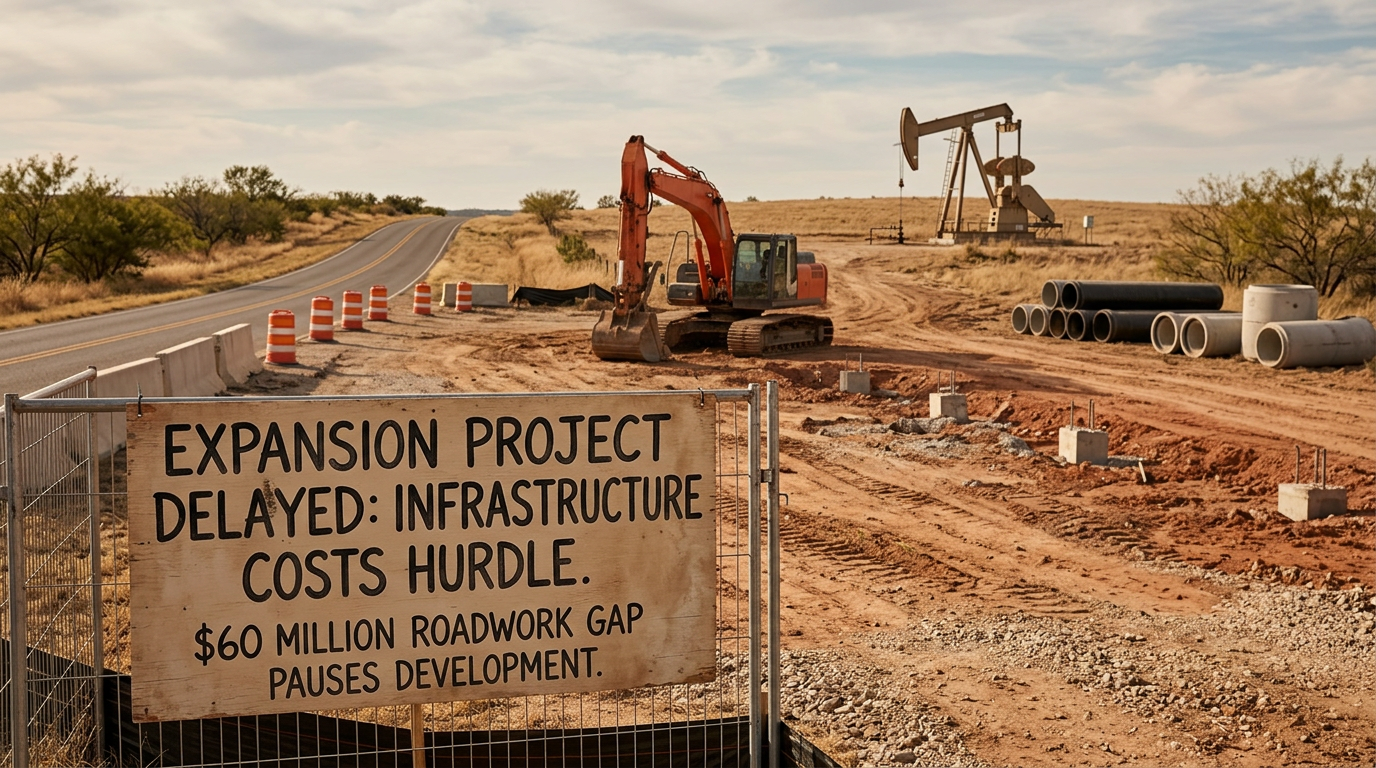
Building a Buc-ee’s travel center is no longer just a matter of purchasing land and pouring concrete; it has become a massive logistical undertaking requiring significant public and private collaboration. A new proposed location in Anderson County is currently experiencing a standstill as local officials and the company navigate a $60 million funding gap regarding necessary road improvements. For decades, Buc-ee’s has grown from a local Lake Jackson convenience store into a cultural phenomenon that demands high-capacity highway interchanges and robust utility infrastructure to support hundreds of pumps and thousands of daily visitors. Historically, Buc-ee’s projects serve as major economic catalysts, but they also place immense strain on existing rural and suburban transportation networks. In various development cycles across the South, including previous expansions within Texas, the company has worked with state departments of transportation to ensure that the influx of traffic does not lead to gridlock. This current impasse underscores the rising costs of construction and the complexities of modern commercial development, where the 'Buc-ee’s Effect' can increase local property taxes and job opportunities while simultaneously requiring multi-million dollar investments from taxpayers and developers alike.
Texas relevance
As a Texas-based institution headquartered in Lake Jackson, the success and logistical hurdles of Buc-ee’s are of paramount interest to the Texas business community. The company’s ability to navigate infrastructure funding gaps serves as a bellwether for how other major Texas retailers might handle expansion in an era of high inflation and rising material costs. Furthermore, the strategies used to resolve this $60 million gap could set a precedent for future Buc-ee’s locations within the Lone Star State, particularly in rapidly growing corridors like the Permian Basin or the outskirts of the Hill Country where current infrastructure is often insufficient for such massive footprints.
The $60 Million Roadwork Hurdle
The primary obstacle preventing the commencement of construction is a massive financial deficit related to the surrounding transportation network. Because a standard Buc-ee’s can feature upwards of 120 fueling positions and a 70,000-square-foot retail space, the traffic volume it generates is comparable to a major regional shopping mall. The existing roads in Anderson County were not designed for this level of heavy-duty traffic, requiring a total overhaul of interchanges and feeder roads.
Engineers have estimated that the necessary upgrades—which include widening lanes, installing high-capacity traffic signals, and reinforcing roadbeds—will cost approximately $60 million. Currently, neither the local government nor the private development partners have committed the full sum needed to bridge this gap. This lack of funding has effectively paused a project that many local residents had hoped would bring hundreds of new jobs to the region.
Negotiations are reportedly ongoing, but the scale of the investment required is significant even for a company as successful as Buc-ee’s. In many previous instances, state-level grants or tax increment reinvestment zones (TIRZs) have been utilized to cover these costs. Without a clear path to securing this funding, the project remains in a state of 'developmental limbo' that could last months or even years.
The Economic Allure of the Beaver
Despite the high entrance fee in terms of infrastructure, the lure of hosting a Buc-ee’s remains incredibly high for local municipalities. A typical location provides anywhere from 200 to 400 full-time jobs, often starting at wages significantly higher than the local average for retail and food service. For a county looking to expand its tax base, the sales tax revenue alone is a transformative prospect that can fund schools, emergency services, and further public works.
Buc-ee’s locations are unique in that they are destinations rather than mere stops. Travelers often plan their routes specifically to visit the store for its branded merchandise, clean restrooms, and specialized food offerings. This 'destination' status ensures a consistent stream of out-of-county and out-of-state dollars flowing into the local economy, which is the primary reason why local officials are still at the table trying to find a solution for the $60 million gap.
However, the fiscal math must work for the taxpayers. If a county borrows $60 million to build roads for a single private entity, they must be certain that the return on investment justifies the debt service. This calculation is likely what is slowing down the approval process as auditors and planners look for a way to distribute the financial burden without overleveraging the community's future.
Logistical Complexity of Mega-Travel Centers
The sheer size of a modern Buc-ee’s location requires more than just road improvements. These sites involve complex environmental considerations, including massive underground fuel storage systems and high-volume wastewater management. Coordinating these utilities with existing county systems often adds layers of cost that are not immediately apparent to the public but are essential for the site to function safely.
In the case of the Anderson County site, the topography and existing utility grid may be contributing to the high price tag. When a site is located away from a major urban center, bringing high-capacity power and water lines to the property can cost millions before the first brick is even laid. This is a common challenge for the company as it seeks large tracts of land that are usually found on the fringes of developed areas.
The project’s current stall serves as a reminder that the 'Texas-sized' ambitions of Buc-ee’s require Texas-sized infrastructure. If the local topography requires extensive grading or the construction of new flyover ramps to prevent highway backups, those costs can quickly escalate beyond what a local budget can handle without state or federal intervention.
A Growing Pattern of Development Delays
This is not the first time a Buc-ee’s project has faced pushback or delays due to logistical or financial concerns. Across the country, as the brand expands into states like Colorado, Kentucky, and even further east, local residents have occasionally voiced concerns over traffic congestion and the erosion of small-town character. While the Anderson County delay is primarily financial, it reflects a broader trend of increased scrutiny on massive commercial developments.
In Texas, the company has generally enjoyed a smoother path due to its status as a home-grown favorite and a more business-friendly regulatory environment. However, as construction costs have surged by over 30% in the last few years, the feasibility of these projects is being tested. What might have been a $30 million infrastructure project five years ago has now doubled in price, forcing both the company and the government to sharpen their pencils.
The outcome of the Anderson County situation will be closely watched by other municipalities currently in talks with the travel center chain. If the project is abandoned, it may signal that even the most popular brands are not immune to the current economic pressures of high-interest rates and skyrocketing infrastructure expenses.
Comparing the Local Impact
When comparing the growth of Buc-ee’s to other major Texas retailers like H-E-B, the infrastructure requirements are notably different. While an H-E-B strengthens a local neighborhood, a Buc-ee’s serves a massive transient population. This means the infrastructure must be designed for heavy trucks (even though Buc-ee’s famously bans 18-wheelers from its pumps) and a constant rotation of passenger vehicles that can number in the thousands per hour during peak travel holidays.
The impact on local life can be polarizing. While some view the arrival of the beaver logo as a sign of progress and convenience, others fear the loss of quiet, rural life. For the leaders in Anderson County, the decision revolves around whether the long-term benefit of becoming a regional travel hub outweighs the immediate headache of securing $60 million in funding for roads that currently serve very few people.
As the company continues its nationwide march, the 'Texas model' of travel centers is being exported to every corner of the United States. However, the costs of that model are becoming a major talking point in city council meetings from the Carolinas to the Midwest, making the resolution of the Anderson County gap a significant case study for the industry.
Analysis
The standoff over infrastructure funding highlights a growing tension in municipal development: the balance between attracting high-revenue retailers and the fiscal reality of maintaining public roads. Critics often argue that private corporations should bear the full brunt of these costs, while proponents point out that the long-term sales tax revenue generated by a Buc-ee’s usually pays for the infrastructure several times over. If this deadlock continues, it may force Buc-ee’s to rethink its site selection strategy, perhaps favoring locations where state-level funding is more readily available to bridge the gap between rural roads and mega-center requirements.
Source attribution
This story was reported using a public release from the Buc-ee's (Google News). Keep TX Red rewrote the coverage independently and links to the official statement for verification.
Frequently Asked Questions
- Why does a gas station need $60 million in infrastructure?
- Buc-ee’s isn't a typical gas station; it is a massive travel center that attracts thousands of visitors daily. To prevent dangerous traffic backups on major highways, the surrounding roads must be widened, and interchanges must be redesigned to handle the sudden increase in vehicle volume.
- Is Buc-ee’s a Texas-owned company?
- Yes, Buc-ee’s is headquartered in Lake Jackson, Texas. It was founded in 1982 and has since expanded from a local convenience store to a massive chain with locations across the southern United States.
- Will the Anderson County project be canceled?
- The project is currently 'stalled' rather than canceled. Both the company and local officials are usually motivated to find a solution because of the high tax revenue the store generates, but if the funding gap cannot be closed, the project could potentially be relocated.
- Do Buc-ee’s locations allow 18-wheelers?
- Historically, Buc-ee’s does not allow 18-wheeler trucks at its fueling stations. This policy is designed to keep the locations friendly for passenger vehicles and to reduce the wear and tear on the immediate parking lot infrastructure, though the surrounding public roads must still be built to high standards.
Official Sources
Take the next step
Browse the Newsroom →Read more about Keep Texas Red → Our full guide to what Keep Texas Red means and why Texans support it.
Get Texas updates delivered weekly.
Independent Texas reporting on politics, policy, and daily life. One email a week. Unsubscribe anytime.
Keep TX Red Newsroom
The Keep Texas Red Editorial Staff produces nonpartisan explainers, policy breakdowns, and educational resources to help Texans understand how their government works. All content is reviewed for accuracy and updated regularly.
About Keep TX Red →