Texas Legislative Leaders Pivot Toward Unified State Strategy to Address Homelessness Challenges
Texas lawmakers are rethinking the state's role in local homelessness as legislators weigh a shift from fragmented city programs to state-level oversight.
Editorial disclaimer: Opinions and analysis on Keep TX Red are editorial content — not statements of fact. See our editorial standards.
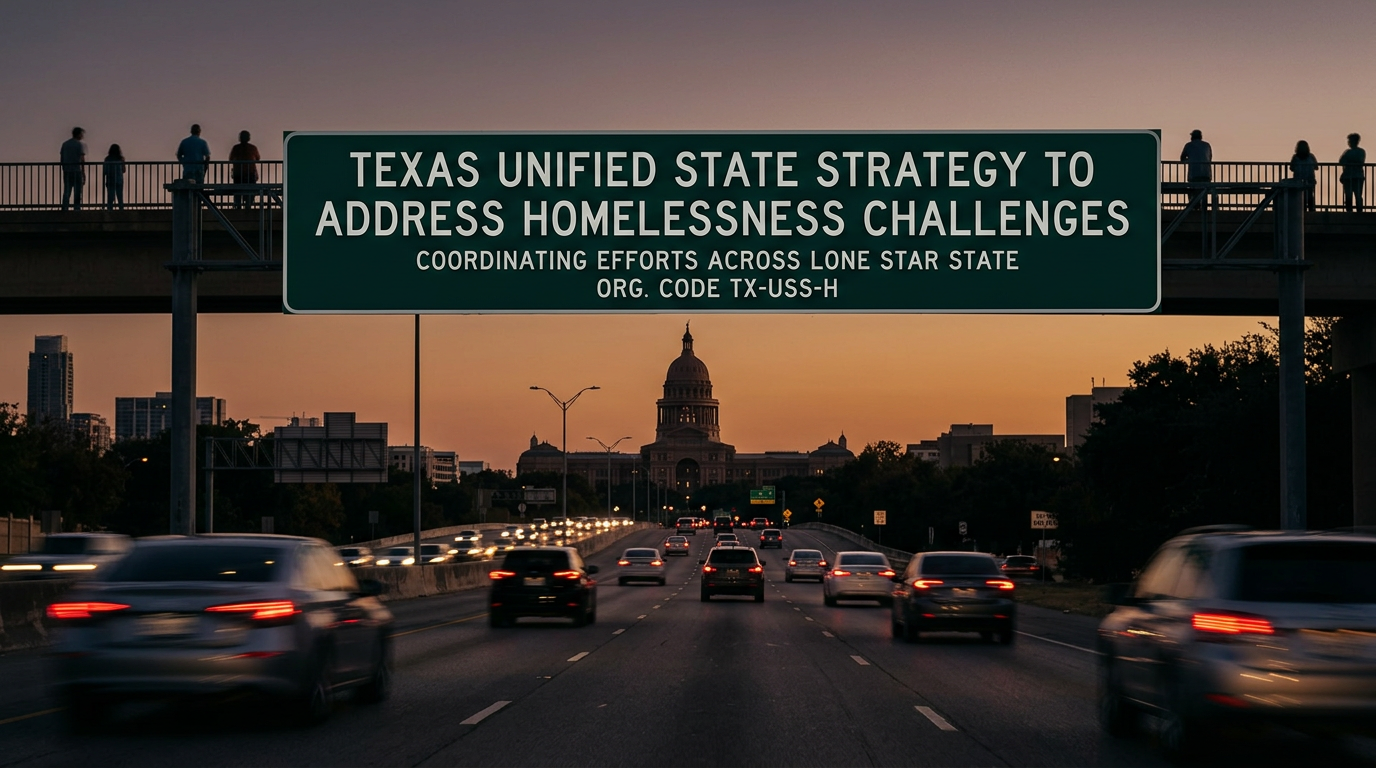
The traditional framework for managing homelessness in Texas, which has long relied on a patchwork of municipal ordinances and local non-profit initiatives, is undergoing a rigorous reassessment at the State Capitol. State lawmakers are currently investigating whether the decentralized nature of these efforts has contributed to inefficiencies and rising costs across major urban centers. Historically, the state's involvement has been minimal, limited primarily to grant funding and specific law enforcement mandates, such as the 2021 statewide ban on public camping. However, recent legislative committee hearings suggest a growing appetite for a more cohesive, top-down strategy that could standardize how cities across the Lone Star State handle encampments, mental health services, and temporary housing initiatives. This shift represents a potential departure from the 'local control' model that has defined Texas social policy for generations. Context for this legislative pivot can be found in the escalating tensions between state officials and city leaders in metropolitan hubs like Austin, San Antonio, and Houston. For years, the state has intervened periodically, most notably when the Texas Department of Transportation cleared encampments under highway overpasses or when the Governor’s office established state-sanctioned camping areas. This historical context illustrates a slow build-up toward the current debate: whether the state should continue to act as an occasional enforcer or transition into a primary coordinator for homeless services. The move toward a more centralized authority mirrors other recent Texas legislative trends, where lawmakers have sought to standardize regulations on everything from building codes to municipal budgets to ensure consistency across the state's diverse geography.
Texas relevance
This policy discussion is directly relevant to residents in every major Texas metropolitan area including Dallas, Houston, Austin, and San Antonio, as it may dictate where and how public funds are allocated for social services. If the legislature moves toward a unified state response, Texas cities could see a significant shift in their budgetary autonomy. Furthermore, the outcome of these hearings will influence public safety standards and the visibility of homelessness in Texas neighborhoods, impacting small business owners and residential property values alike. Local governments are watching closely to see if the state will provide more funding or simply impose more stringent requirements on how they manage their unsheltered populations.
The Challenge of Local Fragmentation
In recent months, testimony delivered to legislative committees has highlighted the difficulties inherent in the current fragmented system. Currently, a person experiencing homelessness in Fort Worth may encounter a completely different set of rules and available resources than they would just thirty miles away in Dallas. This 'zip code' approach to social services often leads to what critics call 'patient shuffling,' where individuals are moved across city lines rather than being integrated into long-term stability programs.
Lawmakers have expressed concern that this lack of coordination wastes taxpayer dollars. Millions are funneled through various state agencies—including the Texas Department of Housing and Community Affairs and the Texas Health and Human Services Commission—but without a single 'point of contact' or a unified data-sharing system, it is nearly impossible to track the effectiveness of these expenditures. This lack of transparency is a primary driver behind the call for a centralized state authority.
Housing First vs. Treatment First Models
A central point of contention in the Texas Capitol is the philosophical approach to recovery. Many Texas cities have adopted 'Housing First' policies, which prioritize getting individuals into permanent housing before addressing underlying issues like unemployment or substance abuse. Some state leaders, however, are pushing for a 'Treatment First' or 'Earned Housing' model, which requires participation in rehabilitation programs as a prerequisite for long-term state-funded housing.
The debate over these models is not just academic; it dictates the design of multi-million dollar facilities across the state. Should Texas invest in apartment-style complexes with minimal oversight, or should it prioritize secure, service-rich environments that focus on sobriety and mental health stabilization? The ongoing legislative inquiry is seeking to determine which model offers the best return on investment for Texas taxpayers while ensuring public spaces remain safe and accessible for all citizens.
The Role of Mental Health Infrastructure
Texas lawmakers are increasingly recognizing that homelessness is often a symptom of the state's overburdened mental health infrastructure. With many state psychiatric hospitals operating at or near capacity, the 'local response' often falls to county jails, which have effectively become the largest mental health providers in the state. This cycle of incarceration and release does little to solve the root causes of homelessness and places an immense strain on local law enforcement resources.
Proposed state-level reforms include the expansion of 'diversion centers'—facilities where police can take individuals in crisis instead of booking them into jail. By scaling these programs at the state level, Texas could potentially reduce the revolving door of the criminal justice system. Legislators are evaluating whether state-run diversion centers could provide a more efficient alternative to the current system, where each county is left to build its own clinical infrastructure from scratch.
Public Safety and Encampment Management
Public safety remains a top priority for Texas voters, and the visibility of large-scale encampments has become a flashpoint in state politics. While the statewide camping ban provided a legal tool for clearing sidewalks and parks, it did not provide a destination for the displaced. Lawmakers are now discussing the creation of sanctioned state-run camping areas that provide basic hygiene, security, and access to social workers in a controlled environment.
These 'safe zones' would be managed under a uniform set of state regulations, theoretically preventing the sanitation and crime issues that plague unauthorized urban camps. Critics of the plan argue that these zones could become 'out of sight, out of mind' warehouses for the poor, while proponents argue they are a necessary intermediate step to restore order to Texas cities while providing a safer environment than the streets.
Economic Impacts on Texas Businesses
The economic toll of the homelessness crisis is another factor driving state intervention. Small business owners in downtown corridors across Texas have testified about the costs associated with property damage, private security, and lost foot traffic. When local governments fail to maintain clean and safe commercial districts, the state’s overall economic climate can suffer, potentially deterring out-of-state investment and tourism.
By taking a more active role, the Texas Legislature aims to protect the commercial viability of urban centers. A state-led approach could include tax incentives for businesses that hire individuals transitioning out of homelessness or grants for business improvement districts to enhance security. The goal is to create a synergy between social recovery and economic revitalization, ensuring that Texas remains a premier destination for business.
Inter-Agency Coordination and Data Sharing
One of the most practical solutions being discussed is the implementation of a statewide data system. Currently, a veteran seeking help in El Paso might have their records siloed in a local database that is inaccessible to providers in San Antonio. A unified state system would allow for better tracking of individual progress, ensuring that services are not duplicated and that vulnerable individuals do not fall through the cracks when they move between jurisdictions.
This push for data integration aligns with broader efforts to modernize Texas state government. By leveraging technology to create a comprehensive 'homeless management information system' (HMIS) at the state level, lawmakers believe they can identify which programs are delivering results and which should be defunded. This data-driven approach is designed to replace the anecdotal evidence that often dominates local government decision-making.
The Future of Texas Homelessness Policy
As the legislative session approaches, the groundwork is being laid for significant omnibus legislation that could redefine the relationship between the state and its cities. Whether through the creation of a new state agency or the expansion of existing ones, the trend is clearly toward centralization. This movement will likely face pushback from advocates of municipal autonomy, but the current momentum suggests that the status quo is no longer considered acceptable by those in power in Austin.
Ultimately, the success of a state-led response will be measured by the reduction of individuals living on the streets and the improvement of public order. Residents can expect to see more vigorous debates over funding priorities, with a heavy emphasis on accountability and measurable outcomes. The transformation of Texas homelessness policy is not just a social endeavor; it is a fundamental test of the state's ability to manage complex urban challenges in a rapidly growing and changing society.
Analysis
The movement toward a state-led response to homelessness marks a significant ideological shift within the Texas GOP. While the party typically champions limited government, the perceived failure of local Democratic-led cities to manage urban homelessness has created an opening for state-level intervention. By framing homelessness as a statewide crisis rather than a local nuisance, conservative lawmakers can justify using the state's emergency powers and budgetary muscles to impose stricter discipline on city managers. However, the success of this strategy hinges on the state's willingness to fund the very services—such as mental healthcare and addiction treatment—that it has historically left to the private sector and local charities. If the state takes over the 'response' without providing the 'resources,' it risks merely shifting the optics of the problem without solving the underlying causes.
Source attribution
This story was reported using a public release from the Texas Standard. Keep TX Red rewrote the coverage independently and links to the official statement for verification.
Frequently Asked Questions
- Why is the Texas Legislature getting involved in local homelessness issues now?
- Lawmakers believe that local cities have failed to manage the problem effectively, leading to public safety concerns and economic damage to downtown areas. They argue that a fragmented system across different cities creates inefficiencies that only state-level oversight can fix.
- How would a state-led response change things for local residents?
- Residents might see more uniform enforcement of camping bans and the creation of state-regulated service zones. It could also mean that local tax dollars are redirected into state-managed programs rather than city-specific initiatives.
- What is the difference between 'Housing First' and 'Treatment First'?
- Housing First provides permanent shelter immediately without prerequisites. Treatment First requires individuals to participate in mental health or substance abuse programs as a condition for receiving long-term housing assistance funded by the state.
Official Sources
Take the next step
Browse the Newsroom →Read more about Keep Texas Red → Our full guide to what Keep Texas Red means and why Texans support it.
Get Texas updates delivered weekly.
Independent Texas reporting on politics, policy, and daily life. One email a week. Unsubscribe anytime.
Keep TX Red Newsroom
The Keep Texas Red Editorial Staff produces nonpartisan explainers, policy breakdowns, and educational resources to help Texans understand how their government works. All content is reviewed for accuracy and updated regularly.
About Keep TX Red →