Governor Greg Abbott Appoints New Leadership to Texas Infectious Disease Task Force
Imelda Garcia takes the helm of the Texas Task Force on Infectious Disease Preparedness and Response, ensuring state readiness for future health threats.
Editorial disclaimer: Opinions and analysis on Keep TX Red are editorial content — not statements of fact. See our editorial standards.
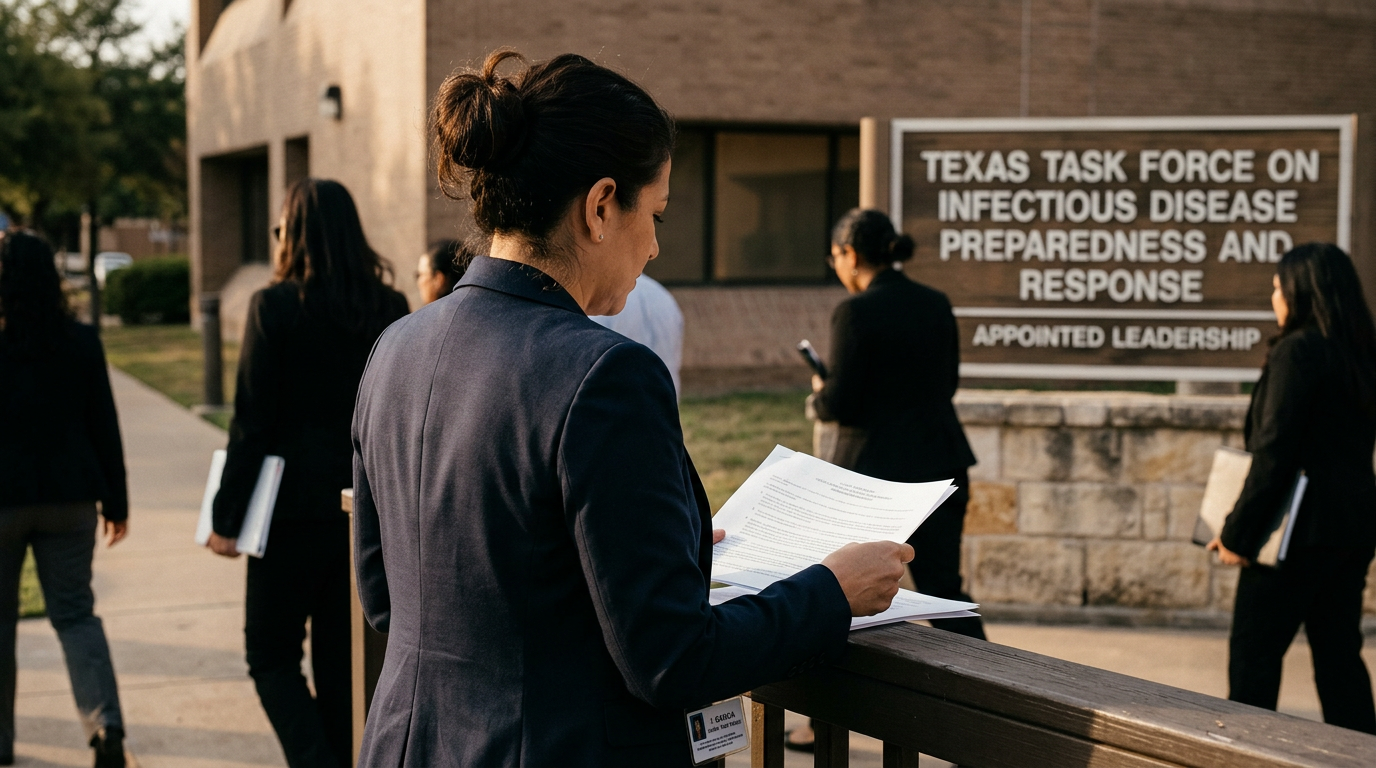
Governor Greg Abbott officially designated Imelda Garcia as the Chair of the Task Force on Infectious Disease Preparedness and Response. This strategic move places an experienced public health veteran at the center of the state's planning for biological and epidemiological emergencies. Garcia, who currently serves as the Interim Commissioner of the Texas Department of State Health Services (DSHS), will lead the group in refining the state's defensive strategies against a wide range of transmissible illnesses. Historically, this task force has been instrumental in coordinating multi-agency reactions to health crises, dating back to significant outbreaks that necessitated a unified Texas response. The appointment comes at a time when Texas is emphasizing long-term stability and expert-led governance within its health infrastructure. Garcia's role is not limited to mere oversight; she is tasked with ensuring that Texas leaders and the general public have access to transparent, evidence-based data regarding health risks. This leadership transition underscores the Governor's commitment to maintaining a robust biological defense system that can scale rapidly during a localized or statewide health event. By leveraging nearly two decades of experience within the state health system, the Chair is expected to bridge the gap between scientific research and actionable emergency protocols.
Texas relevance
Texas serves as a global hub for international travel, trade, and migration, making its public health infrastructure a matter of national security and economic stability. With major ports of entry and some of the busiest international airports in the world, the state is uniquely vulnerable to the importation of rare or highly infectious diseases. The Task Force on Infectious Disease Preparedness and Response is the specific mechanism designed to protect Texans from these external and internal biological threats. Imelda Garcia’s tenure in the Austin-based headquarters of the Department of State Health Services provides her with a deep understanding of the unique geographic and demographic challenges facing the Lone Star State.
The Professional Pedigree of Imelda Garcia
Imelda Garcia has spent more than 15 years within the ranks of the Texas public health system, building a resume that spans multiple levels of administration. Starting her journey with the Department of State Health Services in 2007, she has consistently ascended through the agency's leadership structure. Her previous tenure as the associate commissioner of the Laboratory and Infectious Disease Services Division provided her with hands-on experience in the technical aspects of pathogen identification and containment.
Before ascending to her current role as Interim Commissioner, Garcia was appointed as the chief deputy commissioner in early 2025. Her academic background, including a Bachelor of Arts from the University of Texas at Austin and a Master of Public Health from the University of North Texas Health Science Center at Fort Worth, provides the theoretical foundation for her practical state service. This combination of Texas-based education and long-term state employment makes her uniquely prepared for the nuances of the Lone Star State's health policy environment.
Operational Goals of the Infectious Disease Task Force
The primary mission of the task force is to create a seamless flow of information between medical researchers, emergency responders, and elected officials. By developing standardized protocols, the group ensures that whether a crisis originates in an urban center like Houston or a rural community in West Texas, the response reflects the best available data. The task force is not merely a reactive body; it is charged with looking ahead to identify emerging global health trends that could eventually reach the state.
Furthermore, the task force acts as a filter for public information. In an era where health data can often be politicized or misrepresented, this body is designed to be a reliable source of truth. Under Garcia's leadership, the task force will likely double down on its commitment to transparency. This includes providing regular updates to the Governor's office and ensuring that local health departments are equipped with the resources they need to execute state-level directives efficiently.
Historical Context and Precedent for the Task Force
The Task Force on Infectious Disease Preparedness and Response carries a legacy of tackling complex health challenges. Originally formed to address specific high-consequence diseases, its scope has expanded to cover a broad spectrum of epidemiological threats. Previous iterations of the task force were critical during the Ebola scare and the subsequent global disruptions of recent years. The body’s ability to convene experts from various fields—ranging from immunology to logistics—has been its defining strength.
Governor Abbott’s reliance on this specific task force highlights a preference for specialized advisory boards over generalized executive orders. By empowering a focused group of experts, the administration can tailor its policies to the specific science of infectious diseases. The move to bring Garcia to the chair position continues this trend of relying on internal subject matter experts to guide high-stakes decision-making processes that affect millions of residents across the state.
Strategic Importance of DSHS Leadership
The Texas Department of State Health Services (DSHS) is one of the largest and most complex state agencies. It manages everything from vital statistics to food safety, but its infectious disease division remains its most critical arm in terms of public safety. Garcia’s dual role as Interim Commissioner and Task Force Chair creates a direct line of communication between the agency's operational staff and the task force’s advisory functions.
This dual-hatting of leadership roles is a common strategy in Texas government designed to reduce bureaucracy. When the person leading the task force is the same individual overseeing the state’s medical laboratories and health data collection, the speed of response increases. For Texans, this means that the transition from identifying a potential viral threat to implementing a public safety protocol can happen in hours rather than days, which is a key factor in successful containment.
Future Outlook for Health Preparedness in Texas
Looking forward, the task force will focus on modernizing the state's disease monitoring software and enhancing the cooperation between public and private healthcare providers. Garcia is expected to advocate for continued investment in diagnostic capabilities within Texas-based labs. This would decrease the state's reliance on national facilities, allowing for faster turnaround times for critical test results during an outbreak.
Education also remains a top priority. The task force is expected to roll out new initiatives aimed at informing the public about basic preventative measures and the state's specific readiness plans. By fostering a culture of preparedness, the task force aims to minimize panic and maximize cooperation during future health events. Garcia’s appointment reflects a forward-looking approach that anticipates the next decade of public health challenges in a rapidly growing state.
Analysis
The selection of an internal veteran like Imelda Garcia suggests that the Abbott administration is prioritizing institutional knowledge over outside political appointments. This move likely aims to ensure continuity in Texas's pandemic preparedness frameworks. By keeping the leadership within the existing DSHS hierarchy, the Governor ensures that there is no 'learning curve' when it comes to legislative compliance and inter-agency cooperation. This strategy is essential for a state that often finds itself at odds with federal mandates, as it allows Texas to maintain a self-reliant posture in its health response strategies.
Source attribution
This story was reported using a public release from the Office of the Governor. Keep TX Red rewrote the coverage independently and links to the official statement for verification.
Frequently Asked Questions
- What is the primary purpose of the Texas Task Force on Infectious Disease Preparedness and Response?
- The task force is designed to provide expert assessments and state-level recommendations for managing infectious disease outbreaks. It serves as a central hub for medical expertise and advises Texas leaders on the best protocols to protect the state's population.
- Who is Imelda Garcia and why was she chosen for this role?
- Imelda Garcia is the Interim Commissioner of the Texas Department of State Health Services with nearly two decades of experience in the agency. She was chosen for her extensive background in laboratory services and infectious disease management, having served in various leadership roles within the department since 2007.
- Does this appointment change the state's current health protocols?
- While the appointment itself does not immediately change existing laws, it signals a continuation of expert-led preparedness efforts. As Chair, Garcia will oversee the creation of new protocols and recommendations that will guide the state's future response to health emergencies.
Official Sources
Take the next step
Browse the Newsroom →Read more about Keep Texas Red → Our full guide to what Keep Texas Red means and why Texans support it.
Get Texas updates delivered weekly.
Independent Texas reporting on politics, policy, and daily life. One email a week. Unsubscribe anytime.
Keep TX Red Newsroom
The Keep Texas Red Editorial Staff produces nonpartisan explainers, policy breakdowns, and educational resources to help Texans understand how their government works. All content is reviewed for accuracy and updated regularly.
About Keep TX Red →