Camp Mystic Legal Battle Shifts to Federal Court Amidst Bankruptcy Filing Claims
A major legal shift occurs in the Camp Mystic lawsuit as operators move to federal court following bankruptcy filing, impacting Texas families' claims.
Editorial disclaimer: Opinions and analysis on Keep TX Red are editorial content — not statements of fact. See our editorial standards.
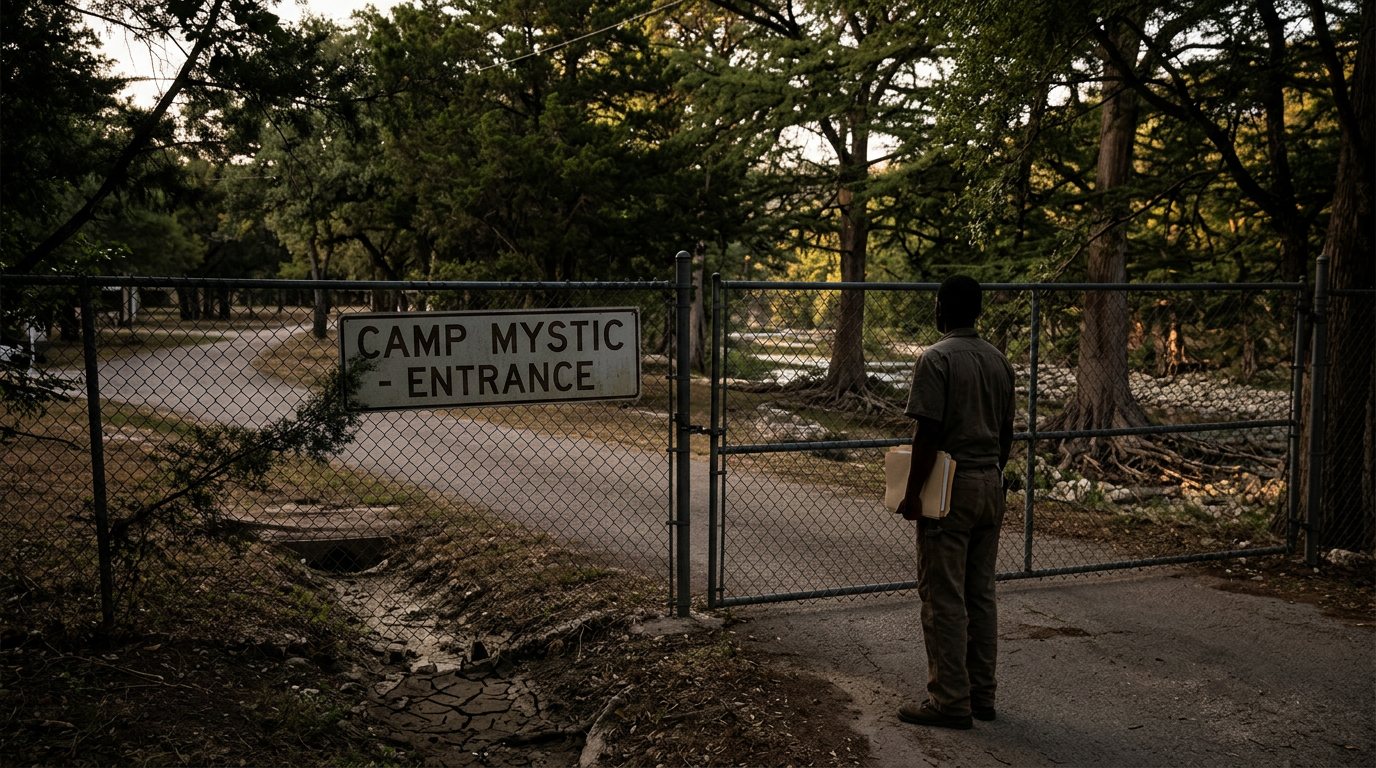
Recent developments in the legal proceedings involving the popular Hill Country summer retreat, Camp Mystic, have seen the case transferred from state to federal court jurisdiction. This transition follows a strategic filing for bankruptcy by the camp's operators, a move that effectively halts the processing of multiple lawsuits in local courts. For decades, the Texas Hill Country has been home to various youth camps that pride themselves on long-standing traditions and safety records. However, the catastrophic weather event that occurred last year near Hunt, Texas, placed these safety protocols under extreme scrutiny when sudden flooding along the Guadalupe River basin endangered hundreds of campers. The shift to federal litigation represents a significant procedural change, as federal judges operate under different evidentiary rules and bankruptcy protections than the Kerr County judges who were originally overseeing the matter. Historically, Texas has a complex relationship with riparian rights and flooding liability, frequently balancing the protection of recreational businesses against the safety expectations of the public. This specific case draws upon precedents regarding 'Acts of God' versus negligence in disaster preparedness. The current legal maneuver by the camp's leadership utilizes federal bankruptcy statutes to centralize disparate claims into a single venue, which often results in different settlement outcomes for plaintiffs. As the case moves forward, the primary focus remains on how a private entity manages extreme weather risks and whether current Texas statutes provide enough protection for families sending their children to remote rural environments where cellular service and physical egress may be limited during natural disasters.
Texas relevance
This legal battle is profoundly relevant to Texas because it centers on the Kerr County region, a hub for the state’s multi-million dollar summer camp industry. The outcome could set a new precedent for how liability is handled by recreational facilities across the Texas Hill Country, impacting thousands of families who travel from Houston, Dallas, and Austin every summer. Furthermore, the use of federal bankruptcy courts to address personal injury and negligence claims is a growing trend in Texas corporate law, influencing how residents can seek justice for local incidents through the national court system.
The Impact of Last Year's Flooding Events
The catastrophic weather event that triggered these lawsuits took place in the heart of the Texas Hill Country, a region known for its beauty but also for its susceptibility to flash flooding. When the heavy rains began, the Guadalupe River rose at an unprecedented rate, catching many in the Hunt area off guard. The lawsuits allege that the operators of Camp Mystic did not act with the necessary urgency to evacuate the premises or provide adequate sheltered high ground for the children under their care.
Eyewitness accounts from the time described a harrowing scene where water levels rose several feet in a matter of minutes, cutting off traditional exit routes. The legal challenge focuses on whether the camp had adequate weather monitoring systems and if their emergency response plan met the standard of care expected of a premier Texas institution. The defense argues that the volume of water was beyond what any reasonable party could have anticipated, classifying it as an extraordinary event of nature.
Strategic Shift to Federal Bankruptcy Court
By filing for bankruptcy, the camp's corporate entities have triggered an 'automatic stay' on existing state litigation. This is a common legal tactic in high-stakes civil litigation in Texas. It allows a debtor to pause all collection and litigation efforts against them while a federal judge reviews their financial health and total liabilities. This shift effectively takes the decision-making power out of the hands of Kerr County juries and places it before a federal bankruptcy judge, who will prioritize the equitable distribution of resources among all claimants.
Strategic bankruptcy filings often lead to a 'global settlement' rather than individual trials. For the families involved, this could mean a significantly longer wait for a resolution, but it also ensures that the camp’s remaining assets are not exhausted by the first plaintiff to reach a verdict. The move has been met with criticism from legal representatives of the families, who argue that the camp is using financial maneuvers to avoid a public trial regarding their safety protocols and internal communications during the flood.
Examining Hill Country Safety Standards
The Texas Hill Country is home to hundreds of camps, many of which have existed for over a century. This litigation has forced a industry-wide re-evaluation of how these facilities communicate with parents and local emergency services. In many parts of rural Kerr and Real counties, topography creates 'dead zones' for cellular signals, making real-time weather alerts difficult to receive. The lawsuits claim that Camp Mystic failed to utilize redundant communication channels to ensure they were aware of upstream river gauges.
Moreover, the construction of physical flood barriers and the design of bunkhouses are now under the microscope. Historically, many of these camps were built with an aesthetic that prioritizes closeness to nature, often placing structures in close proximity to riverbanks. As Texas continues to see more volatile weather patterns, the standard for 'safe construction' in these zones is shifting, and the federal court's findings could influence future building codes for seasonal youth facilities across the state.
The Plaintiffs' Claims and Allegations
The five families involved in the lawsuits represent a cross-section of Texas residents who say their trust was violated. Their primary allegation is one of negligence, arguing that there were clear warnings from the National Weather Service that went unheeded by camp directors. They seek damages for the emotional distress and physical danger their children faced, asserting that the trauma of the event has had lasting psychological impacts on the young campers.
Beyond negligence, some of the filings hint at a failure to maintain proper staff-to-camper ratios during the crisis. The plaintiffs argue that the teenage counselors were not properly trained to handle a high-stress water rescue scenario, and that the management failed to provide these young employees with the direction needed to secure the safety of the younger children. The camp, conversely, maintains that their staff acted heroically under impossible circumstances, saving lives despite the overwhelming force of the river.
Corporate Restructuring and Future Operations
The bankruptcy filing does not necessarily mean Camp Mystic will close its doors forever. In many Texas cases, this type of filing is meant to restructure debt and liability so the business can continue to operate under a new financial framework. The camp leadership has expressed a desire to continue their mission, suggesting that the bankruptcy process is the most responsible way to handle the overwhelming volume of litigation costs while maintaining their commitment to their employees and the local economy.
However, the reputational damage is a separate hurdle. For a business built on the trust of parents, a federal bankruptcy case involving allegations of safety failures is a difficult narrative to navigate. The outcome of the federal proceedings will likely include mandates for new safety investments and third-party oversight, which could serve as a model for other camps in the Guadalupe river basin seeking to avoid similar tragedy and legal exposure in the future.
Comparing Texas State vs. Federal Litigation
One of the major differences the parties will face in federal court is the application of the Federal Rules of Civil Procedure and Evidence. While Texas state courts are often seen as more friendly to plaintiffs in personal injury cases, federal courts can be more stringent regarding expert testimony and the discovery process. This change in venue might limit the types of evidence the families can present regarding the camp's past safety record or internal memos.
Furthermore, the judge in a federal bankruptcy court is tasked with balancing the camp’s survival as a going concern against the rightful claims of the creditors—in this case, the families. This utilitarian approach to justice differs from the punitive and compensatory focus of a state-level tort trial. As this case unfolds in the federal system, it will be a closely watched indicator of how Texas business entities can shield themselves from local accountability through the use of federal statutes.
Analysis
While the camp operators maintain that the flooding was an unpredictable natural disaster, the move to federal court through bankruptcy is a calculated legal strategy often deployed to limit total financial exposure. By consolidating the five separate lawsuits, the defense likely hopes to streamline the process and potentially reduce the individual payouts to the grieving and affected families. From a policy perspective, this case highlights a potential gap in Texas regulations regarding the mandatory emergency evacuation infrastructure for camps located in high-risk flood plains along the Guadalupe and Frio rivers. Advocacy for 'Camp Safety Reform' may arise from this if the federal courts prioritize the business's financial restructuring over the specific accountability sought by the plaintiffs in state court.
Source attribution
This story was reported using a public release from the Texas Standard. Keep TX Red rewrote the coverage independently and links to the official statement for verification.
Frequently Asked Questions
- Why was the case moved from a Texas state court to a federal court?
- The move occurred because the camp's operators filed for bankruptcy under federal law. When a business files for bankruptcy, it triggers an 'automatic stay,' which halts state proceedings and often allows the defendant to consolidate all legal claims against them into a single federal court case to manage their debts and liabilities.
- What are the families accusing Camp Mystic of doing wrong?
- The families have filed five separate lawsuits alleging that the camp failed to properly monitor weather conditions, failed to evacuate the premises in a timely manner, and lacked an adequate emergency response plan during a catastrophic flood event that occurred in the Texas Hill Country last year.
- Will Camp Mystic close because of the bankruptcy?
- Not necessarily. Bankruptcy filings, particularly Chapter 11, are often used by Texas businesses to restructure their finances and settle legal claims while remaining in operation. The goal is typically to create a payment plan for creditors and claimants rather than completely dissolving the company.
- How does this affect other summer camps in Texas?
- This case is being watched as a bellwether for the industry. A federal ruling could establish new legal expectations for flood safety, emergency communications, and liability insurance for all recreational facilities operating in Texas flood zones, potentially leading to stricter state regulations.
Official Sources
Take the next step
Browse the Newsroom →Read more about Keep Texas Red → Our full guide to what Keep Texas Red means and why Texans support it.
Get Texas updates delivered weekly.
Independent Texas reporting on politics, policy, and daily life. One email a week. Unsubscribe anytime.
Keep TX Red Newsroom
The Keep Texas Red Editorial Staff produces nonpartisan explainers, policy breakdowns, and educational resources to help Texans understand how their government works. All content is reviewed for accuracy and updated regularly.
About Keep TX Red →