Attorney General Ken Paxton Solidifies Border Security Platform with National Border Patrol Council Endorsement in McAllen
Texas AG Ken Paxton visits McAllen to accept the National Border Patrol Council endorsement, focusing on state-led border enforcement and security measures
Editorial disclaimer: Opinions and analysis on Keep TX Red are editorial content — not statements of fact. See our editorial standards.
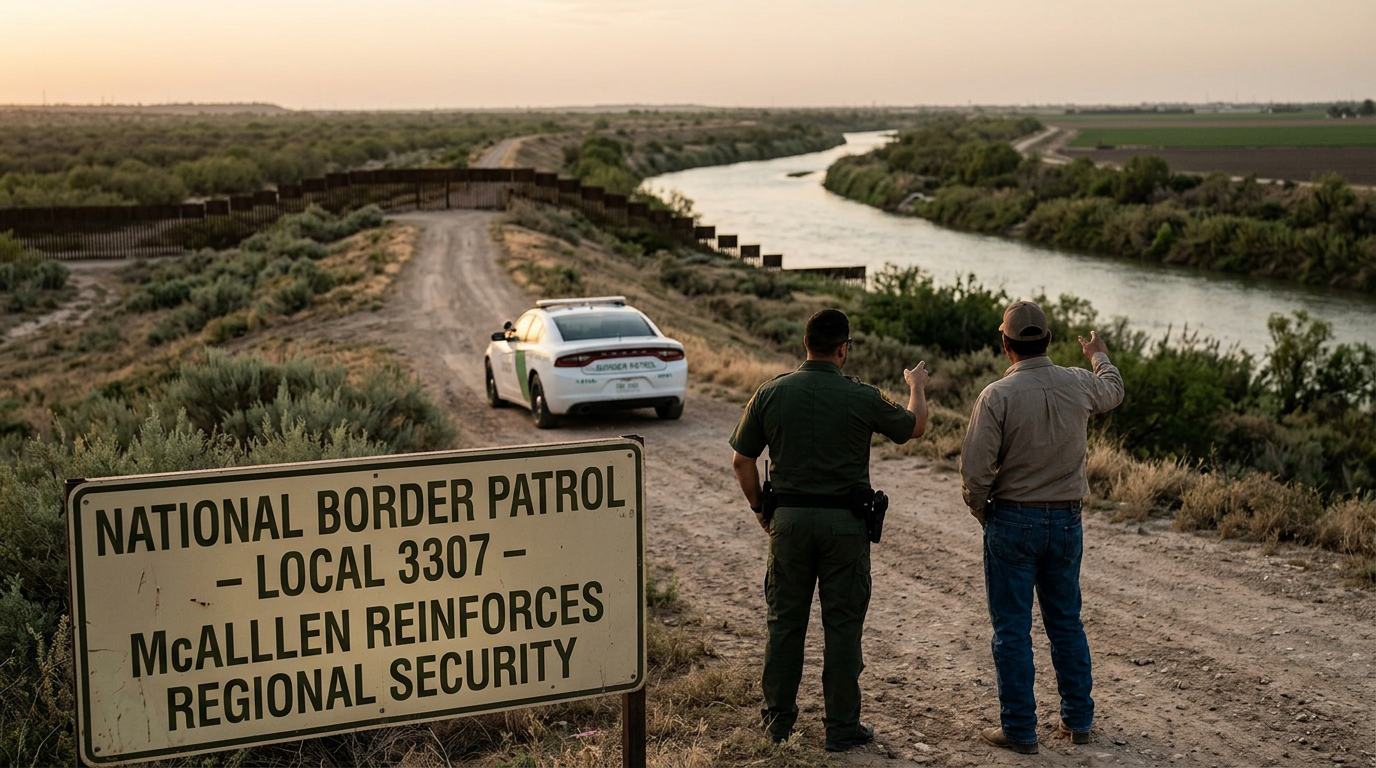
Texas Attorney General Ken Paxton traveled to the Rio Grande Valley this week to reinforce his commitment to regional security following a major endorsement from the National Border Patrol Council (NBPC). The visit to McAllen serves as a pivotal moment in the Attorney General’s ongoing efforts to align state legal strategies with the practical needs of federal agents working on the front lines. During his time in the border community, Paxton emphasized the necessity of robust enforcement and criticized current federal management of international boundaries. Historically, the relationship between Texas state officials and federal border entities has fluctuated, but the NBPC’s public support for Paxton signals a deep-seated alignment on policy priorities regarding illegal crossings and cartel activity. This campaign stop follows years of litigation led by the Attorney General's office against various federal policies that Paxton argues have incentivized mass migration. The setting of McAllen is particularly significant, as it has long been one of the most active sectors for both legal trade and unauthorized crossings. By standing alongside union representatives for Border Patrol agents, Paxton aimed to demonstrate that his legal maneuvers in Austin and Washington D.C. have tangible support from those tasked with physical security in the field. The visit also highlighted the growing political shift in South Texas, where border security concerns have become a top-tier issue for voters across the spectrum.
Texas relevance
The security of the Texas-Mexico border is not merely a national issue but a local reality for residents of McAllen and the broader Rio Grande Valley. For Texans, the Attorney General’s legal actions impact everything from municipal law enforcement budgets to the safety of private property owners along the river. This specific event in Hidalgo County underscores the state’s continued reliance on a 'Texas-first' security model, which seeks to fill gaps left by federal policy through state-funded initiatives like Operation Lone Star. Given that Texas shares over 1,200 miles of border with Mexico, the coordination between the state’s top lawyer and the rank-and-file agents of the Border Patrol Council is a critical component of the state’s long-term infrastructure and public safety planning.
Strengthening Ties with Frontline Agents
The endorsement by the National Border Patrol Council represents a significant bridge between the state’s legal apparatus and the operational reality of federal agents. The NBPC represents thousands of agents who have expressed growing frustration with the administrative roadblocks preventing them from fully enforcing existing immigration laws. By appearing in McAllen, Paxton is positioning himself as the primary advocate for these agents within the American judicial system.
During the event, discussions focused on the morale of agents and the tools required to deter illegal entries effectively. The Council’s leadership noted that the legal challenges mounted by the Texas Attorney General have often provided the only meaningful pushback against policies they believe endanger both agents and the public. This partnership suggests a future where Texas continues to play a primary role in border litigation, regardless of the stance taken by the executive branch in Washington.
Legal Strategies and Boundary Disputes
A central theme of Paxton’s McAllen visit was the ongoing dispute over state versus federal jurisdiction at the border. The Attorney General has consistently argued that when the federal government fails to protect the state from what he terms an 'invasion,' the state holds a constitutional right to defend its own borders. This legal theory has been the foundation for the deployment of the Texas National Guard and the installation of physical barriers like concertina wire and river buoys.
Residents of the Rio Grande Valley have seen these legal battles play out in real-time on their own doorsteps. From the placement of shipping containers to the litigation over the destruction of state property by federal agents, the courtroom wins and losses directly affect the landscape of South Texas. Paxton’s visit served to reassure his constituents that he intends to pursue these cases to the highest courts to establish a permanent precedent for state-led border defense.
Public Safety and Cartel Influence
Beyond the logistics of immigration, Paxton’s stop in McAllen addressed the pervasive threat of transnational criminal organizations. The Attorney General highlighted how unsecured sections of the border facilitate the flow of fentanyl and other illicit substances into Texas communities. He argued that the lack of a standardized, aggressive enforcement policy has allowed cartels to exploit gaps in the system, leading to an increase in human trafficking and violent crime.
By aligning with the Border Patrol Council, Paxton is highlighting the intelligence-sharing and cooperation necessary to disrupt these criminal networks. He noted that without the support of the legal system, agents are often forced into a 'catch and release' cycle that does little to deter the high-level operators of the smuggling rings. The visit emphasized a holistic approach to security that combines physical barriers with aggressive prosecution of traffickers.
Economic Impact on Border Communities
The economic health of McAllen and similar border cities is intrinsically tied to the stability of the international boundary. During his visit, Paxton touched upon the strain that mass migration puts on local resources, including hospitals, emergency services, and schools. He pointed out that while legal trade is the lifeblood of the region, the chaos associated with unauthorized crossings can disrupt the very supply chains that Texas business owners rely on.
Local leaders have often expressed a dual need: the maintenance of a vibrant cross-border economy and the assurance of public safety. Paxton’s platform suggests that by hardening the border against illegal activity, the state can better facilitate the legal commerce that passes through the McAllen-Hidalgo International Bridge. This economic perspective is a key part of his appeal to the business community in the Rio Grande Valley.
Political Shifts in the Rio Grande Valley
The Attorney General’s presence in McAllen is indicative of a broader political realignment occurring across South Texas. Areas that were once considered safe havens for more liberal immigration policies are seeing a surge in support for conservative security measures. This shift is driven largely by the firsthand experiences of residents who deal with the consequences of federal policy failures every day.
Paxton’s ability to secure the NBPC endorsement and draw significant crowds in McAllen suggests that his message is resonating beyond the traditional conservative base. As the 2026 election cycle approaches, the Rio Grande Valley is likely to remain a central battleground for these clashing visions of border management, with Paxton positioning himself as the stalwart defender of the state's sovereign interests.
Future of State-Led Enforcement
Looking ahead, the collaboration between the Texas Attorney General’s office and border enforcement unions is expected to result in more coordinated policy recommendations. Paxton has hinted at new legislative initiatives that would further empower state law enforcement to assist federal agents in high-traffic areas. These proposals would likely include increased funding for surveillance technology and the expansion of the state’s judicial capacity to handle border-related offenses.
The end goal, as stated by Paxton during his McAllen stop, is to create a 'seamless' wall of defense that incorporates both physical and legal infrastructure. As long as the federal government maintains its current course, Texas appears ready to expand its footprint in the border security space, using every tool at the disposal of the Attorney General to ensure the safety of the Lone Star State.
Analysis
OPINION: The endorsement from the National Border Patrol Council is more than just a campaign trophy for Ken Paxton; it is a strategic validation of his aggressive litigation strategy. For years, critics have argued that the Attorney General’s office was overstepping by involving the state in federal immigration matters. However, by securing the trust of the very men and women patrolling the brush, Paxton can now frame his legal battles as necessary protections for overwhelmed agents. This move likely deepens his support in South Texas, a region that is increasingly receptive to hardline security stances as the administrative costs of the border crisis continue to mount at the local county level.
Source attribution
This story was reported using a public release from the AG Ken Paxton — Video Moments (Google News). Keep TX Red rewrote the coverage independently and links to the official statement for verification.
Frequently Asked Questions
- Why is the National Border Patrol Council endorsement significant for Ken Paxton?
- The NBPC represents the rank-and-file agents who perform the daily work of border security. Their endorsement provides Paxton with expert validation for his security policies and legal actions, suggesting that his strategies are viewed as effective by those directly involved in enforcement.
- What specific actions has Ken Paxton taken regarding the border?
- Paxton has filed dozens of lawsuits against the federal government to block policies like 'catch and release,' stop the removal of border fencing, and defend the state's right to install floating barriers in the Rio Grande. He also supports the deployment of the Texas National Guard under Operation Lone Star.
- How does border security affect the city of McAllen?
- McAllen is a major hub for international trade and travel. Ineffective border security can lead to increased strain on local municipal services, public safety concerns regarding cartel activity, and disruptions to the legal flow of goods and services across the border.
Official Sources
Take the next step
Browse the Newsroom →Read more about Keep Texas Red → Our full guide to what Keep Texas Red means and why Texans support it.
Get Texas updates delivered weekly.
Independent Texas reporting on politics, policy, and daily life. One email a week. Unsubscribe anytime.
Keep TX Red Newsroom
The Keep Texas Red Editorial Staff produces nonpartisan explainers, policy breakdowns, and educational resources to help Texans understand how their government works. All content is reviewed for accuracy and updated regularly.
About Keep TX Red →