Texas Targets Mission Regional Medical Center in Birth Tourism Investigation
Governor Abbott directs the HHSC to investigate and refer potential legal violations involving maternity tourism packages in the Rio Grande Valley.
Editorial disclaimer: Opinions and analysis on Keep TX Red are editorial content — not statements of fact. See our editorial standards.
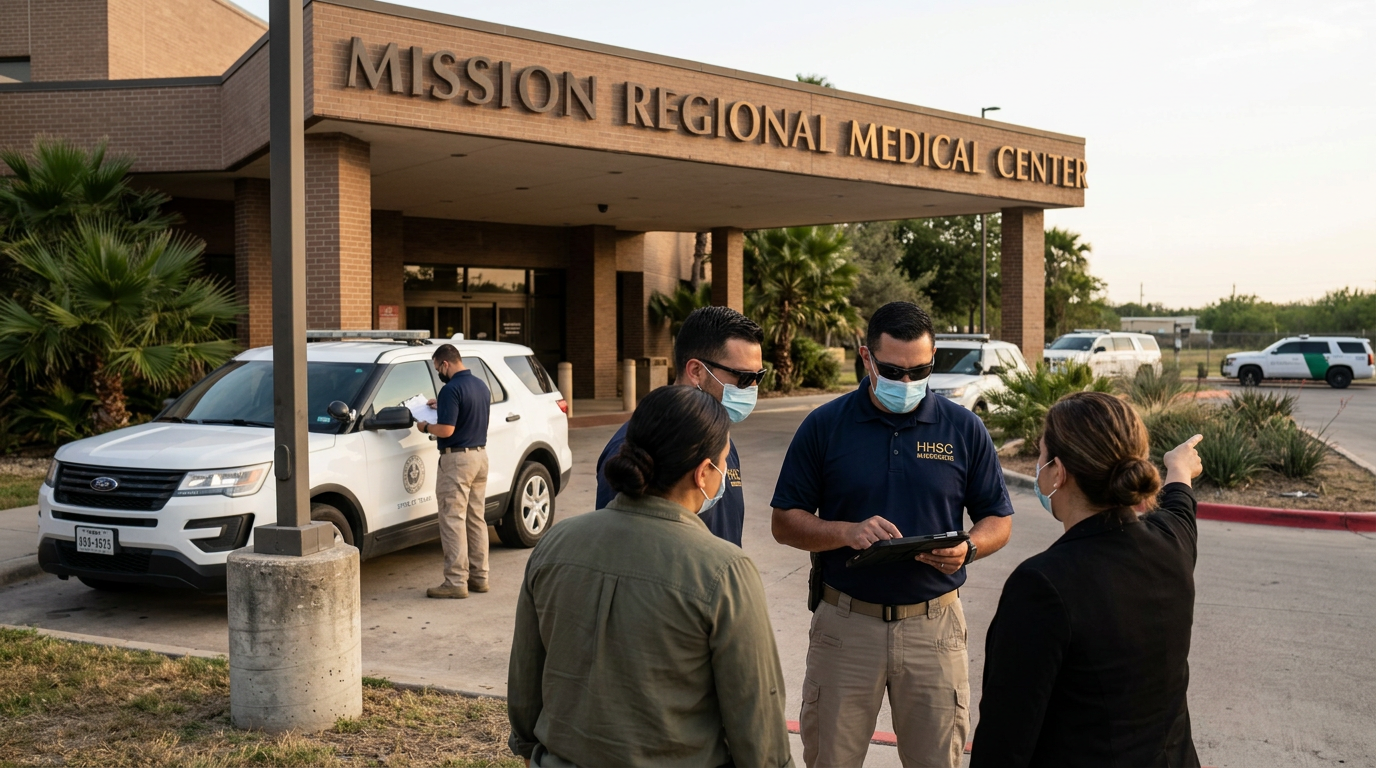
The Texas Health and Human Services Commission (HHSC) has officially moved forward with a full investigation into allegations of 'birth tourism' activities at a South Texas medical facility. This development follows a direct mandate from Governor Greg Abbott, who voiced concerns that foreign nationals were being recruited to give birth on Texas soil to secure legal citizenship for their children. Historically, Texas has seen various efforts to tighten border security and oversight of state-funded or state-licensed facilities regarding non-resident usage. Historically, this move aligns with the state's long-standing trend of challenging federal immigration norms by asserting state-level regulatory authority over healthcare providers that facilitate entry-related benefits for non-citizens. The state's executive branch is now actively monitoring how private and regional healthcare entities market their services to international clients, specifically those who reside outside the United States.
Texas relevance
The investigation centers on Mission Regional Medical Center, a facility located in the Rio Grande Valley, a critical region for Texas healthcare and border policy. The outcome of this investigation could fundamentally change how hospitals along the Texas-Mexico border operate and market their maternity services. For Texans, this is a matter of administrative oversight and the use of state-regulated resources. The Governor's directive treats these medical packages as a bypass of the standard federal immigration process, suggesting that Texas will use its own health commission to enforce standards that prevent what he characterizes as the exploitation of the state's medical infrastructure. If legal violations are found, it could lead to significant litigation involving the Texas Attorney General and local district attorneys in South Texas.
The Directive to Health and Human Services
The investigation was triggered when Governor Greg Abbott issued a formal directive to the Texas Health and Human Services Commission. This agency is responsible for the oversight of hospital licensing and the administration of various health programs across the state. The Governor’s office identified specific promotional packages at Mission Regional Medical Center that allegedly targeted foreign nationals, offering them streamlined access to delivery services.
According to the state, these packages were not merely medical services but were marketed as a method for international residents to secure U.S. citizenship for their offspring. The Governor’s directive was clear: any evidence of state law violations discovered during the HHSC inspection must be forwarded immediately to the Texas Attorney General’s office for civil action and to local prosecutors for potential criminal charges.
This move by the HHSC is a swift response, occurring within a week of the Governor’s initial order. It marks a significant escalation in how the state monitors the business practices of hospitals. Facilities that participate in these programs could face a range of penalties, from heavy fines to the potential revocation of state licenses if they are found to be in violation of Texas regulatory codes.
Mission Regional Medical Center Under Scrutiny
Mission Regional Medical Center, located in the heart of Mission, Texas, is the primary focus of this state-led inquiry. The hospital has been a fixture of the Rio Grande Valley for decades, providing essential care to both local residents and visitors. However, the state’s current interest lies in the specific 'maternity packages' that the facility has allegedly been offering to individuals from outside the United States.
The state argues that these packages facilitate a practice known as birth tourism, where expectant mothers travel to the U.S. specifically to give birth so their children automatically receive American citizenship. While the medical procedures themselves may be standard, the state is investigating whether the solicitation and administrative handling of these patients violate any state commerce or health regulations.
Local leaders in the Valley have historically emphasized the importance of medical centers in boosting the regional economy and providing high-quality care. This investigation introduces a new layer of complexity, as the facility must now defend its marketing practices and international outreach programs against the weight of the Governor's executive authority and the HHSC’s auditing powers.
Legal and Civil Enforcement Mechanisms
The referral to the Texas Attorney General’s office is a critical step in the enforcement process. Under the leadership of Attorney General Ken Paxton, the state has frequently utilized civil litigation to address policy disagreements with the federal government and to enforce state priorities. If the HHSC finds that Mission Regional Medical Center misrepresented its services or violated state healthcare statutes, a lawsuit could be filed shortly.
In addition to civil penalties, the Governor has opened the door for criminal prosecution. By involving District and County Attorneys, the state is signaling that birth tourism operations could be treated as more than just a regulatory oversight. Potential charges could range from fraud to other state-specific violations related to the operation of a medical facility.
The legal outcome of this case will likely set a major precedent for other hospitals in El Paso, Laredo, and Brownsville. If the state successfully shuts down these packages at Mission Regional, it will almost certainly expand its investigation to other border-adjacent medical providers. This reflects a broader Texas strategy of using all available state levers to influence issues that overlap with border integrity and immigration law.
The Debate Over Birthright Citizenship
At the core of this controversy is the 14th Amendment of the U.S. Constitution, which grants citizenship to all persons born or naturalized in the United States. While the Supreme Court has historically upheld this principle, Governor Abbott’s recent statements suggest a growing frustration with how this legal standard is being utilized by foreign nationals. His assertion that 'U.S. citizenship is not for sale in Texas' highlights the ideological divide between state and federal perspectives on the issue.
The Texas government appears to be focusing on the 'sale' aspect—not the citizenship itself. By targeting the financial transactions and the marketing of hospitality-medical hybrids, the state avoids a direct challenge to the 14th Amendment while still making it functionally more difficult for birth tourism to occur. This nuanced legal approach allows the state to regulate the business of medicine without necessarily redefining citizenship laws.
However, the constitutional implications remain a background factor. Any significant legal action against these hospitals will likely be met with challenges from civil rights organizations and federal advocates. They may argue that Texas is overstepping its bounds by interfering with the rights of individuals to seek medical care and the rights of their children to be recognized as citizens, regardless of their parents' residency status.
Timeline of State Actions
The timeline for this investigation has moved with unusual speed. Within one day of the Governor's official directive, the HHSC had already completed its initial review and submitted its referral to the Attorney General. This rapid response underscores the priority the executive branch is placing on this issue as a part of the broader 'Operation Lone Star' era of state policy.
Expected next steps include a detailed audit of the medical center’s financial records, marketing materials, and internal communication regarding foreign national programs. The HHSC will likely deploy inspectors to the site to ensure that all state standards for patient care and administrative transparency are being met. This proactive stance is designed to send an immediate message to other institutions.
As the investigation proceeds, the public can expect regular updates from the Governor's office and the Attorney General. The state is clearly looking to make an example of any facility that it deems to be circumventing the spirit of federal immigration law through the exploitation of the Texas healthcare system. The speed of the HHSC’s referral suggests that the state believes it already possesses substantial evidence of wrongdoing.
Impact on Border Healthcare Systems
The ripple effects of this investigation will be felt across the entire Texas border healthcare system. Many hospitals in the Rio Grande Valley and other border regions have developed robust systems for treating international patients, which often provides a significant source of revenue. If the state imposes new restrictions on how these patients are recruited or handled, it could impact the financial stability of regional healthcare providers.
Furthermore, there is the question of how this will affect medical practitioners who may feel caught between state mandates and their professional duty to provide care to anyone who walks through their doors. The atmosphere of heightened scrutiny might lead to a more cautious approach in treating non-resident patients, potentially affecting even those who are not participating in the specific 'packages' being investigated.
Ultimately, this situation highlights the ongoing tension between Texas's regulatory power over its institutions and the federal government's jurisdiction over immigration. By forcing this issue into the realm of health and human services, Texas is creating a new battlefield in its ongoing quest local control and border enforcement, with medical centers now standing on the front lines of the debate.
Analysis
This directive by Governor Abbott represents a strategic shift toward using state regulatory agencies to address perceived gaps in federal immigration enforcement. By framing 'birth tourism' as a health commission violation rather than purely a federal border issue, the state creates a pathway for Ken Paxton's office to initiate civil litigation against private corporations. Critics may argue that birthright citizenship is a federally protected constitutional right under the 14th Amendment, but the Governor's focus is on the 'marketing' and 'exploitation' of the system. This suggests the legal strategy will likely target the commercialization and packaging of birth services rather than the status of the individuals themselves. This maneuver also signals a toughening stance toward healthcare facilities that the state perceives as undermining broader border security goals.
Source attribution
This story was reported using a public release from the Office of the Governor. Keep TX Red rewrote the coverage independently and links to the official statement for verification.
Frequently Asked Questions
- What is birth tourism?
- Birth tourism refers to the practice of traveling to a country for the purpose of giving birth there so that the child will be granted citizenship in that nation. In the United States, this is linked to the 14th Amendment's birthright citizenship clause.
- Why is the HHSC involved in an immigration-related matter?
- The Texas Health and Human Services Commission (HHSC) regulates and licenses hospitals in the state. Governor Abbott is using their regulatory authority to investigate whether the business and marketing practices of the hospital violate state health and safety or business codes.
- What could happen to Mission Regional Medical Center?
- If the investigation finds violations of state law, the hospital could face civil lawsuits from the Attorney General, criminal prosecution from local attorneys, heavy fines, or even the suspension or loss of its facility license.
- Is birth tourism illegal under federal law?
- While the act of giving birth in the U.S. results in citizenship for the child, the government has used visa regulations to discourage 'birth tourism' by denying entry to individuals whose primary purpose of travel is deemed to be giving birth for citizenship benefits. Texas is now applying state law to the healthcare providers side of the transaction.
- Has this happened before in Texas?
- While Texas has frequently challenged federal immigration policies in court, this specific tactic of targeting hospital marketing packages via the HHSC represents a newer, more aggressive use of state administrative power to address border-related issues.
Official Sources
Take the next step
Browse the Newsroom →Read more about Keep Texas Red → Our full guide to what Keep Texas Red means and why Texans support it.
Get Texas updates delivered weekly.
Independent Texas reporting on politics, policy, and daily life. One email a week. Unsubscribe anytime.
Keep TX Red Newsroom
The Keep Texas Red Editorial Staff produces nonpartisan explainers, policy breakdowns, and educational resources to help Texans understand how their government works. All content is reviewed for accuracy and updated regularly.
About Keep TX Red →