Texas Senator Proposes Mystic Alerts Act to Repair Critical Infrastructure Gaps in Emergency Broadcasts
Senator John Cornyn introduces a bipartisan plan to modernize wireless emergency notifications and ensure Texans receive life-saving alerts in real time.
Editorial disclaimer: Opinions and analysis on Keep TX Red are editorial content — not statements of fact. See our editorial standards.
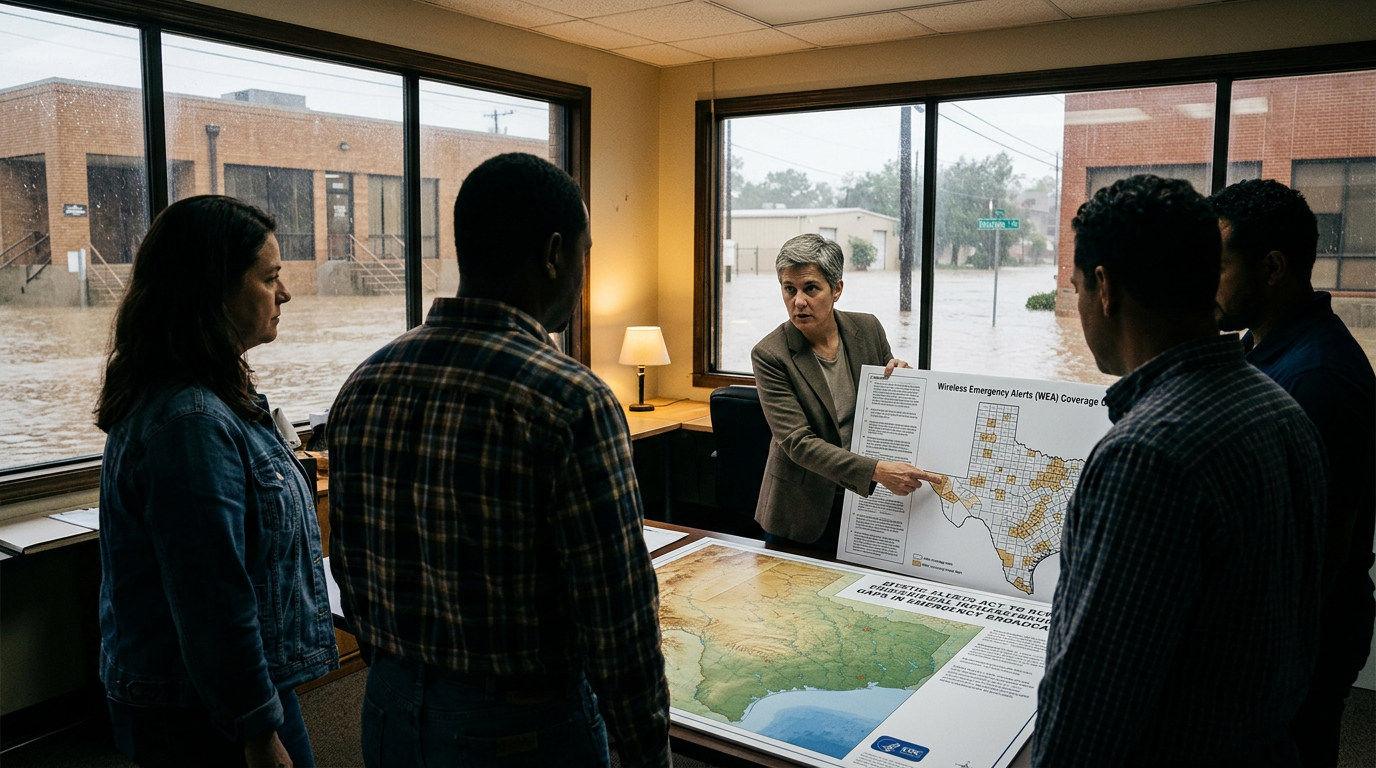
Senator John Cornyn of Texas has spearheaded a new legislative push to reform the way emergency alerts are distributed throughout the United States. Known as the Mystic Alerts Act, the bipartisan bill aims to address recurring failures in the Wireless Emergency Alerts (WEA) system, particularly in regions where geographic barriers or outdated hardware prevent signals from reaching citizens during critical moments. Historically, Texas has been at the forefront of emergency alert evolution, having given rise to the AMBER Alert system following the tragic kidnapping of Amber Hagerman in Arlington in 1996. This new initiative seeks to build on that legacy of protection by ensuring that modern cellular technology is fully capable of handling the demands of rapid-response notifications during natural disasters and public safety threats. The proposed legislation focuses on bridging the gap between local emergency management offices and the national broadcast network. For years, first responders in various parts of the Lone Star State have reported 'dead zones' or significant delays where localized warnings for tornadoes or flash floods failed to trigger on mobile devices despite being within the hazard zone. The Mystic Alerts Act targets the technical backend of these systems, mandating higher standards for infrastructure resilience and ensuring that the Federal Communications Commission (FCC) has the tools necessary to hold service providers accountable for broadcast reliability. By prioritizing the most vulnerable communication nodes, the act hopes to eliminate the dangerous latency that can occur when seconds matter most.
Texas relevance
Texas stands as one of the most disaster-prone states in the nation, regularly facing hurricanes along the Gulf Coast, severe wildfires in the Panhandle, and frequent tornadic activity across North Texas. Because of this high frequency of life-threatening weather events, the reliability of the wireless alert infrastructure is not merely a convenience but a vital component of the state's public safety strategy. This legislation is particularly relevant to rural Texas counties where cell tower density is lower and current alert propagation techniques are often insufficient to reach isolated residents. The state's history with the development of the Silver and Blue alert systems further underscores the Texas leadership in the realm of public safety communication.
Modernizing the Infrastructure of Public Safety
The backbone of the Mystic Alerts Act is a concentrated effort to update the physical and digital infrastructure that supports emergency notifications. Current systems often rely on older protocols that were not designed to handle the precision location data available on today's smartphones. This discrepancy leads to 'over-alerting,' where residents far away from a hazard are woken up by alarms, or 'under-alerting,' where those in the direct path of danger receive nothing. The bill proposes a standardized framework that requires wireless carriers to adopt unified protocols for high-precision targeting.
Furthermore, the legislation seeks to address the issue of signal failure during power outages. Many cellular towers in Texas lack sufficient backup power to remain operational during extended grid failures, such as those seen during major winter storms or hurricanes. By incentivizing the hardening of these sites, the Mystic Alerts Act aims to create a more resilient network that can withstand the very disasters it is meant to warn the public about. This comprehensive approach ensures that the message is not just sent, but successfully received by the intended audience.
Addressing the Rural-Urban Divide in Texas
In many parts of West and South Texas, the distance between transmission towers can lead to significant gaps in coverage. These gaps are particularly dangerous when fast-moving wildfires or flash floods occur. The Mystic Alerts Act includes specific provisions for enhancing signal reach in low-density population areas. By utilizing lower-frequency bands that can travel further distances and penetrate obstacles more effectively, the proposed changes intend to bring the same level of safety to ranching communities as is found in major metropolitan hubs like Houston or Dallas.
The bill also looks at the role of local government in the alerting process. Small-town emergency departments often lack the budget or technical training to utilize the full capabilities of the Integrated Public Alert and Warning System (IPAWS). Cornyn’s proposal includes a grant program designed to provide these smaller municipalities with the necessary software and training to issue localized alerts effectively. This democratization of technology is essential for a state as large and diverse as Texas, where a one-size-fits-all approach to safety often fails.
Enhanced Accountability for Wireless Carriers
One of the more rigorous aspects of the Mystic Alerts Act is the implementation of mandatory reporting requirements for wireless service providers. Under the proposed law, carriers would be required to submit annual reports to the FCC detailing the success rates of emergency broadcasts within their networks. If a carrier consistently fails to deliver alerts within a specified window of time, they could face significant fines. This move is designed to shift some of the responsibility for public safety onto the private entities that profit from the use of public airwaves.
Industry stakeholders have expressed concerns regarding the cost of these upgrades, but advocates of the bill argue that the public interest outweighs corporate overhead. By creating a transparent auditing process, the bill ensures that the 'pipes' through which emergency information flows are always clear and functional. This level of oversight is intended to prevent the technical glitches that have historically plagued the system during nationwide tests and actual localized emergencies alike.
The Evolution of Geofencing Technology
The concept of geofencing is central to the future of the WEA system. Currently, when an alert is issued, it is often broadcast by all towers in a specific county. This can lead to unnecessary panic and 'alert fatigue' for citizens who are not in actual danger. The Mystic Alerts Act encourages the adoption of 'device-based geofencing,' where the phone itself determines whether to trigger an alarm based on its precise GPS location relative to the hazard polygon defined by the National Weather Service or local authorities.
This shift to device-based logic represents a significant leap forward in emergency management. It allows for highly surgical warnings, such as notifying only the houses on a specific street during a gas leak or a localized police action. By reducing the frequency of irrelevant alerts, the bill aims to ensure that when a Texan's phone does go off, they are more likely to take the warning seriously and act immediately. This behavioral shift is seen as key to reducing casualties in high-stakes scenarios.
Collaborative Bipartisan Efforts in Washington
While the political climate in Washington is often characterized by division, the Mystic Alerts Act stands out as a rare point of consensus. Senator Cornyn has partnered with colleagues from across the aisle to ensure that the bill addresses the needs of both urban and rural constituents. This bipartisan support is crucial for any bill dealing with interstate commerce and telecommunications, as it ensures the legislation can survive the committee process and reach the floor for a full vote.
The collaborative nature of the bill also means that it incorporates feedback from a wide range of experts, including meteorologists, civil engineers, and first responders. By listening to those on the front lines of emergency response, the authors of the bill have crafted a piece of legislation that is grounded in practical reality rather than just theoretical policy. For Texas, having a senior senator lead this charge ensures that the state's unique geographical and logistical challenges are kept at the forefront of the national conversation on safety.
Future Outlook for Emergency Communications
As the Mystic Alerts Act moves through the legislative process, its impact could be felt far beyond the immediate upgrades to the cell network. It sets a precedent for how the government interacts with private technology companies during times of crisis. As 5G and satellite-to-phone technologies become more prevalent, the frameworks established by this act will provide a roadmap for incorporating new innovations into the national safety net. This forward-looking perspective ensures that the system won't become obsolete within a few years of its implementation.
For the average Texan, the passage of this act would mean a more reliable and less intrusive warning system. It represents a commitment to maintaining the infrastructure of the 'Texas way of life,' where resilience in the face of natural adversity is a shared value. As the bill gains momentum, it serves as a reminder that the most basic function of government is the protection of its people, and that in the digital age, that protection must be as fast and reliable as the networks we use every day.
Analysis
The introduction of the Mystic Alerts Act reflects a growing acknowledgment among federal lawmakers that cellular networks have surpassed traditional radio and television as the primary means of emergency communication. From a policy perspective, this shift acknowledges that 'geofencing'—the ability to target an alert to a very specific set of coordinates—is currently underutilized or poorly executed due to hardware limitations. By pushing for bipartisan support, Senator Cornyn is attempting to bypass the gridlock often found in tech regulation, framing the issue as a fundamental duty of the state to protect its citizens from preventable harm. While the bill will likely face scrutiny regarding the costs associated with infrastructure upgrades, the long-term benefit of reducing fatalities through faster notification times remains a powerful legislative motivator.
Source attribution
This story was reported using a public release from the Texas Congressional Delegation (Google News). Keep TX Red rewrote the coverage independently and links to the official statement for verification.
Frequently Asked Questions
- What is the primary goal of the Mystic Alerts Act?
- The goal is to modernize the infrastructure used for Wireless Emergency Alerts (WEA). This includes improving signal reliability, ensuring alerts reach rural areas, and using better geofencing technology to target only the people who are in actual danger during an emergency.
- How will this affect my cell phone service?
- The act does not change your daily service but aims to make emergency notifications more accurate. You should receive fewer irrelevant alerts, while the ones you do receive for major threats like tornadoes or fires will be more timely and reliable.
- Why is this bill important for Texas specifically?
- Texas frequently deals with hurricanes, wildfires, and tornadoes. Our large geography and mix of dense cities and remote rural areas make a reliable, high-precision emergency alert system a critical necessity for saving lives during rapid-onset disasters.
- Will this cost taxpayers or phone users more money?
- While the bill mandates upgrades from carriers and provides grants for local governments, it focuses on using existing federal safety funds and holding private carriers accountable for their infrastructure. There is no direct tax or fee on consumers included in the proposal.
Official Sources
Take the next step
Browse the Newsroom →Read more about Keep Texas Red → Our full guide to what Keep Texas Red means and why Texans support it.
Get Texas updates delivered weekly.
Independent Texas reporting on politics, policy, and daily life. One email a week. Unsubscribe anytime.
Keep TX Red Newsroom
The Keep Texas Red Editorial Staff produces nonpartisan explainers, policy breakdowns, and educational resources to help Texans understand how their government works. All content is reviewed for accuracy and updated regularly.
About Keep TX Red →