Texas Jurisdictions Face Legal Challenges Over Terrorism Classifications in Law Enforcement Confontations
A look at the legal definitions of domestic terrorism in Texas courts following a high-profile shooting incident in Alvarado and subsequent trials.
Editorial disclaimer: Opinions and analysis on Keep TX Red are editorial content — not statements of fact. See our editorial standards.
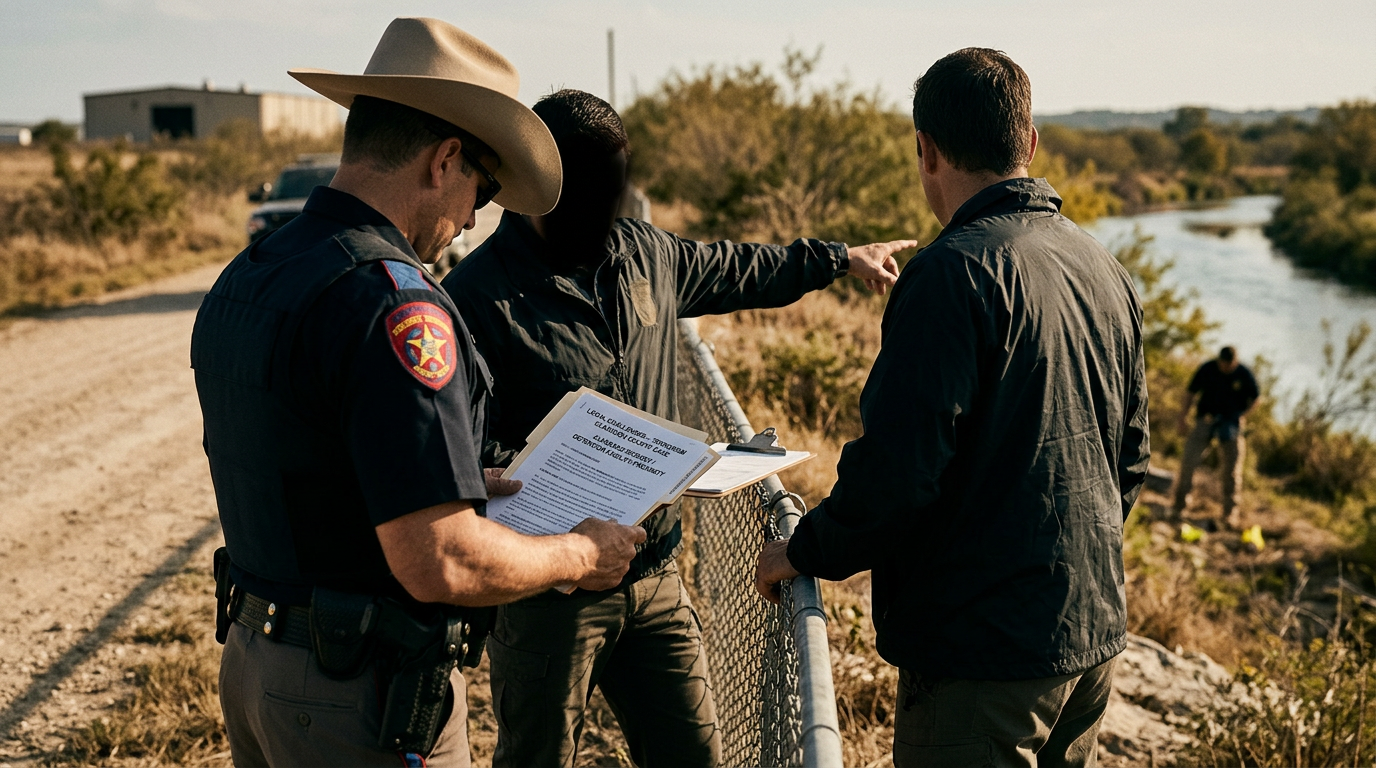
Recent judicial proceedings in Johnson County have brought new scrutiny to how Texas prosecutors and federal authorities classify violent incidents involving political activists. Historically, Texas has maintained a aggressive stance on public safety, particularly regarding infrastructure and law enforcement protection. This specific case stems from an incident in Alvarado where an officer was wounded during a confrontation near a detention facility. While the initial narrative focused on a coordinated plot linked to organized extremist movements, the courtroom reality revealed a more complicated sequence of events that challenged the state's initial domestic terrorism framing. The case serves as a pivotal moment in Texas legal history, highlighting the tension between national security rhetoric and the stringent requirements of evidentiary law in state courts. Contextually, this follows a broader trend in the Lone Star State to strengthen penalties for crimes committed during protests or civil disturbances. In recent legislative sessions, Texas lawmakers have passed several measures aimed at deterring organized violence by increasing the severity of charges for those who interfere with public order. However, as the Alvarado case demonstrates, the application of these enhanced labels requires a high burden of proof that local and federal investigators must meticulously satisfy. By examining the disconnect between the early public statements made by officials and the eventual jury findings, observers can better understand the evolving landscape of criminal justice within the state's borders.
Texas relevance
Texas serves as a primary battleground for the debate over where activism ends and criminal extremism begins, largely due to its extensive network of federal detention centers and border infrastructure. The Alvarado incident highlights the specific risks faced by Texas law enforcement officers who guard these high-profile locations. Furthermore, the outcome of trials in Johnson County often sets a precedent for how other Texas counties—from Harris to Bexar—handle high-stakes prosecutions involving ideological motivations. As Texas continues to attract national attention for its law enforcement policies, the integrity of these classifications remains central to maintaining public trust in the state's judicial independence.
The Initial Confrontation in Alvarado
The incident began outside the Prairieland Detention Center, a facility known for holding individuals under federal immigration custody. The presence of law enforcement at this location is constant, given the sensitive nature of the work performed there. On the day in question, a routine security perimeter became the site of a violent exchange that left an officer injured by gunfire.
Early reports from the scene indicated that the shooter may have had ties to organized groups seeking to disrupt the facility's operations. This led to an immediate and massive response from both local police departments and federal agencies, who treated the site as a potential target for a wider insurgent campaign against Texas infrastructure and federal law enforcement personnel.
Framing the Terrorism Narrative
Following the arrest of the suspect, public statements from high-ranking officials and prosecutors heavily emphasized the ideological motivations of the individual. Using terms like 'domestic terrorism' and 'extremist cell,' the state sought to portray the shooting not as an isolated criminal act, but as a deliberate strike against the government's authority in North Texas.
This approach was consistent with contemporary trends in law enforcement where the intent of the perpetrator is used to heighten the severity of the charges. By framing the incident within the context of 'Antifa' or similar movements, investigators aimed to tap into broader concerns regarding civil unrest. This narrative was intended to justify increased security measures and more rigorous sentencing recommendations during the early phases of the legal process.
Discrepancies in the State's Evidence
As the case moved toward trial, the evidentiary support for a coordinated 'terrorist' plot began to show vulnerabilities. Defense attorneys argued that the incident was a tragic, individual mental health crisis or a spontaneous reaction rather than a pre-meditated attack planned by an organized group. This distinction is vital under Texas law, which distinguishes between individual assault and organized criminal activity.
Forensic analysis and digital footprints failed to establish the level of coordination that the initial 'terrorism' label implied. While the suspect certainly held radical views, the prosecution struggled to prove that these views were the direct engine behind a structured plan to overthrow or significantly impede government functions. The lack of co-conspirators or a documented cell structure made the terrorism charges difficult to sustain in a court of law.
The Role of Federal and State Cooperation
The investigation saw an unprecedented level of cooperation between the FBI, the Department of Homeland Security, and local Johnson County authorities. This joint effort was designed to leverage federal resources for a state-level prosecution, a tactic often used in Texas to ensure that suspects face the most robust legal challenges possible.
However, this cooperation also invited scrutiny regarding the influence of federal policy on local criminal cases. Critics questioned whether the push for a terrorism conviction was driven by political directives from Washington or Austin rather than the specific facts on the ground in Alvarado. This dynamic underscores the complex relationship between different levels of government when dealing with politically sensitive crimes.
Jury Deliberations and the Final Verdict
When the case finally reached a Texas jury, the focus shifted from political ideologies back to the specific mechanics of the shooting. Juries in Texas are traditionally supportive of law enforcement, but they also adhere strictly to the 'beyond a reasonable doubt' standard. In this instance, the jury focused on the physical evidence of the shooting itself rather than the labels applied by the prosecution.
The final outcome resulted in convictions for the physical assault and the shooting of the officer, but notably did not validate the broader terrorism conspiracy claims. This result was seen as a significant check on the prosecution's strategy, demonstrating that Texas citizens are discerning when it comes to the legal definitions of extremist violence. The shooter faced a lengthy prison sentence for the violence committed, regardless of the 'terrorism' label.
Impact on North Texas Law Enforcement Policy
The aftermath of the trial has led to internal reviews within North Texas law enforcement agencies regarding how they communicate with the public during active investigations. There is a renewed emphasis on ensuring that early assessments of a suspect's motives do not outpace the evidence collected by forensic teams. This is intended to preserve the credibility of the department during future high-profile trials.
Furthermore, officers stationed at detention facilities and government buildings have received updated training on situational awareness and de-escalation. While the 'terrorism' label did not stick in court, the threat to officer safety remains a very real concern for those patrolling Alvarado and surrounding areas. Protecting these men and women remains a top priority for the state, independent of the legal classification of their attackers.
Future Implications for Texas Legislation
Legal experts suggest that this case may influence future sessions of the Texas Legislature. There may be calls to clarify the definitions of 'domestic terrorism' within the Texas Penal Code to make them more applicable in cases where an individual acts alone but holds extremist views. Lawmakers often look to high-profile 'near-miss' prosecutions as a catalyst for refining state laws.
If Texas moves to broaden these definitions, it could result in more successful 'terrorism' convictions in the future. Conversely, civil liberties advocates point to this case as a reason to keep definitions narrow, ensuring that the state does not overstep its bounds by criminalizing thought or association alongside actual violent acts. This debate will likely continue to shape the Texas legal landscape for years to come.
Analysis
The shift from a 'terrorism' narrative to a more localized criminal prosecution suggests a strategic recalibration for Texas authorities. While the desire to protect officers is a universal priority in Texas politics, the legal system's check on 'prosecutorial overreach' ensures that political labels do not replace factual evidence. This suggests that while Texas will remain 'tough on crime,' the state's courts will likely demand specific evidence of organized conspiracy before validating charges of domestic terrorism in future cases. This balance is critical for ensuring that the legal system remains focused on individual actions rather than broad ideological affiliations.
Source attribution
This story was reported using a public release from the Texas Monthly. Keep TX Red rewrote the coverage independently and links to the official statement for verification.
Frequently Asked Questions
- What started the investigation into a possible terrorist plot in Alvarado?
- The investigation was triggered when an officer was shot near the Prairieland Detention Center. Because the facility is involved in federal immigration enforcement and the suspect held radical political views, authorities initially suspected a coordinated attack by extremist groups.
- Why were the 'terrorism' charges difficult to prove in court?
- Under Texas and federal law, a terrorism charge typically requires proof of a coordinated conspiracy or a specific intent to intimidate the government through organized violence. In this case, the evidence did not sufficiently show a broader plot or the involvement of other individuals beyond the single shooter.
- What were the results of the trial for the suspect?
- While the domestic terrorism narrative did not lead to a conviction on those specific grounds, the suspect was still convicted for the act of shooting the law enforcement officer. This resulted in a significant prison sentence, as Texas law provides harsh penalties for any assault on a public servant regardless of the motive.
- How does this case affect other Texas cities?
- This case serves as a legal precedent for how prosecutors across Texas handle 'political' crimes. It reminds law enforcement agencies that they must meticulously document evidence of organizational ties if they intend to use enhanced terrorism charges in a courtroom setting.
Official Sources
Take the next step
Browse the Newsroom →Read more about Keep Texas Red → Our full guide to what Keep Texas Red means and why Texans support it.
Get Texas updates delivered weekly.
Independent Texas reporting on politics, policy, and daily life. One email a week. Unsubscribe anytime.
Keep TX Red Newsroom
The Keep Texas Red Editorial Staff produces nonpartisan explainers, policy breakdowns, and educational resources to help Texans understand how their government works. All content is reviewed for accuracy and updated regularly.
About Keep TX Red →