Texas Cultural Expansion: How Buc-ee's Became the Essential Resupply Hub for Continental Travelers
Explore the massive cultural growth of Buc-ee's as it evolves from a Texas fuel stop into a critical logistical hub for long-distance travelers.
Editorial disclaimer: Opinions and analysis on Keep TX Red are editorial content — not statements of fact. See our editorial standards.
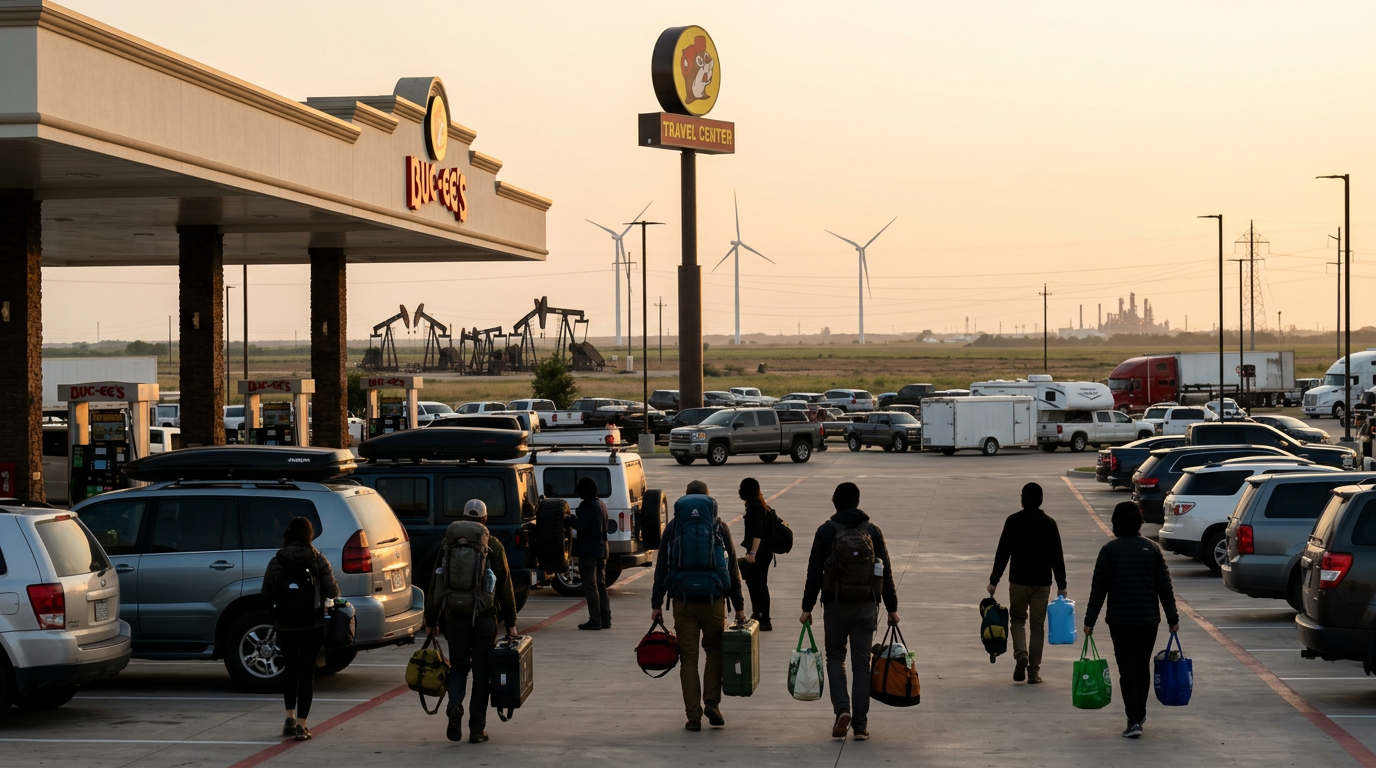
The phenomenon of the Texas-based travel center Buc-ee’s has transitioned from a regional convenience store into a vital piece of infrastructure for long-distance travelers and hikers. What began in 1982 in Lake Jackson, Texas, as a clean and reliable stop for locals has spiraled into a multi-state operation that now serves as a primary resupply point for those crossing the American landscape. The brand’s expansion reflects a shift in how travelers perceive logistics; where once a simple gas station would suffice, the modern traveler now looks toward centralized hubs that offer fresh food, massive gear selections, and exceptionally maintained facilities to support multi-day or multi-week journeys. This evolution is particularly evident as hikers and cross-country drivers increasingly plan their routes specifically to intersect with these massive Texas-born outposts. Historically, Texas has often been the laboratory for large-scale retail innovations, and Buc-ee's represents the ultimate evolution of the highway stop. By standardizing high-end service in a roadside environment, the company has managed to turn a logistical necessity—the fuel and food stop—into a recreational destination that serves as a milestone for those on the road for months at a time. The logistical weight of a 'resupply' is no longer a chore but an event.
Texas relevance
As a cornerstone of the Texas business environment, Buc-ee's serves as a roving ambassador for the Lone Star State's brand of hospitality and efficiency. The company’s continued growth across the Southern United States brings Texas-style commerce to new markets while remaining rooted in its headquarters in Lake Jackson. This is particularly relevant to the Texas economy as the brand acts as a massive exporter of Texas culture and products, ranging from regional barbecue styles to clothing and outdoor equipment. For Texans, the entity is a source of pride and a significant contributor to the state's sales tax revenue and employment figures. The success of these travel centers reinforces Texas's reputation as a leader in retail innovation and customer service standards, ensuring that the state's logistical models are exported nationwide. Wherever a traveler finds a beaver logo, they are essentially interacting with a piece of Texas infrastructure that maintains the state's high expectations for quality and scale.
The Evolution of Resupply Logistics
Modern travel requires a level of planning that was previously unnecessary in the age of paper maps and sparse fueling stations. For long-distance travelers, the 'resupply' is a tactical necessity that involves restocking caloric needs, performing vehicle maintenance, and ensuring psychological comfort through clean facilities. Buc-ee's has positioned itself as the premier solution for these needs, effectively replacing the need for multiple stops at disparate grocers or hardware stores.
The strategic placement of these centers along major interstate corridors allows travelers to consolidate their downtime. Instead of spending two hours navigating a city to find specific items, the all-in-one nature of these locations provides everything from specialized outdoor gear to high-quality perishables. This consolidation of services is now a staple of the American travel experience, pioneered by Texas business logic.
As travelers move across the country, the predictability of the brand creates a 'safety net' in their logistics. For a hiker reaching day 71 of a journey, the ability to find a consistent stock of supplies without the uncertainty of small-town inventory is a game-changer. This reliability has turned a simple convenience store into a mission-critical hub for those living life on the road.
Economic Impact of the Texas Giant
Each new location brings an influx of jobs and tax revenue to the host municipality, often serving as an economic anchor for developing interchanges. The company is known for paying significantly higher wages than the industry average, which often forces local competitors to raise their own standards to retain staff. This 'Buc-ee’s Effect' can shift the local labor market dynamics in a matter of months.
Furthermore, the secondary economic impact involves the promotion of Texas-made products. A significant portion of the retail floor is dedicated to Texas-themed apparel, home decor, and specialty foods produced within the state. This creates a global showroom for Texas artisans and manufacturers, driving even more capital back into the Lone Star State’s domestic economy.
The tax benefits of these mega-centers are massive. By attracting travelers from out of state who might have otherwise driven through without stopping, Buc-ee's captures revenue that would have been spent elsewhere. This injection of capital supports local roads, schools, and public services, proving that the Texas model of high-volume retail has concrete community benefits.
Standardization and Safety in Travel
One of the primary reasons travelers cite for seeking out these locations is the predictability of the experience. In a transient environment like a highway, safety and cleanliness are often variable. The company’s rigid adherence to internal standards provides a sense of security for solo travelers and families alike, knowing that the environment will be well-lit, crowded, and professionally managed.
Safety is further enhanced by the company's policy of prohibiting 18-wheelers at most locations. This design choice creates a safer space for passenger vehicles and pedestrians, reducing the risk of accidents in high-traffic parking lots. This separation of commercial and private traffic is a hallmark of the brand’s commitment to the individual traveler’s comfort and safety.
The psychological impact of a clean restroom cannot be understated in the context of long-haul travel. By making sanitation a core pillar of their business model, the brand has solved a major 'pain point' for American travelers. This focus on the human element of travel—distinguishing it from the purely mechanical needs of the vehicle—is what sets the Texas-born chain apart from global competitors.
Cultural Significance Beyond Gas and Snacks
The branded merchandise, featuring the iconic beaver mascot, has become a cult symbol for both Texans and visitors. It is not uncommon to see the logo in major international cities, serving as a subtle signal of Texas affiliation. This branding success has allowed the company to transcend the 'gas station' label and enter the realm of lifestyle destination.
For those on long journeys, such as hikers or cross-country cyclists, reaching a location is often treated as a milestone. The availability of hot food and diverse snacks provides a morale boost that generic stops cannot match. This psychological component of the traveler's journey has solidified the brand's place in modern American travel lore.
The cultural footprint also extends to social media, where visitors document 'hauls' and 'tours' of the massive facilities. This free marketing is driven by a genuine consumer enthusiasm that is rare for a retail entity. In many ways, the brand has become a shared commonality between diverse groups of people who all find value in the oversized, well-managed Texas experience.
Future Expansion and Infrastructure Goals
The roadmap for the company involves pushing further into the Midwest and East Coast, bringing the Texas model to regions traditionally dominated by smaller, fragmented convenience chains. As they expand, they are also integrating more sustainable technology, including massive electric vehicle charging arrays that signal a shift toward future automotive trends.
Despite growing into a national powerhouse, the company maintains its core identity by keeping its management rooted in Texas. This ensures that as the footprint grows, the fundamental values that built the first store in Lake Jackson remain the guiding principles for the multi-million dollar complexes of the future.
What changes next is the integration of these centers into broader travel grids. As cars become more autonomous and travel becomes more about the 'experience' of the stop than the act of driving, Buc-ee's is perfectly positioned to serve as the town square of the interstate. The transition from a fuel station to a logistics and leisure hub is nearly complete, and it is a evolution that was entirely directed from within the borders of Texas.
The Lake Jackson Legacy
To understand the current dominance of the brand, one must look back at its humble beginnings in Brazoria County. When Arch Aplin III opened the first location, it was founded on the radical idea that a gas station should be a place where people actually wanted to spend time. The 'Buc-ee’s' name itself—a combination of the founder's childhood nickname and his dog's name—speaks to the family-oriented, approachable nature of the business.
Over the decades, the company has resisted the urge to go public or sell to a multinational conglomerate. This private ownership has allowed for a 'quality over speed' growth strategy. Every location is meticulously planned to ensure it meets the standard that Texas customers have come to expect. This dedication to brand integrity is a key reason why the resupply stop remains a cherished part of the journey rather than a corporate obligation.
Analysis
Opinion: The rise of Buc-ee's represents more than just retail success; it is a manifestation of the 'Texas Exceptionalism' philosophy applied to the convenience industry. By refusing to compromise on cleanliness and scale, the company has effectively disrupted the traditional travel stop market. While critics might point to the sheer size of the locations as excessive, the consumer demand suggests otherwise. For the Texas resident, the brand acts as a physical reminder of the state’s economic dominance and its ability to define modern consumer culture even beyond its own borders. The store is effectively a non-political diplomat for the Texas way of life, emphasizing that 'bigger' is only better when it is accompanied by unparalleled quality.
Source attribution
This story was reported using a public release from the Buc-ee's (Google News). Keep TX Red rewrote the coverage independently and links to the official statement for verification.
Frequently Asked Questions
- Where did the first Buc-ee’s open?
- The first location was opened in 1982 in Lake Jackson, Texas. It was founded by Arch 'Beaver' Aplin III and Don Wasek, who aimed to provide a cleaner and more reliable convenience store experience than what was available at the time. This original vision focusing on high-quality service remains the core of their nationwide identity.
- Why don't Buc-ee’s locations allow semi-trucks?
- The company prioritizes the safety and maneuverability of passenger vehicles. By excluding 18-wheelers, they reduce wear on their parking lots and create a less congested, safer environment for families and traditional travelers. This policy also helps keep the traffic flow smooth and reduces noise and exhaust for guests.
- Is Buc-ee’s still a Texas-based company?
- Yes, the company remains headquartered in Lake Jackson, Texas. While they have expanded into several other states including Alabama, Florida, Georgia, and Kentucky, their administrative and operational core is firmly rooted in the Lone Star State, ensuring the 'Texas way' of doing business is maintained across all locations.
- What makes Buc-ee's suitable for 'resupply' for long-distance hikers?
- Buc-ee's offers a high density of calories, clean drinking water, and basic outdoor supplies that are essential for long-haul adventurers. Their massive floor sets allow for a deeper inventory than standard gas stations, meaning hikers can find specific items like camping gear or high-protein snacks without detouring into major metropolitan areas.
Official Sources
Take the next step
Browse the Newsroom →Read more about Keep Texas Red → Our full guide to what Keep Texas Red means and why Texans support it.
Get Texas updates delivered weekly.
Independent Texas reporting on politics, policy, and daily life. One email a week. Unsubscribe anytime.
Keep TX Red Newsroom
The Keep Texas Red Editorial Staff produces nonpartisan explainers, policy breakdowns, and educational resources to help Texans understand how their government works. All content is reviewed for accuracy and updated regularly.
About Keep TX Red →