Texas Convenience Giant Buc-ee’s Shakes Up Labor Market With Transparent High Wage Listings
Buc-ee’s is sparking national conversations on wage transparency and the value of college degrees through its visible six-figure manager salaries.
Editorial disclaimer: Opinions and analysis on Keep TX Red are editorial content — not statements of fact. See our editorial standards.
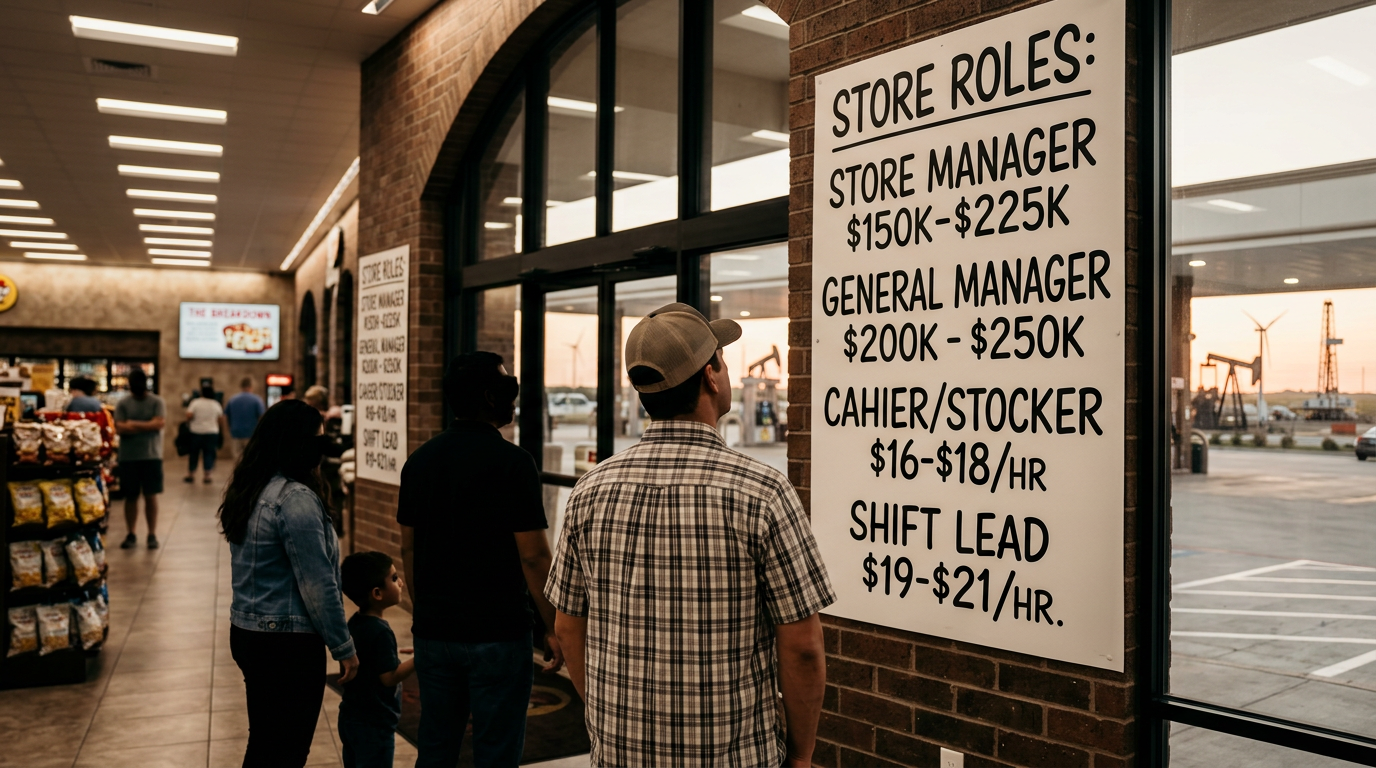
Buc-ee’s, the iconic Texas-sized travel center chain, has once again become a focal point of national economic discourse following the viral spread of its transparent compensation posters. For years, the company has utilized large, visible signs at its entryways to advertise hourly rates and salaried positions, a practice rarely seen in the high-volume retail and petroleum industries. These signs reveal that general managers at the brand's massive locations can earn upwards of $150,000 to $225,000 annually, depending on the site. This level of pay often rivals or exceeds the starting salaries of many corporate roles, law associates, and medical professionals, prompting a massive online debate regarding the necessity of a traditional four-year college degree in the modern economy. The history of Buc-ee’s is deeply rooted in Texas entrepreneurship, founded in Lake Jackson in 1982 by Arch 'Beaver' Aplin III and Don Wasek. What began as a local convenience store has evolved into a cultural phenomenon known for clean restrooms, Beaver Nuggets, and an aggressive labor strategy. Historically, the company has prioritized recruitment by offering pay scales significantly higher than the federal or state minimum wage, paired with benefits packages that include 401(k) matching and three weeks of paid time off. By making these numbers public and placing them right at the front door, the company bypasses the traditional 'black box' of salary negotiation, effectively forcing a conversation about the value of labor in the service sector.
Texas relevance
As a quintessentially Texas brand, Buc-ee’s serves as a major private employer across the Lone Star State, from its headquarters in Lake Jackson to its sprawling locations in New Braunfels, Katy, and Bastrop. The company's wage model directly impacts the local economies of these Texas towns by setting a high floor for competition for labor, often forcing nearby fast-food and retail outlets to raise their own offers to keep pace. Furthermore, the success of this model underscores the strength of the Texas business climate, which allows for large-scale operations to thrive while maintaining a non-unionized but highly compensated workforce. For Texans, the brand is more than a gas station; it is a primary indicator of the state's retail health and a major contributor to the tourism and travel infrastructure that links the state's major metropolitan areas.
The Breakdown of Managerial Compensation
The specific numbers driving the current debate are found on the company’s 'now hiring' boards. According to these public displays, department managers for areas like food service or gift apparel can earn between $23 and $31 per hour, while assistant general managers often see annual salaries ranging from $100,000 to $150,000. The top tier, the General Manager role, is frequently listed with a base salary starting at $150,000, with many reaching the $225,000 mark when bonuses and performance incentives are factored into the total package.
To put these figures into perspective, the average salary for a college graduate in the United States currently hovers around $60,000 per year. By offering double or triple that amount for a position that prioritizes experience and operational excellence over a specific academic pedigree, Buc-ee’s is challenging the long-held societal belief that white-collar office work is the only path to a six-figure income. This transparent approach serves as a recruitment tool that attracts high-caliber talent who might otherwise have looked toward traditional corporate environments.
However, these high wages are not without their caveats. Employees and observers alike note that the company maintains incredibly high standards for its staff. The 'Buc-ee’s way' involves strict policies on grooming, phone usage during shifts, and a fast-paced work environment that requires managers to oversee hundreds of employees and thousands of customers daily. The high pay is widely viewed as a trade-off for the intense physical and mental demands of the job, which operates 24/7, 365 days a year.
Challenging the College Degree Value Proposition
The viral nature of these salary listings has reignited a debate about 'degree inflation'—the practice of requiring a college degree for jobs that may not actually require one. Critics of the traditional higher education system point to Buc-ee’s as proof that vocational skills, management expertise, and on-the-job training can be more lucrative than many degrees that leave students saddled with debt. This resonates particularly well in Texas, where there has been a growing emphasis on trade schools and technical education as viable alternatives to four-year universities.
Economic analysts suggest that seeing a gas station manager earn more than a junior architect or a mid-level marketing director causes a significant amount of 'status anxiety' among the college-educated workforce. It forces an uncomfortable realization that the market values operational efficiency and high-volume retail management at a premium. This shift is part of a broader trend where companies are beginning to value 'skills-based hiring' over 'credential-based hiring,' focusing on what an individual can do rather than where they went to school.
Despite the lack of a mandatory degree for many positions, the competitive nature of these high-paying roles means that many applicants often do hold degrees. However, the company’s willingness to promote based on merit regardless of educational background remains a core part of its corporate identity. This meritocratic approach has helped the brand maintain a loyal core of management-level staff who see a clear upward trajectory without needing to return to the classroom.
Operational Intensity and the Culture of Excellence
Working at a Buc-ee’s is often described as an 'athletic' endeavor. Managers are responsible for maintaining the 'world’s cleanest bathrooms,' ensuring that dozens of fuel pumps are operational, and overseeing a kitchen that produces hundreds of pounds of brisket daily. The operational complexity of a 75,000-square-foot facility is immense. This complexity justifies the high compensation, as it requires a rare set of logistical and interpersonal skills to keep the machine running smoothly during peak holiday travel periods.
The company’s rigid adherence to its brand standards is legendary. Managers must enforce policies that include no visible tattoos, no body piercings besides earlobes, and a prohibition on sitting down during a shift. While these rules have drawn criticism from some labor advocates, supporters argue that the clarity of the expectations, paired with the transparency of the pay, creates an honest contract between the employer and the employee. If you are willing to work within these parameters, the financial rewards are guaranteed and clearly defined.
This culture of excellence has turned Buc-ee’s into a destination rather than a mere pit stop. By investing heavily in their workforce, the ownership ensures that the customer experience remains consistent. High wages lead to lower turnover compared to the industry average, which in turn leads to a more experienced management team capable of handling the logistical nightmares associated with managing the world's largest convenience stores.
Economic Ripples in Small-Town Texas
When Buc-ee’s opens a new location, it often does so in smaller communities or on the outskirts of major hubs, such as Ennis, Luling, or Madisonville. The introduction of hundreds of jobs starting at $16 to $20 an hour—and management roles in the six figures—can fundamentally alter the local labor market. Small businesses in these areas often find themselves struggling to compete for the same pool of workers, leading to a 'Buc-ee’s effect' that effectively raises the baseline wage for the entire region.
This economic pressure is a double-edged sword. On one hand, it boosts the purchasing power of local residents and provides high-quality employment opportunities that were previously unavailable. On the other hand, it can place a strain on smaller 'mom-and-pop' shops that cannot afford to match such high starting pay. This dynamic is a microcosm of the larger economic shifts happening across Texas as it continues to lead the nation in corporate relocations and business expansions.
Furthermore, the tax revenue generated by these massive travel centers is a boon for local Texas counties. The combination of high sales volume and high-paying jobs creates a virtuous cycle of investment in local infrastructure. As the company expands into other states like Alabama, Florida, and Tennessee, the 'Texas model' of retail—defined by scale, cleanliness, and high pay—is becoming a major export for the state.
Transparency as a Recruitment Weapon
In a digital age where salary information is often shrouded in secrecy, Buc-ee’s uses transparency as a strategic weapon. While most companies treat salary as a 'confidential' matter until the final stages of an interview, Buc-ee’s puts its numbers on 4-foot-tall posters. This attracts 'passive' job seekers—people who already have jobs but are walking into the store for a snack and realize they could be making significantly more money by switching to the beaver-branded team.
This marketing of wages also serves a secondary purpose: it justifies the prices to the consumer. When customers see that the staff members are being paid a living wage or better, they are often more willing to accept the premium pricing on specialty items. It builds a sense of brand loyalty and social responsibility that feels organic rather than forced through corporate public relations campaigns. The sign is not just an ad for employees; it is an ad for the brand's values.
The psychological impact of the 'Now Hiring' sign cannot be overstated. In an era of inflation and wage stagnation, seeing a path to a $200,000 salary without needing a postgraduate degree offers a sense of hope and upward mobility. It reinforces the 'Texas Dream'—the idea that hard work, regardless of your starting point, can lead to substantial financial success in a state that rewards productivity.
Source attribution
This story was reported using a public release from the Buc-ee's (Google News). Keep TX Red rewrote the coverage independently and links to the official statement for verification.
Frequently Asked Questions
- Do you need a college degree to move into management at Buc-ee's?
- While having a degree does not hurt your chances, Buc-ee’s is famous for prioritizing experience, work ethic, and operational skills over formal academic credentials. Many of their top-earning managers worked their way up through the ranks, starting in entry-level positions and demonstrating mastery of the company's rigorous standards.
- What kind of benefits does Buc-ee's provide besides the high salary?
- Buc-ee’s offers a comprehensive benefits package that is considered top-tier for the retail industry. This includes a 401(k) plan with a 100% company match up to 6% of the employee's salary, health, dental, and vision insurance, and three weeks of paid time off (PTO) that can be used or cashed out.
- Why does Buc-ee's post their salaries on signs outside the store?
- The company uses wage transparency as a competitive recruitment tool. By making their high pay rates public, they attract high-quality applicants and 'passive' job seekers who may be dissatisfied with their current lower-paying roles. It also serves as a branding statement, showing customers that the company invests in its workforce.
- Is it true that Buc-ee's has a strict dress code for managers and staff?
- Yes, Buc-ee’s maintains very traditional professional standards. This includes prohibitions on visible tattoos, body piercings (other than certain ear piercings), hair of 'unnatural' colors, and unprofessional grooming. These standards are part of the brand's 'clean and wholesome' image that appeals to its massive customer base.
Official Sources
Take the next step
Browse the Newsroom →Read more about Keep Texas Red → Our full guide to what Keep Texas Red means and why Texans support it.
Get Texas updates delivered weekly.
Independent Texas reporting on politics, policy, and daily life. One email a week. Unsubscribe anytime.
Keep TX Red Newsroom
The Keep Texas Red Editorial Staff produces nonpartisan explainers, policy breakdowns, and educational resources to help Texans understand how their government works. All content is reviewed for accuracy and updated regularly.
About Keep TX Red →