Streamlined PBR Permits Fueling Texas AI Data Center Boom Under TCEQ Regulatory Framework
Texas regulators utilize Permit by Rule (PBR) systems to expedite AI data center infrastructure as statewide power demands reach record levels.
Editorial disclaimer: Opinions and analysis on Keep TX Red are editorial content — not statements of fact. See our editorial standards.
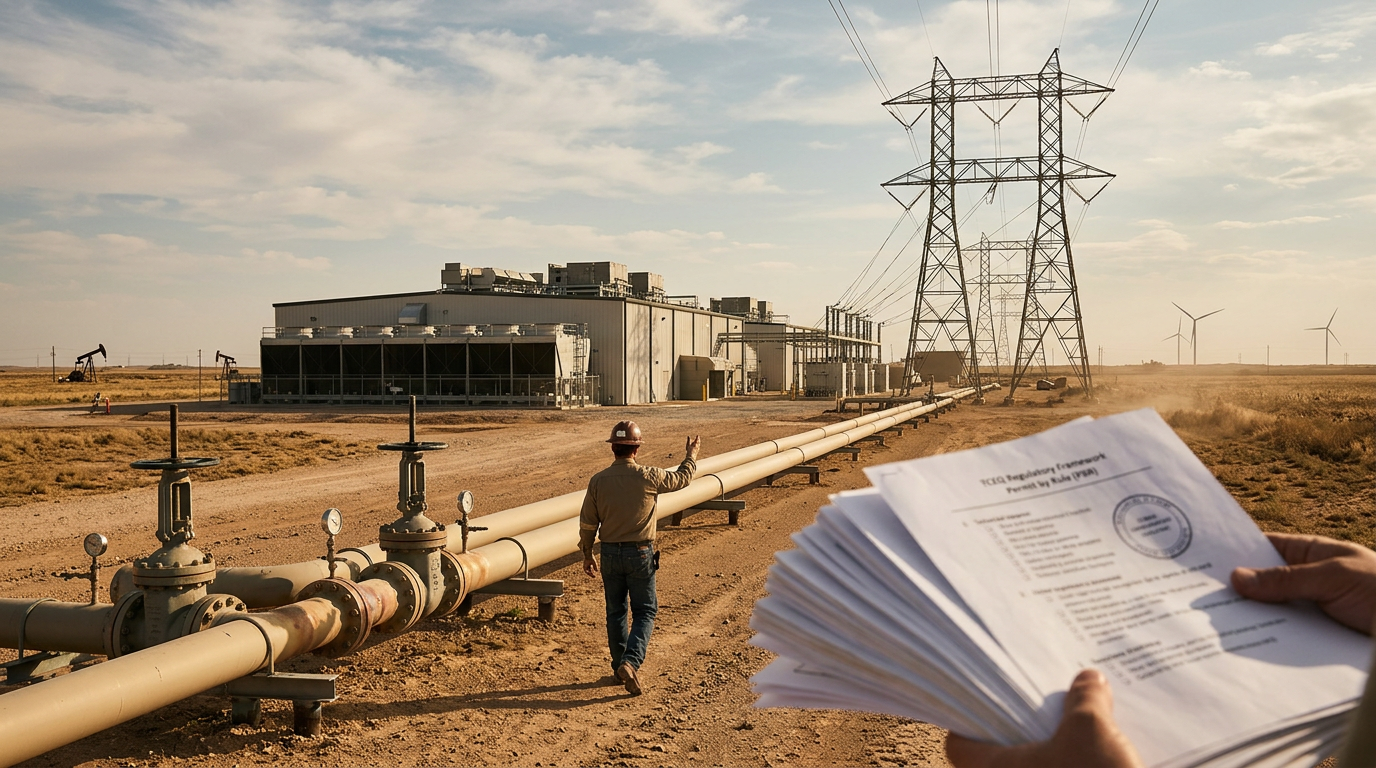
Recent developments in Texas regulatory procedures have highlighted a significant shift in how technological infrastructure is being integrated into the state's industrial landscape. The Texas Commission on Environmental Quality (TCEQ) is increasingly utilizing a streamlined permitting process, known as Permit by Rule (PBR), to authorize the construction and operation of massive on-site power generation facilities specifically designed for artificial intelligence (AI) data centers. Historically, the PBR system was designed to handle minor pollution sources with predictable impacts, such as local dry cleaners, small paint shops, or neighborhood bakeries. However, as the global demand for AI processing capabilities surges, developers are landing in Texas to take advantage of these expedited regulatory pathways to bypass the lengthy timelines typically associated with standard industrial emission permits. This trend comes at a pivotal moment for the Texas energy market. The state's grid, managed by ERCOT, is under immense pressure to maintain reliability while incorporating high-demand consumers. AI data centers are unique in their infrastructure requirements; they require massive amounts of electricity 24/7 to power server racks and cooling systems. By utilizing PBRs, these facilities can install dozens, or even hundreds, of reciprocating internal combustion engines or gas turbines to generate their own power independently of the main grid. This allows for rapid scaling of digital infrastructure but removes certain layers of public notification and environmental scrutiny that usually accompany major industrial developments. The implementation of this policy reflects a broader state strategy to prioritize economic expansion and technological leadership within the Sun Belt.
Texas relevance
Texas serves as the primary battleground for this regulatory evolution due to its unique independent power grid and the leadership of the TCEQ. In regions like the Dallas-Fort Worth Metroplex, the Permian Basin, and the outskirts of Austin, the proliferation of data centers is reshaping local land use and energy consumption. Texas law gives significant autonomy to state agencies to interpret air quality standards, and the current application of PBRs to high-tech energy generation is a direct reflection of a pro-business environment designed to attract Silicon Valley's hardware heavyweights. Historically, Texas has used these simplified permits to encourage small business growth, but the transition into heavy high-tech utility use marks a new era in Texas administrative law that impacts air quality monitoring and energy independence for millions of residents.
The Evolution of the Permit by Rule System
The Permit by Rule system was established by the TCEQ to manage activities that have a negligible impact on air quality. By creating a standardized set of requirements, the agency can allow businesses to begin operations without a months-long or years-long individualized review. This was intended to help the state's small business owners navigate the complex world of environmental compliance without needing a team of high-priced lawyers for every minor exhaust fan or heater installation.
Over the last decade, the scope of PBRs has subtly expanded. As the technological requirements of the modern economy shifted, the definitions within these rules began to encompass larger pieces of equipment. Today, those same rules are being applied to clusters of gas-fired generators that, when combined, produce power equivalent to small traditional power plants. Because the rules focus on individual units rather than the total aggregate of a facility in some contexts, developers have found a legal pathway to deploy significant infrastructure quickly.
AI Growth and the Texas Power Demand
Artificial Intelligence requires significantly more power than traditional cloud computing. The chips used in AI processing, such as GPUs, generate immense heat and consume electricity at a rate that can strain existing municipal substations. Consequently, data center developers have realized that they cannot always rely on the local utility to provide the necessary megawatts on a short timeline. This has led to the rise of 'behind-the-meter' generation, where the facility produces its own electricity on-site.
Texas is particularly attractive for this model because of its deregulated energy market and the abundance of natural gas. By placing high-power computing centers near gas pipelines and using PBRs to authorize the generators, companies can create self-sustaining digital fortresses. This trend is expected to grow as more companies seek to insulate their AI operations from potential grid volatility during extreme Texas weather events.
Environmental Implications of Streamlined Permitting
The primary concern raised by environmental observers is the lack of a cumulative impact assessment. Under a standard permit, the TCEQ would typically model how the emissions from a new plant would affect the specific air quality of the surrounding county. Standard permits also require a public comment period, allowing local residents to voice concerns about noise, smog, or health impacts. The PBR process largely bypasses these requirements, as the 'rules' are already written and assumed to be protective.
When hundreds of these permits are issued in a single geographic area, such as the corridor between San Antonio and Austin, the total emissions can become significant. Critics argue that while one generator might not be a problem, five hundred generators running simultaneously to keep a data center cool during a heatwave could have a measurable impact on local ozone levels. The TCEQ maintains that as long as the facilities meet the predetermined criteria, they are in legal compliance with state law.
Economic Impact on Local Texas Communities
From a fiscal perspective, the rapid permitting of data centers is a massive win for Texas counties and school districts. These facilities represent hundreds of millions of dollars in capital investment. Even with the minimum number of on-site employees, the property tax revenue generated by the high-value computing equipment provides a significant boost to local coffers, often without the associated costs of new residents, such as increased school enrollment or heavy use of emergency services.
Local leaders in rural and suburban Texas often court these developers to diversify their tax bases. The PBR process is a selling point for economic development corporations, as it provides 'regulatory certainty.' Companies are more likely to invest in a Texas township if they know they can have their power plant operational in six months rather than three years. This efficiency has made Texas the top destination for data center relocation in the United States.
The Role of ERCOT and the Backup Power Narrative
The relationship between these self-powering data centers and the ERCOT grid is complex. In theory, these facilities reduce the strain on the public grid by generating their own power. During times of high demand, some data centers even have the capability to sell power back to the grid or ramp down their consumption to help prevent blackouts. This 'demand response' capability is a key part of the state's strategy for maintaining grid stability.
However, the infrastructure required to support this—namely the thousands of new engines authorized by PBRs—creates a parallel energy network that falls outside traditional utility regulation. As the state moves forward, the balance between private 'islanded' power generation and the public trust in air quality and grid reliability will remain a central theme in the Texas Legislature. Policy makers are currently observing how these PBR-authorized plants perform under stress to determine if further adjustments to the administrative code are necessary.
Future Outlook for Texas Regulatory Policy
As the 2025 legislative session approaches, the topic of AI and energy is expected to be a high priority for Texas lawmakers. There is potential for new legislation that could either further codify the use of PBRs for high-tech industries or introduce new thresholds that require large-scale data centers to undergo more rigorous reviews. The tension lies in maintaining the state's competitive edge while addressing the concerns of growing populations in the path of industrial expansion.
The TCEQ itself may also update the PBR definitions. If the agency determines that the scale of current AI power generation exceeds the original intent of the 'minor source' designation, they have the authority to amend the rules. For now, the 'Texas Way' of expedited permitting remains the status quo, ensuring the state remains the global hub for the digital infrastructure that will power the next century of innovation.
Analysis
The use of PBRs for AI data centers is a double-edged sword for the Lone Star State. On one hand, it cements Texas as the 'Silicon Prairie' by offering a speed-to-market advantage that states like California or New York cannot match. By cutting through red tape, Texas ensures that the next generation of global computing power is physically located within its borders, bringing jobs and tax revenue. On the other hand, the absence of public hearings and site-specific environmental reviews could lead to localized friction in growing suburban areas. The policy effectively treats a massive data hub's backup generators like a small-town dry cleaner, a classification that may eventually face legal challenges from groups concerned about cumulative air impacts. For now, the move signals that the state's executive leadership remains committed to an 'all-of-the-above' energy and tech strategy that prioritizes industrial speed over administrative delays.
Source attribution
This story was reported using a public release from the Texas Standard. Keep TX Red rewrote the coverage independently and links to the official statement for verification.
Frequently Asked Questions
- What is a Permit by Rule (PBR)?
- A Permit by Rule is a streamlined authorization from the TCEQ for activities that are deemed to have a minor impact on air quality. It allows businesses to avoid the lengthy individual permit process by following a set of pre-established state regulations.
- Why do AI data centers need their own power plants?
- AI data centers require a massive, constant supply of electricity that often exceeds what the local power grid can immediately provide. Building on-site generation ensures they have reliable power without waiting for utility upgrades.
- Does this process affect the Texas power grid?
- Indirectly, yes. By generating their own power, these centers reduce their draw from the ERCOT grid. However, they also operate outside some of the traditional controls and planning processes used for major utility power plants.
- Is there any public input for PBR applications?
- Generally, no. Unlike standard industrial permits, PBRs do not typically require a public comment period or public hearings, as the facility is agreeing to follow rules that have already been vetted by the state.
- How does this benefit the Texas economy?
- It allows for rapid industrial growth, attracting multi-billion dollar technology investments to the state, which increases property tax revenue for local counties and reinforces Texas's position as a leader in the tech sector.
Official Sources
Take the next step
Browse the Newsroom →Read more about Keep Texas Red → Our full guide to what Keep Texas Red means and why Texans support it.
Get Texas updates delivered weekly.
Independent Texas reporting on politics, policy, and daily life. One email a week. Unsubscribe anytime.
Keep TX Red Newsroom
The Keep Texas Red Editorial Staff produces nonpartisan explainers, policy breakdowns, and educational resources to help Texans understand how their government works. All content is reviewed for accuracy and updated regularly.
About Keep TX Red →