Modern Perspectives Challenge Longstanding Narratives of Texas Revolution History
New academic efforts aim to re-evaluate the historical accounts of the 1836 Texas Revolution and the role of diverse stakeholders.
Editorial disclaimer: Opinions and analysis on Keep TX Red are editorial content — not statements of fact. See our editorial standards.
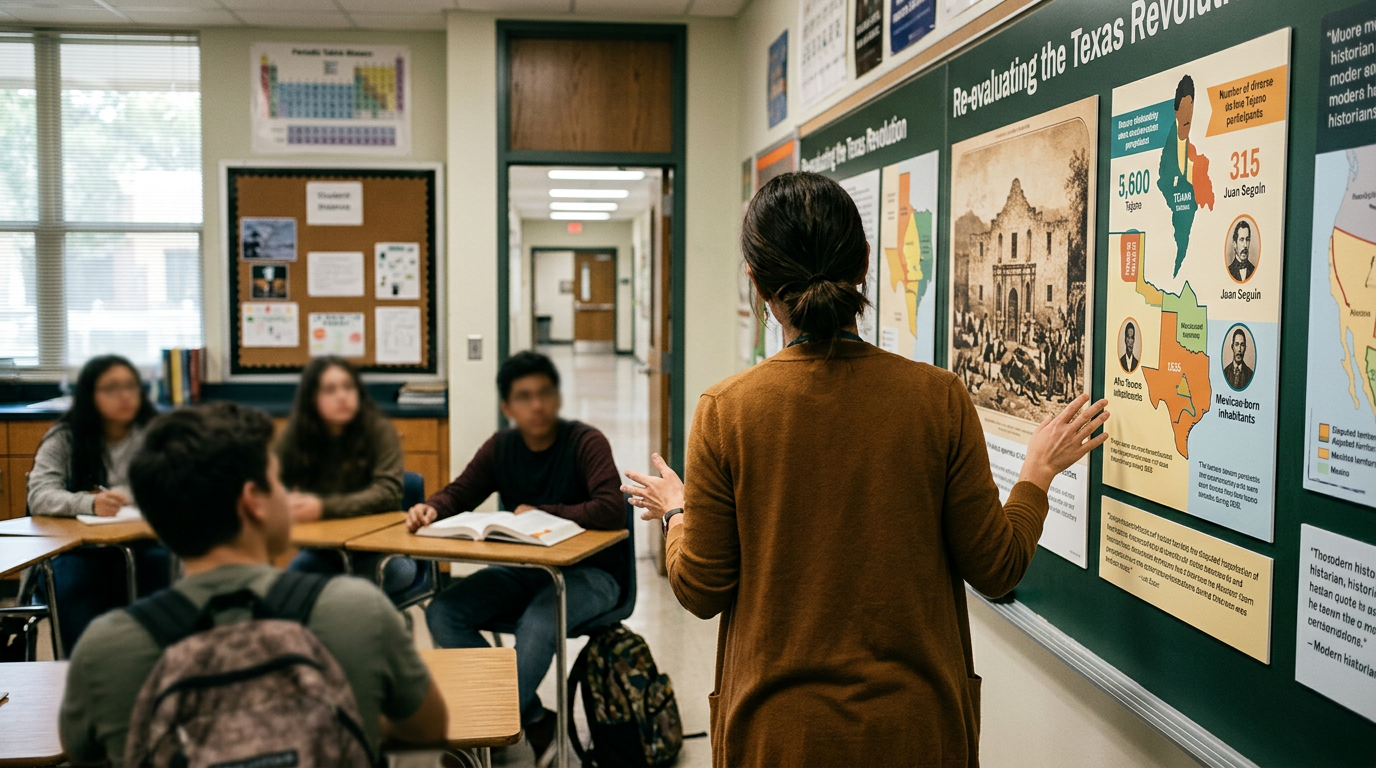
Recent scholarly investigations and archival discoveries are prompting a significant re-evaluation of the traditional narratives surrounding the Texas Revolution of 1836. For nearly two centuries, the story of Texas' struggle for independence from Mexico has been framed through a specific lens that often emphasized the contributions of Anglo-American settlers while omitting the complexities of the geopolitical landscape. This movement to 'correct' history is not about erasing the past, but rather filling in the gaps that have persisted in textbooks and public memory since the mid-19th century. Historians are increasingly looking toward primary sources from Mexican archives and Tejano accounts that provide a more nuanced view of the motivations behind the conflict. Historically, the state of Texas has guarded its foundational myths with significant legislative and cultural fervor. From the 'Line in the Sand' at the Alamo to the heroic victory at San Jacinto, these stories are deeply embedded in the Texan identity. However, as more researchers gain access to digitized records and bilingual historical documents, they are finding that the official history sanctioned during the Jim Crow era and the mid-20th century often bypassed the contributions of Black and Indigenous populations, as well as the internal political struggles within the Mexican government. This shift represents a broader trend in American historiography to reconcile traditional mythology with rigorous, evidence-based academic research.
Texas relevance
As the physical heart of the Texas Revolution, San Antonio serves as the primary battleground for these historical disputes. The city’s historic sites, most notably the Alamo, attract millions of visitors annually, making the accuracy of their presented history a matter of significant local economic and cultural importance. State leaders in Austin have historically taken a firm stance on how Texas history is taught in public schools, often clashing with academics who wish to introduce more critical or diverse viewpoints into the curriculum. This tension between established tradition and evolving research directly impacts the Texas State Board of Education and the various heritage organizations across the Lone Star State.
The Evolution of the Alamo Narrative
The Alamo remains the most potent symbol of Texas' fight for independence, yet its history has been subject to various interpretations over the last 188 years. Initially, the siege was documented mostly through the letters and accounts of those who supported the Texian cause. In the decades following the battle, many of these accounts were embellished to fit the needs of a growing state looking for a unifying origin story. Recent efforts by historians have focused on the Mexican military's perspective, utilizing the journals of General Santa Anna's officers to provide a tactical view of the engagement that was previously ignored.
Furthermore, the role of slavery in the conflict has become a focal point for modern historical corrections. While traditional narratives emphasized 'liberty' from Mexican tyranny, contemporary researchers point out that Mexico’s move toward the abolition of slavery was a primary concern for many Anglo settlers. Acknowledging these economic and social factors does not negate the bravery of those who fought, but it provides a necessary context for why the revolution occurred when it did and why certain alliances were formed or broken during the hostilities.
Tejano Contributions Re-Examined
One of the most significant 'corrections' in modern Texas history involves the recognition of Tejanos—Texans of Spanish or Mexican descent—who fought against the centralist government of Santa Anna. For many years, the contribution of these individuals was downplayed or framed as peripheral to the Anglo-led movement. However, figures like Juan Seguín were instrumental in the revolution’s success and the early governance of the Republic of Texas. Modern scholarship is highlighting how these families often lost their land and status in the years following independence, despite their loyalty to the Texian cause.
The cultural impact of this erasure has been profound for the Hispanic community in Texas. By restoring the names and deeds of Tejano patriots to the forefront of the state's history, educators hope to bridge the gap between different demographic groups today. This includes revising local monuments and developing educational materials that reflect the fact that the Texas Revolution was an internal civil war within Mexico as much as it was a rebellion by immigrants from the United States.
Archives and the Digital Frontier
The push for historical accuracy is being fueled by the mass digitization of records that were previously inaccessible to the general public. Projects involving the General Land Office and the University of Texas at Austin have made thousands of 19th-century documents available online. These records include land grants, legal proceedings, and personal correspondence that paint a vivid picture of life in early 19th-century Texas. Researchers can now cross-reference accounts from different sides of the conflict in real-time, leading to the debunking of several long-held myths.
Digital tools allow for a more forensic approach to history. For example, forensic mapping and architectural analysis at San Antonio’s mission sites have revealed new information about the physical reality of the battle of the Alamo. These findings sometimes contradict the romanticized illustrations produced in the early 20th century, forcing a reconciliation between visual art and historical reality. The use of technology ensures that the next generation of Texans will have access to a more evidence-based version of their state's founding.
Legal and Educational Policy Implications
In Texas, the curriculum for social studies is set by the State Board of Education (SBOE), a body that has seen intense debates over historical standards. Recent legislative sessions have seen the introduction of bills aimed at protecting 'patriotic education,' which some critics argue prevents teachers from exploring the more controversial aspects of state history. This creates a challenging environment for educators caught between the latest academic findings and the mandates passed by state officials in Austin.
School districts across the state are navigating these changes by supplementing state-wide textbooks with local history projects. By focusing on regional history—such as the specific experiences of families in the Rio Grande Valley or the Gulf Coast—educators can provide a more tailored and accurate look at history that resonates with their students. As the state’s population continues to grow and diversify, the demand for a curriculum that reflects that diversity is expected to increase, likely leading to more frequent revisions of the Texas Essential Knowledge and Skills (TEKS) standards.
The Role of Museums and Heritage Sites
Museums are no longer just repositories of artifacts; they have become active participants in the correction of historical narratives. The Bullock Texas State History Museum in Austin and the Witte Museum in San Antonio have revamped their primary exhibits to include more diverse viewpoints. This includes acknowledging the presence of enslaved people at the Alamo and the complex reasons why some individuals chose not to participate in the revolution at all. These institutions provide a critical space for public discourse on sensitive historical topics.
Transitioning these sites involves physical changes, such as updated signage and audio tours, but also structural changes in leadership and curation. Incorporating the descendants of historical figures into the storytelling process has become a common practice. This 'living history' approach helps to humanize the past and move beyond the static, one-dimensional figures of 20th-century cinema. By framing history as a continuous investigation rather than a fixed set of facts, these sites encourage visitors to think more critically about the sources of their information.
Impact on Civic Identity and Future generations
The way a society remembers its past directly influences its civic health. By addressing historical inaccuracies, advocates believe that Texas can foster a more inclusive sense of state pride. When students see themselves reflected in the stories of the state's founding, they are more likely to feel a sense of belonging and civic responsibility. This long-term goal of social cohesion is a major driver behind the desire to revise nearly two centuries of history.
Ultimately, the 'corrections' being made to Texas history are part of a global movement to ensure that national and regional identities are built on a foundation of truth. While the process can be uncomfortable and politically fraught, it represents the maturity of Texas as a society willing to look honestly at its origins. As the state moves toward its bicentennial in 2036, the effort to clarify the historical record will likely intensify, ensuring that the legacy passed down to future generations is as accurate and comprehensive as possible.
Analysis
The debate over historical accuracy in Texas is often viewed through a political lens, yet at its core, it is a pursuit of a more complete truth. While some fear that re-examining the 'heroes' of the Texas Revolution diminishes their sacrifice, others argue that a more robust history actually strengthens the state's legacy by acknowledging its full diversity. The challenge for Texas institutions in the coming decade will be balancing the preservation of foundational state pride with the intellectual honesty required to include the voices of those who were previously marginalized by historians of the 19th and 20th centuries.
Source attribution
This story was reported using a public release from the Texas History Stories (Google News). Keep TX Red rewrote the coverage independently and links to the official statement for verification.
Frequently Asked Questions
- Is Texas history being 'rewritten' in schools?
- The Texas State Board of Education regularly reviews social studies standards. While some call it 'rewriting,' historians describe the process as 'revision'—incorporating new evidence and perspectives to provide a more accurate and complete account of historical events.
- Why is the role of slavery in the Texas Revolution being debated now?
- While mentioned in some older academic circles, the impact of Mexico's anti-slavery laws on Anglo-American settlers has recently gained broader public attention. Historians are documenting how the desire to protect the institution of slavery influenced the timing and motivation of the rebellion.
- How do these historical corrections impact the Alamo?
- Ongoing redevelopment of the Alamo site includes plans for a new museum that will feature broader context about the mission's history, including its role before and after the 1836 battle, as well as the stories of the diverse groups of people who lived and died there.
- Who are the primary groups involved in these historical updates?
- The effort involves a mix of academic historians from major Texas universities, regional heritage societies, Tejano advocacy groups, and employees of state institutions like the General Land Office and the Texas Historical Commission.
Official Sources
Take the next step
Browse the Newsroom →Read more about Keep Texas Red → Our full guide to what Keep Texas Red means and why Texans support it.
Related Articles



Get Texas updates delivered weekly.
Independent Texas reporting on politics, policy, and daily life. One email a week. Unsubscribe anytime.
Keep TX Red Newsroom
The Keep Texas Red Editorial Staff produces nonpartisan explainers, policy breakdowns, and educational resources to help Texans understand how their government works. All content is reviewed for accuracy and updated regularly.
About Keep TX Red →