Houston Mayor Confronts Growing Immigration Pressures After Federal Operation Shooting
Mayor John Whitmire faces political pressure after an ICE enforcement operation in Houston resulted in the shooting of a father of five.
Editorial disclaimer: Opinions and analysis on Keep TX Red are editorial content — not statements of fact. See our editorial standards.
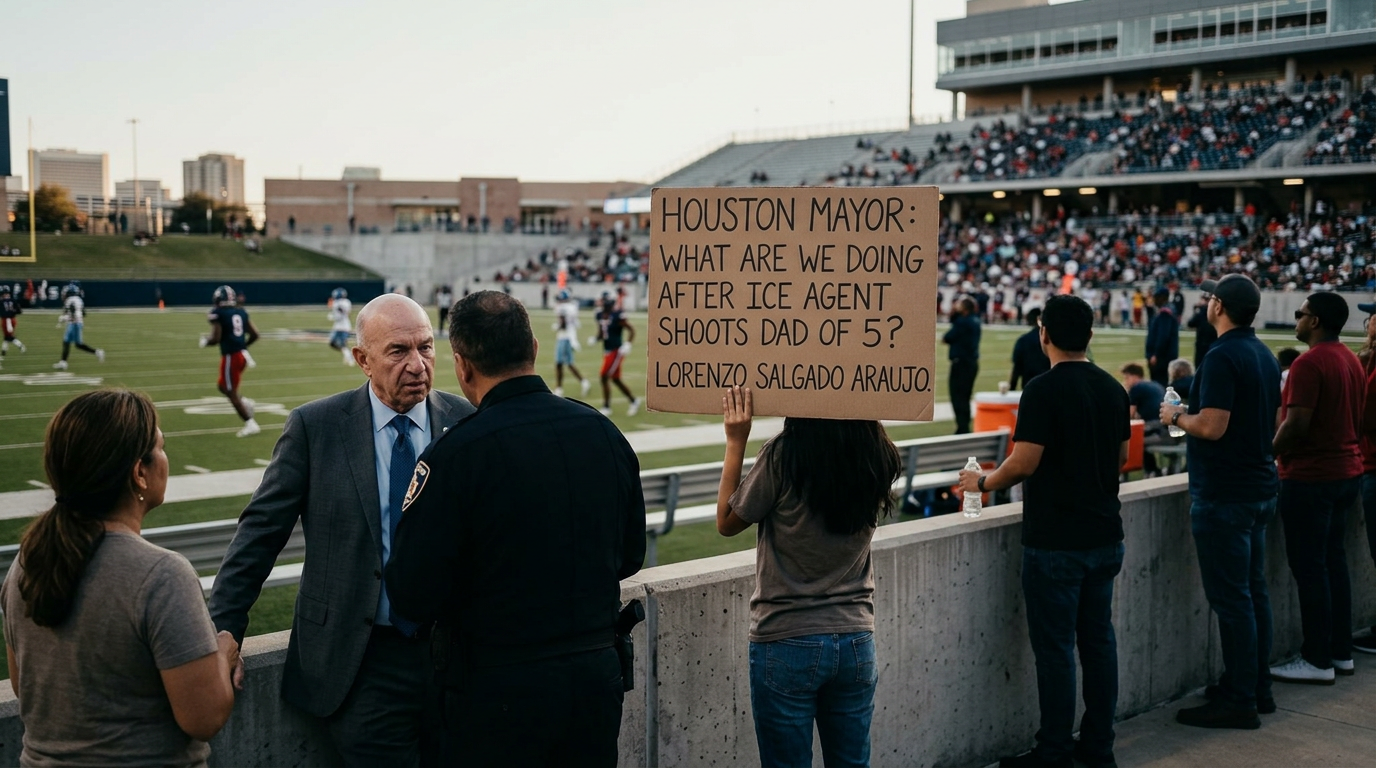
A critical incident involving Immigration and Customs Enforcement (ICE) in late 2024 has force Houston Mayor John Whitmire to navigate a complex political landscape between federal enforcement and local constituent concerns. The event, which occurred during a standard immigration arrest operation, involved an ICE agent discharging a firearm and wounding Lorenzo Salgado Araujo, a local resident and father of five. Historically, Houston has maintained a delicate balance regarding immigration policy, often attempting to avoid the 'sanctuary city' label while also declining to act as a direct extension of federal enforcement. Prior to this shooting, Whitmire had largely focused his mayoral agenda on public safety and infrastructure, steering clear of the divisive rhetoric often associated with border and deportation policies. However, the proximity of the shooting to residential areas and the resulting media scrutiny have made it impossible for City Hall to remain a passive observer in the national debate over interior enforcement. This transition marks a significant shift for a mayor known for his long-standing pragmatism during his decades-long tenure in the Texas Senate, where he often sought bipartisan consensus on law enforcement and criminal justice reform. The incident now serves as a catalyst for broader discussions on how Houston's local police interact with federal agents and the transparency required when federal operations result in violence on municipal soil. As the city handles the aftermath, the administration is being forced to define its stance on federal cooperation at a time when national immigration policy is becoming increasingly aggressive.
Texas relevance
The city of Houston is a major hub for Texas commerce and culture, home to one of the most diverse populations in the United States. Because Texas shares a massive border with Mexico, cities like Houston serve as critical points of focus for both state-led initiatives like Operation Lone Star and federal enforcement programs. The interaction between local Houstonians and federal agencies like ICE directly impacts the social and economic stability of Harris County. This specific incident highlights the intersection of Texas municipal governance and federal authority, testing the strength of Texas Senate Bill 4 (SB4) and other state-level mandates that require local cooperation with federal immigration officials. For Texans, this story is a bellwether for how other major metropolitan areas like Austin, Dallas, and San Antonio might manage similar conflicts between local safety and federal mandates.
Details of the ICE Operation and Shooting
The enforcement action that brought these issues to the forefront took place in a residential area of Houston, where federal agents were attempting to execute an administrative warrant. According to reports, the target was Lorenzo Salgado Araujo, who was confronted outside his family residence. During the encounter, the situation escalated rapidly, resulting in an agent firing their weapon and striking Salgado Araujo. The specifics of what led to the discharge of the firearm remain the subject of internal federal review, which often occurs behind a veil of limited public disclosure.
While federal agencies maintain that such operations are necessary for public safety and the rule of law, the presence of gunfire in a quiet neighborhood has raised alarms among local community leaders. Neighbors reported hearing the shots during a time of day when families were active, leading to questions about the protocols used for high-risk arrests in high-density areas. The victim’s family has emphasized his role as a provider and father, further humanizing a story that the federal government often frames through the lens of criminal statistics and deportation orders.
Following the shooting, local medical services were called to the scene, and the standard investigative procedures were initiated. However, because the incident involved federal law enforcement personnel, the Houston Police Department’s role was largely secondary and observational. This jurisdictional divide creates a friction point for the Mayor, who is often held accountable by the public for any violence occurring within city limits, regardless of which agency pulled the trigger.
Whitmire's Strategy of Pragmatism
Mayor John Whitmire entered office with a 'tough on crime' reputation built over decades in the Texas Legislature. His primary focus has always been the improvement of the Houston Police Department and the reduction of the city’s significant backlog of criminal cases. To achieve these goals, he has historically sought to avoid the 'culture war' topics that frequently derail municipal governance, specifically avoiding heated debates over immigration that have polarized other Texas cities like Austin.
By maintaining a professional working relationship with both state officials in Austin and federal officials in Washington, Whitmire hoped to secure the funding and resources necessary to modernize Houston’s infrastructure and public safety apparatus. This pragmatic approach was intended to shield Houston from the legal battles and funding cuts that often follow when a city takes a defiant stance against federal immigration enforcement movements. The mayor’s philosophy suggests that a city functions best when it focuses on potholes and police response times rather than national social policy.
The shooting of Salgado Araujo has disrupted this strategy. The incident forced the Mayor’s office to issue statements and engage with advocacy groups that demand a more vocal defense of immigrant rights. Conversely, any criticism of the ICE agents risks alienating the Republican-led state government in Austin, which has passed laws penalizing local officials who are perceived as being 'soft' on immigration enforcement or who hamper federal efforts.
Community Response and Advocacy Pushback
In the wake of the shooting, Houston-based advocacy groups have increased their pressure on City Council. Organizations that represent the immigrant community are calling for more transparency regarding how federal agencies coordinate with local law enforcement. They argue that if federal operations lead to violence, the local government has a moral and civic obligation to intervene and protect its residents. Protestors have gathered to demand that the Mayor take a more definitive stand against what they describe as aggressive and unnecessary tactics.
The families living in the vicinity of the incident have also expressed a sense of unease. For many Houstonians, the sight of unmarked federal vehicles and armed agents in their neighborhoods creates a climate of fear that transcends legal status. This fear can lead to a breakdown in community policing, as residents may become less likely to report crimes or cooperate with local police if they believe it will lead to federal intervention or deportation proceedings for themselves or their neighbors.
Whitmire has responded by attempting to offer empathy without promising policy changes that would violate state law. He has met with various stakeholders to listen to their concerns but remains cautious about making sweeping declarations. His administration’s challenge is to soothe the public’s anxiety while adhering to the legal constraints imposed by the Texas state government, which currently mandates high levels of cooperation with federal immigration authorities.
The Shadow of Texas Senate Bill 4
The legal backdrop for this entire situation is the contentious Texas Senate Bill 4, which prohibits local governments from enacting policies that limit immigration enforcement. Under this law, local officials—including mayors and police chiefs—could face removal from office or criminal charges if they intentionally obstruct federal immigration efforts. This creates a 'checkmate' scenario for leaders of large cities who might otherwise wish to implement 'sanctuary' style protections for their residents.
Mayor Whitmire is acutely aware of the penalties associated with SB4, having been a part of the legislative environment when such measures were debated. His reluctance to criticize the ICE operation too harshly is likely informed by the knowledge that the Texas Attorney General’s office is closely monitoring the actions of urban mayors. Any perceived move to hinder ICE could trigger a legal showdown with the state, potentially resulting in the loss of critical state funding for Houston’s cash-strapped programs.
The Salgado Araujo shooting serves as a practical test of how SB4 functions during a crisis. While the law mandates cooperation, it does not explicitly manage the fallout when that cooperation leads to civilian injuries. The Mayor is essentially trapped between a state mandate for total cooperation and a local demand for resident safety. This tension is characteristic of the modern Texas political landscape, where local autonomy is frequently overridden by state-level legislative priorities.
Impact on Federal-Local Relations
The incident has also strained the relationship between the Houston Police Department (HPD) and federal agencies. While HPD often works alongside federal task forces on drug and human trafficking cases, immigration enforcement is a distinct and more politically volatile category. When a federal agent uses force, it can tarnish the reputation of local law enforcement if the public does not distinguish between the two entities. Ensuring that the public knows HPD was not the primary actor in the shooting is a major priority for the mayor’s communications team.
There is also the question of future cooperation. If federal operations continue to result in high-profile violent incidents, the political cost of cooperation may eventually outweigh the legal cost of defiance. For now, Whitmire is attempting to bridge this gap by requesting better communication from federal agencies. The goal is to ensure that when ICE operates within the city, they do so in a manner that minimizes risk to the public and allows the city to prepare for the inevitable community response.
Federal agencies, for their part, maintain that their mission is separate from local municipal concerns. They operate under executive orders and federal statutes that do not require local mayoral approval. This power dynamic leaves the Mayor of a city like Houston with very few tools to influence how immigration enforcement is actually carried out on the ground, even as he bears the political brunt of the consequences.
Looking Forward: The 2024-2026 Political Horizon
As the next election cycle approaches, Whitmire’s handling of this incident will likely become a point of contention. Potential challengers from the left may cite his silence as a betrayal of the city’s diverse values, while challengers from the right may use any criticism of federal agents as evidence that he is not sufficiently committed to border security. The mayor’s ability to find a 'middle path' will determine his political longevity in a city that is increasingly being pulled in two different ideological directions.
The outcome of the internal investigation into the shooting will also be a major factor. If the agent is found to have acted outside of protocol, the Mayor may find the leverage he needs to demand stricter oversight of federal activities within the city. If the shooting is deemed a justified use of force under federal guidelines, the status quo is likely to remain, leaving the community’s concerns largely unaddressed.
Ultimately, the story of the Salgado Araujo shooting is more than just a single law enforcement incident; it is a reflection of the national struggle over immigration playing out on the streets of Texas. Houston serves as the frontline of this conflict, and Mayor Whitmire is the figure currently tasked with maintaining order in a system that is fundamentally fractured. How he balances the needs of his residents with the demands of the state and federal government will have long-lasting implications for the future of urban governance in Texas.
Analysis
The political calculation for Mayor Whitmire is exceptionally difficult given the current state of Texas politics. On one hand, he must appease a suburban and conservative-leaning voter base that values law and order and cooperation with federal agencies to ensure national security. On the other hand, the urban core of Houston contains a significant immigrant population that views federal overreach with suspicion and fear. By attempting to stay neutral, Whitmire initially hoped to avoid the wrath of both the Trump administration and the progressive wing of his own party. However, this shooting has removed the luxury of silence. His response will likely serve as a template for other moderate leaders across the South who are trying to manage the practical realities of immigration without alienating their respective state legislatures or the federal executive branch. The mayor's challenge is to support local law enforcement's right to operate while ensuring that federal agents do not create public safety risks for bystanders or non-violent residents.
Source attribution
This story was reported using a public release from the Texas Monthly. Keep TX Red rewrote the coverage independently and links to the official statement for verification.
Frequently Asked Questions
- Who was involved in the shooting in Houston?
- The shooting involved an agent from Immigration and Customs Enforcement (ICE) and Lorenzo Salgado Araujo, a local resident and father of five. The agent discharged their weapon during an attempt to take Salgado Araujo into custody on an administrative warrant.
- What is Mayor John Whitmire’s stance on immigration enforcement?
- Whitmire has generally pursued a pragmatic, safety-first approach, avoiding the 'sanctuary city' label to comply with state law while focusing on local crime reduction. However, this incident has pressured him to further define how Houston interacts with federal immigration authorities.
- How does Texas State Law SB4 affect this situation?
- Senate Bill 4 requires local law enforcement and officials to cooperate with federal immigration detainer requests and enforcement actions. If Whitmire were to obstruct ICE, he could face legal penalties or removal from office under the provisions of this state law.
- What has been the community's reaction to the shooting?
- The community has expressed significant concern and fear, with activists protesting the use of force in residential neighborhoods. Many are calling for the city to limit its cooperation with ICE to protect the immigrant population from similar violent encounters.
Official Sources
Take the next step
Browse the Newsroom →Read more about Keep Texas Red → Our full guide to what Keep Texas Red means and why Texans support it.
Get Texas updates delivered weekly.
Independent Texas reporting on politics, policy, and daily life. One email a week. Unsubscribe anytime.
Keep TX Red Newsroom
The Keep Texas Red Editorial Staff produces nonpartisan explainers, policy breakdowns, and educational resources to help Texans understand how their government works. All content is reviewed for accuracy and updated regularly.
About Keep TX Red →