Corpus Christi Water Subsidy Conflict: Residents vs Industrial Giants
A look at the $100 million water discount for industry in Corpus Christi and the legal battle to end residential subsidization of corporate utilities.
Editorial disclaimer: Opinions and analysis on Keep TX Red are editorial content — not statements of fact. See our editorial standards.
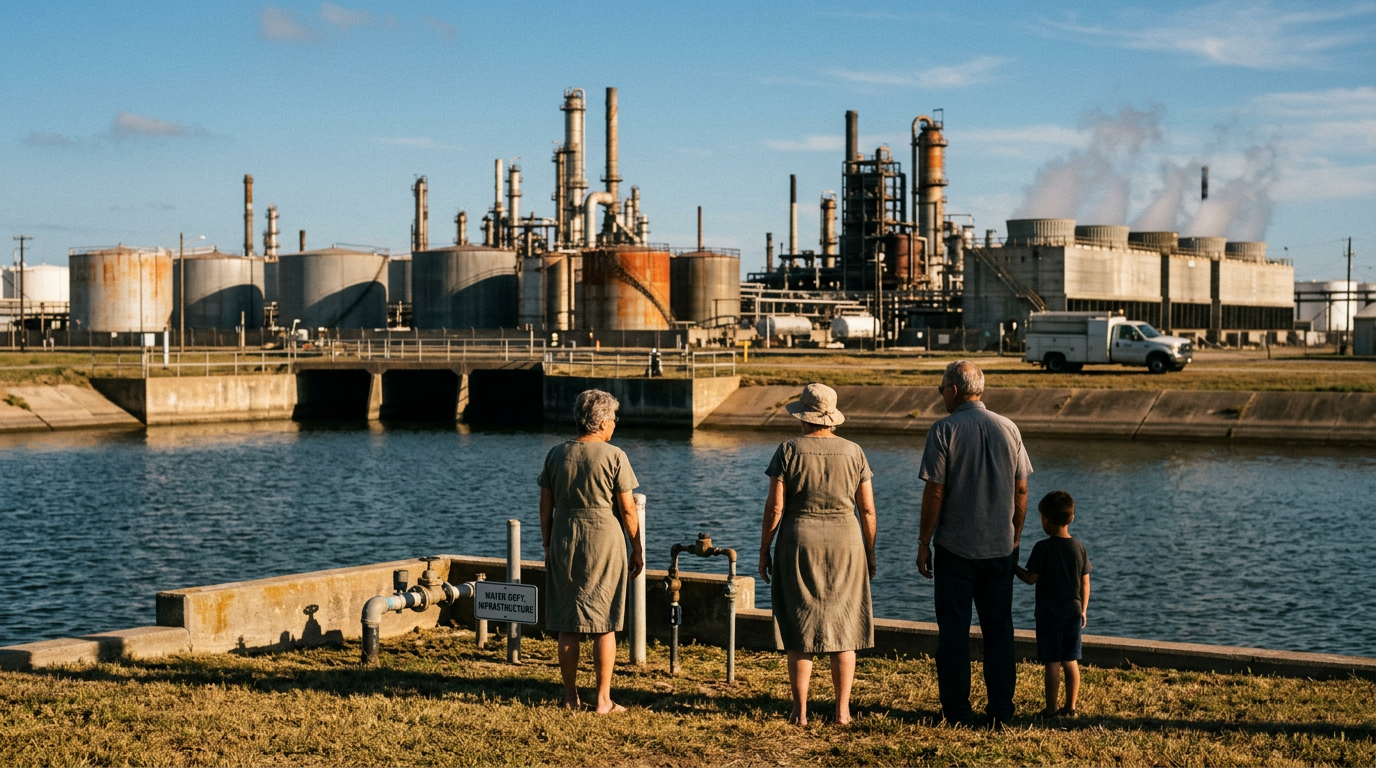
Officials in Corpus Christi have recently brought to light a long-standing utility structure that has effectively transferred the cost of water infrastructure and supply from massive industrial players to everyday residential and small business customers. Over a ten-year period, calculations suggest that these large-scale industrial users received approximately $100 million in discounts compared to what standard market rates would dictate. This arrangement wasn't the result of a single error, but rather a complex tiered rate system that favored high-volume consumption, often at the expense of the municipal utility fund's long-term sustainability. Historically, Texas coastal cities have used favorable utility rates as an incentive to attract and retain petrochemical and manufacturing giants, which serve as the backbone of the regional economy. However, as infrastructure aging and water scarcity become more pressing issues, the city council is now moving to rebalance these scales, leading to a significant legal and political confrontation with some of the state's largest energy producers.
Texas relevance
The situation in Corpus Christi, Texas, serves as a flashpoint for a broader statewide debate regarding how municipalities balance economic development incentives with the basic needs of their local taxpayers. As a hub for the Texas energy sector, Corpus Christi represents the delicate intersection of industrial growth and public infrastructure viability. The outcome of this rate dispute will likely set a precedent for other Texas cities, such as Houston or Beaumont, that host similar industrial concentrations. In Texas, where water rights and utility costs are strictly regulated but often locally controlled, the tension between maintaining a 'business-friendly' environment and ensuring fair pricing for residents is a defining characteristic of modern local governance.
The Evolution of Regional Water Pricing
For decades, the water rate structure in the Coastal Bend was designed under the assumption that high-volume users deserved deep discounts for their consistent and massive consumption. This 'incentive-based' model was intended to ensure that the massive refineries along the ship channel remained competitive in the global market. Over time, however, the gap between the cost of providing the water and the revenue generated from these industrial customers grew significantly.
Internal audits and recent city reviews indicate that while the cost to treat, transport, and secure water rights increased, the industrial rates remained largely stagnant or failed to keep pace with the burden placed on the system. This led to a situation where the fixed costs of the utility department—such as debt service on new pipelines and maintenance of treatment plants—were disproportionately weighted toward those who used the least amount of water: the local homeowners.
Quantifying the $100 Million Gap
The figure of $100 million represents the estimated difference between what industry actually paid and what they would have paid if their rates were aligned with the actual cost of service over the last decade. This deficit did not vanish; rather, it was absorbed by the general ratepayer base. For the average family in Corpus Christi, this meant higher monthly bills to cover the shortfall left by the large-scale discounts offered to industrial neighbors.
City officials argue that this discrepancy has hindered the city's ability to reinvest in critical infrastructure. When a significant portion of the revenue that should be coming from the largest consumers is discounted away, the city is left with fewer resources to address aging pipes, water quality issues, and the development of new water sources like desalination or additional reservoirs.
Industrial Pushback and Legal Challenges
The response from the industrial sector has been swift and litigious. Companies like Valero Energy have filed challenges to the city's proposed rate hikes, arguing that the new structures are unreasonable and violate existing understandings or contracts. Industry representatives often point to their large-scale tax contributions and employment numbers as justification for why they should receive preferential treatment when it comes to utility inputs.
From the perspective of these companies, a sudden and sharp increase in water costs represents a threat to their operating margins. They argue that the city's calculations are flawed and that the proposed increases are an attempt to fix budget shortfalls by targeting a small group of high-capacity users. This legal stalemate has the potential to drag on for years, leaving the future of the city's utility revenue in a state of uncertainty.
The Impact on Small Business and Households
While giant corporations fight to keep their discounts, small business owners in Corpus Christi have reported struggling with rising utility costs. Unlike major refineries, a local car wash or a neighborhood laundry mat does not have the legal department or the political leverage to negotiate a custom rate tier. They are subject to the standard commercial rates, which have risen as the city tries to manage its infrastructure needs.
For most residents, the water bill is a non-negotiable expense that has taken up an increasing share of the monthly household budget. Advocacy groups in the region have pointed out that the $100 million in lost revenue could have been used to freeze rate hikes for low-income seniors or to fund urgent repairs in historic neighborhoods where water mains are frequently prone to breaking.
Future Sustainability and Infrastructure Needs
Corpus Christi faces a unique geographical challenge: it is a port city in a semi-arid region that is prone to droughts. Ensuring a steady supply of water is essential for both the population and the industry. However, the current model of subsidization may no longer be viable as the costs of securing water—such as through the proposed seawater desalination projects—are projected to be astronomical.
If the city cannot reach an agreement where industrial users pay a fair share of these new, more expensive water sources, the financial burden on the average citizen could become unsustainable. The current debate is not just about correcting the past ten years of discounts, but about establishing a framework for how the next fifty years of water infrastructure will be funded.
Political Stakes for the City Council
The current City Council finds itself in a difficult political position. On one hand, they are answering to a frustrated electorate that is tired of seeing high utility bills and aging infrastructure. On the other hand, they must deal with the reality that the petrochemical industry is the dominant employer and a major source of economic activity in the region. Offending these giants could lead to reduced investment in the area.
However, the appetite for reform appears to be growing. Recent public meetings have shown significant support for the council's move to equalize rates. Council members have stated that their primary duty is to the citizens of Corpus Christi, and that while they value their industrial partners, those partners must operate under a 'pay-your-way' model that doesn't rely on the wallets of local families.
Analysis
OPINION: While the industrial sector undoubtedly provides thousands of jobs and significant tax revenue, the revelation of a $100 million 'subsidy' via skewed water rates suggests a failure in oversight that prioritizes corporate balance sheets over household budgets. Keeping Texas 'business-friendly' should not be synonymous with residents footing the bill for the operational costs of multi-billion-dollar corporations. The push by the Corpus Christi City Council to rectify this is a necessary step toward fiscal transparency. However, the aggressive legal pushback from industry giants like Valero indicates that these companies view favorable utilities not as a perk, but as an entitlement—a mindset that city leaders must challenge to protect the financial health of the Coastal Bend region.
Source attribution
This story was reported using a public release from the Texas Standard. Keep TX Red rewrote the coverage independently and links to the official statement for verification.
Frequently Asked Questions
- Why were the industrial companies getting a discount in the first place?
- Historically, the city used a 'declining block' rate structure. This meant that the more water a customer used, the less they paid per unit. While this encouraged large-scale industrial presence in Corpus Christi, it eventually led to a situation where the revenue collected from these giants did not cover their actual share of the system's maintenance and operating costs.
- Which companies are involved in the dispute?
- Major industrial players along the Corpus Christi Ship Channel, including prominent energy companies like Valero, are the primary stakeholders. These companies argue that the proposed rate hikes by the city are excessive and ignore the economic value they bring to the region through jobs and tax revenue.
- How does this affect my water bill if I live in Corpus Christi?
- Currently, residential rates are relatively high because they have been absorbing the 'subsidy' given to industry. If the city successfully reforms the rate structure, it could lead to a more equitable distribution of costs, potentially slowing the rise of residential rates or providing more funds for needed infrastructure repairs that prevent service disruptions.
Official Sources
Take the next step
Browse the Newsroom →Read more about Keep Texas Red → Our full guide to what Keep Texas Red means and why Texans support it.
Get Texas updates delivered weekly.
Independent Texas reporting on politics, policy, and daily life. One email a week. Unsubscribe anytime.
Keep TX Red Newsroom
The Keep Texas Red Editorial Staff produces nonpartisan explainers, policy breakdowns, and educational resources to help Texans understand how their government works. All content is reviewed for accuracy and updated regularly.
About Keep TX Red →