Buc-ee's Expansion Strategy: How the Texas Legend Transforms Interstate Economies
Texas-born Buc-ee's continues its national expansion, bringing its unique economic influence and massive footprint to cities like Tallahassee.
Editorial disclaimer: Opinions and analysis on Keep TX Red are editorial content — not statements of fact. See our editorial standards.
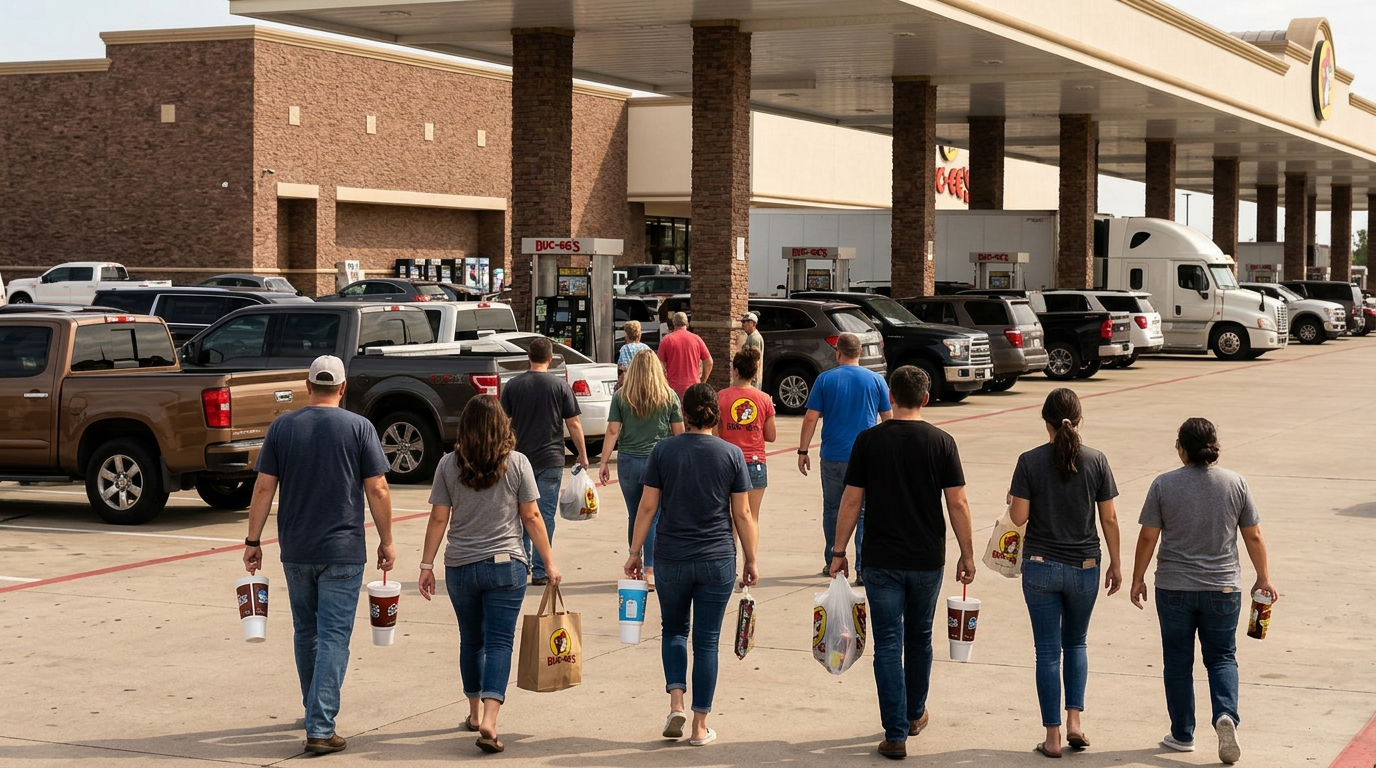
The phenomenon known as the 'Buc-ee's effect' is transitioning from a localized Texas curiosity to a significant driver of regional economic shifts across the Southern United States. Originally established in 1982 in Lake Jackson, Texas, by Arch 'Beaver' Aplin III and Don Wasek, the brand spent decades perfecting a high-volume retail model before embarking on an aggressive multi-state expansion. As new locations are planned for cities such as Tallahassee, Florida, local officials and residents are beginning to study the specific impact these massive travel centers have on traffic patterns, employment markets, and competitive landscapes. The brand's decision to move beyond the Lone Star State represents a strategic evolution that seeks to replicate its cult-like following in new demographic territories. Historically, Buc-ee's functioned as a coastal and suburban Texas staple, providing a predictable oasis for travelers along the I-10 and I-35 corridors. The company’s move toward massive 'destination' centers—some exceeding 75,000 square feet—began in earnest around the turn of the century. By the late 2010s, the company successfully launched its first non-Texas location in Alabama, signaling a new era of expansion. This growth is consistently characterized by high-wage entry-level positions, pristine facilities, and a refusal to allow 18-wheeler semi-trucks on the premises, a policy that differentiates its business model from traditional truck stops while focusing heavily on the passenger vehicle market.
Texas relevance
For Texans, Buc-ee's is more than a convenience store; it is a cultural landmark and a symbol of the state's logistical prowess. The brand's expansion into states like Florida serves as a significant export of Texas business culture and standards. As the company grows globally, it maintains its headquarters in Lake Jackson, ensuring that the corporate revenue generated by these out-of-state 'colonies' flows back into the Texas economy. Additionally, many of the products sold in Florida locations, including certain snacks and merchandise, are sourced from Texas-based distributors and producers, further cementing the economic link between the brand's home state and its new frontiers.
The Evolution of the Travel Center Model
In the early years of the company, the focus was primarily on providing a clean environment and consistent service in the Brazoria County area. The founders realized early on that the standard of 'clean restrooms' was a powerful marketing tool that could sustain a business even if competitors were located closer to the main highway. This realization led to a systematic overhaul of what a convenience store could represent, moving away from quick 'grab-and-go' stops toward 'destination' stops where visitors might spend an hour or more browsing.
This shift necessitated a massive increase in square footage and pump count. Modern Buc-ee's locations often feature over 100 fueling positions, ensuring that wait times are non-existent despite high volume. By providing a surplus of capacity, the brand eliminates the friction typically associated with interstate fueling stops. This surplus-based model is now being studied by city planners in expansion zones who must determine if existing road networks can handle the concentrated surge of traffic that follows a grand opening.
Employment Market and Wage Disruption
One of the most immediate impacts of a new Buc-ee's location is the disruption of the local labor market. The company is known for offering wages that significantly exceed the industry average for retail and food service roles, often starting employees at double the federal minimum wage. Furthermore, they provide full benefit packages including 401(k) matching and paid time off. For a city like Tallahassee, this forces surrounding retail businesses to re-evaluate their own compensation structures to remain competitive.
While these high wages are a boon for employees, they also represent the company's high expectations for productivity and service standards. The brand maintains strict policies regarding employee conduct and appearance, which helps maintain the 'clean and friendly' image that customers expect. This trade-off between higher pay and rigorous standards has allowed Buc-ee's to maintain a stable workforce in an industry traditionally plagued by high turnover rates, creating a reliable economic anchor for the local community.
Traffic Engineering and Community Impact
The footprint of a Buc-ee's travel center is roughly equivalent to a small shopping mall. When a location is announced, it typically triggers a series of traffic studies and infrastructure upgrades funded through a mix of private investment and public tax incentives. In new expansion territories, the concern often centers on how a single facility can generate thousands of trips per day without paralyzing local interchanges. The brand often seeks locations with easy 'on-off' access to major interstates to mitigate these logistical hurdles.
Beyond the roads, the environmental impact is also a point of discussion. With massive asphalt parking lots and high fuel throughput, the company must adhere to strict environmental regulations regarding runoff and fuel storage. Despite these challenges, many communities welcome the brand because it acts as a magnet for other development. Properties surrounding a Buc-ee's often see an increase in value as other retailers, hotels, and restaurants seek to capitalize on the high volume of captured traffic the beaver-branded sign attracts.
The Absence of Trucks: A Strategic Choice
Perhaps the most defining characteristic of the Buc-ee's business model is the exclusion of 18-wheelers. While most large-scale travel centers on interstate highways rely heavily on the trucking industry for fuel sales, Buc-ee's explicitly bans them from their properties. This decision is driven by the desire to create an environment that feels safer and more navigable for passenger vehicles. Without the noise, exhaust, and space requirements of semi-trucks, the centers can prioritize high-speed car fueling and expansive pedestrian-friendly retail areas.
This strategy has proven highly effective at attracting a specific demographic of travelers who might otherwise avoid traditional truck stops. By focusing on the family vacationer and the daily commuter, Buc-ee's has carved out a niche that allows them to charge competitive prices for fuel while generating the bulk of their profit from high-margin retail items like apparel, home decor, and prepared foods. This 'retail-first' approach is what truly separates the brand from its competitors in the energy sector.
The Cult of the Beaver: Brand Loyalty as Growth Engine
The success of Buc-ee's is inextricably linked to its mascot and the associated lifestyle branding. The 'Beaver' has become a recognizable icon of Texas culture, and the company has leveraged this to create an extensive merchandise line that accounts for a substantial portion of its revenue. Fans often travel hundreds of miles specifically to visit a new location, treating the convenience store as a tourist destination rather than a utilitarian stop.
As the company moves into Florida and other southern states, this brand loyalty is being tested. So far, the enthusiasm has followed the brand across state lines, with grand openings often drawing crowds similar to those seen at major sporting events or concert tours. This level of engagement allows the company to minimize traditional advertising costs, relying instead on word-of-mouth and the sheer visibility of its massive billboards that often start appearing hundreds of miles before the actual store.
Expanding the Texas Footprint Nationally
Despite its rapid growth in states like Florida, Georgia, and Tennessee, the heart of Buc-ee's remains firmly planted in Texas. The company continues to break its own records within the state, such as with the massive Luling location which reclaimed the title of the 'World's Largest Convenience Store.' This ongoing investment in Texas suggests that while the brand is hungry for national market share, it views its home state as the laboratory where new concepts and larger-scale operations are first perfected.
The move toward Tallahassee is part of a larger 'I-10 strategy' aimed at dominating the southern corridor of the United States. By placing locations at strategic intervals along major cross-country routes, Buc-ee's is attempting to become the standard-bearer for highway travel. For the Texas economic engine, this means that one of its most successful private enterprises is successfully colonizing the American highway system, bringing a uniquely Texan retail experience to millions of new customers every year.
Analysis
The 'Buc-ee's Effect' is a fascinating case study in brand loyalty and retail disruption. By refusing to cater to the trucking industry, Buc-ee's creates a curated environment for families and vacationers, which in turn drives higher-margin retail sales compared to standard gas stations. Critics often point to the strain on local infrastructure due to the massive influx of vehicles, yet the promise of significant sales tax revenue and jobs often outweighs these concerns for local municipalities. As the brand exports the 'Everything is Bigger in Texas' ethos, it essentially acts as a soft-power ambassador for the state, advertising Texas hospitality and scale to the rest of the country. This expansion proves that a well-executed regional identity can be scaled into a national powerhouse without losing its core cultural appeal.
Source attribution
This story was reported using a public release from the Buc-ee's (Google News). Keep TX Red rewrote the coverage independently and links to the official statement for verification.
Frequently Asked Questions
- Why does Buc-ee's not allow semi-trucks?
- The company focuses on the passenger vehicle market to create a safer, quieter, and more family-friendly environment. This allows for narrower lanes and a retail-centric layout that wouldn't be possible with the large turning radii required by 18-wheelers.
- Where is the home office of Buc-ee's located?
- Buc-ee's is headquartered in Lake Jackson, Texas, and remains a privately held company since its founding in 1982.
- How many fueling stations do the large travel centers typically have?
- Modern flagship locations generally feature between 100 and 120 fueling positions to ensure travelers never have to wait for a pump.
- What is the 'Buc-ee's effect' on local economies?
- It typically involves a significant boost in local sales tax revenue, an increase in surrounding property values, and a shift in the local labor market toward higher retail wages.
Official Sources
Take the next step
Browse the Newsroom →Read more about Keep Texas Red → Our full guide to what Keep Texas Red means and why Texans support it.
Get Texas updates delivered weekly.
Independent Texas reporting on politics, policy, and daily life. One email a week. Unsubscribe anytime.
Keep TX Red Newsroom
The Keep Texas Red Editorial Staff produces nonpartisan explainers, policy breakdowns, and educational resources to help Texans understand how their government works. All content is reviewed for accuracy and updated regularly.
About Keep TX Red →