Texas Lawmakers Target Crypto ATM Fraud After Residents Lose Millions to Digital Scams
Texas legislators are proposing new regulations for cryptocurrency kiosks after a reported $56 million was stolen from residents through ATM-style scams.
Editorial disclaimer: Opinions and analysis on Keep TX Red are editorial content — not statements of fact. See our editorial standards.
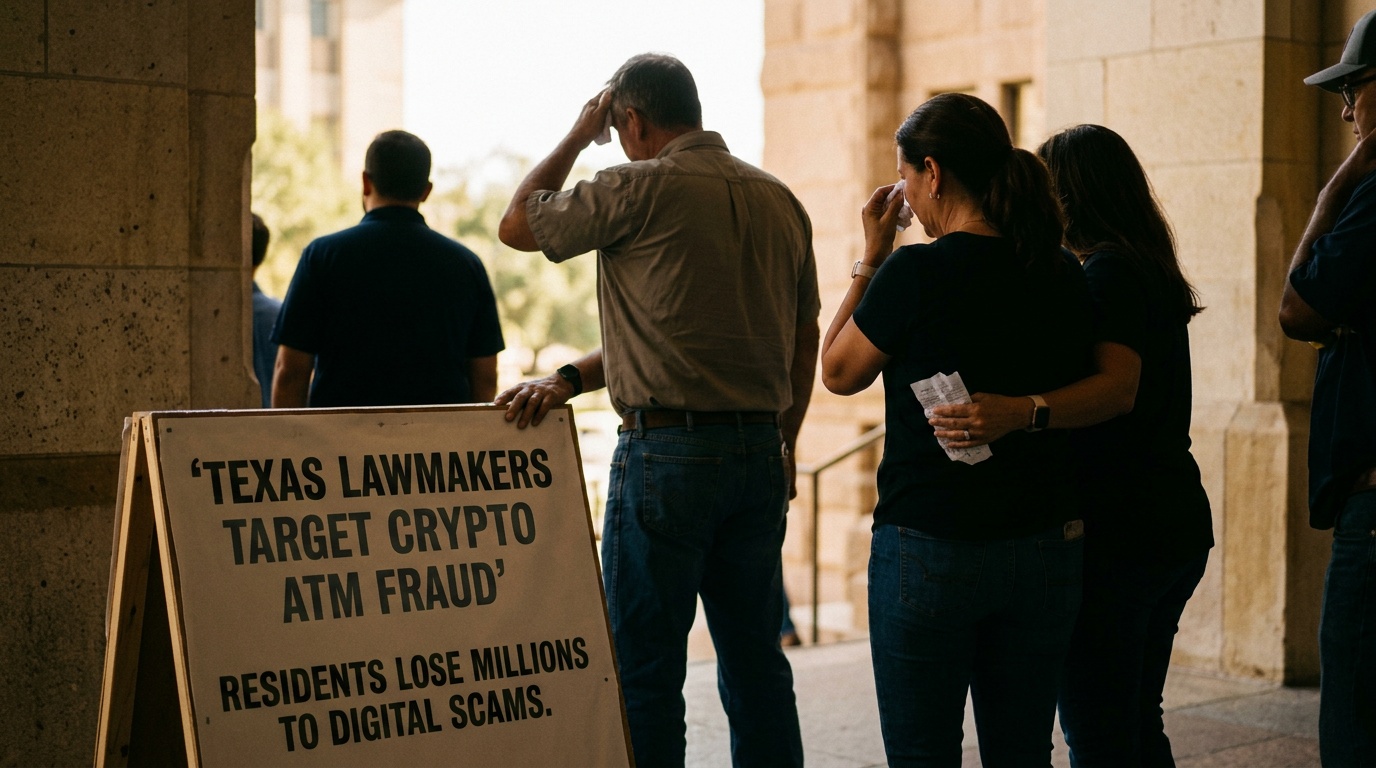
Lawmakers in Austin are shifting their focus toward the rapidly expanding market of cryptocurrency kiosks as new data reveals a staggering financial toll on the state's population. During the previous calendar year, Texans were defrauded of approximately $56 million through transactions involving these standalone machines, which operate similarly to traditional bank ATMs but facilitate the exchange of cash for digital assets. The decentralized and often irreversible nature of these transactions has made them a preferred tool for bad actors seeking to exploit vulnerable individuals, particularly the elderly and those unfamiliar with blockchain technology. Historically, Texas has maintained a relatively hands-off approach to the burgeoning digital asset industry, aiming to position the state as a global hub for Bitcoin mining and financial innovation. However, the rise in reported criminal activity has prompted a bipartisan call for increased oversight and consumer safeguards. This trend follows a national spike in 'pig butchering' and government impersonation scams, where victims are coached to withdraw cash and deposit it into specific crypto kiosks. Unlike traditional wire transfers or credit card transactions, which often have built-in fraud delays or the ability to freeze funds, crypto transfers occur almost instantaneously on a distributed ledger. Once the funds are converted to a digital token and sent to a wallet controlled by a scammer, they are notoriously difficult for local law enforcement to recover. The proposed legislative response aims to bridge the gap between financial freedom and public safety, ensuring that the convenience of these kiosks does not come at the expense of fiscal security for average citizens. As the Texas Legislature prepares for upcoming sessions, the debate over how to regulate these machines without stifling the state's tech-friendly reputation is expected to intensify.
Texas relevance
The issue is deeply seated in the Texas economy because the state currently hosts one of the highest densities of cryptocurrency kiosks in the United States, with thousands of machines located in convenience stores and gas stations across Houston, Dallas, San Antonio, and Austin. The $56 million lost represents a significant drain on the local economy and directly affects the financial stability of Texas households. By addressing this at the state level, the Texas Legislature is looking to set a precedent for how individual states can manage decentralized finance risks within their own borders.
The Mechanism of the Scam
The primary method utilized by fraudsters involves psychological manipulation, often referred to as social engineering. Victims typically receive a phone call or message from someone posing as a representative of a government agency like the IRS or a utility company, claiming there is an outstanding debt or a legal issue that requires immediate payment. To 'resolve' the issue, the victim is directed to a physical cryptocurrency kiosk located nearby.
Because these machines are often placed in high-traffic, low-supervision environments like 24-hour convenience stores, the scammers can keep the victim on the phone throughout the entire process. The victim inserts physical cash into the machine, which then generates a QR code or sends a digital asset directly to the scammer's wallet. The speed of the transaction is the scammer's greatest asset, as it bypasses the traditional banking alerts that might trigger a fraud investigation during a standard branch visit.
Furthermore, many of these kiosks have historically had lax 'Know Your Customer' (KYC) requirements for smaller transactions. This anonymity allows criminals to move illicit funds with minimal risk of immediate detection, leaving local police departments with little more than a digital address that often leads back to overseas accounts beyond their jurisdiction.
Current Legislative Proposals
In response to the $56 million in losses, members of the Texas House and Senate are exploring a variety of regulatory frameworks. One leading proposal involves requiring kiosk operators to implement a mandatory delay for first-time users or for transactions exceeding a certain dollar threshold. This 'wait time' would provide victims a window to rethink the transaction or for family members to intervene before the funds are permanently transferred into the blockchain.
Another avenue being discussed is the requirement for clearer on-screen warnings. These would explicitly state that no government agency or legitimate business will ever demand payment via a cryptocurrency kiosk. Lawmakers are also looking at licensing requirements that would force operators to maintain more robust records and report suspicious activity directly to the Texas Department of Banking, similar to the requirements placed on traditional money transmitters.
The debate also touches on the physical placement of these machines. Some advocates suggest that kiosks should be restricted to locations with active staff who can be trained to recognize the signs of a person being coached through a scam over the phone. However, operators argue that such restrictions would unfairly limit their business model and the accessibility of digital financial tools for unbanked populations.
The Economic Impact on Texas Residents
The financial devastation caused by these scams is not evenly distributed. Data suggest that older Texans, who may have significant savings but less familiarity with digital wallets, are the primary targets. When a senior is defrauded of their life savings through a kiosk, it not only impacts their personal well-being but also increases the burden on state social services and local charities.
Beyond the direct loss of $56 million, there is the hidden cost of law enforcement resources. Rural sheriff's offices and municipal police departments are increasingly overwhelmed by reports of crypto-related fraud. Since these crimes often involve international syndicates, local authorities spend hundreds of hours on cases that rarely result in an arrest or the recovery of funds, diverting attention from other local public safety priorities.
There is also a reputational risk for the state of Texas. As a leader in the 'New Tech' economy, the state risks being seen as a haven for financial predators if it does not establish clear rules of the road. Protecting consumers is now being framed by some lawmakers as a necessary step to ensuring the long-term viability of the legitimate crypto industry in the Lone Star State.
Challenges in Law Enforcement and Recovery
A major hurdle for Texas authorities is the technical nature of blockchain technology. Unlike a traditional bank account where a manager can 'reverse' a fraudulent wire if notified quickly enough, a transaction on the Bitcoin or Ethereum network is mathematically finalized once it is added to a block. There is no central authority to appeal to for a refund.
Local prosecutors also face a jurisdictional nightmare. Even if a Texas Ranger or local detective can trace the funds through various 'mixers' and wallets to a final destination, that destination is frequently in a country that does not have an extradition or financial cooperation treaty with the United States. This makes the prevention of the crime far more effective than any attempt at recovery after the fact.
To combat this, some Texas regions have started specialized task forces that combine cyber-experts with traditional fraud investigators. These teams work to educate the public, but they acknowledge that the sheer number of kiosks—roughly one every few blocks in some major cities—makes physical monitoring nearly impossible without statewide legislative mandates.
The Path Forward for Kiosk Operators
Industry representatives for cryptocurrency ATM companies argue that they are already taking steps to mitigate fraud. Many machines now include prompts that ask the user if they are on the phone with someone they don't know or if they are being told to pay a government fine. They argue that excessive regulation could stifle innovation and hurt legitimate users who use the machines for remittances or as a gateway to the digital economy.
However, the high volume of losses reported last year suggests that current self-regulation is insufficient. Lawmakers are expected to call for industry leaders to testify in upcoming committee hearings to determine exactly how much of their profit is derived from what are clearly fraudulent transactions. The pressure is on for companies to prove they can protect their customers without being forced to by state law.
As the session nears, the focus will likely remain on finding a 'Texas-sized' solution that balances the state's love for deregulation with the undeniable need to protect its citizens from a multi-million dollar criminal enterprise operating in plain sight within their own neighborhoods.
Analysis
The move toward regulation represents a pivotal shift in the Republican-led legislature's stance on digital assets. While Texas leadership remains staunchly pro-crypto in terms of mining and institutional investment, there is an emerging realization that unchecked retail access through physical kiosks creates a massive loophole for organized crime. The challenge for lawmakers will be crafting language that mandates identity verification and 'cooling-off' periods for large transactions without violating the privacy principles that draw many users to cryptocurrency in the first place. Expect industry lobbyists to fight for self-regulation, while consumer advocacy groups push for mandatory warnings and transaction limits.
Source attribution
This story was reported using a public release from the Texas Standard. Keep TX Red rewrote the coverage independently and links to the official statement for verification.
Frequently Asked Questions
- Why are crypto ATMs a favorite for scammers in Texas?
- Crypto ATMs allow for the nearly instantaneous transfer of physical cash into a digital format that is difficult to track and impossible to reverse. Scammers use this speed to ensure the money is gone before the victim realizes they have been defrauded.
- What should I do if I think I'm being directed to a crypto kiosk for a scam?
- Hang up the phone immediately. No legitimate government agency, including the IRS, Social Security Administration, or local law enforcement, will ever ask for payment via a cryptocurrency kiosk or Bitcoin ATM.
- Is the Texas government going to ban these machines?
- There is currently no serious proposal to ban the machines entirely. Instead, lawmakers are focusing on regulation, such as requiring clearer warnings, licensing operators, and potentially implementing 'cooling-off' periods for large transactions.
- Who is most at risk for these types of scams in Texas?
- While anyone can be a victim, elderly residents are frequently targeted because they may have higher cash reserves and may be less familiar with how cryptocurrency works, making the scammer's instructions seem more plausible.
- Why can't the police just refund the stolen money?
- Unlike a bank, there is no central institution that controls cryptocurrency. Once a transaction is sent to a scammer's digital wallet, it is permanent. Recovery usually requires seizing the scammer's digital keys, which is extremely difficult if they are operating outside the U.S.
Official Sources
Take the next step
Browse the Newsroom →Read more about Keep Texas Red → Our full guide to what Keep Texas Red means and why Texans support it.
Get Texas updates delivered weekly.
Independent Texas reporting on politics, policy, and daily life. One email a week. Unsubscribe anytime.
Keep TX Red Newsroom
The Keep Texas Red Editorial Staff produces nonpartisan explainers, policy breakdowns, and educational resources to help Texans understand how their government works. All content is reviewed for accuracy and updated regularly.
About Keep TX Red →