State Board of Education Prepares for Major Shift in Texas Textbook Selection Process
Texas explores new measures to increase state oversight over public school textbooks, potentially reshaping how millions of students learn history.
Editorial disclaimer: Opinions and analysis on Keep TX Red are editorial content — not statements of fact. See our editorial standards.
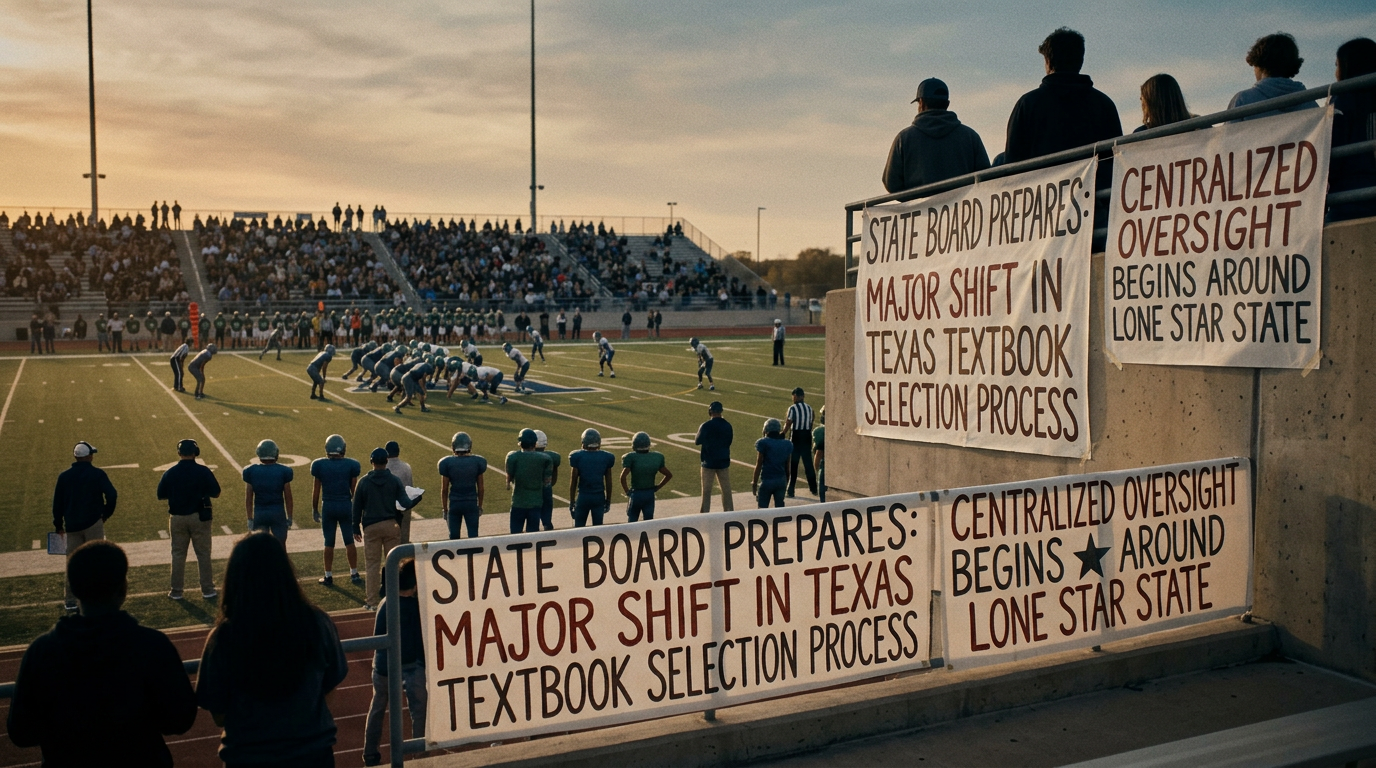
The Texas State Board of Education is entering a new era of curriculum management that could significantly alter the materials used in classrooms across the Lone Star State. Historically, while the state provided a list of recommended materials, local school districts maintained a higher level of autonomy in choosing specific vendors. New legislative pressures and shifts in board policy are moving toward a more centralized model of oversight. This evolution follows decades of debate regarding how historical events, civic duties, and scientific theories are presented to the next generation of Texans. The current movement aims to ensure that any materials purchased with state funds align strictly with the Texas Essential Knowledge and Skills statewide standards. Contextually, Texas has long functioned as a titan in the national textbook market due to the sheer volume of its student population. Since late in the 20th century, the decisions made in Austin have influenced what publishers include in versions of books sold to other states. This latest push for 'unprecedented influence' builds upon previous efforts to streamline instructional materials through House Bill 1605, which created incentives for districts to use state-vetted, high-quality instructional materials. The change represents a move from mere recommendation to active curation of the intellectual landscape for millions of Texas children.
Texas relevance
Texas is the centerpiece of this development. With over five million students in its public school system, the Texas education market dictates economic outcomes for major publishing houses. Decisions made by the SBOE in Austin ripple through every corner of the state, from the urban centers of Houston and Dallas to the smallest rural districts in the Panhandle. Because Texas utilizes a unique funding mechanism for instructional materials, any shift toward centralized state control directly affects how local tax dollars and state grants are allocated. For Texas parents, this means the content of their children's history and science books will increasingly reflect the consensus of state-level officials rather than local school board members.
The Mechanism of State-Level Instructional Influence
The primary vehicle for this expanded influence is the restructuring of the state's vetting process for instructional materials. Under the newer frameworks, the State Board of Education (SBOE) is tasked with a more rigorous review of every chapter and digital module. This isn't just about catching typos; it is about verifying that the tone and factual content meet the specific expectations of the Texas Legislature and the Board.
When the state approves a specific set of materials, it often attaches financial incentives for local districts. Schools that choose from the 'state-approved' list may receive additional funding per student to cover the costs of these materials. For districts facing tight budgets, this financial nudge makes it difficult to deviate from the state's preferred list, effectively creating a de facto mandate for standardized content.
Historical Context of Texas Curricular Debates
Texas has been the site of 'textbook wars' since at least the 1960s. In those early years, activists would travel to Austin to testify before the SBOE regarding the portrayal of the founding fathers, the role of religion in society, and the presentation of the free enterprise system. These debates have only intensified as the state's political climate has evolved.
Previous legislative sessions laid the groundwork for the current situation by expanding the board's power to reject materials that it deems inaccurate or inappropriate. This legacy of intervention has established Texas as a state that takes curriculum seriously, viewing it as a vital component of public policy rather than just a technical academic matter. The current move toward even greater influence is the logical conclusion of a forty-year trend.
Economic Pressure on National Publishers
Publishers like Pearson, McGraw-Hill, and Houghton Mifflin Harcourt have historically tailored their products specifically for the Texas market. Because the Texas market is so lucrative, many companies find it more cost-effective to produce a 'Texas Edition' of a book and then sell that same version to smaller states that lack the bargaining power of the SBOE.
As Texas moves toward more rigid and specific requirements, these publishers face a crossroads. They must decide whether to adopt the Texas standards for their entire national catalog or maintain separate, more expensive production lines. Most often, the 'Texas version' becomes the default for much of the country, meaning that the influence of the Texas SBOE extends far beyond the state's borders.
Local Control vs. State Sovereignty
One of the most significant tensions in this development is the friction between local school boards and the state government. Traditionally, Texas school boards have prided themselves on their independence, representing the specific values and needs of their communities. Some local officials argue that the state is overstepping by making it financially punitive to choose alternative books.
Conversely, state leaders argue that without a strong central standard, the quality of education fluctuates wildly. They contend that the state has a sovereign interest in ensuring that the 'Texas Story' is told accurately and that students are prepared for citizenship in a way that aligns with the majority of the state's taxpayers. This debate is currently playing out in legislative chambers and school board meetings across the state.
The Role of Digital and Open-Education Resources
In a modern twist, the state is also looking at digital platforms and 'open-education resources' (OER). By developing its own digital curriculum, the state can bypass private publishers entirely. This gives the SBOE total control over the text, allowing for real-time updates and changes without the need for a new multi-year printing cycle.
The shift to digital also allows for better tracking of how materials are used in the classroom. If the state provides the platform, they can see which modules are being completed and how students are performing on assessments. This level of integration represents the 'unprecedented' nature of the influence currently being sought by educational authorities in Austin.
Public Perception and Parental Rights
A major driver behind these changes is the parental rights movement. Many Texas parents have expressed a desire for more transparency regarding what is being taught in the classroom. By centralizing the vetting process at the state level, proponents argue that parents have a 'one-stop shop' to hold officials accountable for the curriculum.
If a parent in a small town disagrees with a textbook, they no longer have to fight a lone battle with a local principal. Instead, they can join statewide coalitions to influence the SBOE's decisions. This has turned textbook selection into a high-stakes political event, with public hearings in Austin drawing hundreds of speakers from across the political spectrum.
Analysis
The trend toward centralized textbook approval can be viewed as an effort to bring consistency and accountability to a fragmented educational system. Proponents argue that a standardized curriculum ensures that a student in El Paso receives the same high-quality instruction as a student in Tyler, reducing the 'zip code lottery' of education. Critics, however, worry that this diminishes the traditional Texas value of local control. From an editorial standpoint, this shift signals a hardening of the state's resolve to supervise the cultural and historical narratives taught in schools. By exerting more influence over the selection process, the state effectively filters the ideological and pedagogical framework through which young Texans view their world.
Source attribution
This story was reported using a public release from the Texas History Stories (Google News). Keep TX Red rewrote the coverage independently and links to the official statement for verification.
Frequently Asked Questions
- Does this mean local school boards can no longer choose their own books?
- Local boards technically retain the right to choose their own materials, but the state has introduced financial incentives that make it much more affordable to use state-approved books. If a district chooses a book not on the approved list, they may have to cover more of the cost using local funds rather than state grants.
- What is the Texas Essential Knowledge and Skills (TEKS)?
- TEKS are the state standards for what students should know and be able to do at each grade level in every subject. All state-approved textbooks must demonstrate that they cover 100% of the TEKS for that specific subject and grade.
- How does this affect students' education?
- The goal is to provide a consistent, high-standard curriculum across all 1,200+ Texas school districts. However, the specific impact depends on the content of the books chosen, particularly in sensitive subjects like social studies, history, and science.
Official Sources
Take the next step
Browse the Newsroom →Read more about Keep Texas Red → Our full guide to what Keep Texas Red means and why Texans support it.
Get Texas updates delivered weekly.
Independent Texas reporting on politics, policy, and daily life. One email a week. Unsubscribe anytime.
Keep TX Red Newsroom
The Keep Texas Red Editorial Staff produces nonpartisan explainers, policy breakdowns, and educational resources to help Texans understand how their government works. All content is reviewed for accuracy and updated regularly.
About Keep TX Red →