New Polling Data Explores Shifting Support Trends Among Texas Black Voters Ahead of Senate Contest
Recent data from the Texas Politics Project shows unexpected polling strength for the Democratic Senate nominee among key voter blocks.
Editorial disclaimer: Opinions and analysis on Keep TX Red are editorial content — not statements of fact. See our editorial standards.
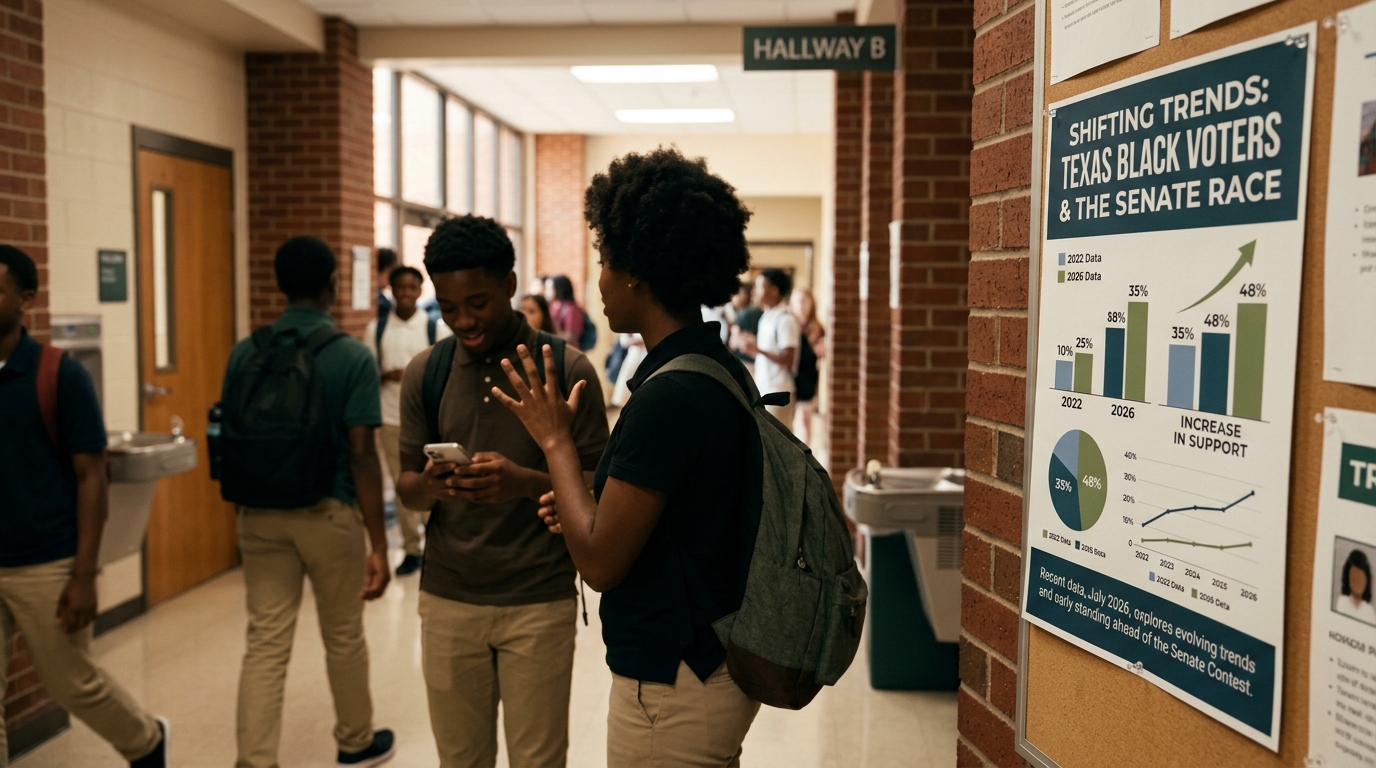
Data released in July 2026 by the Texas Politics Project indicates a notable shift in the early-season standing of James Talarico, the Democratic nominee for the U.S. Senate. Historically, statewide Democratic candidates in Texas have struggled to secure high-intensity commitment from core constituencies early in the cycle, often relying on late-game mobilization efforts. However, this latest survey shows Talarico outperforming the early metrics of previous candidates, such as Beto O'Rourke or Colin Allred, specifically among Black voters across the state's major metropolitan hubs. While the numbers suggest a stronger-than-expected baseline of support, the data also highlights a lingering gap between candidate preference and actual turnout enthusiasm. Contextually, Texas has seen a decade of fluctuating voter participation within the Black community, a demographic that remains a cornerstone of the Democratic platform in the Lone Star State. In previous cycles, the challenge for the party has not been winning the majority of these votes, but rather ensuring that voters feel a direct connection to the candidate's platform enough to physically cast a ballot. For Talarico, a former teacher and state legislator known for focusing on public education and religious ethics, the current polling suggests his messaging is resonating differently than the more traditional partisan rhetoric used by his predecessors. This shift comes at a time when Texas legislative maps and new voting laws have made centralized mobilization more difficult, forcing candidates to seek deeper, more authentic engagement much earlier in the election calendar.
Texas relevance
This data is critical for Texas because it impacts the resource allocation for the upcoming 2026 midterm elections. Specifically, it signals to both major parties how they must engage with voters in Dallas, Houston, and the Austin-San Antonio corridor. For Texas Republicans, these figures indicate a need to defend their share of the electorate or find new ways to communicate their platform to urban and suburban voters who may be drifting toward the Talarico camp. The state's political landscape is often determined by the margins in these specific communities, making this polling a primary indicator of whether the general election will be a narrow contest or a comfortable win for the incumbent party.
Historical Context of the Democratic Strategy in Texas
For nearly thirty years, the Democratic Party in Texas has searched for a candidate capable of bridging the gap between urban centers and the more conservative suburban rings. James Talarico’s entry into the Senate race followed a tenure in the Texas House where he often utilized his background in theology and education to frame political issues in a moral context. This approach appears to be a factor in his early success with Black voters, many of whom are deeply connected to faith-based communities and educational advocacy groups.
Compared to the 2018 or 2024 cycles, the current polling suggests a less polarized reception for the Democratic nominee within these specific communities. In past years, candidates often faced criticism for only appearing in these neighborhoods during the final weeks of the campaign. By establishing a presence and a clear message early, Talarico is attempting to break a cycle of 'disenchantment' that has plagued statewide Democratic efforts for decades. However, the path from polling data to the ballot box remains filled with obstacles, including a robust Republican counter-messaging machine.
Demographic Specifics and Urban Influence
The Texas Politics Project survey breaks down support by region, showing that Talarico is holding a commanding lead in areas like Harris County and Dallas County. These regions are essential for any candidate hoping to overcome the deep-red voting blocks found in West Texas and the Panhandle. The strength of his support in these areas is higher than what was seen at similar points in previous high-profile Senate bids, suggesting a consolidation of the base that usually occurs much closer to Election Day.
Despite this, the data points to a potential weakness: younger voters within these demographics show a higher degree of uncertainty. While older Black voters appear committed to the Democratic ticket, the under-30 demographic remains skeptical or undecided. This mirrors a national trend where younger voters are questioning their party affiliations, a trend that Texas Republicans could potentially exploit if they offer a compelling alternative focused on economic opportunity and school choice.
The Challenge of Voter Enthusiasm
A recurring theme in the 2026 data is that 'support' does not always equal 'enthusiasm.' A voter may indicate they prefer a candidate when asked by a pollster, but that does not guarantee they will wait in line for an hour to vote. The Texas Politics Project noted that while Talarico’s numbers are high, the number of respondents who say they are 'extremely excited' to vote is still lower than the figures seen during the peak of the 2018 'Beto-mania' movement.
This enthusiasm gap is where the rubber meets the road for Texas campaigns. The current legal environment in Texas, including the provisions of Senate Bill 1, has standardized voting hours and locations, making it imperative for campaigns to have a highly motivated base. Without a significant surge in excitement, a candidate can lead in every poll throughout the summer and still lose by double digits when the official tally is conducted in November.
Education and Faith as Campaign Pillars
The Talarico campaign has leaned heavily into his identity as a former teacher, a move that directly addresses concerns in the Black community regarding the future of public school funding in Texas. With the ongoing debate over school vouchers and the 'Parental Empowerment' agenda championed by Governor Greg Abbott, Talarico has positioned himself as a defender of the traditional public school system. This is a strategic move, as public schools often serve as the largest employers and community hubs in urban Texas districts.
Additionally, his use of 'Social Gospel' rhetoric is designed to appeal to the religious sensibilities of many Texas voters. By framing policies like Medicaid expansion and minimum wage increases as moral imperatives rather than just political points, he is attempting to mitigate the 'progressive' label that has historically hurt Democratic candidates in the state. Whether this strategy can hold up under the scrutiny of a general election debate remains to be seen.
The Republican Counter-Strategy
Texas Republicans are unlikely to let these polling numbers go unchallenged. The state GOP has increasingly invested in minority outreach programs, opening community centers in urban areas that were once considered untouchable by the party. Their counter-narrative focuses on the economic impact of federal policies, arguing that the Democratic platform leads to higher costs of living and fewer jobs for working-class Texans of all backgrounds.
As the 2026 race progresses, expect the Republican incumbent's campaign to emphasize Talarico’s voting record in the Texas Legislature, specifically on issues related to tax policy and law enforcement. By painting the challenger as an 'Austin liberal' who is out of touch with the safety and economic needs of the greater Texas population, Republicans aim to suppress the very enthusiasm that Talarico needs to fuel his underdog campaign.
Potential Impact on Down-Ballot Races
The 'Talarico Effect' could have significant implications for local races across Texas. If the Senate nominee successfully drives up turnout among Black voters, it could provide a lift to Democratic candidates running for the State Board of Education, judicial seats, and the Texas House. This 'coattail' effect is a major concern for Republican strategists who are working to maintain their majority in the state capitol.
Conversely, if the enthusiasm gap persists and Talarico fails to mobilize his base, it could lead to a 'top-heavy' failure where the lack of energy at the top of the ticket discourages voters from showing up for local contests. This makes the Senate race a bellwether for the overall political health of the state's two-party system. The next few months of campaigning will determine if these early polling gains are a permanent shift or just a temporary anomaly.
Analysis
From a Keep TX Red perspective, these polling numbers represent a double-edged sword for the Democratic strategy. While seeing higher-than-average support in July is a victory for Talarico's branding, the 'enthusiasm gap' mentioned in the data suggests that these voters are not yet mobilized. Historically, Democratic candidates in Texas hit a ceiling when they fail to translate polling numbers into actual precinct-level turnout. If the Talarico campaign cannot turn these favorable views into a high-energy movement by November, the Republican infrastructure—which traditionally excels at late-cycle mobilization—will likely overcome this early statistical advantage. Furthermore, this poll may serve as a wake-up call for conservative strategists to refocus on the bread-and-butter economic issues that resonate with all Texans, potentially neutralizing the candidate's current momentum.
Source attribution
This story was reported using a public release from the Texas Standard. Keep TX Red rewrote the coverage independently and links to the official statement for verification.
Frequently Asked Questions
- Who is James Talarico?
- James Talarico is a former public school teacher and a member of the Texas House of Representatives. He is currently the Democratic nominee seeking a seat in the U.S. Senate representing Texas in the 2026 election cycle.
- What is the Texas Politics Project?
- The Texas Politics Project is a non-partisan research initiative based at the University of Texas at Austin. They provide periodic polling and data analysis on the state's political climate, voter opinions, and legislative trends.
- Why is the Black voter demographic so important in Texas?
- Black voters are a highly reliable and significant portion of the Democratic base in Texas. High turnout in this demographic is essential for any Democrat seeking to win a statewide office, as they help offset strong Republican support in rural counties.
- How does this polling compare to Beto O'Rourke's 2018 run?
- While Talarico's raw support percentages among Black voters are currently higher than Beto O'Rourke's were in early 2018, the 'enthusiasm' levels—or the number of people excited to vote—are currently lower than the 'Beto-mania' peak.
Official Sources
Take the next step
Browse the Newsroom →Read more about Keep Texas Red → Our full guide to what Keep Texas Red means and why Texans support it.
Get Texas updates delivered weekly.
Independent Texas reporting on politics, policy, and daily life. One email a week. Unsubscribe anytime.
Keep TX Red Newsroom
The Keep Texas Red Editorial Staff produces nonpartisan explainers, policy breakdowns, and educational resources to help Texans understand how their government works. All content is reviewed for accuracy and updated regularly.
About Keep TX Red →