New Fraud Threat: Texas Cryptocurrency Kiosk Scams On The Rise
Texas faces a surge in cryptocurrency kiosk fraud as scammers target residents through convenience store Bitcoin ATMs, leading to millions in losses.
Editorial disclaimer: Opinions and analysis on Keep TX Red are editorial content — not statements of fact. See our editorial standards.
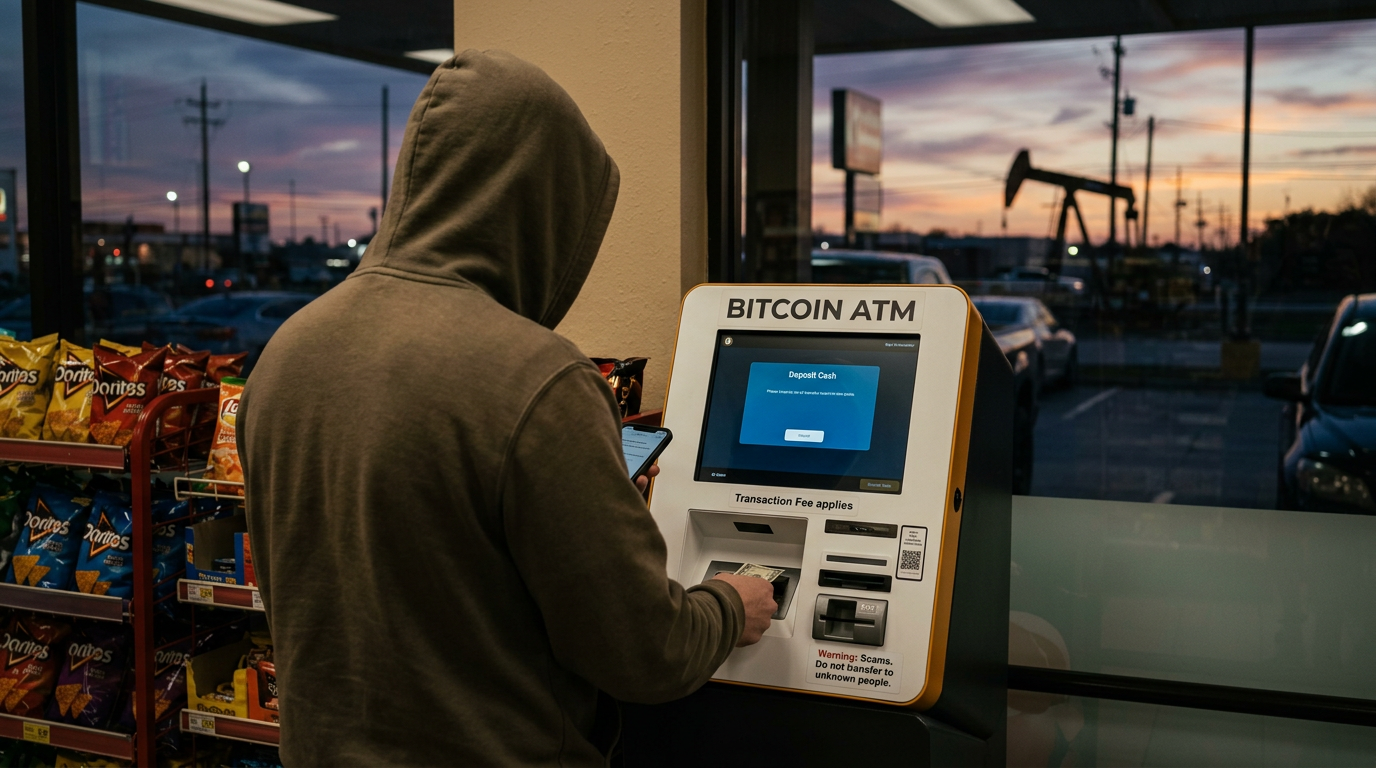
A troubling trend is emerging across Texas convenience stores and gas stations as physical cryptocurrency kiosks, often referred to as Bitcoin ATMs, become the latest tool for sophisticated fraud rings. These machines, which allow users to convert cash into digital assets instantly, have proliferated in urban and rural areas alike. However, state officials and consumer advocates are sounding the alarm after reports indicate that Texans are losing millions of dollars to scams facilitated by these devices. Historically, Texas has maintained a relatively hands-off approach to cryptocurrency regulation to foster innovation, but the rapid rise in kiosk-related theft is prompting a reevaluation of oversight. Unlike traditional bank transfers, crypto transactions are irreversible, making these kiosks an ideal endpoint for criminals who use social engineering to trick victims into depositing cash. This surge in fraud mirrors trends seen in other states, though the sheer volume of kiosks in Texas has made the state a primary target for illicit activity.
Texas relevance
The proliferation of these machines is particularly dense in Texas metropolitan areas like Houston, Dallas, and San Antonio, where high foot traffic and 24-hour accessibility provide cover for fraudulent activity. Texas law enforcement agencies are currently grappling with the jurisdictional challenges of tracking digital assets once they leave a physical kiosk located within state lines. Because Texas serves as a major hub for both energy-intensive crypto mining and retail digital asset adoption, the economic impact of these scams is felt more acutely here than in many other regions. The local impact extends beyond the victims, as small business owners hosting these kiosks may face increased scrutiny or legal liability as the state considers new consumer protection frameworks.
The Mechanics of Kiosk-Based Deception
The primary method used by scammers involves impersonating figures of authority, such as government officials, utility workers, or law enforcement officers. Victims are often contacted via phone or text and told they owe a debt or are under investigation, and that the only way to resolve the matter is through a 'secure' deposit at a local kiosk. Once the victim arrives at the machine, the scammer provides a QR code linked to their own digital wallet, effectively tricking the individual into sending cash directly to the criminal.
These kiosks are particularly effective for scammers because they bridge the gap between the physical and digital worlds. Because the machines occupy space in trusted local businesses, victims often possess a false sense of security regarding the legitimacy of the transaction. The immediate nature of the exchange means that by the time a victim realizes they have been defrauded, the funds have often been moved through multiple international exchanges, making recovery nearly impossible for local Texas police departments.
Legislative Landscape and Regulatory Gaps
Texas has historically been a leader in digital asset legislation, passing bills that recognize the legal status of virtual currencies. However, much of this legislation focused on banking and commercial law rather than the physical regulation of kiosks. This has left a gap where these machines operate with fewer restrictions than traditional ATMs or money transmission services. In some jurisdictions outside of Texas, lawmakers have moved to cap the amount of money that can be deposited in a single day or have implemented mandatory delays for first-time users.
As the financial toll on Texans grows, there is an increasing call for the Texas Department of Banking to take a more active role in licensing and monitoring these operators. Currently, many kiosk owners are third-party entities that simply rent space from convenience stores, creating a complex web of responsibility that makes it difficult for consumers to file grievances. Strengthening the requirements for 'Know Your Customer' (KYC) protocols at the kiosk level is one frequently discussed solution to deter illicit use.
Impact on Vulnerable Texas Populations
Data suggests that the victims of these scams are disproportionately elderly Texans or those who may not be digitally savvy. Scammers leverage the complexity of cryptocurrency to confuse their targets, using technical jargon to explain why a normal bank transfer would be 'unsafe' or 'blocked.' This predatory behavior often results in the loss of entire retirement savings or emergency funds, creating a social safety net burden for the state.
Furthermore, these machines are frequently located in lower-income neighborhoods where access to traditional banking may be limited. For residents in these areas, the kiosks might appear to be a legitimate financial service, unaware that they are also the primary targets for organized crime syndicates. Community leaders are beginning to advocate for increased public awareness campaigns in multiple languages to combat the specific tactics used in Texas communities.
The Role of Business Owners and Kiosk Operators
Convenience store owners in Texas are often caught in the middle of this issue. For many small business owners, hosting a crypto kiosk provides a steady stream of rental income and increased foot traffic. However, as the frequency of scams increases, some owners are being trained to recognize signs of a victim in distress—such as someone on a persistent phone call while feeding large stacks of bills into a machine. Some retail associations are now encouraging members to post unofficial warning signs near the machines to alert customers.
Kiosk operators themselves argue that they provide a valuable service for the 'unbanked' and that the vast majority of their transactions are legitimate. They often point to existing anti-money laundering (AML) software integrated into the machines. However, critics argue that these software solutions are easily bypassed by scammers who coach their victims on how to answer security questions, suggesting that human intervention or more stringent state-level oversight is the only effective deterrent.
Future Outlook for Texas Crypto Policy
The trend of rising crypto fraud is likely to spark a debate in the Texas Legislature regarding the 'Right to Mine' and 'Right to Trade' versus the state's duty to protect consumers. Pro-blockchain advocates worry that heavy-handed regulations on kiosks could stifle the broader digital economy in Texas. Conversely, law enforcement groups are signaling that without better data sharing from kiosk operators, the state will continue to see an outflow of wealth to overseas criminal groups.
In the coming months, it is expected that more Texas cities may follow the lead of other national municipalities by considering zoning or licensing restrictions on where these machines can be placed. Until formal changes are made, the burden of protection falls largely on individual education. The Texas Attorney General’s office and the Better Business Bureau continue to update their advisories as new variations of the kiosk scam emerge, emphasizing that no legitimate government agency will ever demand payment via a Bitcoin ATM.
Analysis
While the technology behind cryptocurrency is not inherently fraudulent, the physical infrastructure of Bitcoin ATMs has created a 'blind spot' in financial security. The convenience that makes these machines attractive to legitimate users also serves as a bypass for standard banking safeguards, such as human intervention or 'cooling off' periods for large transfers. From a policy perspective, Texas faces a delicate balance: maintaining its status as a pro-crypto 'frontier' while ensuring that its citizens are not uniquely vulnerable to international criminal enterprises. The lack of mandatory warning labels or transaction delays on these machines in Texas—features already implemented in several other states—suggests that legislative action may be on the horizon during the next session to prevent the state from becoming a permanent haven for kiosk-based money laundering.
Source attribution
This story was reported using a public release from the Texas Standard. Keep TX Red rewrote the coverage independently and links to the official statement for verification.
Frequently Asked Questions
- Why can't the police reverse a fraudulent Bitcoin ATM transaction?
- Cryptocurrency transactions are designed to be permanent and decentralized. Unlike a credit card charge or a bank transfer, there is no central authority or 'middleman' who can claw back the funds once they have been sent to a private digital wallet.
- How can I tell the difference between a real kiosk and a scam?
- The kiosk hardware itself is usually legitimate, but the scam lies in the instructions you are given. A legitimate transaction is one you initiate yourself for your own investment. If someone on the phone is directing you to a specific machine to 'pay a fine' or 'verify your identity,' it is a scam.
- Is Texas planning to ban these machines?
- There is currently no statewide ban on cryptocurrency kiosks in Texas. However, as fraud numbers climb, there is growing discussion among state legislators regarding increased regulation, mandatory warning labels, and lower transaction limits.
Official Sources
Take the next step
Browse the Newsroom →Read more about Keep Texas Red → Our full guide to what Keep Texas Red means and why Texans support it.
Get Texas updates delivered weekly.
Independent Texas reporting on politics, policy, and daily life. One email a week. Unsubscribe anytime.
Keep TX Red Newsroom
The Keep Texas Red Editorial Staff produces nonpartisan explainers, policy breakdowns, and educational resources to help Texans understand how their government works. All content is reviewed for accuracy and updated regularly.
About Keep TX Red →