Lite-On Expands North American Operations with Major McKinney Capital Investment
Governor Abbott reveals Lite-On will create 500 jobs in McKinney through a new $307 million advanced manufacturing headquarters for AI infrastructure.
Editorial disclaimer: Opinions and analysis on Keep TX Red are editorial content — not statements of fact. See our editorial standards.
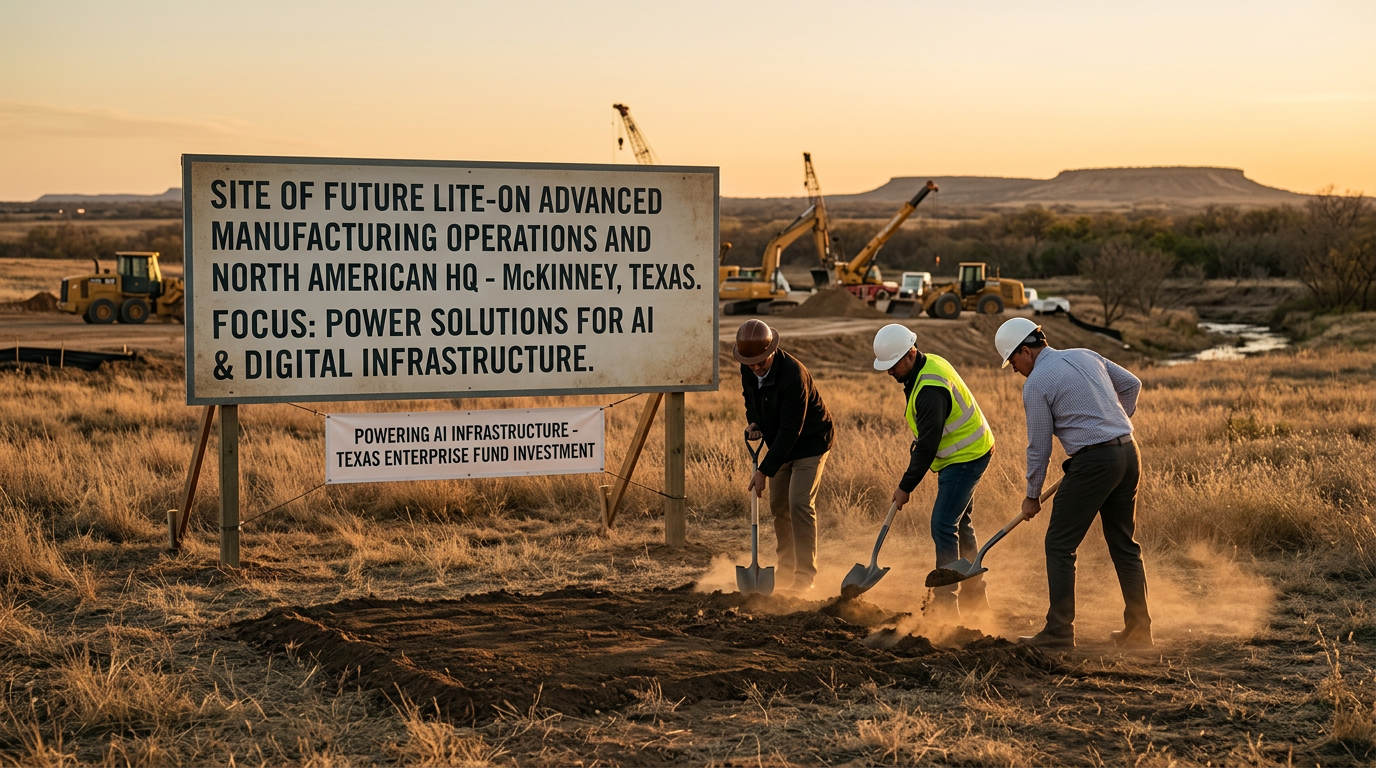
Governor Greg Abbott has announced that Lite-On, Inc. (LITEON) is designating McKinney, Texas, as the site for its new North American headquarters and advanced manufacturing hub. This strategic move centers on the development and production of power solutions tailored specifically for artificial intelligence and large-scale digital infrastructure. Historically, Texas has leveraged the Texas Enterprise Fund (TEF) as a 'deal-closing' mechanism to attract global technology leaders, moving the state away from a commodity-based economy toward a high-tech manufacturing powerhouse. This announcement follows a consistent trend of Silicon Valley and international tech firms migrating to the North Texas corridor, which has become a magnet for semiconductor and electronic component production over the last decade. The initial phase of this corporate expansion involves a massive capital commitment of $307 million, aimed at retrofitting and establishing a state-of-the-art facility capable of meeting the rising global demand for AI-driven hardware components. State officials emphasized that this partnership is a byproduct of the stable regulatory climate and the absence of a personal income tax, which continues to drive corporate relocations to the Lone Star State.
Texas relevance
McKinney and the broader Collin County region are the direct beneficiaries of this corporate migration. As one of the fastest-growing areas in the United States, McKinney represents the shifting economic center of North Texas. This project specifically targets the expanding intersection of energy and computing, a sector where Texas already leads due to its independent power grid and vast data center network. The commitment of $307 million into the local tax base will provide significant funding for municipal services and local infrastructure without placing additional burdens on existing residential taxpayers. Furthermore, the inclusion of a Veteran Created Job Bonus highlights the state's initiative to integrate the large veteran population in North Texas into high-skill technical roles. This expansion ensures that the DFW metroplex remains a primary competitor against traditional tech hubs like San Jose or Austin.
Economic Impact and Job Creation in Collin County
The expansion is projected to generate roughly 500 new employment opportunities for the McKinney area. These positions are expected to span a wide range of expertise, from high-level engineering and electrical design to advanced manufacturing floor operations and corporate administrative roles. By introducing a significant number of high-wage jobs, LITEON contributes to the rising median household income in the region, which has seen an influx of professional talent over the last five years.
Beyond the direct employees of LITEON, the local economy will likely experience a multiplier effect. Local contractors, service providers, and small businesses in McKinney will see increased demand as the $307 million in capital investment circulates through the community. The development of a headquarters of this magnitude usually requires extensive local support services, ranging from facility maintenance to logistics and supply chain management companies located within the DFW metroplex.
The project also includes a specific $100,000 Veteran Created Job Bonus. This state-level incentive encourages LITEON to actively recruit from the pool of former military personnel who reside in North Texas. This move aligns with Texas’ broader goal of becoming the most veteran-friendly state in the country, ensuring that those with technical military training have a direct path into the private sector’s most advanced industries.
The Strategic Shift to AI Infrastructure
LITEON is pivoting its North American focus toward the infrastructure that sustains artificial intelligence. As AI models become more complex, they require specialized power management systems that can handle extreme loads with precision. The McKinney facility will be at the forefront of designing these modules, which are essential for the global data center market. This move places Texas at the heart of the 'physical' side of the digital revolution, focusing on hardware rather than just software.
The manufacturing facility will likely utilize advanced robotics and automation to maintain competitive production cycles. By housing both the North American headquarters and the manufacturing plant in the same location, LITEON can significantly reduce the 'concept-to-market' timeline. Engineers in McKinney will be able to walk from their design desks directly to the production floor to oversee prototype testing, a major advantage in the fast-paced electronics industry.
This shift to AI-centric hardware also aligns with the national security interest of the United States. Having critical power infrastructure for AI developed and manufactured domestically reduces reliance on overseas manufacturers. Texas is becoming an increasingly important player in this 'reshoring' movement, where high-tech companies bring their most sensitive and important production lines back to American soil.
Incentives and the Texas Enterprise Fund
The Texas Enterprise Fund (TEF) played a pivotal role in securing this deal for McKinney. LITEON was offered a $3.5 million grant, which is contingent on the company meeting specific job creation and investment milestones. This 'performance-based' model ensures that taxpayer dollars are only disbursed when the promised economic benefits are actually realized, protecting the state from companies that fail to deliver on their growth projections.
The TEF is often the deciding factor when a company is weighing Texas against other states like Tennessee, North Carolina, or Arizona. While the low tax environment is a baseline attraction, the TEF provides the specific capital needed to offset the high costs of building advanced manufacturing cleanrooms and specialized labs. This program has been a cornerstone of Governor Abbott's economic strategy since he took office, aiming to win 'trophy' corporate relocations.
In addition to the state-level grants, local municipalities like McKinney often provide their own sets of incentives, such as property tax abatements or infrastructure improvements. These local-state partnerships create a comprehensive package that makes the cost of doing business in Texas significantly lower than in traditional tech hubs like California. The LITEON deal serves as a blueprint for how these different levels of government can collaborate to attract international industry leaders.
Infrastructure and Grid Reliability
A manufacturing facility focused on power solutions requires a robust and reliable energy supply. The choice of McKinney indicates confidence in the local utility infrastructure and the broader Texas power grid. As the state works to expand its energy capacity to meet the needs of a growing population and industrial base, projects like the LITEON facility underscore the necessity of continued investment in the ERCOT system to support high-intensity industrial users.
Furthermore, the facility itself will likely research ways to make power distribution more efficient. This 'circular' benefit means the technology developed in McKinney could eventually be used to improve the efficiency of power grids and data centers across the country. As Texas continues to deal with the demands of an evolving energy landscape, having a local leader in power solutions provides a unique resource for the state's own infrastructure challenges.
The logistical advantages of McKinney cannot be overstated. Located near major North Texas highways and within driving distance of DFW International Airport, the facility is perfectly situated for the global distribution of its AI power products. This connectivity allows LITEON to ship components to data centers worldwide while maintaining a centralized management hub in a business-friendly environment.
McKinney's Growing Corporate Profile
McKinney has been transitioning from a quiet suburb into a major corporate destination. The city has aggressively marketed its quality of life, highly-rated school systems, and available land to attract companies that might have previously looked only at Dallas or Plano. The LITEON headquarters represents one of the largest economic development 'wins' in the city's recent history, signaling that it can compete for global high-tech projects.
The presence of a North American headquarters brings a level of prestige to the city that goes beyond simple manufacturing jobs. It means that executive decisions, research breakthroughs, and strategic planning will all occur within McKinney city limits. This typically leads to an increase in corporate philanthropy, local sponsorships, and community involvement, as the company seeks to build a long-term home for its employees.
By focusing on the 'advanced electronics' sector, McKinney is diversifying its local economy. This protects the city from downturns in other sectors, such as retail or housing. A diversified industrial base is key to long-term fiscal stability, ensuring that the city can continue to provide high-quality services to its residents even during broader economic fluctuations.
Analysis
The decision by LITEON to anchor its North American operations in McKinney is a clear validation of the state's 'Texas Model' of low regulation and targeted incentives. By focusing on AI power solutions, the state is positioning itself at the very beginning of the supply chain for the next generation of computing. This isn't just about assembly; it is about the research, design, and manufacturing of the critical infrastructure that allows artificial intelligence to function. From a policy perspective, the use of the Texas Enterprise Fund continues to be a point of strength for the Abbott administration, serving as the financial 'carrot' to bring international capital into suburban Texas markets. Critics of state incentives often argue about corporate welfare, but the creation of 500 high-paying jobs and a $307 million private investment suggests a high return on the state's initial $3.5 million grant. This move also strengthens the geopolitical standing of Texas as a secure domestic alternative for critical electronic components.
Source attribution
This story was reported using a public release from the Office of the Governor. Keep TX Red rewrote the coverage independently and links to the official statement for verification.
Frequently Asked Questions
- What exactly will the LITEON facility in McKinney produce?
- The facility is designed for the manufacturing and research of advanced power solutions and infrastructure components. These products are specifically engineered to support the high-demand energy needs of artificial intelligence applications and large-scale data center operations.
- How many jobs are being created by this expansion?
- The initial phase of the expansion is expected to create 500 new jobs in the McKinney area. These roles will range from corporate headquarters staff to specialized manufacturing and engineering positions.
- What incentives did the state of Texas provide to LITEON?
- The state offered a $3.5 million grant through the Texas Enterprise Fund (TEF). Additionally, the company is eligible for a $100,000 Veteran Created Job Bonus, which is an incentive provided for the intentional hiring of military veterans.
- Why did LITEON choose McKinney over other locations?
- While the company considered various factors, Texas' lacks a personal income tax, has a lower regulatory burden, and offers a highly skilled workforce. McKinney specifically offers proximity to the DFW tech corridor and a high quality of life for relocating employees.
Official Sources
Take the next step
Browse the Newsroom →Read more about Keep Texas Red → Our full guide to what Keep Texas Red means and why Texans support it.
Get Texas updates delivered weekly.
Independent Texas reporting on politics, policy, and daily life. One email a week. Unsubscribe anytime.
Keep TX Red Newsroom
The Keep Texas Red Editorial Staff produces nonpartisan explainers, policy breakdowns, and educational resources to help Texans understand how their government works. All content is reviewed for accuracy and updated regularly.
About Keep TX Red →