Grid Independence: Texas Mandates Independent Power Solutions for New Data Center Construction
Governor Abbott announces that new data center projects must secure their own energy sources to protect the Texas power grid and consumer stability.
Editorial disclaimer: Opinions and analysis on Keep TX Red are editorial content — not statements of fact. See our editorial standards.
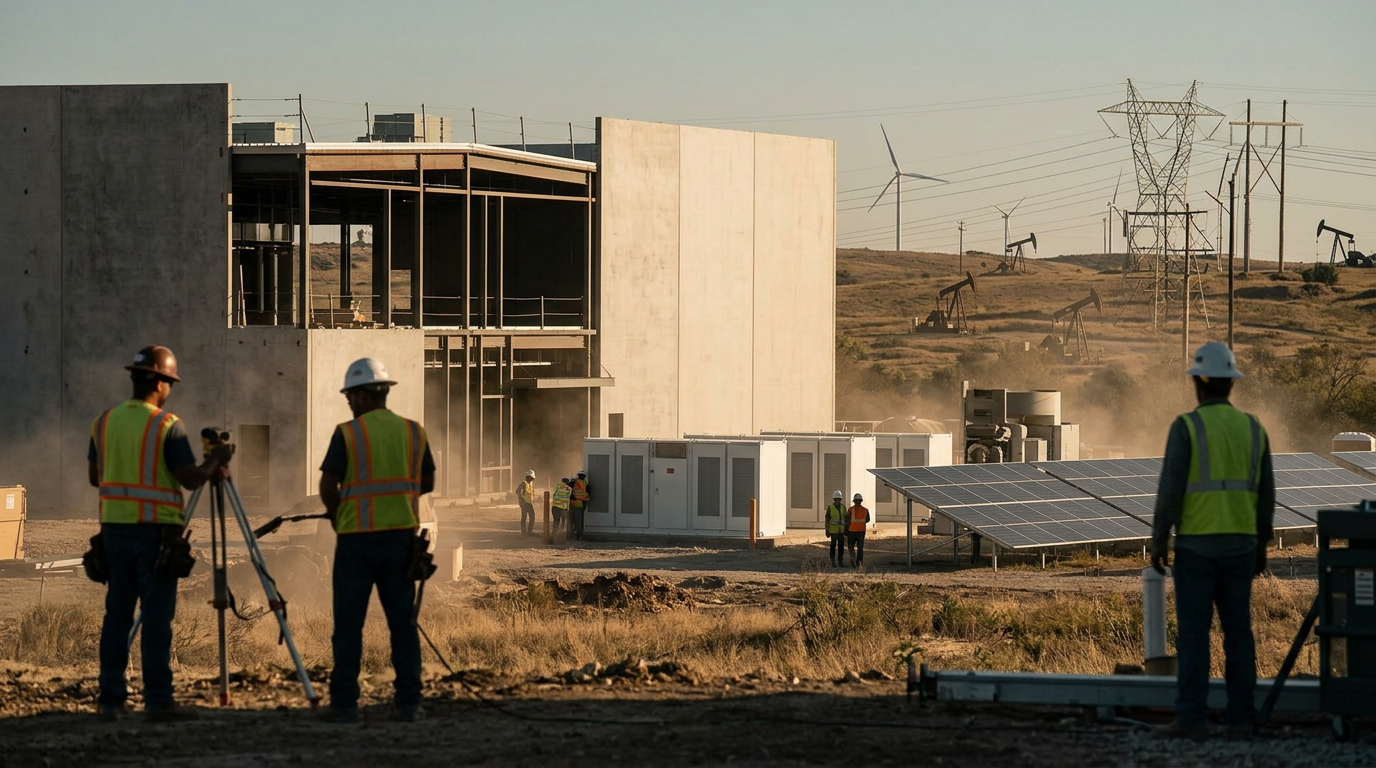
Governor Greg Abbott has signaled a major shift in the state's industrial energy policy, informing major technology firms that future data centers must provide their own power sources. Historically, Texas has been a magnet for energy-intensive industries due to its deregulated market and business-friendly environment. However, the surge in demand from massive server farms necessitated by the artificial intelligence boom and cryptocurrency mining has put unprecedented stress on the Electricity Reliability Council of Texas (ERCOT). The Governor’s new directive aims to ensure that these large-scale facilities do not compromise the state’s residential and retail energy supplies. This policy change comes after a decade of rapid expansion in the Texas tech sector. Previously, the state encouraged wholesale data center growth with tax incentives, viewing these facilities as primary drivers of economic development in both suburban and rural corridors. As the scale of these operations shifted from individual server rooms to multi-acre campuses consuming hundreds of megawatts each, the balance between economic growth and grid reliability reached a critical juncture. The Governor’s stance reinforces the principle that industrial development must not come at the expense of the average Texan's power bill or home comfort.
Texas relevance
The reliability of the Texas grid is perhaps the most scrutinized infrastructure issue in the state following the 2021 winter storms. With cities like Austin, San Antonio, and Dallas becoming global hubs for tech infrastructure, the strain on local utilities is extreme. This directive directly impacts North Texas and the San Antonio-Austin corridor, where the majority of new data center permits are concentrated. By requiring these firms to 'bring their own power,' the state is forcing a shift toward on-site generation, such as natural gas turbines, large-scale battery storage, or dedicated renewable farms, ensuring that the local neighborhoods surrounding these hubs do not experience brownouts due to industrial consumption.
The AI Surge and Grid Capacity
The primary catalyst for this policy shift is the exponential growth of Artificial Intelligence (AI) and the data processing requirements that accompany it. AI models require significantly more power to train and run than traditional cloud storage or internet search functions. As Texas has become a preferred destination for these facilities, the projected load on ERCOT has ballooned. Recent estimates suggest that the demand for electricity could double within the next decade, a pace that far outstrips the current rate of new power plant construction.
Governor Abbott’s directive serves as a 'stop-gap' to prevent the grid from reaching a breaking point. By requiring these massive consumers to build their own generation capacity, the state is effectively creating a two-tier energy market. The existing grid remains dedicated to traditional consumers and existing industry, while the new 'High-Tech Tier' must innovate its own solutions. This approach prevents a scenario where the state would have to choose between cooling homes during a heatwave and maintaining the uptime of a global data network.
Furthermore, this move encourages the development of microgrids. These localized power systems can operate independently of the main Texas grid, providing a level of resilience that tech companies covet. If a data center can generate its own power via on-site natural gas or solar-plus-storage, it is less vulnerable to wide-scale grid failures, creating a win-win scenario for both the corporate entity and the state of Texas.
Shift in Economic Incentives
For the better part of twenty years, Texas lured major corporations with the promise of cheap, abundant energy. This strategy worked remarkably well, turning the state into a global powerhouse for information technology. However, the 'abundance' of energy is no longer a given as the population swells and industrial demand spikes. The new mandate represents a structural change in how Texas views economic incentives—moving away from unconditional welcomes toward a 'contribution-based' model of growth.
Under this new directive, companies are not just bringing jobs and tax revenue; they are now expected to bring their own utility solutions. This may change the profile of companies that choose to relocate to the Lone Star State. Only those with the capital to invest in significant infrastructure will be able to scale their operations. While this might slow the absolute number of small-scale data centers, it ensures that the large-scale projects which move forward are sustainable and don't place an undue burden on legacy systems.
This policy also aligns with the broader legislative push to increase dispatchable power in Texas. By forcing data centers to build on-site generation (likely natural gas), the state is indirectly increasing the overall amount of electricity produced within its borders. During times of extreme emergency, there is potential for these private power sources to feed back into the main grid, though the primary goal remains isolation and self-sufficiency for the facilities themselves.
Impact on the Energy Market
The requirement for on-site power generation is expected to spark a flurry of activity in the Texas independent power producer sector. Companies that specialize in manufacturing industrial generators, turbine systems, and battery arrays are seeing a surge in inquiries. This mandate creates a captive market for energy technology, potentially making Texas a testing ground for innovative energy-as-a-service (EaaS) business models. Instead of simply buying power from a utility, tech firms may sign long-term contracts with energy providers to build and manage power plants directly adjacent to their server farms.
There is also the question of how this will affect the renewable energy transition. Many tech firms have corporate mandates to use 100% renewable energy. If they are forced to provide their own power, they may invest heavily in massive solar and wind projects. However, because data centers require 24/7 reliability, these renewable projects must be paired with significant storage or natural gas backup. This helps solve the 'intermittency' problem that has plagued the integration of renewables into the Texas grid, as the private sector now bears the cost of the storage necessary to make wind and solar 'firm.'
The move may also influence the location of these centers. Rather than crowding into the tech-heavy centers of Travis or Dallas counties, firms may look to West Texas or the Gulf Coast, where land for power generation is more affordable and proximity to natural gas pipelines is higher. This could lead to a more geographically diverse distribution of high-tech jobs across the state, benefiting smaller communities that have the land and resources to support self-powered industrial complexes.
Regulatory and Permitting Hurdles
While the Governor's mandate is clear, the implementation will require coordination between the Public Utility Commission of Texas (PUCT) and ERCOT. New regulations will need to define exactly what 'bringing your own power' entails. For instance, does a facility need to generate 100% of its peak load at all times, or can it use the grid for backup? These technical details will determine the financial viability of many proposed projects and will likely be the subject of upcoming legislative sessions.
Permitting for on-site generation can also be a lengthy process. Environmental regulations, pipeline access, and safety inspections all add layers of complexity to a project that would have previously only required a standard connection to the grid. The state may need to streamline its permitting processes to ensure that this new energy requirement doesn't become a bureaucratic dead-end that drives business to other states like Oklahoma or Virginia.
Despite these challenges, the state leadership remains firm. The political priority is clearly the protection of the consumer-facing grid. By setting these ground rules now, Texas is providing a predictable regulatory environment for the next twenty years of tech expansion. It signals to investors that while Texas wants their business, it will not sacrifice the stability of its citizens' daily lives to accommodate it.
A Global Precedent
Texas is not the only jurisdiction grappling with the energy demands of the digital age, but it is taking one of the most proactive stances. Similar hubs in Loudoun County, Virginia, and parts of Ireland have faced public backlash and even moratoriums on new data center construction due to energy concerns. By choosing a 'self-generation' path rather than a 'no-growth' path, Texas is attempting to maintain its pro-growth reputation while solving the physical constraints of the electrical grid.
Other states are watching the Texas experiment closely. If the Lone Star State can successfully integrate massive data loads by forcing them to be energy-independent, it could provide a blueprint for industrial development in the 21st century. It moves the conversation from how to 'save' energy to how to 'create' energy alongside demand, a philosophy that has long defined the Texas approach to industry and infrastructure.
Analysis
The Governor’s announcement is a calculated move to harmonize the state's 'Open for Business' philosophy with the practical realities of infrastructure limitations. For years, critics have suggested that high-usage industries like Bitcoin mining and AI processing were receiving preferential treatment at the expense of residential safety. By mandating self-sufficiency, Abbott is effectively placing the cost of infrastructure expansion on the companies that profit from it, rather than socializing the costs among Texas ratepayers. This could drive a secondary boom in the state: the deployment of small modular reactors or advanced natural gas capture systems, as tech giants like Microsoft, Amazon, and Google are forced to become energy producers in their own right.
Source attribution
This story was reported using a public release from the Governor Abbott — Video Moments (Google News). Keep TX Red rewrote the coverage independently and links to the official statement for verification.
Frequently Asked Questions
- Why is the Governor requiring data centers to bring their own power?
- Data centers, particularly those used for artificial intelligence and cryptocurrency mining, consume massive amounts of electricity. To prevent this spike in demand from causing brownouts or increasing prices for regular Texas residents and small businesses, the Governor is mandating that these large-scale facilities provide their own energy sources rather than drawing solely from the shared public grid.
- How will this affect existing data centers in Texas?
- The directive primarily targets new construction and future expansions. Existing facilities are already integrated into the grid under previous agreements, but the state is encouraging all high-demand industrial users to look into independent generation to increase overall grid resilience.
- What kind of power sources are these companies expected to use?
- Companies have several options, including building on-site natural gas power plants, utilizing large-scale battery storage systems, or developing dedicated renewable energy farms (such as solar or wind) that can specifically power their facilities without drawing from the ERCOT pool during peak times.
- Will this drive tech companies out of Texas?
- While it increases the initial cost of building a data center, Texas remains an attractive location due to its lack of state income tax, central geographic location, and large workforce. Many industry experts believe this mandate provides 'regulatory certainty,' which is often more valuable to large corporations than low initial costs.
Official Sources
Take the next step
Browse the Newsroom →Read more about Keep Texas Red → Our full guide to what Keep Texas Red means and why Texans support it.
Get Texas updates delivered weekly.
Independent Texas reporting on politics, policy, and daily life. One email a week. Unsubscribe anytime.
Keep TX Red Newsroom
The Keep Texas Red Editorial Staff produces nonpartisan explainers, policy breakdowns, and educational resources to help Texans understand how their government works. All content is reviewed for accuracy and updated regularly.
About Keep TX Red →