Governor Greg Abbott Standards for Texas Data Centers: Power Independence Mandated for Large Tech Facilities
New Texas policy requires data center developers to secure independent power sources to protect the ERCOT grid from excessive industrial demand.
Editorial disclaimer: Opinions and analysis on Keep TX Red are editorial content — not statements of fact. See our editorial standards.
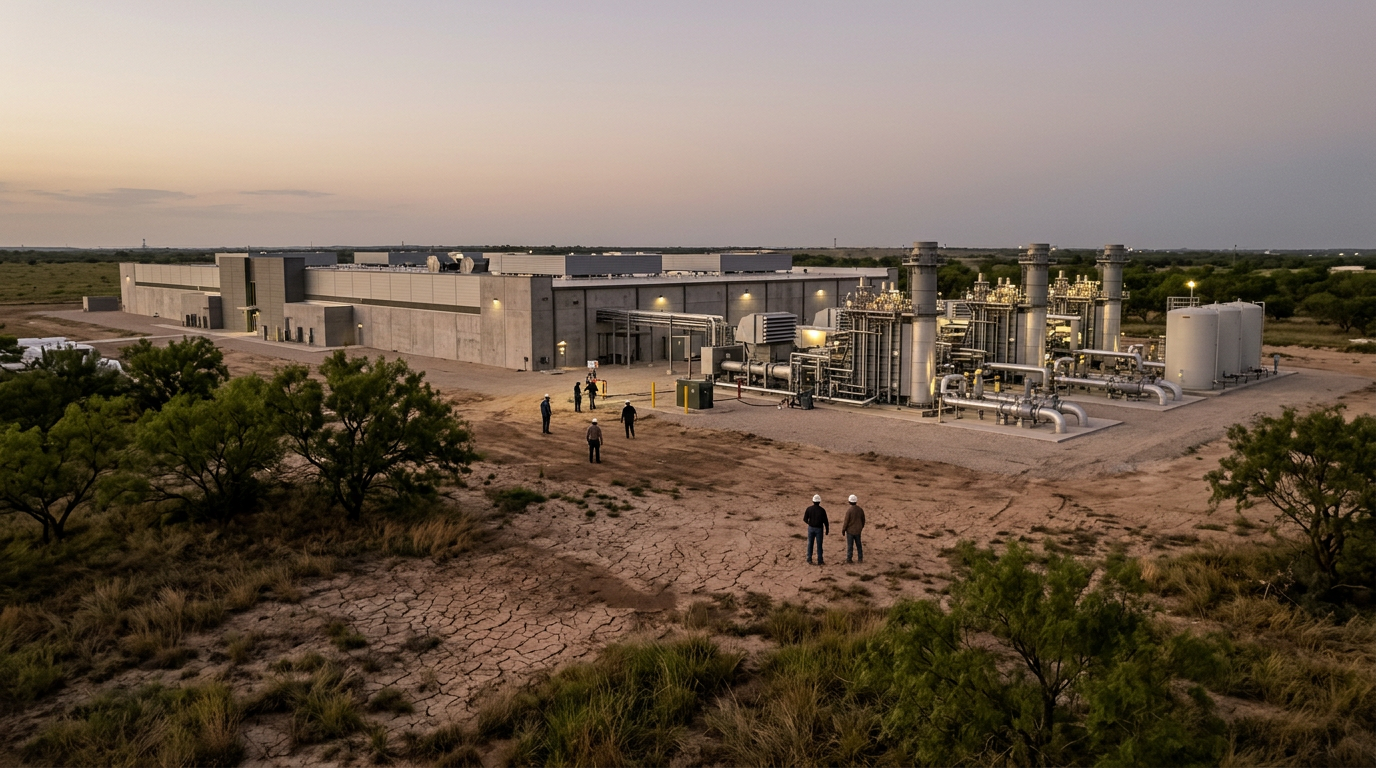
Texas Governor Greg Abbott has issued a clear directive regarding the continued expansion of data centers and high-energy industrial facilities within the state. In a recent policy shift aimed at balancing technological growth with energy security, the Governor stated that companies seeking to build large-scale data facilities must bring their own power generation capabilities to the table. This move comes as the state continues to see an unprecedented influx of technology companies, artificial intelligence startups, and cryptocurrency mining operations that require massive amounts of electricity to function. Historically, Texas has leveraged its pro-business environment and independent energy grid to attract these firms, but the strain on the Electric Reliability Council of Texas (ERCOT) has necessitated a strategy that prioritizes residential and critical commercial reliability over new industrial loads. The Governor's stance indicates that the traditional model of connecting massive new facilities to the existing grid without immediate supplemental generation is no longer sustainable. This development follows years of legislative and regulatory adjustments following the Winter Storm Uri of 2021, which exposed vulnerabilities in the statewide distribution system. By requiring tech giants to provide their own energy solutions—such as modular nuclear reactors, on-site solar farms with battery storage, or dedicated natural gas turbines—the state identifies a path forward that allows for economic expansion without compromising the comfort and safety of Texas homeowners during peak demand periods.
Texas relevance
Texas is currently the leading destination for data center investments in the United States, particularly in the North Texas and Austin-San Antonio corridors. This policy directly impacts massive projects currently under development by companies like Meta, Google, and Amazon, all of which have a significant footprint in the Lone Star State. Texas relevance is rooted in the unique nature of the ERCOT grid; unlike other states, Texas operates largely as an energy island. Therefore, when massive industrial consumers join the grid, the impact is felt more acutely by local Texans than it would be in states integrated into larger national interconnections. The Governor's mandate ensures that the rapid industrialization of rural Texas land for server farms does not lead to increased utility costs or rolling blackouts for families in Dallas, Houston, or small-town communities.
Balancing Economic Growth with Infrastructure Limits
For the past decade, Texas has been the undisputed leader in corporate relocations. The state’s low taxes and regulatory predictability have made it an ideal home for the digital economy. However, the sheer scale of the power demand from modern data centers—now being driven by the energy-intensive processing requirements of Artificial Intelligence—has reached a level where the state must prioritize grid stability. Governor Abbott's comments suggest that while the state's doors remain open for business, the entry fee now includes self-sufficiency.
This approach prevents a scenario where the general public subsidizes the infrastructure needed by multi-billion-dollar corporations. In many jurisdictions, the cost of upgrading substations and transmission lines to accommodate large industrial users is often passed down to residential ratepayers. By shifting the burden of power generation to the developers themselves, Texas protects its citizens from price surges and ensures that the power available for homes remains stable even as the tech sector grows.
The Rise of On-Site Generation Solutions
In response to these new expectations, many tech developers are looking toward microgrids as a primary solution. These localized energy systems can operate independently of the main Texas grid, providing a reliable source of power that is immune to broader fluctuations. Many of the companies targeted by this policy have already expressed interest in utilizing renewable energy paired with long-term storage, but the Governor's mandate may push them toward more consistent 'baseload' options like natural gas or modular nuclear power.
The shift toward on-site generation also provides a defensive layer for the data centers themselves. In the event of a statewide emergency or high-demand weather event, these facilities can disconnect from the main grid and run on their own power, preventing them from becoming a drain on the system when residents need it most. This 'islanded' capability is becoming a gold standard for digital infrastructure in the 21st century.
Impact on the Artificial Intelligence Boom
The demand for power has shifted dramatically with the rise of AI. Unlike traditional web hosting, AI training requires clusters of high-performance GPUs that consume significantly more electricity per square foot of rack space. Texas has become a hub for these facilities, but the Governor's warning serves as a reminder that the physical requirements of the digital world are very much grounded in the physical reality of the power plant.
As AI companies look to Texas for their next massive data halls, they will now need to factor in the cost of building solar arrays, wind turbines, or gas-fired generators alongside their server racks. While this adds to the initial capital expenditure of these projects, the long-term benefit is a more resilient operation that is less susceptible to the volatility of the spot energy market in Texas.
Protecting the Residential Ratepayer
One of the primary drivers behind this policy is the protection of the Texas consumer. When demand spikes in the ERCOT market, prices can rise to several thousand dollars per megawatt-hour. If massive data centers are competing for that same power, the increased demand keeps prices elevated for everyone. By ensuring these centers have their own supply, the state can keep the market supply-demand curve more favorable for the average family.
The Governor has emphasized that the Texas miracle is built on affordability. If the cost of living—specifically electricity bills—becomes too high due to industrial competition for resources, the Texas model is threatened. This policy is an insurance policy for the Texas middle class, ensuring that 'Big Tech' pays its own way rather than leaning on the existing public infrastructure.
The Future of Texas Grid Policy
This announcement is likely the beginning of a broader trend in Texas energy policy. As more industries, including electric vehicle manufacturing and semiconductor fabrication, expand in the state, the requirement for self-generation could expand to other sectors. The Public Utility Commission of Texas (PUCT) and ERCOT are already looking at ways to incentivize industrial users to provide dispatchable power back to the grid during emergencies.
Ultimately, Texas is positioning itself as a leader in industrial energy independence. By forcing large-scale users to be self-sufficient, the state is fostering a more decentralized and robust energy ecosystem. This not only secures the grid but also creates a new industry of private energy production that can support the state's burgeoning tech economy for decades to come.
Analysis
The Governor’s announcement reflects a pragmatic pivot toward 'energy realism.' While Texas remains fiercely competitive in attracting big tech, leadership acknowledges that the grid has a physical limit. By mandating that data centers 'bring their own power,' Texas is essentially creating a new market for distributed generation. This policy shift may actually accelerate the adoption of advanced energy technologies, such as Small Modular Reactors (SMRs) and hydrogen fuel cells, as tech companies with deep pockets are forced to innovate to meet their energy needs. Critically, this removes the political liability of potential grid failures from the state government and places the onus of infrastructure on the private entities profiting from Texas land and tax incentives.
Source attribution
This story was reported using a public release from the Governor Abbott — Video Moments (Google News). Keep TX Red rewrote the coverage independently and links to the official statement for verification.
Frequently Asked Questions
- Why is Governor Abbott requiring data centers to bring their own power?
- The primary reason is to ensure that the Texas power grid remains stable and that residential users are not impacted by the massive energy consumption of large-scale server farms. As more tech companies move to Texas, their demand for electricity can strain the current infrastructure, potentially leading to higher costs and reliability issues for families.
- What kind of power sources are these companies expected to use?
- While the state hasn't mandated a specific technology, options include on-site natural gas generators, small nuclear reactors, solar farms with battery storage, and hydrogen energy systems. The goal is for these facilities to be 'grid-neutral' or even contributors to the grid during times of high demand.
- Will this stop tech companies from moving to Texas?
- It is unlikely to stop growth, as Texas still offers significant land, tax, and labor advantages. However, it changes the financial planning for these projects, requiring them to invest in energy infrastructure as part of their initial development costs.
- How does this affect existing data centers?
- The policy largely targets new developments and significant expansions of existing facilities. Current operations are already integrated into the grid, but they may face future incentives or pressures to add their own generation capabilities to increase their operational resilience.
Official Sources
Take the next step
Browse the Newsroom →Read more about Keep Texas Red → Our full guide to what Keep Texas Red means and why Texans support it.
Get Texas updates delivered weekly.
Independent Texas reporting on politics, policy, and daily life. One email a week. Unsubscribe anytime.
Keep TX Red Newsroom
The Keep Texas Red Editorial Staff produces nonpartisan explainers, policy breakdowns, and educational resources to help Texans understand how their government works. All content is reviewed for accuracy and updated regularly.
About Keep TX Red →