Governor Abbott Signals New Power Requirements for Incoming Texas Data Centers
Texas Governor Greg Abbott suggests that new data centers must secure their own energy sources to protect the state's power grid from rising demand.
Editorial disclaimer: Opinions and analysis on Keep TX Red are editorial content — not statements of fact. See our editorial standards.
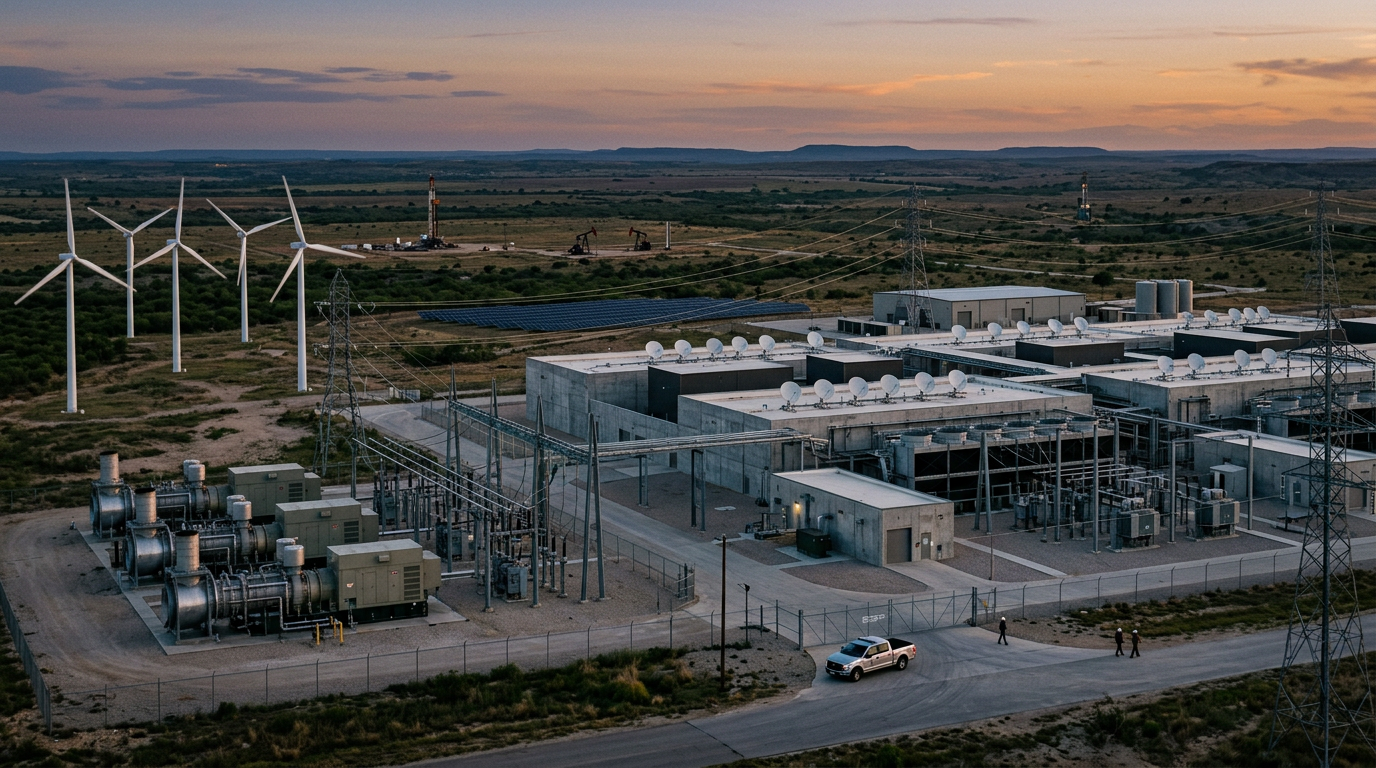
Governor Greg Abbott has signaled a potential shift in how industrial energy consumers, particularly data centers, enter the Texas market. During recent public comments, the Governor emphasized that massive technological facilities must prioritize their own energy generation or direct sourcing rather than relying solely on the existing public grid. This proactive stance comes as Texas continues to attract high-tech investment while simultaneously managing the delicate balance of grid reliability. The Governor's position suggests that while Texas remains open for business, the era of unlimited grid access for high-consumption industrial hubs may be undergoing a transition toward self-sufficiency. Historically, Texas has leveraged its independent energy market, managed by the Electric Reliability Council of Texas (ERCOT), to lure tech giants. From Amazon to Google, the state’s deregulated market offered competitive rates that were hard to match elsewhere. However, after the winter storms of 2021 and record-breaking summer heatwaves, the conversation has moved from simple expansion to long-term sustainability. The Governor’s current approach mirrors prior legislative efforts to ensure that the rapid growth of the digital economy does not outpace the foundational infrastructure required to keep the lights on for residential consumers and small businesses.
Texas relevance
This policy pivot has direct implications for major Texas metro areas like Austin, Dallas-Fort Worth, and San Antonio, which have become some of the fastest-growing data center hubs in the nation. As Texas leads the country in energy production, the strain placed on the ERCOT grid by energy-intensive operations like artificial intelligence processing and cryptocurrency mining has become a central legislative priority. Ensuring that these corporate entities bring their own power solutions—such as on-site solar, natural gas microgrids, or battery storage—is seen as a vital step in maintaining the stability of the Texas electrical system.
The Rising Demand of the Digital Frontier
The proliferation of data centers across the Lone Star State is driven by the global explosion in cloud computing and generative artificial intelligence. These facilities operate tens of thousands of servers that require constant cooling and high-voltage power 24 hours a day. Unlike residential neighborhoods, where energy use peaks and troughs based on the time of day, data centers maintain a high 'baseload' demand that places a significant, unyielding constant on the ERCOT system.
Governor Abbott’s comments reflect a growing concern among state leaders that the sheer volume of new applications for grid connection could overwhelm existing capacity. By requiring these firms to provide their own generation, the state is attempting to decouple technological growth from potential grid instability. This strategy ensures that while the economy grows, the margin of reserve power remains healthy for all Texans.
Infrastructure and Strategic Growth
Texas has invested billions into the Texas Energy Fund to incentivize the construction of new natural gas power plants. However, the timeframe for building large-scale generation often spans several years. Data centers, by contrast, can be constructed much faster. This 'readiness gap' is what the Governor looks to address by putting the onus of energy creation on the developers of the data facilities themselves.
The Governor noted that the state is not looking to turn away investment. Instead, the goal is to foster a 'symbiotic' relationship where big tech contributes to the state’s energy resilience. In many cases, this could mean data centers building on-site natural gas turbines or partnering with renewable energy producers to create dedicated power lines that do not draw from the public pool during times of peak demand.
Economic Implications for Local Communities
Data centers are often viewed as ideal commercial neighbors because they provide significant property tax revenue for local school districts and counties without adding many students or heavy traffic. However, the energy consumption issue has become a political sticking point. Local officials must now weigh the benefits of tax revenue against the potential for high local energy prices if the grid becomes stressed.
If companies are required to build their own power plants, the initial capital investment in Texas projects will rise. While this might deter smaller firms, the Governor’s administration appears confident that the strategic advantages of being located in Texas—such as the business-friendly climate and robust fiber optic networks—will outweigh the added costs of energy self-sufficiency.
ERCOT and the Regulatory Environment
ERCOT is currently tracking hundreds of gigawatts of potential new demand from various industrial sectors. The Governor’s recent statements serve as a directive to regulators and lawmakers to refine the rules governing how large consumers connect to the grid. This could lead to new 'interconnection' standards that favor projects capable of operating independently during emergencies.
Under current Texas law, energy providers have some flexibility, but the introduction of a formal 'bring your own power' mandate would likely require further legislative action or a shift in the Public Utility Commission’s (PUC) rule-making. This move fits into a broader theme of 'Texas First' energy policy, where the reliability of the home-state grid is prioritized over the ease of entry for multinational corporations.
Future of Crypto and AI in Texas
Texas has famously welcomed cryptocurrency miners, who also utilize massive amounts of electricity. Many of these miners already use 'demand response' programs, where they shut down during peak heat to help the grid. However, the Governor’s new stance suggests a more permanent solution is desired. Moving from temporary shutdowns to permanent on-site generation represents the next phase of the Texas industrial energy strategy.
As AI continues to become a dominant force in the global economy, the demand for processing power will only increase. Texas is positioning itself to be the capital of this movement, but only if it can do so without compromising the daily lives of its citizens. The Governor’s message is clear: if you want to power the future in Texas, you must be part of the solution to the state's energy needs.
Analysis
By mandating that data centers 'bring their own power,' the Governor is essentially asking for a private-sector solution to a public infrastructure challenge. This signals a move toward a 'user-pays' model for grid stability. If successful, this could accelerate the development of independent power production technologies within the state, further solidifying Texas as a leader in both traditional and innovative energy sectors. However, critics may argue that such requirements could potentially slow the influx of tech jobs if the costs of self-generation become too high compared to neighboring states.
Source attribution
This story was reported using a public release from the Governor Abbott — Video Moments (Google News). Keep TX Red rewrote the coverage independently and links to the official statement for verification.
Frequently Asked Questions
- Why is the Governor focusing on data centers specifically?
- Data centers consume vast amounts of electricity constantly. Unlike other businesses, their demand does not significantly drop at night, which puts a continuous load on the Texas power grid. As more companies move to Texas for AI and cloud computing, the cumulative effect of this demand could threaten grid stability if not managed through self-generation.
- Does this mean data centers are no longer welcome in Texas?
- No, the Governor has stated that Texas remains open for business. The goal is to ensure that development is sustainable. By requiring companies to bring their own power, the state ensures that huge corporations contribute to the energy supply rather than just drawing from it, allowing both the tech sector and the state's infrastructure to grow together.
- How would a company 'bring its own power'?
- Companies can do this by building on-site energy production facilities. This often includes small-scale natural gas plants, large battery storage systems, or dedicated solar and wind farms that are directly connected to the data center rather than the public grid.
Official Sources
Take the next step
Browse the Newsroom →Read more about Keep Texas Red → Our full guide to what Keep Texas Red means and why Texans support it.
Get Texas updates delivered weekly.
Independent Texas reporting on politics, policy, and daily life. One email a week. Unsubscribe anytime.
Keep TX Red Newsroom
The Keep Texas Red Editorial Staff produces nonpartisan explainers, policy breakdowns, and educational resources to help Texans understand how their government works. All content is reviewed for accuracy and updated regularly.
About Keep TX Red →