Autonomous Vehicle Technology and Texas Drunk Driving Laws Converge
Texas faces new safety challenges as drivers increasingly rely on automated vehicle systems while impaired, raising complex legal and safety questions.
Editorial disclaimer: Opinions and analysis on Keep TX Red are editorial content — not statements of fact. See our editorial standards.
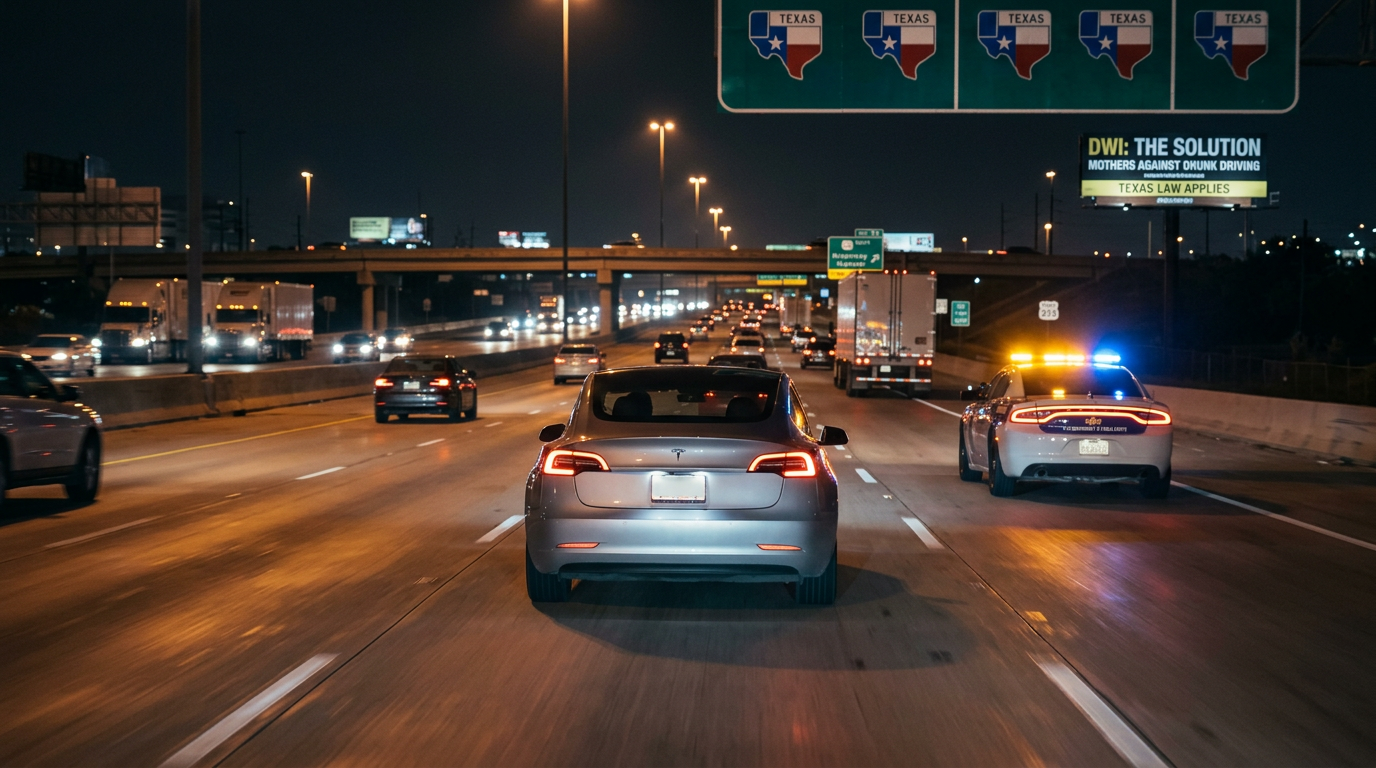
The emergence of advanced driver-assistance systems (ADAS), such as Tesla's Autopilot and Full Self-Driving capabilities, is creating a new frontier for law enforcement and public safety advocates across Texas. Historically, the state has struggled with high rates of driving while intoxicated (DWI), leading to aggressive public awareness campaigns and strict sentencing. The introduction of automation was initially touted as a potential solution to human error, which accounts for the vast majority of vehicular fatalities. However, recent trends suggest that rather than eliminating the risk of impaired driving, these systems are encouraging some individuals to engage in risky behavior under the false assumption that the car can handle the journey solo. The current legal framework in Texas still holds the human operator responsible for the vehicle's actions, regardless of the level of technological intervention active at the time of an incident. Texas has a long history of lead-adopting automotive technologies, but the rapid proliferation of semi-autonomous kits has outpaced the development of specialized traffic regulations. While groups like Mothers Against Drunk Driving (MADD) have monitored these developments closely, the data remains inconclusive regarding whether automation is actually reducing the net number of alcohol-related crashes or simply changing the nature of how they occur. As these vehicles become more common on bustling corridors like I-35 and I-10, the gap between consumer perception of 'self-driving' and the actual mechanical reality of the systems is becoming a primary concern for the Texas Department of Public Safety (DPS). Drivers are increasingly finding themselves in a legal gray area where they believe they are passengers in their own cars, despite the law requiring them to be vigilant operators ready to take control at any moment.
Texas relevance
Texas consistently ranks among the states with the highest number of annual DWI fatalities, making any shift in driving behavior or technology deeply relevant to the state's public health strategy. With major tech hubs in Austin and Dallas and a massive logistics network, Texas is a primary testing ground for both consumer and commercial autonomous platforms. The way Texas courts interpret 'operation' of a vehicle in the age of Autopilot will set a precedent for the entire nation, directly impacting millions of Texas commuters who share the road with these tech-heavy vehicles daily.
The Illusion of Full Autonomy
One of the most significant issues facing Texas motorists is the misunderstanding of 'Level 2' automation. Most vehicles currently on the market require a human to be fully engaged, even if the car is steering, braking, and accelerating on its own. The marketing of these features often suggests a hands-off experience that the hardware cannot safely sustain in complex environments like construction zones or unpredictable weather common in the Texas Panhandle.
When drivers consume alcohol, their reaction times are delayed, and their judgment is impaired. If a semi-autonomous system fails or encounters an edge-case scenario it cannot navigate, an intoxicated driver is incapable of reclaiming control fast enough to prevent a collision. This mismatch between technological limitation and human impairment is becoming a frequent site of investigation for local police departments across the state.
Legal Ramifications Under Texas Statutes
In Texas, the definition of 'operating' a motor vehicle is broad. Courts have historically ruled that a person can be found guilty of a DWI even if the vehicle is not in motion, provided they are in a position to exert control over it. This precedent applies directly to automated systems; being behind the wheel while a computer steers does not shield a Texan from criminal charges if their blood-alcohol content exceeds the legal limit.
Defense attorneys are testing these boundaries, arguing that if the vehicle was functioning correctly and avoiding hazards, the 'operation' by the human was negligible. However, Texas prosecutors have remained firm, emphasizing that the human driver is the ultimate authority and responsible entity. The state’s 'Duty to Maintain a Lookout' remains a cornerstone of traffic law that automation has not yet superseded.
Impact on Public Safety Initiatives
Public safety organizations that have spent decades fighting drunk driving find themselves in a difficult position. On one hand, fully autonomous 'Level 5' vehicles—which do not exist for consumer purchase yet—could theoretically eliminate the need for a sober driver entirely. On the other hand, the current transition period is incredibly dangerous because it provides a false sense of security that encourages people to drink and drive.
Recent safety reports indicate that when drivers believe the car is in control, they are more likely to engage in secondary activities like checking phones or napping. When combined with alcohol, this leads to a complete lack of situational awareness. Texas road safety advocates are now pivoting their messaging to address 'automation complacency' as a specific risk factor alongside traditional intoxication.
Technological Safeguards and Driver Monitoring
To combat this trend, many manufacturers are installing driver-monitoring systems (DMS) that use infrared cameras to track eye movement and head position. If the system detects that the driver is looking away or showing signs of nodding off, it issues alerts and eventually disables the autonomous features. In Texas, these systems are effectively becoming 'digital nannies' that attempt to force compliance.
However, sophisticated users have found ways to bypass these safeguards, using weighted devices on steering wheels or wearing glasses that trick cameras. The cat-and-mouse game between safety engineers and drivers who want to abuse automation is a major concern for insurance companies in the Lone Star State, who are seeing rising premiums as a result of these high-tech crashes.
The Future of Rural vs. Urban Automated Driving
The challenges of automated driving vary wildly across the Texas landscape. In urban centers like Houston or San Antonio, heavy traffic and clear lane markings provide a predictable environment for ADAS to function. In these areas, the temptation to use Autopilot as a 'designated driver' is high due to the density of nightlife and proximity to residential areas.
In contrast, rural Texas roads often lack the clear markings and signage that these systems rely on. A driver relying on automation while impaired on a backroad near Lubbock faces extreme risks, as the system may disengage without warning due to poor infrastructure. The disparity in road quality across the state makes a universal 'self-driving' solution for drunk driving unlikely in the near future.
Economic Implications for Texas Drivers
The cost of vehicles equipped with these advanced systems remains high, creating a demographic shift in who is involved in these types of incidents. For many Texans, a DWI conviction carries devastating economic consequences, including the loss of professional licenses and massive fines. Adding the liability of a high-value automated vehicle into the mix complicates insurance claims and civil litigation.
Insurance providers are beginning to analyze data from these vehicles to determine fault. If a drive-log shows the driver was inactive or inebriated while the system was active, they may deny coverage for damages. This leaves the driver personally liable for significant costs, further emphasizing that technology is not a loophole for avoiding the consequences of impaired driving.
Analysis
Opinion: The danger lies not in the technology itself, but in the branding that leads users to overestimate its capabilities. Calling a system 'Autopilot' or 'Full Self-Driving' creates a psychological safety net that does not exist in reality. Texas legislators need to move swiftly to clarify that no current consumer-grade technology absolves a driver of the responsibility to remain sober and attentive. Over-reliance on these systems is a form of digital complacency that could potentially reverse the gains made in lowering state highway fatality rates through traditional enforcement and education.
Source attribution
This story was reported using a public release from the Texas Monthly. Keep TX Red rewrote the coverage independently and links to the official statement for verification.
Frequently Asked Questions
- Can I get a DWI in Texas if my car was driving itself?
- Yes. Under current Texas law, a human occupant in the driver's seat is considered the operator of the vehicle. If you are intoxicated and behind the wheel while an automated system is active, you can be arrested and charged with a DWI.
- Does Tesla's Autopilot prevent crashes caused by drunk drivers?
- While these systems have safety features like automatic emergency braking, they are not designed to compensate for an impaired driver. They can fail to recognize certain hazards, and if the system disengages, an intoxicated driver will likely be unable to react in time to avoid an accident.
- Are there cars that are legally allowed to drive a drunk person home?
- No. There are currently no consumer vehicles available in Texas that meet the 'Level 5' autonomy standard required to operate without a sober, licensed driver present and attentive. Using any current technology as a 'designated driver' is illegal and life-threatening.
Official Sources
Take the next step
Browse the Newsroom →Read more about Keep Texas Red → Our full guide to what Keep Texas Red means and why Texans support it.
Get Texas updates delivered weekly.
Independent Texas reporting on politics, policy, and daily life. One email a week. Unsubscribe anytime.
Keep TX Red Newsroom
The Keep Texas Red Editorial Staff produces nonpartisan explainers, policy breakdowns, and educational resources to help Texans understand how their government works. All content is reviewed for accuracy and updated regularly.
About Keep TX Red →