Texas Representative Challenges Attorney General Over Confidential Plea Deal Details
State Rep. James Talarico files formal requests for records regarding Ken Paxton's handling of a specific North Texas child abuse prosecution.
Editorial disclaimer: Opinions and analysis on Keep TX Red are editorial content — not statements of fact. See our editorial standards.
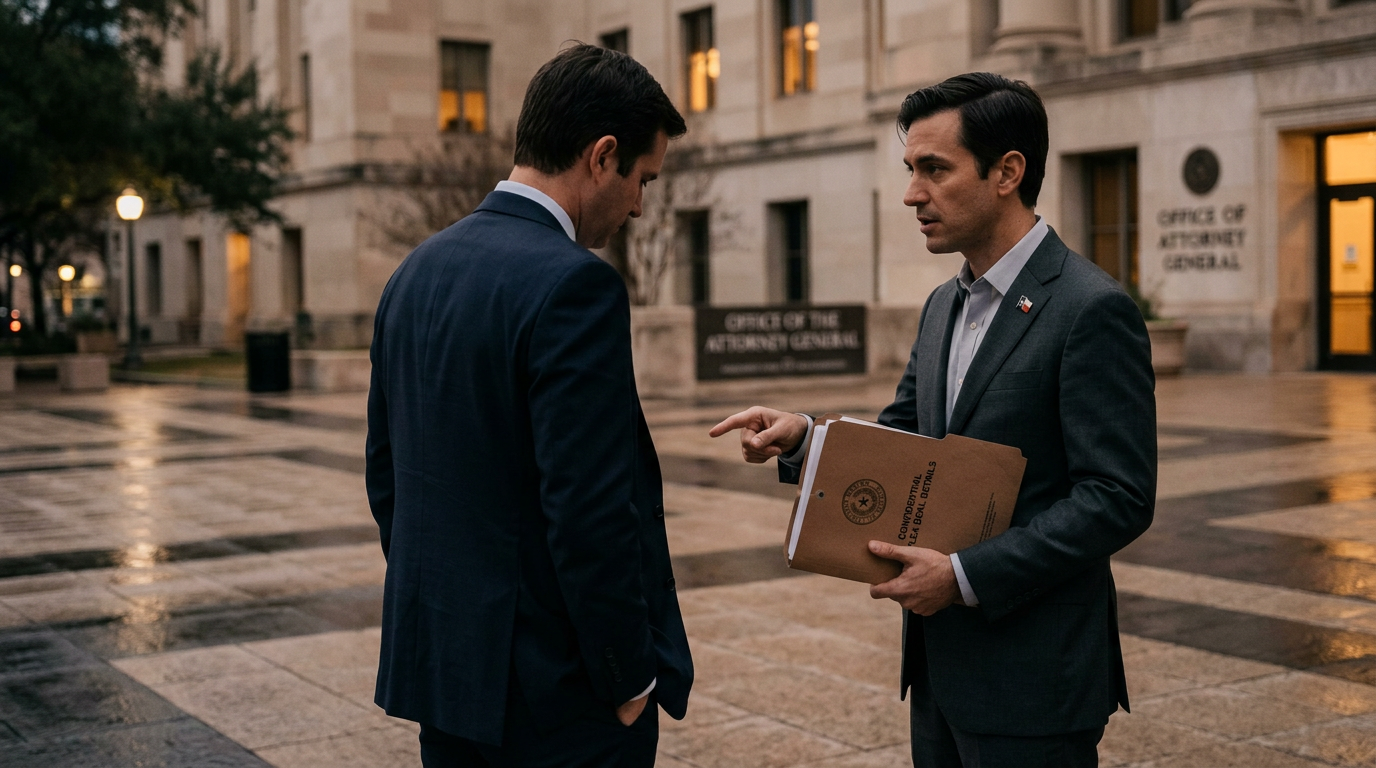
State Representative James Talarico has officially initiated a formal inquiry into the office of Texas Attorney General Ken Paxton, seeking documentation related to a controversial plea agreement. This request centers on the resolution of a high-profile child abuse case where the defendant received a sentence that critics argue was insufficiently rigorous. The legislative inquiry aims to uncover the internal communications and decision-making processes that led the Attorney General’s office to accept the specific terms of the settlement rather than pursuing a trial or a harsher penalty. This move by Talarico represents a significant escalation in the ongoing tension between the Republican Attorney General and legislative Democrats. By filing a formal Public Information Act request and a specific legislative query, Talarico is leveraging state transparency laws to force the executive branch to justify its prosecutorial discretion. Historically, the Office of the Attorney General (OAG) in Texas has maintained wide latitude in how it handles criminal cases referred to it by local districts, but this specific case has sparked outcry due to the sensitive nature of the crimes involved. Representative Talarico’s request is not just for the final legal documents, which are typically public, but for the underlying correspondence between state prosecutors and defense attorneys. He is also seeking any analysis performed by the OAG that suggested a plea deal was the most appropriate path for justice. This push for transparency comes at a time when the office of the Attorney General is already under intense scrutiny regarding its administrative choices and legal priorities across the Lone Star State.
Texas relevance
The outcome of this records request will set a major precedent for how much transparency the Texas public can expect regarding the Attorney General's prosecutorial decisions. In Texas, the OAG often steps in to assist local district attorneys in complex cases, meaning the policies set in Austin have a direct impact on public safety and judicial outcomes in every county from Harris to El Paso. Furthermore, the use of the Texas Public Information Act by a sitting legislator to investigate a fellow state official highlights the internal checks and balances currently at play within the Texas state government.
The Core of the Dispute
The primary tension stems from a plea arrangement involving a North Texas defendant accused of severe injury to a child. The state’s decision to allow a plea that resulted in probation or reduced sentencing, rather than significant prison time, has become the flashpoint for this records request. Talarico argues that the public deserves to know why the highest law enforcement office in the state felt this was an adequate resolution.
Under Texas law, the Attorney General has the authority to prosecute certain crimes when local officials request assistance or are recused. This gives the OAG immense power over individual lives and local justice systems. Critics of the current administration argue that this power has been used inconsistently, leading to calls for increased oversight of how these deals are brokered behind closed doors.
Records Requested and Legal Grounds
Talarico’s request is broad, covering all digital and physical communications related to the case. This includes emails, text messages, and internal memos generated by the OAG’s Criminal Prosecutions Division. The lawmaker is specifically looking for evidence of whether external political pressure or administrative shortcuts influenced the decision to settle the case.
The Texas Public Information Act (TPIA) generally favors disclosure, but there are specific exceptions for pending litigation and internal deliberative processes. It is likely that the Attorney General’s office will seek an opinion from its own open records division to withhold some of these documents, potentially leading to a protracted legal battle between two branches of the state government.
Political Implications for the OAG
Ken Paxton has faced numerous challenges to his authority and conduct over the last several years, including a high-profile impeachment trial and ongoing litigation. This new inquiry into his office's prosecutorial record adds another layer to the narrative of his tenure. By focusing on a child abuse case, his detractors are aiming at a sensitive area of public concern, attempting to paint the OAG as failing in its most fundamental duty: protecting the innocent.
Supporters of the Attorney General, however, view such requests as politically motivated fishing expeditions. They argue that the office must have the freedom to make tough calls in court without every email being scrutinized by political opponents. The defense of the plea deal likely rests on the evidentiary hurdles that prosecutors may have faced, which would be revealed if the records are ever released.
The Role of Legislative Oversight
As a member of the Texas House, James Talarico has a unique standing to demand these records. Legislative oversight is a cornerstone of the Texas Constitution, intended to ensure that executive agencies are operating within the bounds of the law and the interests of their constituents. This incident reflects a growing trend of legislators taking a more active role in monitoring the day-by-day operations of state agencies.
If the OAG denies the request, Talarico may take the issue to the House floor or seek a subpoena through a legislative committee. This would escalate the conflict from a simple records request to a constitutional showdown over the limits of executive privilege in the state of Texas. The precedent established here will dictate how other state agencies respond to similar inquiries in the future.
Community Reaction in North Texas
The community where the original crimes occurred has expressed significant concern over the perceived leniency of the justice system. Advocacy groups for children's rights have joined the call for more information, stating that transparency is the only way to restore faith in the system. The local impact of such cases often reverberates for years, influencing how victims view the reporting process and the reliability of state intervention.
Local law enforcement and prosecutors often rely on the OAG for specialized resources and expertise. If the relationship between the state and local offices is seen as producing flawed outcomes, it could discourage future cooperation. This makes the clarity of the OAG's response vital not just for Austin politics, but for the functional operation of the criminal justice system in Texas counties.
Transparency in the Texas Justice System
Texas has a complex history with government transparency. While the state prides itself on being open, the actual process of obtaining government records can be slow and expensive. This case once again puts the spotlight on the need for reforms that would make it easier for the public to track the progress and resolution of cases handled at the state level.
The outcome of this conflict will likely be watched by legal experts across the country. As states grapple with the balance between prosecutorial independence and public accountability, the actions taken in Texas often serve as a bellwether for national trends. Should these records be released, it could lead to a massive shift in how plea bargains are documented and defended in the public square.
Potential Outcomes and Next Steps
There are three primary paths this situation could take: total disclosure, a partial release with significant redactions, or a full denial followed by a lawsuit. Each path carries risks for both Talarico and Paxton. A full release could expose flaws in the OAG's process, while a full denial could be viewed as a cover-up by the voting public.
As the deadline for responding to the TPIA request approaches, all eyes in the Texas Capitol remain on the Attorney General. The information revealed—or hidden—will undoubtedly influence future legislative sessions and potentially the next election cycle for the position of Attorney General. For now, the focus remains on the specific details of a case that has left many Texans demanding answers.
Analysis
OPINION: While the Attorney General’s office often argues that plea deals are a necessary tool to avoid the uncertainty of a jury trial and to protect victims from testifying, the political optics of this specific case are undeniably challenging. Rep. Talarico is clearly using this moment to frame the OAG as an agency that lacks accountability. For Paxton, the challenge is maintaining the confidentiality of legal strategy while satisfying a public demand for justice in cases involving vulnerable children. This clash highlights the deep partisan divide in Austin, where even the standard procedures of a criminal prosecution become a new front in the battle over state leadership.
Source attribution
This story was reported using a public release from the AG Ken Paxton — Video Moments (Google News). Keep TX Red rewrote the coverage independently and links to the official statement for verification.
Frequently Asked Questions
- What is a Public Information Act request in Texas?
- The Texas Public Information Act is a series of laws that grant the public access to government records. Any individual can request documents from state or local agencies, though there are legal exemptions for certain types of sensitive information, such as pending investigations or attorney-client secrets.
- Why does the Attorney General get involved in local child abuse cases?
- The Texas Attorney General's office can take over or assist in local criminal cases if the local District Attorney requests help due to a lack of resources, or if the local office has a conflict of interest that requires them to recuse themselves from the prosecution.
- Can Ken Paxton refuse to release the records?
- Yes, the Attorney General's office can argue that the documents are protected by legal privilege or other statutory exceptions. If they wish to withhold the information, they generally must seek a formal ruling from their own agency's Open Records Division or face a challenge in district court.
Official Sources
Take the next step
Browse the Newsroom →Read more about Keep Texas Red → Our full guide to what Keep Texas Red means and why Texans support it.
Get Texas updates delivered weekly.
Independent Texas reporting on politics, policy, and daily life. One email a week. Unsubscribe anytime.
Keep TX Red Newsroom
The Keep Texas Red Editorial Staff produces nonpartisan explainers, policy breakdowns, and educational resources to help Texans understand how their government works. All content is reviewed for accuracy and updated regularly.
About Keep TX Red →