Houston ICE Shooting Investigation Sparks Debate Over Body Camera Policy and Enforcement Tactics
Federal agents fatally shot an individual in Houston during a targeted operation, leading to calls for increased transparency and body camera usage.
Editorial disclaimer: Opinions and analysis on Keep TX Red are editorial content — not statements of fact. See our editorial standards.
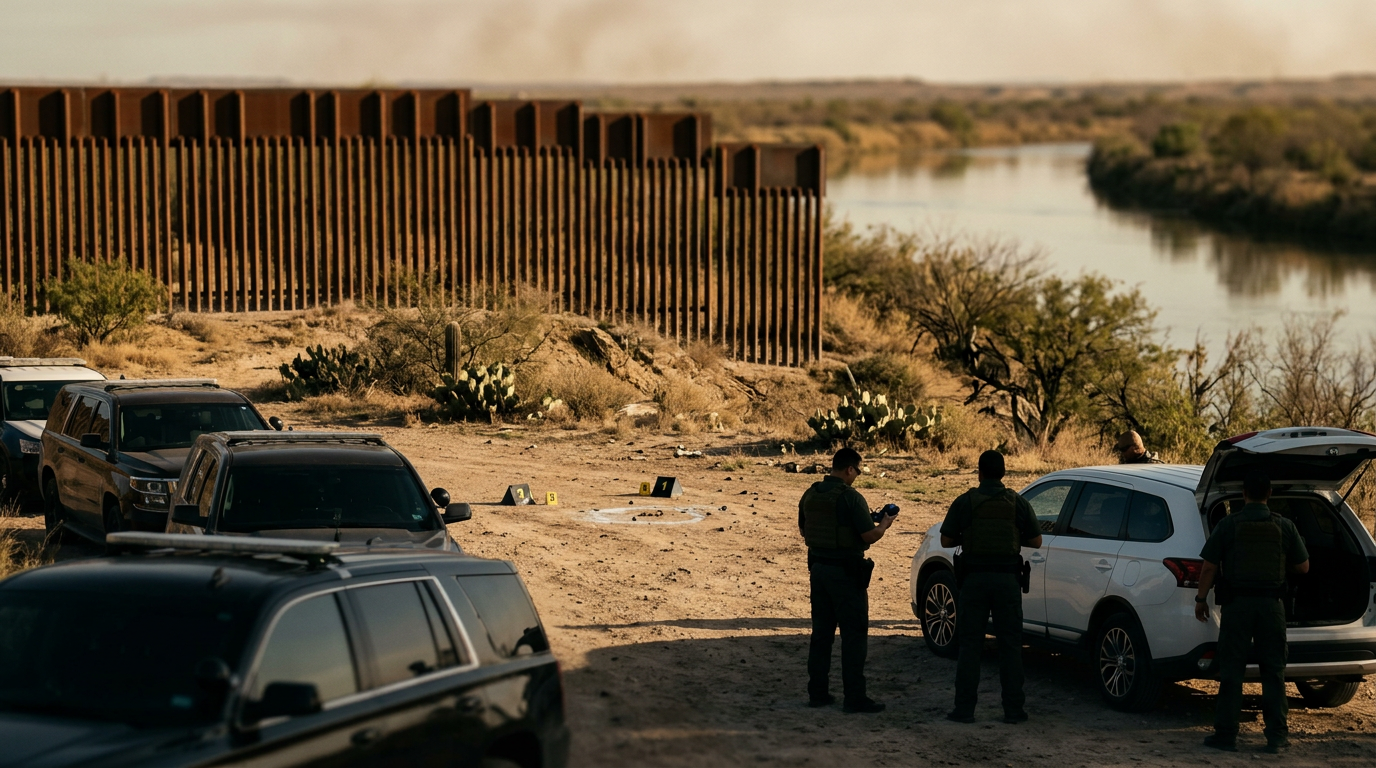
A fatal encounter involving federal immigration agents in Houston has triggered a significant investigation into the tactics used during a recent apprehension attempt. Lorenzo Salgado Araujo was killed on a Tuesday morning in north Houston during what the U.S. Department of Homeland Security (DHS) described as a high-priority enforcement operation. Early reports and subsequent statements from local representatives indicate that the deceased may not have been the primary individual federal agents were seeking to take into custody. This incident follows a pattern of high-stakes federal operations in major Texas metropolitan areas where the line between administrative civil enforcement and high-risk criminal apprehension often blurs, leading to volatile situations in residential neighborhoods. Historically, federal agencies have faced criticism in the Lone Star State for inconsistencies in how field agents document lethal force incidents compared to local Texas police departments, which have largely adopted mandatory body-worn camera protocols over the last decade.
Texas relevance
As the largest city in Texas and a primary focus for federal immigration enforcement, Houston serves as a critical backdrop for this incident. The death of a resident during a federal operation directly impacts the trust between local immigrant communities and law enforcement across the Houston-The Woodlands-Sugar Land metropolitan area. Texas-based lawmakers, including Congresswoman Sylvia Garcia, have immediately voiced concerns that federal standards for transparency are lagging behind Texas state law requirements, which often mandate electronic recording of interactions that lead to the use of force. The outcome of this investigation will likely influence how federal agencies operate within the jurisdictions of Texas sheriffs and police chiefs who are simultaneously navigating the complexities of state-level immigration mandates like Senate Bill 4.
The Morning of the Incident in North Houston
The shooting occurred during the early hours of a Tuesday morning in a residential pocket of north Houston. Agents from Immigration and Customs Enforcement (ICE) were reportedly conducting what they termed a 'targeted enforcement operation' aimed at locating a specific individual with a criminal history. However, the chaos of the encounter led to the discharge of firearms, resulting in the death of Lorenzo Salgado Araujo.
Witnesses and family members have raised questions regarding the lead-up to the gunfire. While federal officials maintain that the agents were acting within their legal authority to execute a warrant, the lack of immediate clarity regarding the threat posed by Araujo has fueled local frustrations. In many Texas neighborhoods, the presence of unidentified or plainclothes federal agents can lead to confusion, sometimes resulting in defensive actions by residents who may not immediately recognize the individuals as law enforcement.
Questions Concerning the Intended Target
One of the most pressing issues emerging from the initial investigation is whether the man killed was the actual subject of the federal warrant. Congresswoman Sylvia Garcia, who represents the district where the incident occurred, has publicly stated that information available to her office suggests Araujo was not the person the agents intended to arrest that morning. This raises serious questions about the intelligence-gathering process preceding federal raids in Texas cities.
If the operation was indeed based on mistaken identity or an overbroad approach to the target area, it could lead to civil litigation and a deeper probe into DHS training protocols. The distinction between a 'target' and a 'collateral contact' is significant in federal law, and the use of lethal force on an unintended individual typically triggers a high-level review by both the Office of Professional Responsibility and the Department of Justice.
The Gap in Body Camera Implementation
Central to the public outcry is the revelation that the agents involved were not wearing functioning body cameras at the time of the shooting. This comes despite years of promises from federal agencies to modernize their equipment and align with the transparency standards seen in major Texas municipalities like Dallas, Austin, and San Antonio. The delay in federal body cam rollout is often attributed to budgetary constraints and technical hurdles, yet these explanations offer little comfort to the families of those killed in non-recorded incidents.
In Texas, the Law Enforcement Management Institute has frequently highlighted the benefits of body cameras in de-escalating conflicts and providing an objective record of events. When federal agents operate in Texas without these tools, they create an evidentiary imbalance. Without video, investigators must rely on forensic ballistics, shell casing placement, and witness testimonies which can often be contradictory in the high-stress environment of a shooting.
Community Reaction and Calls for Accountability
Organizations across Houston have begun mobilizing to demand a full accounting of the events that led to Araujo's death. There is a growing concern that federal operations in the city are becoming more aggressive, potentially jeopardizing the safety of bystanders. Advocates argue that if federal agents are to operate in residential areas, they must be held to at least the same standard of accountability as the Houston Police Department.
Local leaders are also calling for an independent investigation that goes beyond an internal DHS review. They argue that a neutral third party, such as the Civil Rights Division of the Department of Justice or a local grand jury, should examine the evidence to determine if the use of force was justified under the Fourth Amendment. This push for external oversight is a recurring theme in Texas whenever a federal agency is involved in a local fatality.
Federal Policy vs. Local Reality
The policy governing the use of force by federal agents is set at the national level, but the consequences of those policies are felt on the streets of Texas. Currently, federal guidelines allow for the use of deadly force when an agent has a reasonable belief that there is an imminent threat of death or serious physical injury. The interpretation of 'imminent threat' is often the focal point of legal battles following these incidents.
In this specific Houston case, the absence of video makes it difficult to ascertain if the agents followed de-escalation protocols described in the 2022 Executive Order on Advancing Effective, Accountable Policing and Criminal Justice Practices. That order specifically encouraged federal agencies to prioritize the use of body cameras, yet the implementation remains inconsistent across different regions and specialized task forces.
The Legal Road Ahead for the Investigation
The investigation is currently in its preliminary stages, with the Houston Police Department often assisting in the initial processing of the scene when federal shootings occur within city limits. However, the ultimate determination of wrongdoing will likely reside with federal prosecutors. The process of reviewing such cases can take months, if not years, leaving the community in a state of uncertainty.
Should the investigation find that the agents acted outside of their authority, the case could move toward a federal grand jury. Conversely, if the shooting is ruled justified under federal guidelines, it will likely reignite the legislative push in Congress to mandate body cameras for all federal agents conducting field work. For Texas residents, the case serves as a reminder of the complex jurisdictional maze that governs law enforcement in the state.
Analysis
The absence of body camera footage in this case represents a significant setback for federal transparency efforts that were supposedly bolstered by recent executive orders. While local Texas law enforcement agencies have spent millions of taxpayer dollars to ensure every patrol officer is equipped with recording devices, federal entities like ICE and CBP have been slower to fully integrate these tools into everyday field operations. This discrepancy creates a 'transparency vacuum' where the only account of a fatal shooting comes from the involved agents themselves. For a state like Texas, which prides itself on the rule of law and accountability, the inability of a federal agency to provide video evidence of a lethal encounter in a Houston neighborhood is increasingly viewed as unacceptable by stakeholders across the political spectrum.
Source attribution
This story was reported using a public release from the Texas Standard. Keep TX Red rewrote the coverage independently and links to the official statement for verification.
Frequently Asked Questions
- Was the individual killed in the Houston shooting a criminal suspect?
- Federal authorities have not explicitly detailed the criminal history of Lorenzo Salgado Araujo, though they stated they were conducting a 'targeted' operation. However, local representatives have raised concerns that he was not the specific individual agents were searching for when the shooting occurred.
- Why were the ICE agents not wearing body cameras?
- While there has been a federal push to equip all field agents with body cameras, the implementation has been uneven across different units and regions. In this instance, the agents involved were reportedly not equipped with functioning cameras, a fact that has drawn sharp criticism from Houston lawmakers.
- Who is responsible for investigating this shooting?
- Typically, such incidents are investigated by the agency's own Office of Professional Responsibility, often in coordination with the FBI or the Department of Justice. Local authorities like the Houston Police Department may assist with the initial crime scene investigation, but federal jurisdiction usually takes precedence.
Official Sources
Take the next step
Browse the Newsroom →Read more about Keep Texas Red → Our full guide to what Keep Texas Red means and why Texans support it.
Get Texas updates delivered weekly.
Independent Texas reporting on politics, policy, and daily life. One email a week. Unsubscribe anytime.
Keep TX Red Newsroom
The Keep Texas Red Editorial Staff produces nonpartisan explainers, policy breakdowns, and educational resources to help Texans understand how their government works. All content is reviewed for accuracy and updated regularly.
About Keep TX Red →