Houston ICE Enforcement Operations Under Scrutiny Following Fatal Shooting Incident
Investigation intensifies after a federal agent's fatal encounter with a Mexican national in Houston leads to international legal demands.
Editorial disclaimer: Opinions and analysis on Keep TX Red are editorial content — not statements of fact. See our editorial standards.
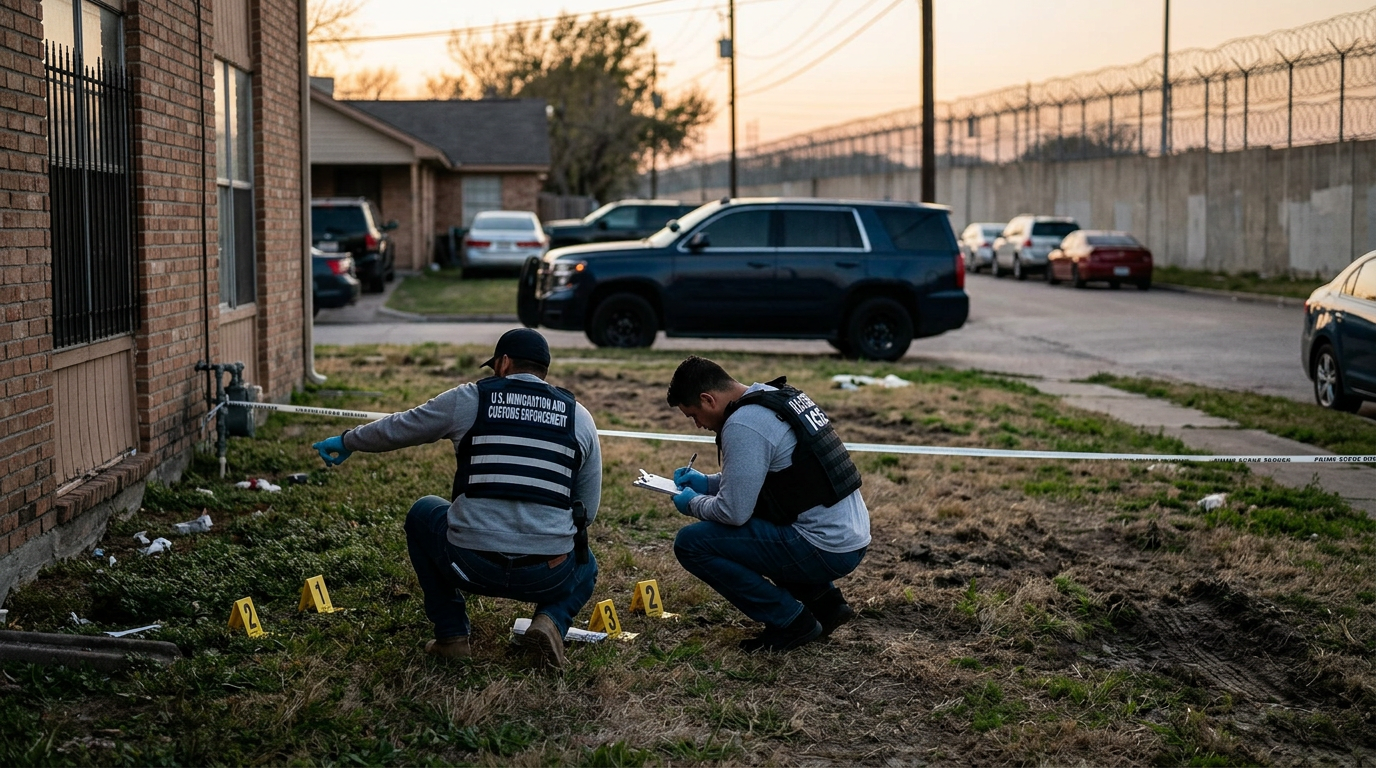
A fatal encounter involving a federal agent from U.S. Immigration and Customs Enforcement (ICE) in Houston has ignited a complex legal and diplomatic confrontation. During a routine enforcement operation in a residential neighborhood, an agent discharged a firearm, resulting in the death of a Mexican national. Historically, Texas urban centers like Houston have been focal points for high-density immigration enforcement due to their proximity to the border and large foreign-born populations. This specific incident has bypassed local news cycles to become a significant point of contention between the United States and the Mexican government, which has officially demanded a transparent investigation and pledged to support the deceased's family in seeking legal remedies. The incident marks a precarious moment for municipal-federal relations, as local leaders often balance the need for public safety with the optics of federal agents operating within city limits. In the past, similar events in North Texas and the Rio Grande Valley have led to prolonged civil litigation, setting a precedent that this Houston case will likely follow a multi-year path through the federal court system.
Texas relevance
Texas serves as the primary theater for federal immigration policy implementation, and Houston sits at the heart of this activity as one of the nation's most diverse metropolitan areas. This incident directly impacts the state's judicial and law enforcement landscape, as it tests the immunity of federal agents working within Texas jurisdictions. In Harris County, the relationship between federal agencies and local residents is often sensitive; a disruption in this trust can lead to decreased cooperation in unrelated criminal investigations. Furthermore, the involvement of the Mexican government highlights the unique geopolitical importance of Texas, where state-level issues frequently escalate into international diplomatic discussions. The resolution of this case will likely influence future protocols for how ICE operates in major Texas cities, potentially altering the tactical approach used in residential neighborhoods across the state.
The Logistics of Federal Enforcement in Houston
Houston is designated as a critical hub for ICE’s Enforcement and Removal Operations (ERO). The city’s massive infrastructure, including major highways and international airports, makes it a logical focal point for tracking individuals who have outstanding deportation orders or criminal records. These operations are typically planned weeks in advance, relying on intelligence gathered by multiple federal branches to ensure that agents can apprehend targets with minimal public disruption.
However, the tactical reality of operating in a sprawling metropolis like Houston presents unique challenges. Agents often find themselves in situations where the environment changes rapidly, moving from secure facilities to residential complexes where bystanders and families are present. In this specific July case, the transition from a standard apprehension to a lethal force incident occurred in seconds, raising questions about the initial risk assessment performed by the field team. Federal guidelines generally dictate that lethal force is a last resort, but the application of that rule in high-stress Texas summers is currently under heavy review by internal affairs.
The presence of federal agents in Houston neighborhoods is a daily occurrence that usually goes unnoticed by the public. It is only when these operations result in physical harm or death that the underlying tension between federal authority and local residency becomes visible. Moving forward, the Houston field office may face new restrictions or reporting requirements from the city council, even though federal agencies technically operate outside of municipal jurisdiction.
Mexico’s Diplomatic and Legal Response
The Mexican government, through its consulate in Houston, has taken an unusually firm stance regarding this shooting. By pledging to pursue legal action, Mexico is signaling that it views the rights of its citizens abroad as a non-negotiable priority. This involves not only advocating for the deceased's family but also demanding access to the full evidentiary record of the shooting, including any available surveillance footage or witness statements collected by the Houston Police Department.
This diplomatic pressure creates a layered legal problem. While the agent involved is protected by federal immunity to a certain extent, international treaties and civil rights statutes provide avenues for foreign governments to challenge the actions of U.S. officers. The Mexican Ministry of Foreign Affairs has historically utilized ‘amicus curiae’ briefs in U.S. courts to influence outcomes in cases involving their nationals, and this Houston incident appears to be the next major test of that strategy.
Beyond the legalities, the incident sours the cooperative spirit often necessary for cross-border law enforcement. Texas and Mexico share deep economic and social ties; when a shooting like this occurs, it creates a cooling effect on other collaborative efforts, such as human trafficking investigations and narcotics interdiction. The consulate's involvement ensures that this story will remain a headline in Mexico City, putting pressure on Washington D.C. to provide a swift and comprehensive accounting of the facts.
Public Protests and Community Reactions
In the days following the shooting, Houston saw localized protests near the site of the incident and outside federal buildings downtown. These gatherings were composed of a mix of community activists, civil rights groups, and neighbors who witnessed the event. The primary grievance expressed by these groups is the perceived lack of accountability for federal officers compared to their municipal counterparts, who are subject to local oversight boards and more immediate public transparency.
The reaction in Houston reflects a broader national trend where community members demand more oversight of federal law enforcement activities. In Texas, where the 'sanctuary city' debate has been a legislative cornerstone for years, this shooting provides a tragic example for both sides of the argument. Proponents of stricter oversight argue that federal agents are too insulated from the communities they patrol, while supporters of the agency argue that such incidents are rare relative to the thousands of successful, non-violent apprehensions made every year.
Community leaders in the affected neighborhood have called for town hall meetings to address the psychological impact of the shooting on residents. The sight of federal agents engaging in a lethal encounter can have long-lasting effects on the public's willingness to report crimes or engage with any form of law enforcement, creating a ‘chilling effect’ that complicates the work of local Houston police officers.
The Role of the Houston Police Department
While the shooting involved a federal agent, the Houston Police Department (HPD) plays a secondary but vital role in the aftermath. Local police are typically the first to secure a scene and often conduct the initial homicide investigation alongside federal authorities. This dual-track investigation can be cumbersome, as the FBI or DHS internal affairs may eventually take over the lead, leaving local investigators with limited information to share with the public.
HPD's involvement is also a matter of public policy under Texas law. Senate Bill 4, which pertains to immigration enforcement cooperation, creates a framework where local and federal agencies must work in tandem. However, when a federal operation goes wrong, the local department often faces the brunt of community backlash. Houston's police leadership must navigate these waters carefully, maintaining their federal partnerships without alienating the diverse population they are sworn to protect.
The transparency of the HPD investigation will be a benchmark for the overall credibility of the findings. If the local department is seen as being too deferential to the federal agency, it could exacerbate the mistrust currently felt by the community. Conversely, a rigorous and independent HPD inquiry could provide the clarity needed to de-escalate tensions and provide the family of the deceased with the answers they are demanding.
Impact on Federal Immigration Policy in Texas
The Houston shooting is likely to be used as a case study in future congressional hearings regarding the Department of Homeland Security’s budget and operational standards. Legislators who favor stricter border and immigration enforcement may view the incident as an unfortunate consequence of high-risk work, while those favoring reform will likely point to it as evidence that current enforcement methods are too aggressive for domestic settings.
In Texas specifically, this event could influence state-level legislation. Many lawmakers in Austin have been pushing for increased state control over immigration matters, and federal mishaps can be used as justification for the state to expand its own enforcement powers under the Texas Department of Public Safety. This creates a paradoxical situation where both federal and state agencies are vying for more authority, often leading to a more crowded and complex law enforcement environment.
The legal outcome for the agent involved will also set a precedent. If the shooting is found to be within policy, it reinforces the current legal standard for federal use of force. If it is found to be outside of policy, it could lead to a wave of administrative changes that redefine how warrant executions and field stops are conducted across the state of Texas, potentially slowing down the pace of deportations in favor of increased safety protocols.
Historical Context of Federal Shootings in Texas
Texas has a long history of high-profile incidents involving federal agents, dating back to operations in the 1990s. The geography of the state makes it inevitable that federal and civilian life will intersect frequently. Previous cases in El Paso and Laredo have shown that when a Mexican national is killed by U.S. agents, it triggers a predictable cycle of international condemnation, internal review, and slow-moving civil litigation that often lasts for over a decade.
These past incidents have led to some improvements in training, such as the implementation of de-escalation techniques and the use of non-lethal deterrents. However, the Houston case proves that the risk of a fatal outcome remains a persistent reality. By looking at historical data, it is clear that these events occur more frequently in areas with high volumes of 'migrant transit,' making Houston a high-probability zone for such tragic encounters.
Comparing this case to the 2010 shooting of Sergio Adrian Hernandez Guereca on the El Paso-Juarez border reveals how much the legal landscape has shifted. The Supreme Court eventually ruled in that case that the family could not sue the agent for damages in U.S. courts, a ruling that provides a significant hurdle for the family in the current Houston case. This legal backdrop explains why the Mexican government is pursuing diplomatic and systemic pressure rather than relying solely on the U.S. tort system.
Analysis
The shooting in Houston highlights a recurring friction point in American federalism: the intersection of national security mandates and local civil liberties. From a policy perspective, the scrutiny following this event may force the Department of Homeland Security to review its use-of-force policies, particularly regarding daylight enforcement actions in densely populated areas. While federal agents are granted significant latitude to perform their duties, the immediate and aggressive response from the Mexican consulate suggests that this will not be treated as a routine administrative matter. Some observers suggest that the heightened political climate surrounding border security and immigration in Texas ensures that every local incident is magnified on the national stage. This event serves as a catalyst for renewed debates over oversight, with critics calling for body-worn camera mandates for all federal agents and supporters of the agency emphasizing the dangerous and unpredictable nature of field enforcement in major transit hubs.
Source attribution
This story was reported using a public release from the Texas Standard. Keep TX Red rewrote the coverage independently and links to the official statement for verification.
Frequently Asked Questions
- What authority does the Mexican government have in a Houston shooting?
- While Mexico cannot directly prosecute a U.S. official, they provide legal counsel to their citizens through the consulate, file diplomatic protests with the U.S. State Department, and can initiate international legal challenges under various treaties to ensure their citizens receive due process.
- Why was the ICE agent in that neighborhood?
- Federal agents often conduct ‘targeted enforcement operations’ in residential areas to locate individuals with specific warrants or deportation orders. These operations are part of their daily mandate to enforce federal immigration laws within the interior of the United States.
- What happens to a federal agent after a shooting?
- Standard procedure involves placing the agent on administrative leave while multiple investigations are conducted. This includes an internal review by the Office of Professional Responsibility and an external criminal investigation by local police and potentially the FBI to determine if the use of force was justified.
- Will the body camera footage be released?
- Currently, ICE agents are not universally required to wear body cameras, although a pilot program was launched in 2023. Whether footage exists and is released depends on the specific equipment used by the team and the policies of the Department of Homeland Security regarding active investigations.
Official Sources
Take the next step
Browse the Newsroom →Read more about Keep Texas Red → Our full guide to what Keep Texas Red means and why Texans support it.
Get Texas updates delivered weekly.
Independent Texas reporting on politics, policy, and daily life. One email a week. Unsubscribe anytime.
Keep TX Red Newsroom
The Keep Texas Red Editorial Staff produces nonpartisan explainers, policy breakdowns, and educational resources to help Texans understand how their government works. All content is reviewed for accuracy and updated regularly.
About Keep TX Red →