Thermostat Wars: The Long History and High Risks of the 78-Degree Cooling Standard
Texas faces recurring debates over thermostat settings as national energy advice clashes with the reality of Lone Star State heatwaves.
Editorial disclaimer: Opinions and analysis on Keep TX Red are editorial content — not statements of fact. See our editorial standards.
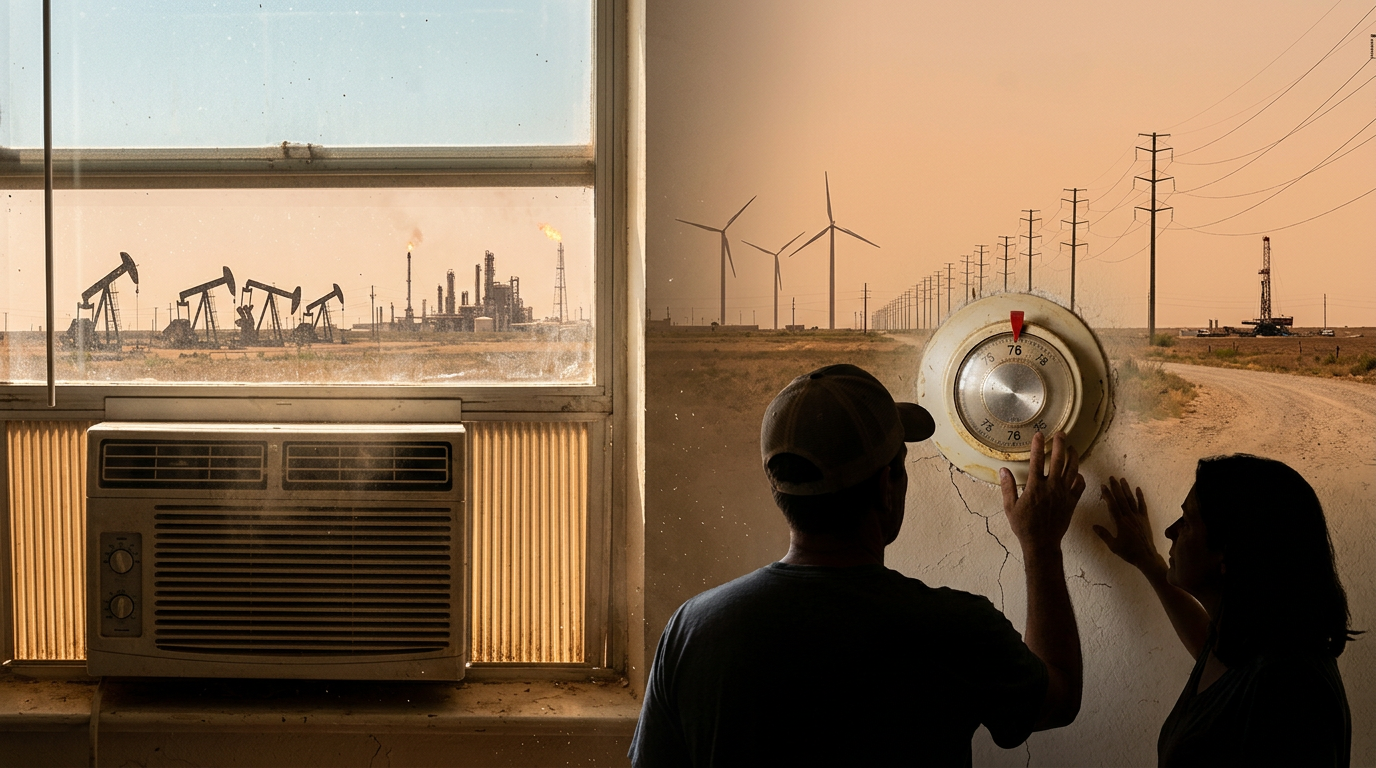
The debate over the optimal indoor temperature recently reignited after New York City's leadership suggested residents maintain air conditioning at 78 degrees to prevent grid failure. While presented as contemporary advice, this specific numerical standard dates back over 50 years to the Nixon administration’s response to the 1973 OPEC oil embargo. During that era, the federal government mandated temperature limits in public buildings to curb fuel dependency. Today, the recommendation has transitioned from a federal mandate to a recurring piece of advice from utilities and grid operators across the country, often meeting sharp resistance from citizens in warmer climates. In Texas, the '78-degree rule' is frequently cited by the Electric Reliability Council of Texas (ERCOT) during peak summer months, sparking a familiar cycle of public backlash and political debate over infrastructure reliability versus individual comfort.
Texas relevance
Texas is the epicenter of the American thermostat debate due to its unique, isolated power grid. Unlike other states, Texas cannot easily import large amounts of electricity from neighbors during a crisis, making demand-side management—like raising thermostat settings—a primary tool for ERCOT. Historical precedent in Texas shows that while the 78-degree suggestion is meant to prevent rolling blackouts, it often highlights the tension between the state's growing population and its aging thermal power fleet. For Texans, this number is more than a suggestion; it is a signal of potential grid instability and a catalyst for legislative scrutiny regarding how the state manages its energy independence.
The Origins of the 78-Degree Figure
The fascination with 78 degrees began as a desperate measure during the energy crises of the 1970s. President Richard Nixon first introduced the Emergency Building Temperature Restrictions, which were later intensified under President Jimmy Carter. At the time, the goal was strictly geopolitical: reducing oil consumption to weaken the leverage of foreign exporters. It was never intended to be a health-based standard for residential comfort in humid, subtropical environments like the Gulf Coast.
Over the decades, the Department of Energy and the Environmental Protection Agency’s Energy Star program adopted this legacy number. They argue that 78 degrees represents the 'sweet spot' where energy savings are maximized without causing immediate mechanical failure of HVAC systems. However, for modern homes in high-heat zones, critics argue this figure ignores the physiological realities of heat exhaustion and the build-up of indoor humidity.
Texas Grid Pressure and Public Defiance
In the Lone Star State, ERCOT issues Voluntary Conservation Appeals whenever the reserve margin of electricity narrows. These appeals almost always include the suggestion to raise thermostats to 78 degrees or higher during the hours of 3:00 PM to 8:00 PM. While these measures are technically voluntary, the social media response from Texans is often one of fierce defiance, reflecting a deep-seated distrust of grid management following the 2021 winter storm.
The pushback is not merely about comfort; it is a demand for accountability. Many residents argue that in a state with such vast energy resources, the necessity of living in a 78-degree home feels like a regression. This has led to a cultural divide where the thermostat becomes a symbol of either civic duty or a sign of systemic failure by the state government and utility providers.
Health and Safety Implications
While energy experts focus on the grid, health professionals warn that a blanket 78-degree recommendation can be dangerous for certain populations. In many parts of Texas, high outdoor humidity means that an indoor temperature of 78 can lead to an 'apparent temperature' or heat index that is significantly higher. This is particularly risky for the elderly, children, and those with underlying respiratory or cardiovascular conditions.
Medical experts often suggest that while 78 degrees might be acceptable for a healthy adult, it is not a one-size-fits-all solution. Proper airflow, insulation, and the age of the structure play massive roles in whether 78 degrees is actually safe. In older Texas homes with poor circulation, a thermostat set to 78 can result in stagnant air pockets that reach much higher temperatures near ceilings and in upstairs bedrooms.
The Impact of Population Growth
The reason the 78-degree advice persists in Texas is largely due to the sheer scale of the state’s growth. With thousands of new residents moving to Texas every month, the demand for air conditioning is outstripping the pace of new power plant construction. Each new suburban development adds thousands of A/C units to the grid, most of which are programmed by default to much lower temperatures.
Legislators have attempted to address this through various bills aimed at incentivizing the construction of 'dispatchable' power plants—typically natural gas—that can be turned on quickly when demand spikes. Until that capacity significantly increases, the reliance on conservation requests remains the cheapest and most immediate lever for ERCOT to pull, ensuring that the 78-degree debate will remain a fixture of Texas summers.
Economic Consequences of Cooling Standards
There is a significant economic component to the thermostat wars. For low-income Texans, raising the thermostat to 78 degrees is often a financial necessity rather than a political statement. High utility bills during record-breaking heatwaves can force families to choose between cooling and other essentials like food or medicine. In this context, the 78-degree suggestion can feel patronizing to those who already live without luxury cooling.
Conversely, for the business sector, strict adherence to higher indoor temperatures can impact productivity and retail traffic. Restaurants, malls, and office buildings in Texas rely on 'refrigerated air' as a primary draw for customers. A mandate or even a strong social push toward 78 degrees could have cascading effects on the state's service economy, which thrives on providing an escape from the outdoor elements.
Technological Solutions vs. Behavioral Changes
The future of this debate likely lies in technology rather than government nagging. Smart thermostats and 'demand response' programs are becoming more common in Texas. These systems allow utility companies to slightly adjust a customer's temperature during a grid emergency in exchange for rebates or lower rates. This shifts the focus from a flat 78-degree rule to a more nuanced, automated approach to load shedding.
However, this technology also raises privacy concerns. Some Texans are wary of giving utility companies remote access to their home's climate control. As the state continues to modernize its grid, the tension between automated efficiency and personal autonomy will likely become the next front in the ongoing battle over how Texas stays cool.
Analysis
The politicization of the thermostat is a symptom of a larger struggle over energy policy and personal liberty. For conservative Texans, being told how to cool their own homes often feels like an overreach that masks a failure to build enough dispatchable power generation. When officials suggest 78 degrees, they are effectively shifting the burden of grid maintenance onto the consumer. This narrative has become a potent political tool, used to argue for more investment in natural gas and nuclear power rather than relying on behavioral changes to keep the lights on.
Source attribution
This story was reported using a public release from the Texas Standard. Keep TX Red rewrote the coverage independently and links to the official statement for verification.
Frequently Asked Questions
- Why is 78 degrees the specific number recommended?
- The number 78 was determined by federal agencies in the 1970s as an 'acceptable' balance point that reduces the load on energy producers while maintaining basic indoor safety. It has since been baked into federal guidelines like Energy Star, despite changes in building technology and climate.
- Does ERCOT have the power to force me to set my thermostat to 78?
- No, ERCOT issues voluntary conservation appeals. Unless you have specifically signed up for a 'demand response' program with your retail electric provider that allows them to adjust your smart thermostat, you maintain full control over your home's temperature.
- Is 78 degrees safe for everyone in a Texas summer?
- Not necessarily. Heat tolerance varies significantly. Factors like humidity, age, and pre-existing health conditions can make 78 degrees dangerous for some. It is important to prioritize health and utilize fans or lower settings if signs of heat exhaustion appear.
Official Sources
Take the next step
Browse the Newsroom →Read more about Keep Texas Red → Our full guide to what Keep Texas Red means and why Texans support it.
Get Texas updates delivered weekly.
Independent Texas reporting on politics, policy, and daily life. One email a week. Unsubscribe anytime.
Keep TX Red Newsroom
The Keep Texas Red Editorial Staff produces nonpartisan explainers, policy breakdowns, and educational resources to help Texans understand how their government works. All content is reviewed for accuracy and updated regularly.
About Keep TX Red →