The Beaver’s Dominion: How Buc-ee's Redefined the Texas Travel Experience and Conquered the Interstate
Texas-born Buc-ee's transforms from a local convenience chain into a cultural powerhouse, dominating the American roadside landscape with its beaver mascot
Editorial disclaimer: Opinions and analysis on Keep TX Red are editorial content — not statements of fact. See our editorial standards.
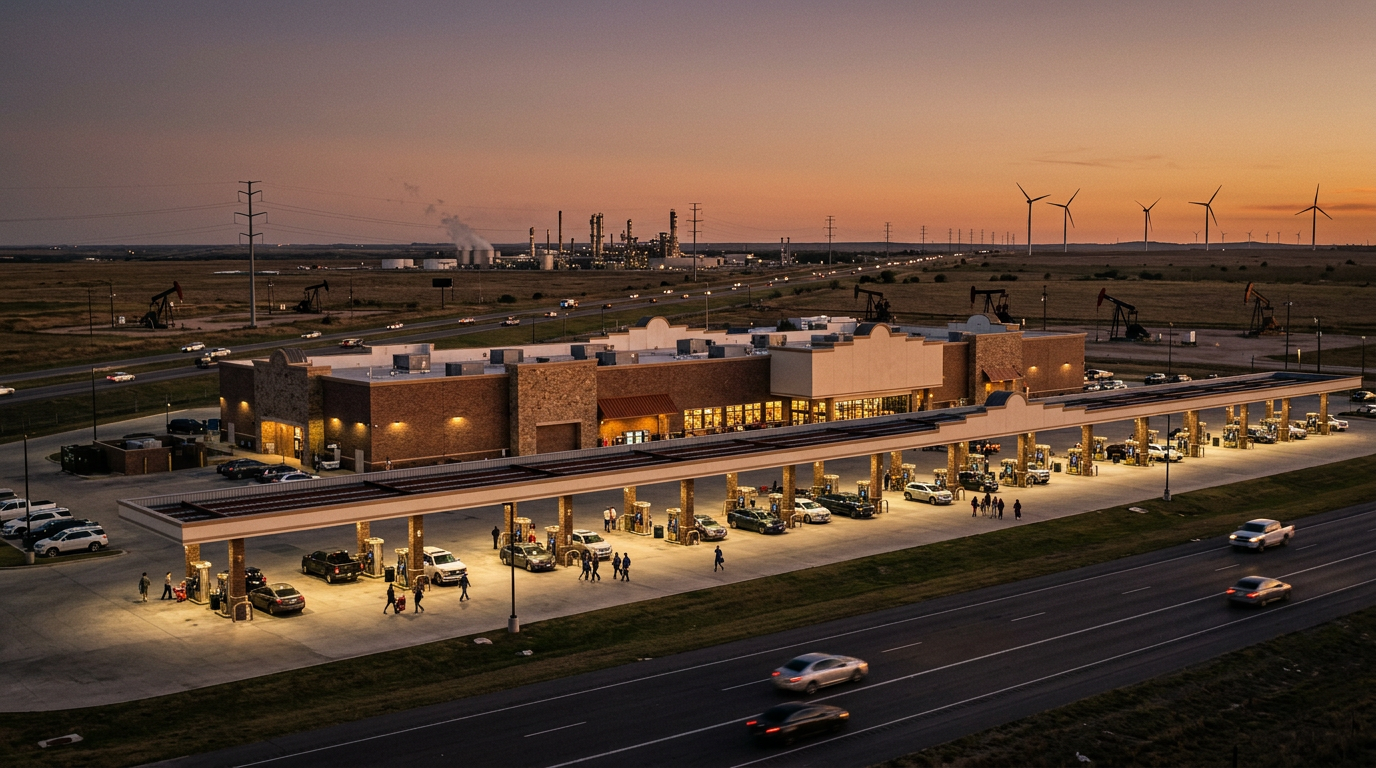
Founded in 1982 in Lake Jackson, Texas, Buc-ee's has evolved from a small-town pit stop into a massive cultural and commercial phenomenon that commands loyalty rarely seen in the retail sector. Arch 'Beaver' Aplin III and Don Wasek built an empire based on a simple but revolutionary premise: provide the cleanest restrooms, the cheapest ice, and the most expansive selection of snacks available on the road. For decades, the chain focused exclusively on the Lone Star State, cementing its status as a mandatory stop for anyone traversing the vast stretches of Texas highways. Historically, Texas gas stations were merely functional conduits for fuel, but Buc-ee's transformed them into destination points, blending elements of high-end grocery stores, gift shops, and massive barbecue pits. The recent expansion beyond Texas borders has highlighted the aggressive and meticulous nature of the brand's growth strategy. As the company moves into states like Florida, Alabama, and Colorado, it brings with it a distinctive Texas pride that often eclipses local competitors. The mascot—a cheerful, buck-toothed beaver in a red hat—has become more than just a logo; it is a symbol of a specifically Texan brand of hospitality and scale. This expansion is not merely about physical locations but about the displacement of regional incumbents who cannot match the sheer square footage or the fanatical devotion the Beaver inspires in travelers.
Texas relevance
Texas remains the spiritual and operational heart of Buc-ee's, serving as the proving ground for every innovation the company exports to the rest of the nation. The town of New Braunfels currently hosts one of the largest convenience stores in the world, a massive 66,335-square-foot facility that has become a major regional employer and tourism driver within Central Texas. The success of the brand has created a unique economic ripple across the state, where small towns compete for the prestige and tax revenue that a new location brings to their jurisdictions. Furthermore, the company's commitment to high wages—often significantly above the industry average for retail and food service—has set a new benchmark for labor standards in the Texas service industry.
The Evolution of the Roadside Oasis
In the early days of Texas travel, the convenience store was often an afterthought—a cramped space with limited options and questionable hygiene. Buc-ee's disrupted this status quo by focusing on the 'negative space' of the travel experience: the things people dreaded most about road trips. By prioritizing pristine bathroom facilities and 24-hour maintenance, they established a baseline of trust that competitors ignored for decades.
The shift from a regional secret to a national heavyweight began when the company realized that their audience wasn't just hungry drivers, but collectors of experiences. The 'Texas-sized' approach meant building facilities with over 100 fueling positions and thousands of square feet dedicated to home decor, apparel, and its signature Beaver Nuggets. This massive scale allows for a diverse revenue stream that insulates the company from the volatility of fuel prices.
Social media has played an outsized role in this growth. The beaver mascot has reached 'cult' status, with fans documenting their 'Buc-ee's hauls' on platforms like TikTok and Instagram. This organic marketing has allowed the brand to enter new markets with pre-built demand, as residents in neighboring states have often seen the logo online long before the first shovel hits the ground in their own community.
The Economics of the Beaver Empire
The financial engine behind Buc-ee's is as impressive as its physical footprint. Unlike traditional franchises, the company maintains tight control over its locations, ensuring consistency in everything from the temperature of the pulled pork to the greeting customers receive at the door. This centralized management style allows for rapid iteration and quality control that is rarely seen in chains of this magnitude.
Buc-ee's also leverages its massive land acquisitions to influence local development. When a new site is selected, it often triggers a surge in surrounding property values and draws other retail developments to the area. For many rural Texas counties, a Buc-ee's development is the largest single private investment in their local history, providing hundreds of jobs that include benefits like 401(k) matching and significant paid time off.
The brand's pricing strategy also plays a role in its dominance. By selling high volumes of private-label snacks and merchandise, they maintain higher margins than stores relying purely on third-party snacks. This vertical integration—where the brand is the manufacturer, the distributor, and the retailer—makes it a formidable opponent in the retail space.
The Culture of the 100-Pump Station
Walking into a modern Buc-ee's location is often described as a sensory overload. The smell of fresh roasted nuts and brisket competes with the visual clutter of thousands of branded t-shirts and swimsuits. This atmosphere is intentionally curated to encourage 'loitering' in a way that traditional gas stations discourage. The more time a traveler spends inside, the more likely they are to purchase items they didn't know they needed.
Security and order are also hallmarks of the Texas brand. The company famously bans 18-wheelers from its main locations, a controversial move that prioritizes the comfort of passenger vehicle drivers. This policy creates a safer, quieter environment for families, further distancing the Buc-ee's experience from the gritty image of the traditional truck stop.
The staffing levels are notably higher than those of rivals. At any given time, dozens of employees are visible cleaning, restocking, and assisting customers. This visibility reinforces the brand's promise of cleanliness and service, creating a virtuous cycle where high standards attract high-quality employees, who in turn maintain the brand's reputation.
Challenges in National Expansion
As Buc-ee's moves further from its Texas roots, it faces the challenge of maintaining its 'local' charm while operating on a national scale. In some states, local zoning boards and environmental groups have raised concerns about the traffic and ecological impact of such massive developments. However, the company has largely navigated these hurdles by promising significant tax contributions and community support.
There is also the question of 'mascot fatigue.' While the beaver remains a beloved figure in Texas, the company must work to ensure the brand doesn't become seen as a corporate invader in other regions. To combat this, they often incorporate local flavors and specialized regional items into their inventory while maintaining the core Texas identity that makes them unique.
Labor markets also present a hurdle. Maintaining the high staffing levels required for the Buc-ee's model is difficult in areas with low unemployment or high competition for service workers. Thus far, the company's strategy of paying well above market rates has been its primary tool for ensuring its locations remain fully staffed and operational.
The Future of the Roadside Landscape
The 'rampage' of the beaver mascot shows no signs of slowing down. Projects are currently underway in several new states, and existing locations in Texas continue to be upgraded and expanded. The brand is increasingly becoming a real estate play as much as a retail one, securing prime locations along major interstate corridors long before competitors can react.
As the automotive industry shifts toward electric vehicles, Buc-ee's is also adapting. Their massive parking lots are being equipped with charging stations, ensuring that they remain a relevant destination for the next generation of travelers. The logic is sound: if a car takes 30 minutes to charge, there is no better place for the driver to wait than inside a massive showroom filled with food and shopping.
Ultimately, Buc-ee's is a testament to the power of a well-executed niche. By taking the humblest of business models—the gas station—and scaling it to an absurdly Texan degree, they have created a brand that is essentially immune to the pressures of e-commerce. You cannot download a fresh brisket sandwich or the experience of a perfectly clean restroom, and that is where the Beaver's true power lies.
Analysis
The rise of Buc-ee's represents a shift in American consumer behavior where the journey itself is commodified as much as the destination. By weaponizing the 'Texas' identity, the company successfully exports a lifestyle rather than just petroleum products. This 'rampage' mentioned in recent reports isn't just about market share; it's about the cultural displacement of traditional, smaller-scale rest stops. While critics might point to the homogenization of the American roadside, the sheer efficiency and cleanliness of the Buc-ee's model provide a competitive edge that is nearly impossible for older, legacy brands to overcome without significant capital reinvestment.
Source attribution
This story was reported using a public release from the Buc-ee's (Google News). Keep TX Red rewrote the coverage independently and links to the official statement for verification.
Frequently Asked Questions
- Why are 18-wheelers not allowed at most Buc-ee's locations?
- Buc-ee's specifically designs its facilities for passenger vehicles to focus on family safety and convenience. By prohibiting semi-trucks, the company reduces pavement wear, minimizes noise, and prevents the 'truck stop' atmosphere that many of their target customers—families on vacation—might find intimidating.
- Where was the first Buc-ee's store located?
- The very first Buc-ee's was opened in July 1982 in Lake Jackson, Texas. It was a modest 3,000-square-foot store, a far cry from the massive 'travel centers' the company is known for today, which can exceed 70,000 square feet.
- What makes the beaver nuggets so popular?
- Beaver Nuggets are a signature snack consisting of caramel-coated corn puffs. They have become a cult favorite due to their addictive sweetness and the fact that they are exclusively available at Buc-ee's locations, making them a staple 'souvenir' for travelers passing through.
- Is Buc-ee's a franchise or family-owned?
- Buc-ee's is a privately held company and does not offer franchise opportunities. This allows founders Arch Aplin III and Don Wasek to maintain strict quality control over every location and ensure that the brand's standards for cleanliness and service are consistently met across the entire chain.
Official Sources
Take the next step
Browse the Newsroom →Read more about Keep Texas Red → Our full guide to what Keep Texas Red means and why Texans support it.
Get Texas updates delivered weekly.
Independent Texas reporting on politics, policy, and daily life. One email a week. Unsubscribe anytime.
Keep TX Red Newsroom
The Keep Texas Red Editorial Staff produces nonpartisan explainers, policy breakdowns, and educational resources to help Texans understand how their government works. All content is reviewed for accuracy and updated regularly.
About Keep TX Red →