San Antonio Secured as Global Hub for Toyota Tacoma Production with Historic Expansion Plan
Toyota commits to 2,000 new jobs and a massive San Antonio factory expansion following a $303 million incentive agreement with Texas officials.
Editorial disclaimer: Opinions and analysis on Keep TX Red are editorial content — not statements of fact. See our editorial standards.
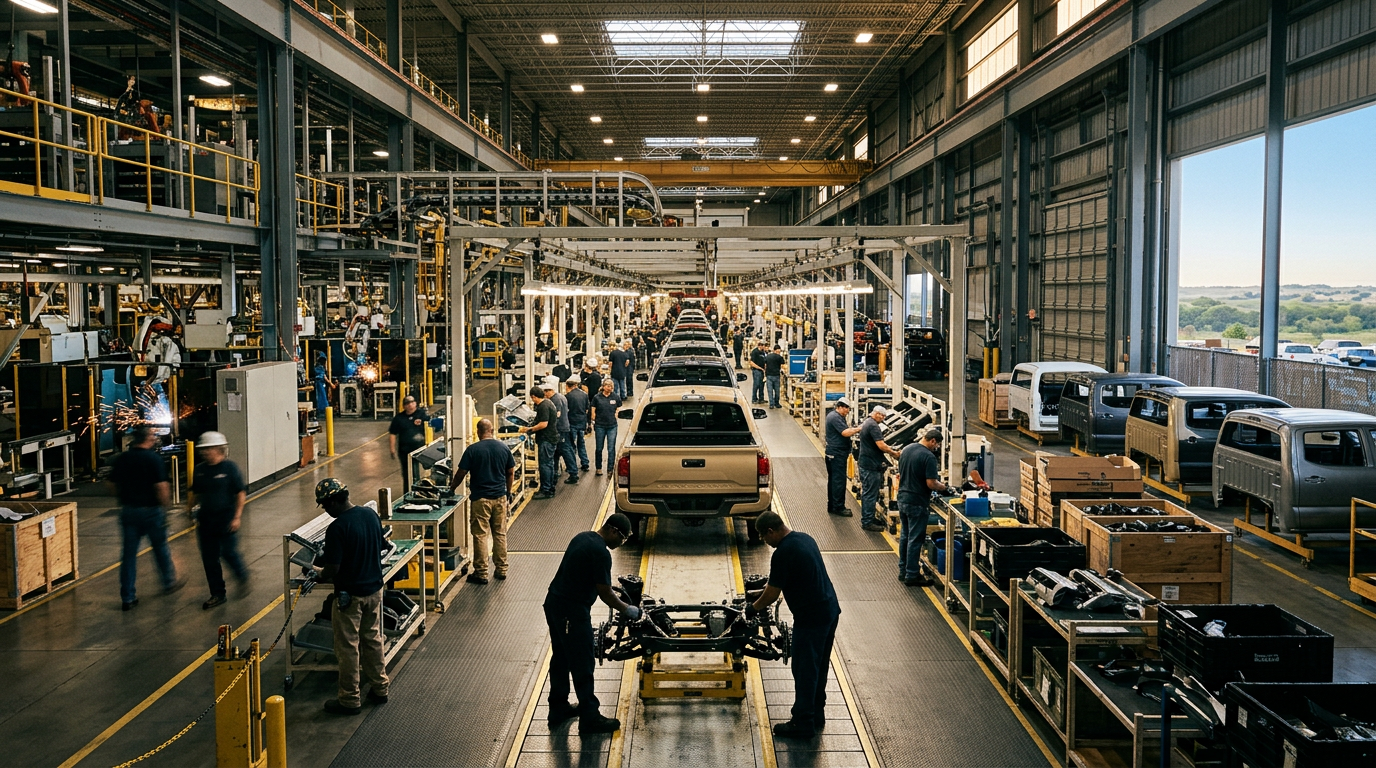
Toyota has officially announced a massive strategic shift that reinforces Texas as the primary driver of its North American truck operations. The automotive giant will return full production of its popular Tacoma model to the San Antonio assembly plant, a move accompanied by a major infrastructure expansion. This project is expected to generate approximately 2,000 direct new jobs, significantly bolstering the local workforce. Historically, Texas has competed aggressively with other manufacturing hubs, including facilities in Mexico and other Southern states, to anchor high-value industrial projects. By repatriating specific production lines and expanding existing footprints, this latest development follows a multi-decade trend of industrial centralization within the Lone Star State, where favorable tax structures and infrastructure investment continue to attract global manufacturers. The agreement was finalized after state and local authorities presented a comprehensive incentive package valued at $303 million, marking one of the most significant economic development deals for the region in recent years.
Texas relevance
The impact of this expansion is deeply localized to San Antonio and Bexar County, the heart of the Texas South Texas manufacturing corridor. For two decades, the Toyota facility on the city’s South Side has served as a cornerstone of the regional economy, transforming a former ranching area into a high-tech industrial zone. This latest move ensures that the local supply chain—consisting of dozens of on-site and near-site parts suppliers—will likely see a corresponding surge in demand and staffing needs. Beyond the immediate job count, the infusion of state and local capital through incentives underscores the commitment of Texas leadership to maintaining a 'business-first' environment that outcompetes international alternatives. The expansion further solidifies Texas’s status as a leader in automotive manufacturing, rivaling traditional 'Auto Alley' states like Michigan and Tennessee, while providing stable, high-paying vocational opportunities for the South Texas community.
The Evolution of the San Antonio Assembly Plant
The Toyota Motor Manufacturing, Texas (TMMTX) facility has been a fixture of the San Antonio skyline since it first broke ground in the mid-2000s. Originally intended as a specialized site for full-sized trucks, the plant has undergone several phases of modernization to accommodate the Tundra and later the Sequoia. The reintroduction of the Tacoma on a larger scale represents a full-circle moment for the facility, which has long been praised for its innovative 'on-site supplier' model.
Under this model, dozens of independent companies that produce seats, dashboards, and other components operate within the same campus as the main assembly line. This reduces logistics costs and environmental impact while creating a dense ecosystem of industrial expertise. The new expansion will likely require these suppliers to scale their operations in tandem, amplifying the 2,000-job headline figure into a much larger ripples effect across the regional labor market.
Over the years, the San Antonio plant has set records for production efficiency within the Toyota global network. This track record of reliability was a primary factor in the company’s decision to reinvest in Texas rather than allocating this capacity to alternative sites. The plant’s ability to pivot between different vehicle platforms demonstrates a level of workforce flexibility that state officials frequently highlight when courting international investors.
Breaking Down the $303 Million Incentive Package
The financial framework that secured this deal is a collaborative effort involving the City of San Antonio, Bexar County, and state-level programs. The package includes a mix of property tax abatements, grants, and infrastructure improvements tailored to support a facility of this scale. Such incentives are often criticized as corporate welfare, but proponents argue they are necessary tools for Texas to remain competitive in a global market where other regions offer similar or greater inducements.
A significant portion of the package is tied to performance benchmarks, meaning Toyota must meet specific hiring quotas and capital investment milestones to realize the full value of the incentives. This structure protects the taxpayer by ensuring that public funds are only 'spent' in proportion to the actual economic value generated. Additionally, the infrastructure components of the deal often benefit the surrounding community, such as improved road access and utility upgrades that can support future growth in the area.
Local leaders in San Antonio view these incentives as a way to diversify the economy away from its traditional reliance on tourism and military spending. By doubling down on the manufacturing sector, the city is building a more resilient middle class. Economic analysts suggest that the long-term tax revenue generated by the employees' spending and the plant's operational requirements will eventually far exceed the initial $303 million layout.
Workforce Development and Future Job Growth
The addition of 2,000 jobs presents both an opportunity and a challenge for the San Antonio labor market. To fill these roles, Toyota will need to collaborate with local educational institutions, such as Alamo Colleges and Texas A&M University-San Antonio, to ensure a steady pipeline of skilled technicians and engineers. These roles generally offer competitive wages and benefits, providing a path to upward mobility for many residents in South Texas.
The training programs associated with these new positions often focus on advanced robotics, data analytics, and lean manufacturing principles. As the automotive industry shifts toward more complex vehicle architectures, including hybrid and electric powertrains, the skills acquired by Texas workers will keep them competitive on a global scale. This human capital investment is a vital component of the long-term health of the Bexar County economy.
Furthermore, the project is expected to create thousands of indirect jobs during the construction phase. Building the new factory space will require a massive influx of contractors, electricians, and engineers. Once the facility is operational, the increased daily population at the site will support local small businesses, from restaurants to service providers, creating a sustained economic boost for the South Side community.
Strategic Importance of the Tacoma Production Line
The Tacoma has long been one of the best-selling mid-size pickups in the United States, maintaining a loyal customer base even as competition in the segment has increased. By moving the bulk of its production back to San Antonio, Toyota can streamline its supply chain and respond more quickly to fluctuations in U.S. consumer demand. The proximity to major Texas highways and rail lines allows for efficient distribution across the central and eastern regions of the country.
This move also reflects a broader industry trend of 'near-shoring' or 'on-shoring' production to mitigate the risks of global supply chain disruptions. Recent years have shown that long-distance logistics can be brittle, and having a localized production hub in a state with a stable power grid and a pro-industry regulatory environment is a significant strategic advantage. The 'Made in Texas' label has also become a powerful marketing tool for truck manufacturers.
For Toyota, the Texas plant is more than just a factory; it is a center of excellence for truck engineering. The feedback loop between the assembly workers in San Antonio and the engineers designing the vehicles ensures that the Tacoma remains durable and reliable. This synergy is harder to maintain when production is scattered across multiple international sites.
Environmental and Community Impact Considerations
As part of the expansion, Toyota has committed to maintaining high environmental standards, utilizing modern manufacturing techniques that reduce water consumption and energy waste. Large-scale industrial projects in Texas are increasingly scrutinized for their environmental footprint, and the San Antonio facility has historically integrated green spaces and sustainable water management practices locally. This focus on sustainability is often a prerequisite for the modern corporate ESG goals that major investors demand.
The community around the plant is also set to benefit from philanthropic efforts that typically accompany Toyota’s presence. The company has a long history of supporting local non-profits and K-12 education initiatives in the San Antonio area. As the footprint of the plant grows, so does the company's stake in the health and prosperity of its surrounding neighborhoods, leading to increased civic engagement.
Traffic and infrastructure management will be a key focus for local planners as the 2,000 new employees begin commuting to the site. The incentive package includes provisions for road improvements to handle the increased volume of trucks and personal vehicles. Efficient transit planning will be essential to ensuring that the growth does not adversely affect the quality of life for long-time residents in the South Side area.
The Competitive Landscape for Texas Manufacturing
Texas continues to lead the nation in attracting manufacturing investments, but the competition is heating up both domestically and internationally. States like Georgia and South Carolina have also seen massive investments from EV manufacturers and battery plants. By securing the Toyota Tacoma expansion, Texas reasserts its dominance in the traditional internal combustion and hybrid engine markets while preparing for the future of mobility.
The 'Texas Model' of low taxes and light regulation is frequently cited by corporate executives as the deciding factor in these multi-million dollar decisions. However, the availability of a ready workforce and a reliable infrastructure are becoming equally important. This deal serves as a benchmark for future negotiations, proving that the state is willing to put skin in the game to protect its industrial base.
Looking ahead, the success of this expansion will likely lead to further investments from Toyota’s network of global partners. As the San Antonio hub grows, it becomes a more attractive destination for other high-tech manufacturers looking for a proven location. The synergy between automotive assembly and other sectors like aerospace and cybersecurity further complicates San Antonio's identity as a multi-modal economic powerhouse.
Analysis
This decision by Toyota to consolidate Tacoma production in San Antonio represents more than just a corporate expansion; it is a strategic victory for the Texas economic model. In an era where many manufacturers have looked toward lower-cost labor markets south of the border, Toyota’s alignment with Texas signaled that productivity, infrastructure stability, and governmental cooperation are as valuable as raw labor costs. The $303 million incentive package, while substantial, is designed as an investment that will likely yield returns for the state through increased taxable economic activity and a more robust consumer base in the San Antonio area. Critically, this brings high-value engineering and assembly tasks back to American soil, ensuring that the flagship truck of the Toyota brand is manufactured by Texans for a predominantly American market. From a policy perspective, it validates the state's ongoing use of targeted economic incentives to anchor bedrock industries.
Source attribution
This story was reported using a public release from the Texas Standard. Keep TX Red rewrote the coverage independently and links to the official statement for verification.
Frequently Asked Questions
- Why did Toyota choose San Antonio for this expansion?
- Toyota chose San Antonio due to the existing success and efficiency of its local assembly plant, the availability of a skilled manufacturing workforce, and a robust $303 million incentive package. Texas also offers a favorable business climate with lower regulatory hurdles and proximity to key logistical networks.
- What kind of jobs will be created by the new Toyota project?
- The 2,000 new positions will primarily consist of advanced manufacturing roles, including assembly line technicians, specialized engineers, robotics maintenance staff, and quality control analysts. There will also be a significant number of indirect jobs created in the local supply chain and service sectors.
- How does the incentive package benefit the taxpayers of Texas?
- While the $303 million package is a significant upfront commitment, it is structured based on performance milestones. The long-term benefits include a massive increase in the local tax base, the move of high-paying jobs into the region, and the reduction of unemployment. Furthermore, the infrastructure improvements funded by the deal often provide utility to the general public.
- Will the new production line include electric vehicles?
- While the focus for the Tacoma is currently on traditional and hybrid powertrains, the modernization of the San Antonio plant through this expansion makes it better equipped to handle future shifts in automotive technology, including potential electric vehicle production lines as market demand evolves.
Official Sources
Take the next step
Browse the Newsroom →Read more about Keep Texas Red → Our full guide to what Keep Texas Red means and why Texans support it.
Get Texas updates delivered weekly.
Independent Texas reporting on politics, policy, and daily life. One email a week. Unsubscribe anytime.
Keep TX Red Newsroom
The Keep Texas Red Editorial Staff produces nonpartisan explainers, policy breakdowns, and educational resources to help Texans understand how their government works. All content is reviewed for accuracy and updated regularly.
About Keep TX Red →