Mexican Consulate Seeks Answers After Fatal Houston ICE Enforcement Shooting
Mexican officials threaten legal action following a fatal confrontation between ICE agents and a Mexican national in Houston during a targeted operation.
Editorial disclaimer: Opinions and analysis on Keep TX Red are editorial content — not statements of fact. See our editorial standards.
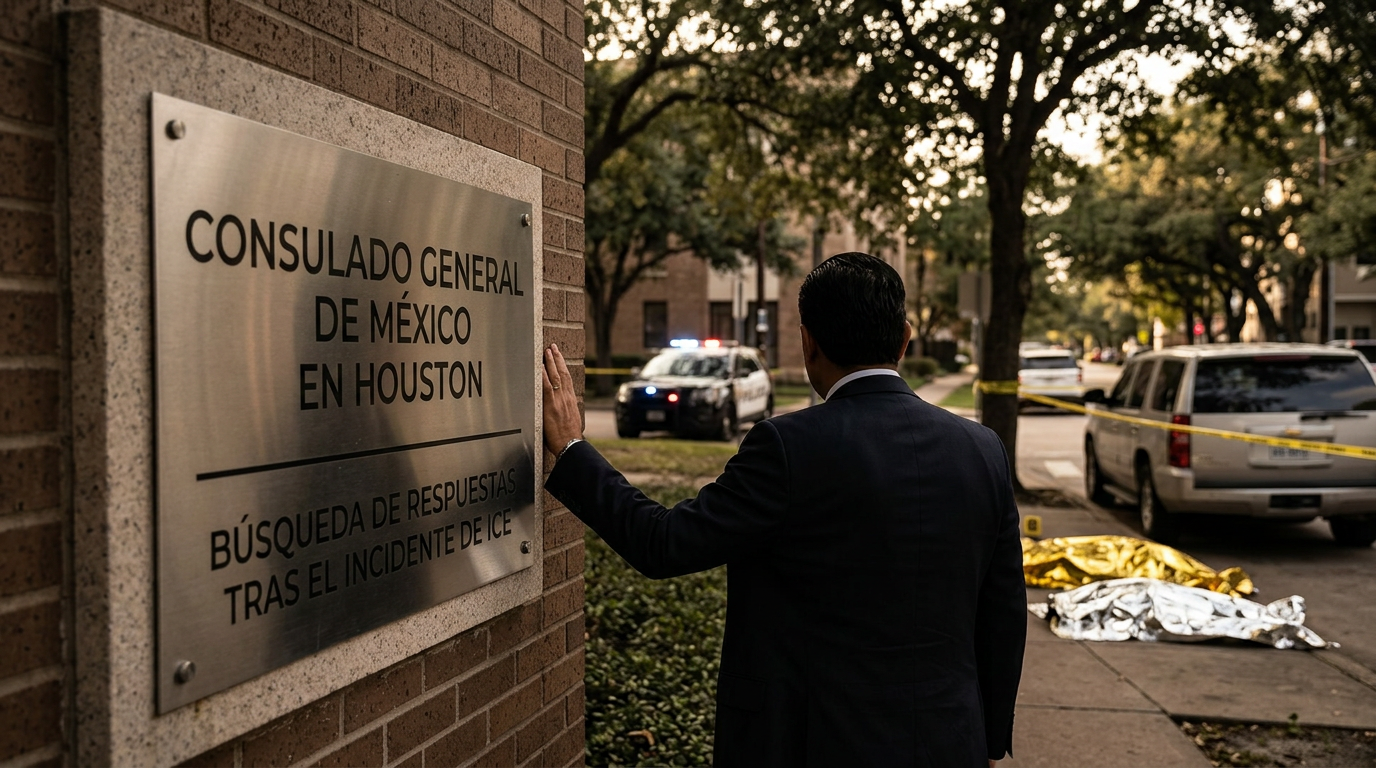
A fatal Tuesday afternoon shooting involving federal immigration agents in Houston has sparked an international dispute between the United States and Mexico. The incident occurred during a planned enforcement action by U.S. Immigration and Customs Enforcement (ICE) aimed at a specific individual. Following the confrontation, which resulted in the death of a Mexican national, the Mexican federal government expressed immediate concern over the use of lethal force. Historically, Houston has been a focal point for federal-local law enforcement dynamics due to its large immigrant population and strategic geographic position. This event marks one of the first major diplomatic challenges for the new Mexican administration under President Claudia Sheinbaum regarding the treatment of its citizens on American soil. Unlike prior incidents where local law enforcement led investigations, the federal nature of the ICE involvement brings the Department of Homeland Security directly into the spotlight. The fatal outcome has prompted the Mexican Consulate in Houston to demand a transparent investigation, while federal agents maintain they were conducting lawful duties under the scope of national security and public safety. This development occurs amid heightened local and national tension over deportation efforts and the methods used by federal agencies to secure the interior of the state.
Texas relevance
As a major metropolitan hub in Texas, Houston serves as a primary operational theater for ICE, making this event central to state-level debates on public safety and foreign relations. The incident tests the resilience of the relationship between Texas law enforcement and international diplomatic entities stationed within the state. Previous incidents in the Rio Grande Valley and San Antonio have set a precedent for how federal actions impact local community trust, and the outcome of the impending legal challenges could influence how future warrants are executed across the Lone Star State. Texas residents are particularly attuned to these developments as they intersect with ongoing state-led initiatives like Operation Lone Star, despite this being a purely federal operation.
Chronology of the Houston Operation
The enforcement operation began on a Tuesday as ICE agents tracked a targeted individual whose identity has not yet been fully disclosed to the general public. During the encounter, which took place in a residential or commercial corridor of Houston, the situation escalated rapidly. Details regarding whether the individual was armed or if a physical struggle preceded the discharge of firearms are currently under investigation by internal federal oversight bodies.
Local emergency responders were called to the scene shortly after the shots were fired, but the Mexican national was pronounced dead shortly thereafter. In the hours following the shooting, ICE officials confirmed that their officers were performing a high-risk warrant service, a common but dangerous aspect of immigration enforcement in large urban environments like Houston. The immediate area was cordoned off for several hours as forensic teams from federal and potentially local departments processed the scene.
The reaction from the Mexican Consulate was swift, as representatives arrived to confirm the nationality of the deceased and provide support to the family. This proactive stance by the consulate is part of a broader trend of Mexican diplomacy focusing on the rights of their citizens abroad. The incident has since moved from a local police matter to a subject of discussion in the Mexican National Palace, illustrating the high stakes of federal enforcement in Texas.
Mexico’s Diplomatic Response and Potential Lawsuit
President Claudia Sheinbaum has publicly addressed the matter, indicating that her administration will not remain passive when its citizens are killed by foreign government agents. The Mexican Ministry of Foreign Affairs is reportedly reviewing international protocols to determine if any violations of the Vienna Convention on Consular Relations occurred. This includes examining whether the consulate was notified within an appropriate timeframe following the detention and subsequent death of the individual.
Legal experts suggest that any lawsuit would likely focus on the 'excessive use of force' doctrine, though such cases face significant hurdles in U.S. courts due to sovereign immunity protections for federal employees. Mexico’s legal strategy may involve seeking civil damages or pushing for a more robust independent investigation that excludes the Department of Homeland Security's internal review board. This push for outside oversight is a recurring theme in criticisms of federal law enforcement transparency.
The consulate has also emphasized that the deceased’s family deserves a full accounting of the events. By framing this as a human rights issue, the Mexican government is looking to build a case that could potentially influence a more sympathetic international audience. The outcome of these legal maneuvers could take months or years to resolve, leaving the status of the involved ICE agents in a state of administrative limbo until the final reports are filed.
ICE Protocols and Targeted Enforcement in Texas
ICE's targeted enforcement operations are distinct from general sweeps, as they rely on intelligence-led policing to locate individuals with criminal records or final orders of removal. These operations are essential components of maintaining the integrity of the federal immigration system. In Houston, these units often work under high pressure, navigating complex neighborhoods where the presence of federal authorities can be met with varying degrees of cooperation or hostility.
Agents are trained in de-escalation, but the inherent volatility of serving warrants often leads to split-second decisions regarding the use of force. Under federal policy, agents are authorized to use lethal force only when there is an imminent threat of death or serious physical injury to the officer or others. The investigation will pivot on whether the agents' perceptions of threat were 'objectively reasonable' under the standard established by the Supreme Court in Graham v. Connor.
For supporters of strict immigration enforcement in Texas, these agents are seen as the front line in a battle against illegal residency. Any perceived softening of their authority due to pressure from foreign governments is often viewed with skepticism. Conversely, critics of the agency argue that such fatal encounters are symptomatic of an enforcement culture that values apprehension over safety, a claim that federal officials vehemently deny.
Local Impact on the Houston Community
Houston is known for its diverse population and its role as a gateway for international trade and migration. Events like this create ripples through sectors ranging from local commerce to community-based policing. When federal agencies engage in fatal shootings, it can sometimes complicate the efforts of the Houston Police Department to build trust with local neighborhoods, even though the city's officers were not the ones who pulled the trigger.
Local leaders are currently navigating the fine line between supporting federal colleagues and addressing the concerns of residents who feel vulnerable. The city's history of managing high-profile immigration cases makes it a unique laboratory for observing how global politics play out on local streets. Community advocates have already called for town halls to discuss the implications of federal activity in the region, seeking to ensure that residents understand their rights while respecting the legal authority of the federal government.
Historically, Texas cities have resisted 'sanctuary' policies that would limit cooperation with ICE, partly due to state laws like Senate Bill 4. However, the diplomatic pressure from Mexico adds a new layer of complexity that local officials cannot ignore. The economic ties between Houston and Mexico—totaling billions in annual trade—mean that both entities have a vested interest in resolving this dispute without causing lasting damage to their working relationship.
Historical Context of Mexican-US Law Enforcement Tensions
This is not the first time a fatal shooting involving U.S. federal agents and a Mexican national has caused a stir. Previous decades have seen similar incidents along the border and in major interior cities, often leading to temporary strains in bilateral cooperation on issues like drug interdiction and human trafficking. The Mexican government has a long-standing practice of filing formal protests, or 'diplomatic notes,' following such events to register their disapproval.
In the past, these tensions have occasionally led to changes in how federal agents are trained to interact with foreign nationals. For example, the implementation of body-worn cameras for many CBP and ICE agents was partly a response to demands for greater accountability in the field. This current incident in Houston could serve as a catalyst for renewed calls to expand the use of these cameras to all field units involved in warrant execution.
Despite the friction, the U.S. and Mexico remain deeply interdependent for security operations. Both nations recognize that a complete breakdown in communication would only benefit criminal organizations. Therefore, while the rhetoric from Mexico City is stern, it is likely that behind-the-scenes negotiations will aim to stabilize the situation before it causes a broader rift in regional security strategies.
The Search for Transparency and Next Steps
The path forward involves several layers of investigation. First, the ICE Office of Professional Responsibility will conduct an internal audit of the shooting. Simultaneously, the Department of Justice may review the case to determine if any civil rights violations occurred. These parallel processes are designed to ensure that the facts are corroborated from multiple angles, though they are notoriously slow to produce public findings.
For the Mexican government, the next step involves the formal filing of legal motions. This could include subpoenas for any video evidence or witness testimony obtained by federal authorities. The consulate’s legal team is expected to be highly active in the coming weeks, coordinating with the victim's family to potentially initiate a wrongful death suit in a Texas federal court. Such a move would force the discovery of evidence that might otherwise remain confidential.
Ultimately, the resolution of this case will set a tone for the relationship between the Sheinbaum administration and U.S. federal agencies. In Texas, where immigration remains a top-tier political issue, every development will be scrutinized for its impact on state sovereignty and the rule of law. The balance between effective enforcement and international accountability remains one of the most difficult challenges for officials at every level of government.
Analysis
The potential legal action from the Mexican government represents a strategic move by President Sheinbaum to assert authority in protecting expatriates. While ICE typically enjoys broad immunity for actions taken during official duties, the push for transparency may force federal agencies to refine their public communication strategies in Texas. For the 'Keep TX Red' audience, this highlights the complex friction between necessary immigration enforcement and the legal hurdles introduced by foreign intervention in domestic law enforcement matters. The focus remains on whether federal protocols were followed, yet the political fallout will likely be weaponized by groups seeking to limit enforcement capabilities within city limits.
Source attribution
This story was reported using a public release from the Texas Standard. Keep TX Red rewrote the coverage independently and links to the official statement for verification.
Frequently Asked Questions
- Was the shooting victim armed or a known criminal?
- ICE has stated the individual was the target of a specific enforcement operation, but they have not yet released specific details regarding the individual's criminal history or whether a weapon was recovered at the scene.
- Can a foreign government actually sue a U.S. federal agency?
- While foreign governments can provide legal support to their citizens and file diplomatic protests, suing a federal agency like ICE is difficult due to sovereign immunity. Lawsuits are typically filed as civil rights or wrongful death claims on behalf of the deceased's estate or family.
- What is the expected timeline for the investigation?
- Federal investigations into staff-involved shootings can take several months to over a year to reach a final conclusion, as they involve forensic analysis, witness interviews, and legal reviews.
- How does this impact Houston's local law enforcement?
- While the Houston Police Department was not the primary agency involved, fatal federal operations can impact community relations and local trust in law enforcement across the metropolitan area.
Official Sources
Take the next step
Browse the Newsroom →Read more about Keep Texas Red → Our full guide to what Keep Texas Red means and why Texans support it.
Get Texas updates delivered weekly.
Independent Texas reporting on politics, policy, and daily life. One email a week. Unsubscribe anytime.
Keep TX Red Newsroom
The Keep Texas Red Editorial Staff produces nonpartisan explainers, policy breakdowns, and educational resources to help Texans understand how their government works. All content is reviewed for accuracy and updated regularly.
About Keep TX Red →