Expanding Workforce Alignment Fuels New Growth in Texas Community College Attendance
Texas community colleges report enrollment gains as schools shift focus toward high-demand technical certifications and local workforce needs.
Editorial disclaimer: Opinions and analysis on Keep TX Red are editorial content — not statements of fact. See our editorial standards.
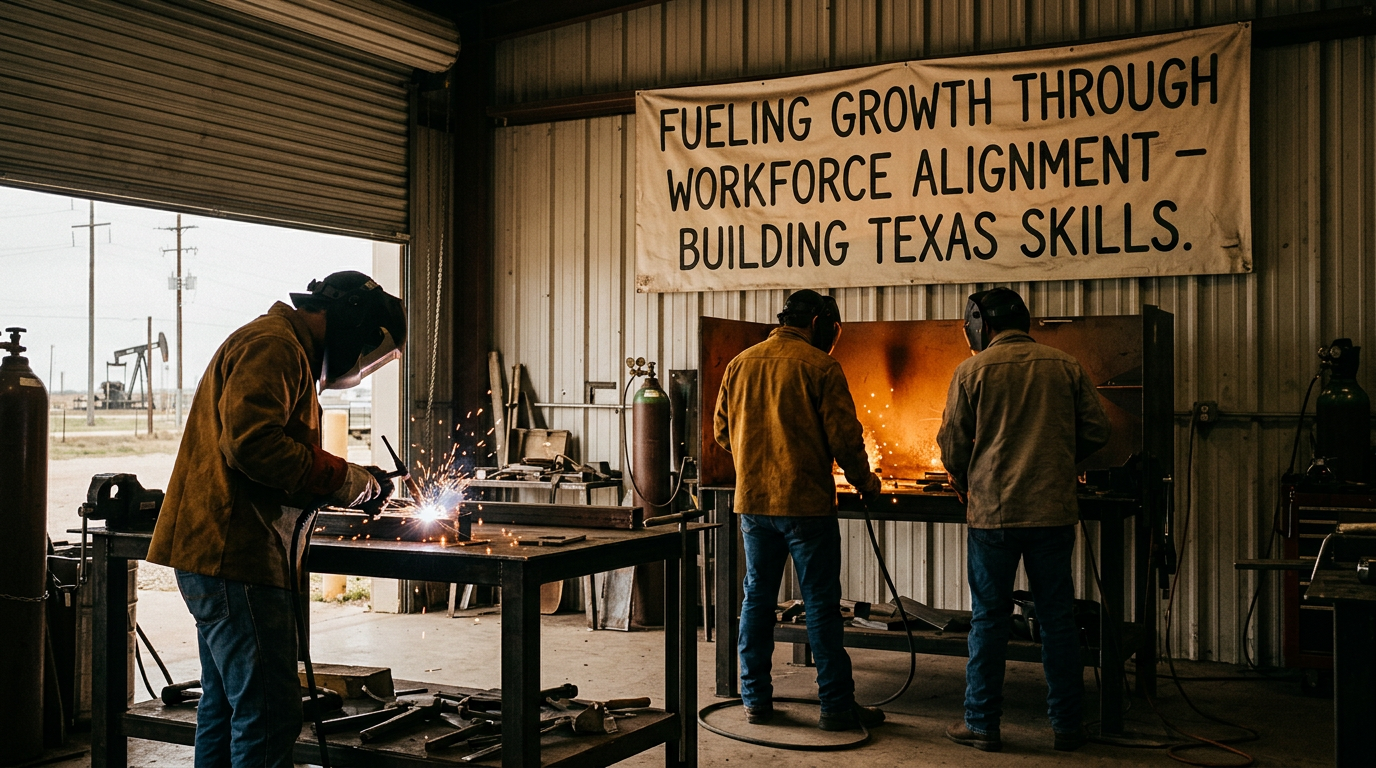
Educational institutions across the state are witnessing a gradual stabilization of student populations following a period of significant demographic decline. For several years, Texas community colleges struggled with dwindling enrollment numbers as potential students prioritized immediate entry into a high-demand labor market over traditional academic pursuits. Recent data indicates that by pivoting toward specialized certifications and shorter-term vocational training, these institutions are successfully attracting a new demographic of learners who seek tangible skills rather than general degrees. This shift reflects a broader national trend where the value proposition of a two-year associate degree is being weighed against the immediate earning potential of trade-based certifications. Historically, Texas has relied on its community college system as a bridge for first-generation students and as a primary feeder for the state's diverse university network. However, the economic pressures of the post-pandemic era forced a reevaluation of this model. The current recovery is not a simple return to form but rather an evolution of the community college's role within the local economy. By aligning curriculum with specific industry needs—ranging from semiconductor manufacturing in Central Texas to logistics and energy in the Gulf Coast—schools are proving their worth to a skeptical public that had begun to question the ROI of higher education.
Texas relevance
The health of the Texas community college system is inextricably linked to the state's overall economic competitiveness. As Texas continues to attract major corporations in the tech and manufacturing sectors, the demand for a skilled workforce has never been higher. Cities like Austin, Dallas, and Houston require thousands of qualified technicians annually, and the local community college districts—such as Austin Community College and Dallas College—serve as the primary engines for this talent pipeline. If these institutions fail to maintain robust enrollment, the resulting gap in skilled labor could hinder the state's ability to sustain its rapid industrial growth. Legislative changes in Austin have also adjusted funding formulas to reward these schools for student outcomes, such as degree completion and high-wage job placement, rather than just total headcount.
The Evolution of Technical Certification
One of the primary drivers behind the recent enrollment stabilization is the aggressive implementation of 'stackable' credentials. In many Texas districts, students are no longer required to commit to a multi-year program to see a return on their investment. Instead, they can earn specific industry certificates in fields like cybersecurity, welding, or nursing assistance within a matter of months. This allows them to enter the workforce immediately while retaining the option to return later and apply those credits toward a full associate degree.
This modular approach to education has proven particularly attractive to adult learners who may already be employed but are looking to upskill for better pay. By offering flexible schedules and online hybrid models, Texas community colleges have lowered the barrier to entry for a significant portion of the population that previously found the traditional semester-based model inaccessible. This demographic shift is crucial for filling the middle-skill jobs that currently dominate the Texas employment landscape.
Economic Pressures and Student Decisions
The recent dip in enrollment can be traced back to the 'opportunity cost' of education during a period of record-low unemployment across the state. When retail and service sector wages rose sharply, many young Texans opted for immediate income over long-term educational debt. The community college system had to demonstrate that the long-term earnings of a specialized graduate far outweigh the immediate gratification of an entry-level paycheck. This messaging has finally begun to resonate as inflation makes higher-wage career paths more necessary for financial survival.
Furthermore, the cost of living in major Texas metropolitan areas has forced students to stay closer to home. Local community colleges offer a significantly more affordable entry point for the first two years of a bachelor’s degree compared to the state's flagship universities. By focusing on affordability and proximity, these institutions have successfully repositioned themselves as the most fiscally responsible choice for families navigating the current economic climate. This strategy is helping to reclaim students who might have otherwise bypassed higher education entirely.
The Role of State Legislative Funding
Texas legislators have fundamentally changed how community colleges receive state taxpayer support. Moving away from a system based purely on 'contact hours'—the amount of time students spend in a classroom—the state now emphasizes outcomes. Institutions are incentivized to ensure students actually finish their programs and find employment in high-demand fields. This policy shift has forced administrators to cut failing programs and double down on those that lead to real-world success.
The impact of House Bill 8, passed in the 88th Legislative Session, cannot be understated in this recovery. By providing a financial safety net for schools that serve high-need populations and prioritizing successful transfers to four-year universities, the state has created a more competitive and results-oriented educational environment. This legislative environment has fostered an era of transparency where colleges must prove their value to both the state government and their local tax-paying constituents.
Industry Partnerships Drive Innovation
The success of colleges in the Permian Basin and along the Gulf Coast is largely due to direct partnerships with energy and manufacturing giants. These corporations often help design the curriculum, provide state-of-the-art equipment for labs, and offer guaranteed interviews for graduates. This level of integration ensures that when a student completes a program at a school like San Jacinto College or Odessa College, they possess the exact skills required by local employers.
In Central Texas, the arrival of massive semiconductor fabrication plants has triggered a similar response. Community colleges in the region have rapidly developed programs to train cleanroom technicians and equipment operators. These are high-stakes roles that do not necessarily require a PhD but do require a level of technical precision that only a specialized community college program can provide. By acting as a specialized training arm for the private sector, these schools have secured their place in the Texas economic engine.
Addressing the Decline in Traditional Enrollment
While technical and vocational training is on the rise, traditional academic enrollment still faces challenges. Many students are questioning the utility of a standard liberal arts associate degree if it does not lead directly to a specific career. In response, Texas colleges are revamping their advising systems to help students understand exactly how their credits will transfer to larger institutions like Texas A&M or the University of Texas. This clarity is essential for maintaining the 'transfer pipeline' that historically accounted for a large portion of community college revenue.
The trend of 'dual credit'—where high school students take college-level courses—has also changed the landscape. While this helps students save money and graduate earlier, it creates new challenges for community colleges in terms of long-term enrollment stability. Schools are now having to find new ways to engage these students once they graduate high school, encouraging them to complete their associate degree locally rather than moving straight to a four-year university.
Future Outlook for Texas Campuses
Looking ahead, the recovery of Texas community colleges will likely be uneven across the state. Rural institutions face a different set of obstacles than urban districts, including smaller tax bases and declining local populations. However, the move toward remote learning and specialized mobile training units offers a potential solution for these smaller schools to reach students in underserved areas. The digital divide remains a hurdle, but state-level investments in broadband are expected to expand the reach of these educational programs.
Ultimately, the survival and thriving of the Texas community college system depend on its ability to remain nimble. As technology evolves and industries like AI and renewable energy gain a foothold in the state, these institutions must be ready to adapt their curriculum within months, not years. The current enrollment recovery is a sign that the system is successfully navigating its first major shift toward a skills-based future, but the work of modernizing Texas education is far from over.
Analysis
Opinion: The shift toward workforce-centric education is a long-overdue market correction for Texas higher education. While traditional academic tracks remain important, the reality is that the modern Texas economy demands specialized prowess over general liberal arts studies. The fact that enrollment is rebounding because schools are listening to industry leaders suggests that the 'one-size-fits-all' approach to education is effectively dead. For Texas to remain the top state for business, our community colleges must function more like professional training hubs and less like secondary high schools. The current uptick in numbers is a validation that students are willing to invest their time and money when they see a direct, verifiable path to a six-figure salary in a trade.
Source attribution
This story was reported using a public release from the Texas Standard. Keep TX Red rewrote the coverage independently and links to the official statement for verification.
Frequently Asked Questions
- Why did Texas community college enrollment drop originally?
- Enrollment faced a downturn primarily due to a strong labor market where entry-level wages increased, making immediate employment more attractive than attending school. Additionally, the pandemic disrupted traditional learning schedules and caused many prospective students to delay their education.
- How is House Bill 8 changing schools?
- House Bill 8 restructured the state's funding model to reward community colleges based on the success of their students. This means schools receive more support when students earn a degree or certificate, transfer to a university, or complete a program that leads to a high-demand career.
- Are technical certificates better than associate degrees?
- It depends on the career goal. Certificates offer a faster path to the workforce and are highly valued in trades and technical fields. Associate degrees often serve as a broader foundation and are essential for those planning to transfer to a four-year university for a bachelor's degree.
- What programs are seeing the most growth?
- Growth is highest in technical fields such as healthcare, nursing, welding, cybersecurity, and advanced manufacturing. These programs often have direct connections to local industries that are currently hiring at high volumes.
Official Sources
Take the next step
Browse the Newsroom →Read more about Keep Texas Red → Our full guide to what Keep Texas Red means and why Texans support it.
Get Texas updates delivered weekly.
Independent Texas reporting on politics, policy, and daily life. One email a week. Unsubscribe anytime.
Keep TX Red Newsroom
The Keep Texas Red Editorial Staff produces nonpartisan explainers, policy breakdowns, and educational resources to help Texans understand how their government works. All content is reviewed for accuracy and updated regularly.
About Keep TX Red →