Attorney General Ken Paxton Investigates StubHub for Potential World Cup Ticket Fraud
Texas AG Ken Paxton launches a probe into StubHub over 'ghost tickets' for the FIFA World Cup, aiming to protect soccer fans from deceptive practices.
Editorial disclaimer: Opinions and analysis on Keep TX Red are editorial content — not statements of fact. See our editorial standards.
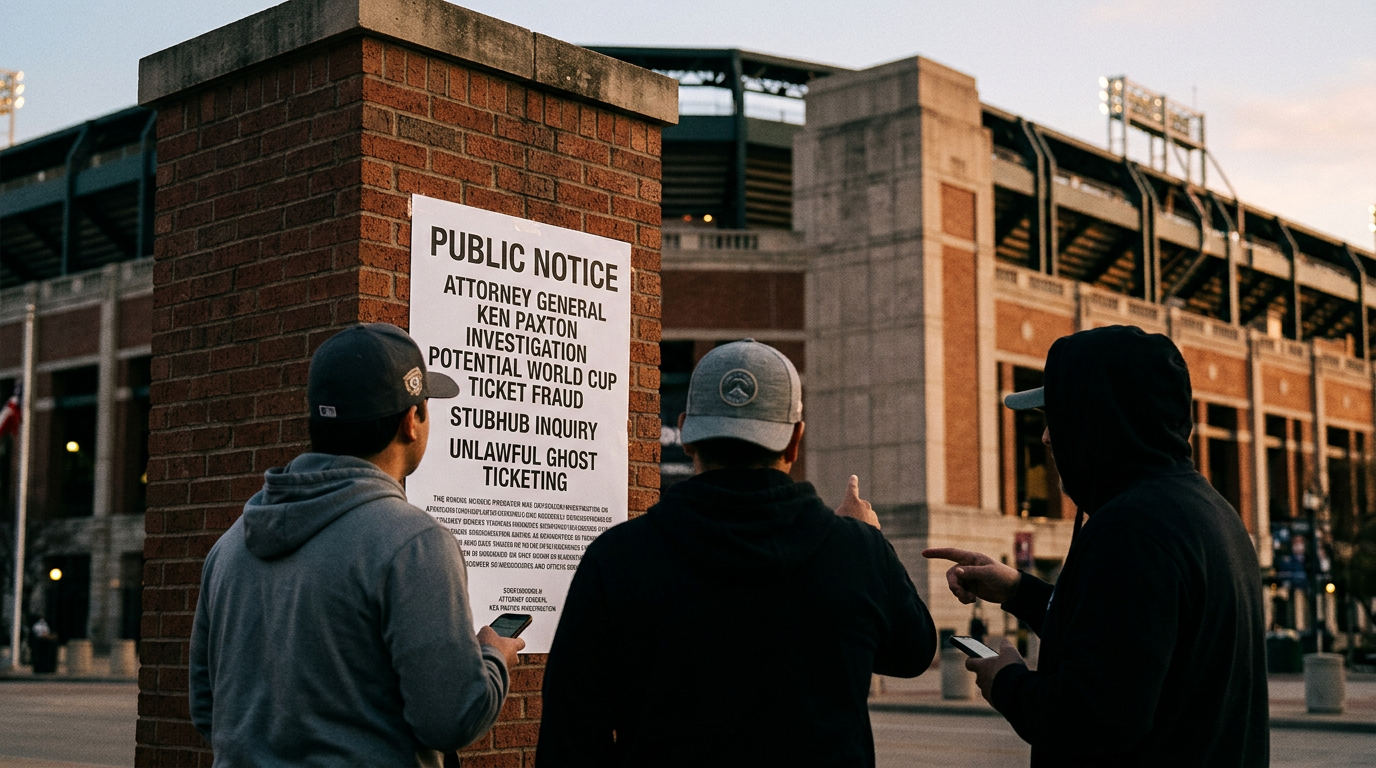
Texas Attorney General Ken Paxton has formally initiated an investigation into the secondary market ticket giant StubHub. The inquiry focuses on allegations of 'ghost ticketing' related to the upcoming 2026 FIFA World Cup, which is set to host several major matches across the state of Texas. Ghost ticketing occurs when a platform lists sets of tickets that the seller does not actually possess at the time of the sale, often leading to consumers being left without entry to high-demand events after they have already paid premium prices. Historically, Texas has taken a firm stance against deceptive trade practices in the entertainment and sports sectors, with the Office of the Attorney General (OAG) frequently utilizing the Deceptive Trade Practices Act to regulate how digital platforms interact with Texas consumers.
Texas relevance
The state of Texas is positioned as a primary hub for the 2026 World Cup, with AT&T Stadium in Arlington and NRG Stadium in Houston scheduled to host numerous matches. Because Texas is a central location for the tournament, its residents and visitors are uniquely vulnerable to predatory ticketing practices that could result in millions of dollars in losses. This investigation serves as a regulatory safeguard to ensure that the Texas economy benefits from legitimate tourism and sporting commerce rather than falling prey to digital arbitrage schemes that target local sports enthusiasts.
The Rise of Ghost Ticketing Concerns
Ghost ticketing has become an increasingly sophisticated problem in the digital age. Unlike traditional scalping, where a physical or digital ticket is transferred from one person to another, ghost ticketing involves the sale of a promise. Speculative sellers list tickets at high prices based on the expectation that they can acquire them cheaper at a later date, often before they are even officially released to the public.
When these sellers fail to secure the tickets they have already 'sold,' the buyer is often left with a last-minute cancellation. While platforms like StubHub often offer refunds or replacement tickets, these remedies frequently fall short when prices have tripled in the intervening months, or when fans have already invested thousands in non-refundable travel and lodging for events like the World Cup.
For an event with the global scale of the World Cup, the potential for market manipulation is unprecedented. Attorney General Ken Paxton’s office is specifically looking into whether StubHub’s current disclosures are sufficient to warn buyers that they are participating in a speculative market rather than a guaranteed transaction for a specific seat.
Texas Consumer Protection Laws
The primary tool at the disposal of the Attorney General is the Texas Deceptive Trade Practices-Consumer Protection Act (DTPA). This law provides the state with broad authority to prosecute businesses that engage in 'false, misleading, or deceptive acts.' In the context of the StubHub investigation, the OAG is examining if the platform's user interface misleads consumers into believing they are buying a confirmed seat.
Under the DTPA, the state can seek significant civil penalties and injunctions to stop harmful business practices. For a company the size of StubHub, a negative finding in Texas could lead to mandatory changes in how they display listings not just in the Lone Star State, but across their entire global platform due to the logistical difficulty of segmenting their digital architecture.
Past interventions by the OAG have resulted in settlements that forced transparency in ‘drip pricing’—the practice of adding massive fees at the very end of a transaction. This current investigation into speculative World Cup tickets is seen as a natural extension of that consumer-centric litigation strategy.
Impact on Dallas and Houston Host Cities
The 2026 World Cup is more than a sporting event for Texas; it is a massive infrastructure and economic development project. Dallas and Houston have spent years bidding for and preparing for these matches, expecting a massive influx of international visitors. If the ticketing market is viewed as unreliable or fraudulent, it could damage the reputation of Texas as a premier destination for global events.
Local businesses, from hotels in the Arlington entertainment district to the restaurant corridors in Houston's downtown, rely on the certainty that ticket holders will actually arrive. Widespread 'ghost ticketing' failures could lead to empty seats in the stadiums and thousands of canceled hotel nights, directly impacting the tax revenue and economic projections the state has publicized.
By launching this investigation now, Paxton is providing a layer of security for the local organizing committees. It ensures that the focus remains on the games and the economic benefit to Texans, rather than on legal battles over fraudulent sales that could surface if the market is left unchecked for the next two years.
The Logistics of the OAG Investigation
The investigation involves a Civil Investigative Demand (CID), which functions similarly to a subpoena. This allows the Attorney General to demand internal documents, communications, and data regarding how StubHub handles speculative listings. The state will likely demand information on how many Texas residents have previously reported issues with unfulfilled World Cup tickets and what steps StubHub took to rectify those situations.
Furthermore, the OAG will explore the relationship between StubHub and the individual sellers on the platform. If the platform is found to be incentivizing or knowingly facilitating speculative listings without proper safeguards, the state could argue that StubHub is directly complicit in the deception.
This data-heavy approach is typical for the OAG’s Consumer Protection Division. They will look for patterns of behavior that indicate a systemic failure to protect buyers. The investigation will also likely benchmark StubHub’s practices against other ticket resellers to determine if their policies are out of step with industry standards or state law.
FIFA’s Role and Primary Market Controls
While the investigation targets StubHub, the broader context includes FIFA’s own strict ticketing policies. FIFA generally attempts to restrict the resale of tickets through unauthorized channels to prevent exactly the kind of speculation that Paxton is investigating. However, secondary markets continue to thrive due to high demand and the technical difficulty of enforcing exclusive resale platforms.
The conflict between primary ticket issuers like FIFA and secondary markets like StubHub often leaves the consumer caught in the middle. If a buyer purchases a ‘ghost ticket’ on StubHub, and FIFA’s security measures make it harder for that seller to eventually fulfill the order, the consumer is the one who suffers the loss of the experience.
Paxton’s investigation may inadvertently support FIFA’s efforts to keep ticket sales within their controlled ecosystem, but the primary motivator remains Texas law. The state’s concern is not who sells the ticket, but whether the transaction itself is honest and whether the person paying is actually getting what they were promised.
Future Outlook for Texas Sports Fans
As the World Cup draws closer, the demand for tickets will only increase, making the OAG’s findings critical for the 2025 and 2026 sales cycles. If the investigation leads to an agreement or a lawsuit, it could result in new requirements for all ticket platforms operating in Texas, such as mandatory 'Speculative Listing' badges that must be displayed on any ticket not currently in the seller's possession.
Texas sports fans should remain cautious when using secondary markets. Even with state intervention, the digital marketplace is vast and often operates faster than legal proceedings. The OAG’s public announcement of this investigation serves as an immediate warning to fans to verify the terms of their purchases and to be wary of deals that seem too good to be true.
Ultimately, this action reinforces the OAG's commitment to policing the digital economy. Whether it is social media, data privacy, or online ticket sales, the state is increasingly willing to challenge the largest tech firms in the country to ensure that the rights of Texas residents are not sidelined in the pursuit of corporate profit.
Analysis
This move by the OAG signals a proactive approach to one of the largest sporting events in North American history. By intervening years before the first whistle blows, Paxton is attempting to set a legal precedent that forced-speculation in the ticket market will not be tolerated under Texas law. From a political perspective, this aligns with the broader 'Texas First' consumer protection agenda, demonstrating that the state will hold multi-billion dollar California-based tech platforms accountable if they fail to provide transparency to Texas buyers. It also serves as a warning to other secondary markets that the OAG is closely monitoring the digital landscape surrounding the World Cup.
Source attribution
This story was reported using a public release from the Texas Standard. Keep TX Red rewrote the coverage independently and links to the official statement for verification.
Frequently Asked Questions
- What is 'ghost ticketing' exactly?
- Ghost ticketing, or speculative ticketing, is when a seller lists tickets for an event they do not actually have in their possession. They set a high price, hoping to buy a cheaper ticket later to fulfill the order. If they can't find a cheaper ticket, they often cancel the sale, leaving the buyer without a ticket and potentially out of luck for travel costs.
- Is the World Cup really being targeted for this?
- Yes, because of the extreme demand and high ticket prices for the World Cup, it is a primary target for speculative sellers. Attorney General Ken Paxton noted that this event is particularly susceptible to these types of deceptive market practices.
- What can Texas do to stop StubHub?
- The Texas Attorney General can use the Deceptive Trade Practices Act to file lawsuits, seek injunctions to stop specific business practices, and demand financial restitution for consumers who were misled. The state can also levy heavy fines for each violation of the law.
- Which Texas cities will be affected by World Cup ticket issues?
- Arlington (Dallas area) and Houston are the two Texas cities hosting matches. Residents in these areas, as well as any Texan planning to travel to these games, are the focus of the Attorney General's consumer protection efforts.
Official Sources
Take the next step
Browse the Newsroom →Read more about Keep Texas Red → Our full guide to what Keep Texas Red means and why Texans support it.
Get Texas updates delivered weekly.
Independent Texas reporting on politics, policy, and daily life. One email a week. Unsubscribe anytime.
Keep TX Red Newsroom
The Keep Texas Red Editorial Staff produces nonpartisan explainers, policy breakdowns, and educational resources to help Texans understand how their government works. All content is reviewed for accuracy and updated regularly.
About Keep TX Red →