Texas Democrats Accuse GOP of Political Coercion as Legislative Tensions Mount
High-profile Texas Democrats liken Republican legislative tactics to 'pickpocketing' as the battle over statewide policy intensifies in Washington.
Editorial disclaimer: Opinions and analysis on Keep TX Red are editorial content — not statements of fact. See our editorial standards.
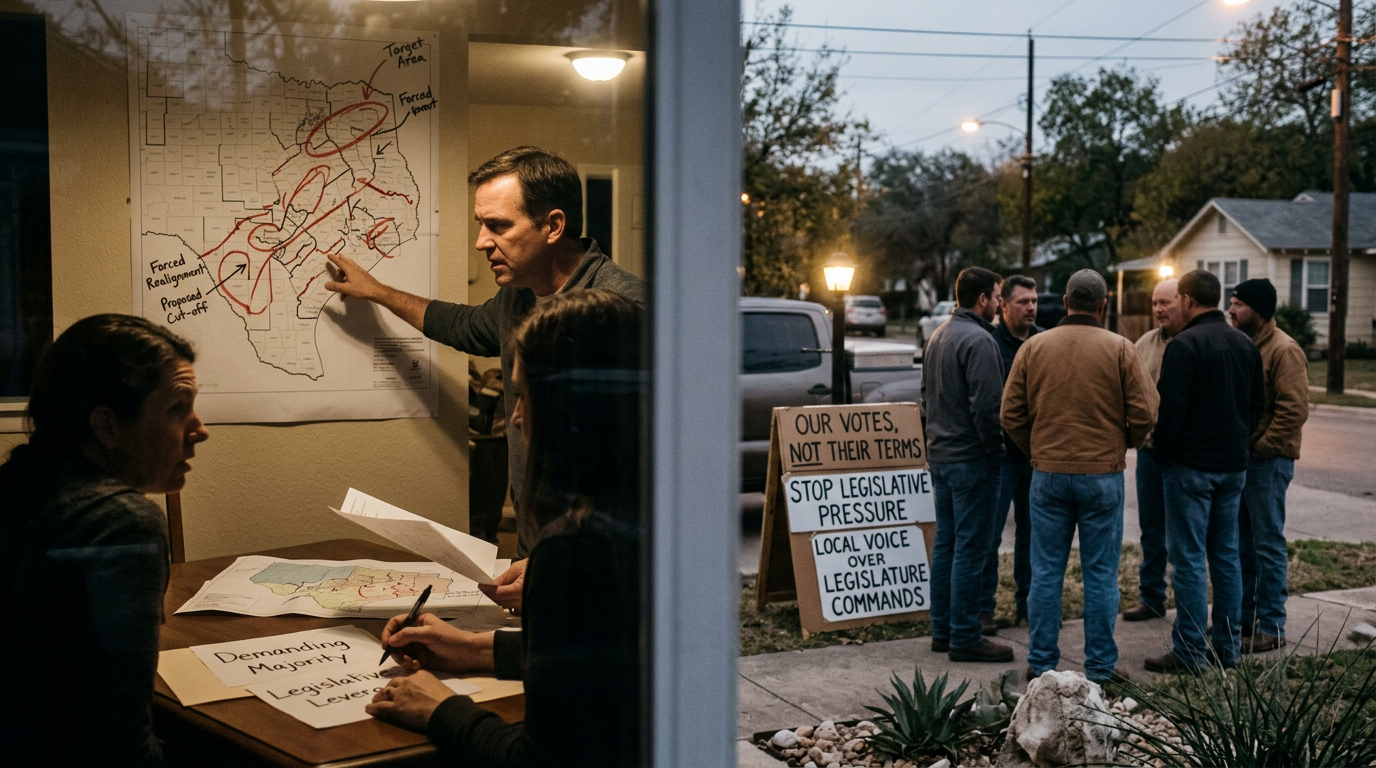
Recent high-level political discourse in the Texas congressional delegation has taken a sharp turn as members of the state's Democratic caucus utilize increasingly vivid metaphors to describe their Republican counterparts. This friction stems from a series of legislative maneuvers designed to stall or pass specific state-level agendas, reflecting the deeply polarized nature of the Lone Star State's governance. Most notably, a prominent Texas representative has compared the recent threats directed at the Democratic minority to the act of 'pickpocketing,' implying a subtle but intentional theft of political agency and representation. This rhetoric is not an isolated incident but rather the culmination of years of escalating tension regarding the redistricting processes, voting access laws, and the procedural rules governing both the Austin statehouse and the federal halls of power where Texas representatives seek to exercise their influence. Historically, Texas has seen numerous instances of legislative 'walkouts' and physical standoffs, but the current atmosphere of verbal hostility suggests a new peak in the adversarial relationship between the two dominant parties.
Texas relevance
These developments are crucial for Texas residents as the legislative gridlock directly impacts the delivery of state services, the formulation of the biennial budget, and the implementation of property tax reforms. When the Texas congressional delegation engages in high-stakes verbal sparring, it often signals a shift in national priorities that could affect federal funding for Texas infrastructure and border security projects. Furthermore, the metaphors used by these elected officials shape the public perception of the 'Texas Model' of governance, potentially influencing business relocations and the state's economic standing on the global stage. Understanding the nuances of these political threats is essential for voters who must navigate the complex landscape of Texas partisan politics in upcoming election cycles.
The Evolution of Texas Political Rhetoric
The language used by Texas politicians has historically been robust, but the recent comparison of legislative strategy to street crime marks a departure from standard partisan bickering. By framing political disagreement as a form of theft, representatives are signaling to their constituents that the stakes involve more than just policy differences; they are framed as questions of fundamental fairness and moral integrity. This shift mirrors a national trend where political opponents are increasingly viewed through a lens of criminality or existential threat rather than as colleagues with differing viewpoints.
Observers of the Texas legislature note that this specific rhetoric follows several months of intense debate over the state's jurisdictional boundaries and the authority of local municipalities. When federal representatives from Texas weigh in on these local matters using such charged language, it often serves to nationalize issues that were previously handled within the state's own borders. This creates a feedback loop where local grievances are amplified on the national stage, only to return to Texas as even more polarized partisan platforms.
Historical Context of Procedural Conflict
To understand the current animosity, one must look back to the various quorum-busting efforts led by Texas Democrats in past decades. These instances, where lawmakers fled the state to prevent the passage of Republican-led initiatives, established a precedent for unconventional resistance. The current 'pickpocketing' accusations are a rhetorical response to what Democrats see as a new Republican strategy to prevent such walkouts from being effective or to penalize those who participate in them.
Republicans, on the other hand, point to their consistent electoral victories across the state as a clear mandate from the people of Texas to pursue their legislative agenda without hindrance. They argue that the 'threats' described by their opponents are simply the natural consequences of losing political arguments in a democratic system. This fundamental disagreement over the 'rules of the game' is what fuels the fire of modern Texas political discourse, as neither side currently accepts the other's interpretation of legislative ethics.
The Impact on Bipartisan Cooperation
The immediate fallout of this heightened rhetoric is the erosion of bipartisan cooperation on non-partisan issues such as water infrastructure, emergency preparedness, and energy grid stability. When the primary mode of communication between parties is one of accusation and defensive posture, the 'middle ground' becomes a political no-man's-land. Lobbyists and advocacy groups in Austin report that it has become increasingly difficult to find co-sponsors for bills that cross party lines, as representatives fear being seen as 'consorting with the enemy.'
This stalemate has long-term implications for the Texas economy. As the state continues to grow, it requires proactive legislation to manage its expanding population and infrastructure needs. If the congressional delegation and state legislature remain mired in metaphorical disputes and accusations of theft, the practical business of governing is sidelined. This leads to a reactive governing style, where problems are only addressed after they reach a crisis point, rather than through strategic, long-term planning.
Washington's Influence on Texas Policy
The specific comments made by the Texas Congressman were delivered in a national media context, highlighting how Texas politics is often served up as a microcosm of the nation's broader ideological split. By taking these grievances to the federal level, Texas Democrats are looking for national allies to pressure state-level actors. This internationalization of Texas domestic policy creates a complex dynamic where local officials are answering to national party leaders as much as their own local voters.
Conversely, Texas Republicans often use these national spotlights to showcase their commitment to conservative principles, using the conflict as a badge of honor. The result is a political environment where the primary audience for a representative's words is not the person sitting across the aisle, but the cable news viewer or the social media follower. This 'theatre of politics' ensures that the rhetoric remains high-temperature even when the actual legislative impact of a specific move might be minimal.
Future Outlook for the Texas Delegation
As the next election cycle approaches, both parties are expected to lean further into these narratives. For Democrats, the 'pickpocketing' theme will likely be used to fundraise and mobilize voters who feel disenfranchised by the current power structure. They will argue that their rights are being systematically stripped away through procedural trickery and aggressive legislative posturing. This narrative is designed to generate a sense of urgency and moral clarity for their base.
Republicans will likely counter by characterizing these accusations as desperate attempts to distract from a losing platform. They are expected to double down on their legislative priorities, framing any Democrat resistance as a failure to respect the will of the majority. Until there is a significant shift in the state's electoral math, these two competing realities will continue to clash, making the halls of the Texas Capitol and the offices of the Texas congressional delegation some of the most contentious spaces in American politics.
Analysis
Opinion: The use of the 'pickpocketing' analogy highlights a growing sense of frustration among Democrats who feel the traditional rules of engagement in Texas politics are being discarded in favor of raw power plays. However, from a Republican perspective, these tactics are often framed as necessary measures to ensure the mandate of the majority is upheld against what they perceive as obstructionist minority delays. This rhetorical escalation serves both bases but does little to bridge the widening gap in the state's legislative productivity. As both sides dig in, the likelihood of a collaborative legislative session decreases, potentially leading to more special sessions called by the Governor to address unfinished business.
Source attribution
This story was reported using a public release from the Texas Congressional Delegation (Google News). Keep TX Red rewrote the coverage independently and links to the official statement for verification.
Frequently Asked Questions
- What prompted the 'pickpocketing' comment from the Texas Congressman?
- The comment was made in response to what the Congressman perceived as aggressive threats and procedural maneuvers by the Republican majority to force through legislation without the usual levels of debate or minority input. It reflects a belief that the democratic process is being subverted through subtle, yet impactful, rule changes.
- How does this affect current Texas laws?
- While the rhetoric itself doesn't change the law, it indicates a breakdown in communication that usually precedes legal challenges in court. Often, when legislative sessions become this heated, the final bills are immediately met with lawsuits, delaying their implementation and leaving the state's legal landscape in a state of uncertainty.
- Is this type of language common in Texas politics?
- Texas has a long history of 'colorful' political language, but the specific framing of legislative strategy as a criminal act like 'pickpocketing' is seen as an escalation. It marks a shift from debating policy outcomes to debating the legitimacy and morality of the legislative process itself.
Official Sources
Take the next step
Browse the Newsroom →Read more about Keep Texas Red → Our full guide to what Keep Texas Red means and why Texans support it.
Get Texas updates delivered weekly.
Independent Texas reporting on politics, policy, and daily life. One email a week. Unsubscribe anytime.
Keep TX Red Newsroom
The Keep Texas Red Editorial Staff produces nonpartisan explainers, policy breakdowns, and educational resources to help Texans understand how their government works. All content is reviewed for accuracy and updated regularly.
About Keep TX Red →