Houston ICE Enforcement Incident Resulting in Fatal Shooting Under Multi-Agency Investigation
Federal and local authorities probe a deadly encounter in Houston involving ICE agents and an individual during a targeted enforcement operation.
Editorial disclaimer: Opinions and analysis on Keep TX Red are editorial content — not statements of fact. See our editorial standards.
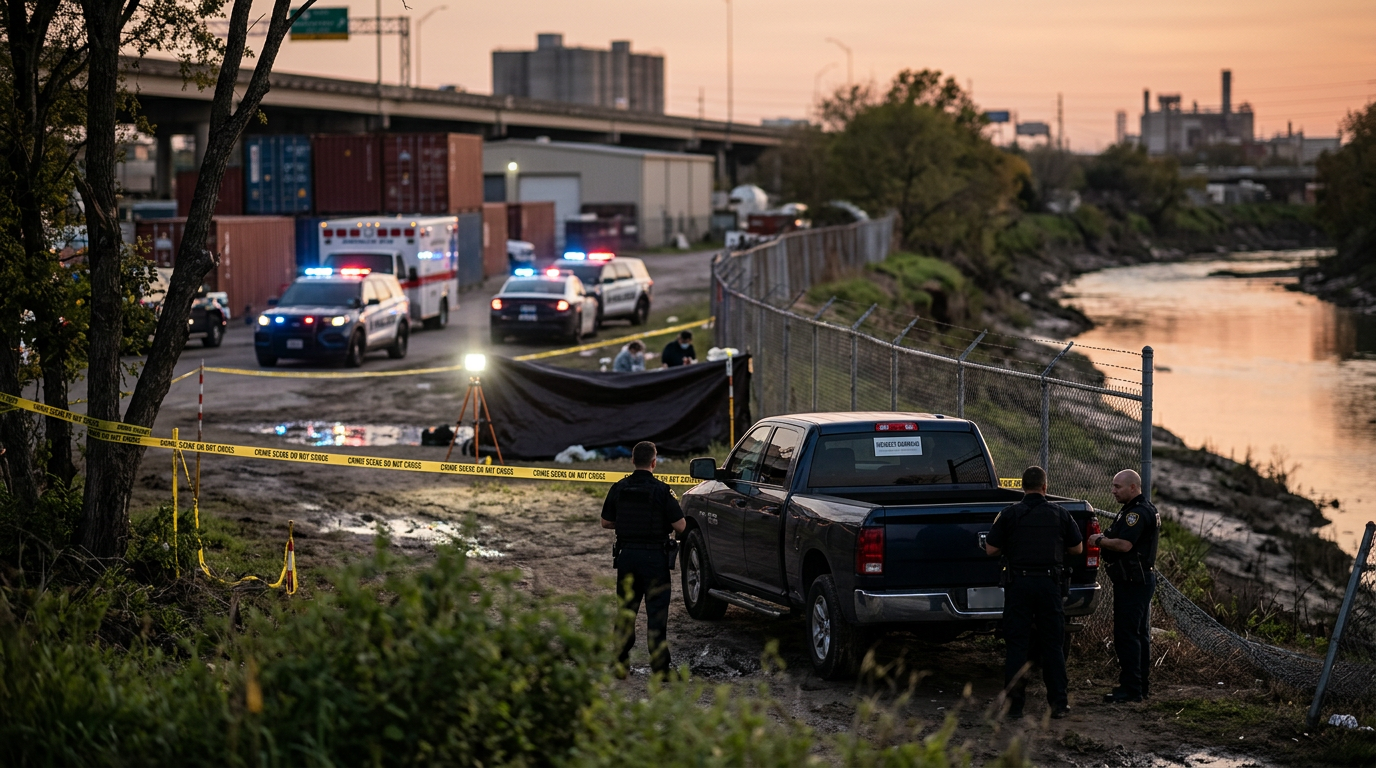
A critical incident involving federal law enforcement occurred in Houston on July 7, 2026, when an agent with U.S. Immigration and Customs Enforcement (ICE) discharged their firearm during an enforcement operation. The encounter resulted in the death of Lorenzo Salgado Araujo, an individual identified by federal officials as a Mexican national present in the United States without legal authorization. According to preliminary reports from the agency, the shooting took place while officers were attempting to execute a targeted enforcement action. The agency alleges that the situation escalated when the individual attempted to use a vehicle as a weapon against the agents on the scene. Historically, Houston has remained one of the most active hubs for ICE's Enforcement and Removal Operations (ERO) due to its size and proximity to the southern border. This specific event marks one of several high-profile confrontations involving federal agents in the Harris County area over the last decade, highlighting the dangerous nature of field operations in dense urban environments. Immediate medical assistance was reportedly requested following the discharge of the weapon, but the individual succumbed to his injuries. In accordance with standard federal protocols, the shooting has triggered a comprehensive review process involving both internal and external oversight bodies. The incident adds to a long history of complex interactions between federal immigration authorities and the local populations in major Texas metropolitan areas. As the investigation remains in its early stages, details regarding the specific criminal history or the nature of the warrants being served on Salgado Araujo have not been fully disclosed to the public. This event serves as a stark reminder of the volatile conditions faced by law enforcement officers tasked with identifying and apprehending individuals sought for immigration violations or associated criminal activity.
Texas relevance
This incident took place in Houston, Texas, which serves as the primary seat of Harris County and a focal point for federal immigration enforcement. The outcome of this investigation impacts the relationship between Texas local law enforcement and federal agencies, as well as the safety of residents in the Houston metroplex. The state of Texas has been at the forefront of the national debate regarding immigration policy and enforcement tactics, often asserting that federal presence is necessary for public safety while balancing the logistics of urban policing within diverse communities like those found in southeast Texas.
Details of the Targeted Enforcement Operation
The operation in Houston was characterized by the agency as a 'targeted enforcement' action, which typically signifies that agents were not conducting a random sweep but were instead seeking a specific individual with a known history or outstanding warrants. These operations are often the result of months of surveillance and data gathering by the Enforcement and Removal Operations (ERO) branch of ICE. In this instance, the team was operating in a residential or commercial pocket of Houston where the suspect was believed to be located.
Such operations are high-precision efforts designed to minimize collateral impact on the surrounding community. However, the use of a vehicle by the suspect introduces a variable that often leads to a rapid escalation of force. Law enforcement training across Texas emphasizes that a car is a deadly weapon when used to strike or pin an officer, and the federal use-of-force policy permits the use of service weapons when an agent perceives an imminent threat of death or serious bodily injury to themselves or others in the vicinity.
Profiles and Background of the Involved Parties
The individual killed, Lorenzo Salgado Araujo, was identified as a citizen of Mexico. According to ICE records, he did not have the legal right to reside or work within the United States at the time of the encounter. While the specific reasons for his inclusion in the targeted operation have not been released, such actions typically focus on individuals with previous deportation orders, criminal records, or those who pose a broader threat to national security or public safety. The agency is currently reviewing his records to provide a clearer picture of his history within the country.
The identity of the agent who fired the fatal shot has been withheld, which is standard procedure during the initial phases of an officer-involved shooting investigation. The agent is expected to be placed on administrative leave while the inquiry proceeds. This administrative step is not a disciplinary measure but a standard part of the protocol to ensure that the investigation is conducted without interference and that the mental well-being of the officer is addressed following a lethal encounter.
Multifaceted Investigation Procedures
In the aftermath of the shooting, several layers of oversight have been activated. The Houston Police Department (HPD) and the Harris County District Attorney’s Office traditionally play roles in investigating any discharge of a firearm that results in death within their jurisdiction. Their primary goal is to determine if any state laws were violated during the course of the interaction. Simultaneously, the ICE Office of Professional Responsibility (OPR) will conduct an internal probe to ensure the agent’s actions aligned with Department of Homeland Security (DHS) guidelines.
The investigation will likely rely heavily on forensic evidence, including ballistics, vehicle positioning, and any available video footage from body-worn cameras or nearby surveillance systems. Given the transparency requirements of modern law enforcement, the findings of these reports are often scrutinized by federal oversight committees in Washington, D.C. The combination of local and federal review ensures that the incident is viewed from both a criminal justice and a policy-compliance perspective.
The Role of Houston in Federal Enforcement
Houston is widely regarded as one of the most significant logistical centers for immigration enforcement in the United States. Its proximity to the Gulf Coast and the southern border, combined with its status as a major international transit hub, necessitates a robust ICE presence. The Houston Field Office covers a vast territory, stretching across southeast Texas, and manages thousands of cases involving non-citizens who have bypassed legal entry points or violated the terms of their visas.
Because of this high volume of cases, enforcement operations are a daily reality in the Houston area. These events rarely result in the loss of life, but when they do, they ignite intense public debate regarding the methodology of federal agents. For local residents, the presence of federal authorities is a polarizing but persistent element of the city's complex security landscape. The success or failure of these operations often dictates the policy direction for enforcement tactics used throughout the rest of the state of Texas.
Legal Implications and Self-Defense Standards
The legal crux of the investigation will center on the 'objective reasonableness' of the agent’s actions. Under federal law, established largely by Supreme Court precedents, use of force is evaluated based on what a reasonable officer on the scene would do given the same facts and circumstances. If Salgado Araujo was indeed attempting to run over the agent, the use of lethal force is likely to be deemed a justifiable act of self-defense. A vehicle's mass and speed make it a lethal instrument that can kill an officer instantly, leaving little room for non-lethal alternatives.
Defense of third parties—including other agents on the team or nearby civilians—also plays a role in these legal evaluations. Investigators will look for evidence of the vehicle’s trajectory and the speed at which it was moving toward the officers. In many previous cases in Texas involving vehicle-related threats against law enforcement, grand juries have historically found that officers acted within their rights to protect their lives and the lives of those around them.
Community Response and Safety Concerns
Whenever a federal operation results in a death, it creates immediate concern within the local community. Community leaders in Houston often call for calm while demanding a full accounting of the facts. The impact of such events can fluctuate depending on the speed and clarity of the information provided by federal authorities. In recent years, ICE has made efforts to be more communicative regarding field incidents, though the sensitive nature of active investigations often limits the amount of data released in the first 48 hours.
For the neighborhoods where these operations occur, the presence of armed federal agents and the sound of gunfire can be traumatic. Law enforcement agencies in the Houston area continue to work on improving 'de-confliction' strategies to ensure that local police and federal agents do not accidentally interfere with one another's work. This coordination is vital to preventing 'blue-on-blue' incidents and ensuring that the public is not caught in the crossfire of high-speed chases or tactical apprehensions.
Historical Context of ICE Operations in Texas
Texas has a long and storied history of being the primary theater for United States border and immigration enforcement. Historically, operations in the 1990s and 2000s focused heavily on the immediate border zones, but the last two decades have seen a significant shift toward 'at-large' arrests in urban centers like Dallas, San Antonio, and Houston. This shift reflects a strategy of targeting individuals who have moved into the interior of the country after bypassing initial border controls.
The evolution of these tactics has been met with both legislative support and resistance within the state. Texas state lawmakers have frequently passed legislation to compel cooperation between local jurisdictions and federal immigration authorities, such as Senate Bill 4. These laws are designed to ensure that federal agencies like ICE have the logistical support they need to remove criminal aliens from Texas communities. The Houston shooting is a byproduct of this intensified focus on interior enforcement and the inherent dangers of removing individuals who may be desperate to avoid deportation.
Analysis
Analysis: From an editorial perspective, the incident in Houston underscores the constant physical risks inherent to immigration enforcement in the modern era. While critics often focus on the policy implications of ICE operations, the tactical reality frequently involves high-stakes encounters where agents must make split-second decisions in self-defense. If the agency's account of the vehicle-ramming attempt is verified, it reinforces the argument that many targets of these operations are willing to use potentially lethal force to evade capture. For Texas, where the burden of illegal immigration is most acutely felt, the efficiency and safety of federal agents are paramount to maintaining the rule of law. A transparent investigation is necessary, but it must also acknowledge the dangerous environment that federal officers navigate daily to fulfill their mandates in a border state.
Source attribution
This story was reported using a public release from the Texas Standard. Keep TX Red rewrote the coverage independently and links to the official statement for verification.
Frequently Asked Questions
- What is a 'targeted enforcement operation'?
- A targeted enforcement operation is a planned law enforcement action where officers seek out a specific individual based on prior evidence, warrants, or criminal history. Unlike general sweeps, these are focused efforts to apprehend high-priority targets who are often considered a risk to public safety or have recurring violations of immigration law.
- Was the individual involved a U.S. citizen?
- No. Federal authorities identified the deceased, Lorenzo Salgado Araujo, as a Mexican national who did not have legal status to be in the United States.
- Who investigates an ICE shooting in Texas?
- The investigation is typically multi-layered. Locally, the Houston Police Department and the Harris County District Attorney's Office look for state law violations. Federally, the ICE Office of Professional Responsibility and the DHS Office of Inspector General review the incident for compliance with federal policy and civil rights.
- Are ICE agents allowed to use lethal force in Houston?
- Like all federal law enforcement, ICE agents are permitted to use lethal force when they have an objectively reasonable belief that there is an imminent threat of death or serious physical injury to themselves or others. Attempting to run over an agent with a vehicle is generally classified as a lethal threat.
Official Sources
Take the next step
Browse the Newsroom →Read more about Keep Texas Red → Our full guide to what Keep Texas Red means and why Texans support it.
Get Texas updates delivered weekly.
Independent Texas reporting on politics, policy, and daily life. One email a week. Unsubscribe anytime.
Keep TX Red Newsroom
The Keep Texas Red Editorial Staff produces nonpartisan explainers, policy breakdowns, and educational resources to help Texans understand how their government works. All content is reviewed for accuracy and updated regularly.
About Keep TX Red →