Governor Abbott Establishes New Texas Classroom Commission to Elevate Educator Perspectives
A new commission led by Courtney Boswell MacDonald will integrate direct teacher feedback into Texas public education policy and student achievement goals.
Editorial disclaimer: Opinions and analysis on Keep TX Red are editorial content — not statements of fact. See our editorial standards.
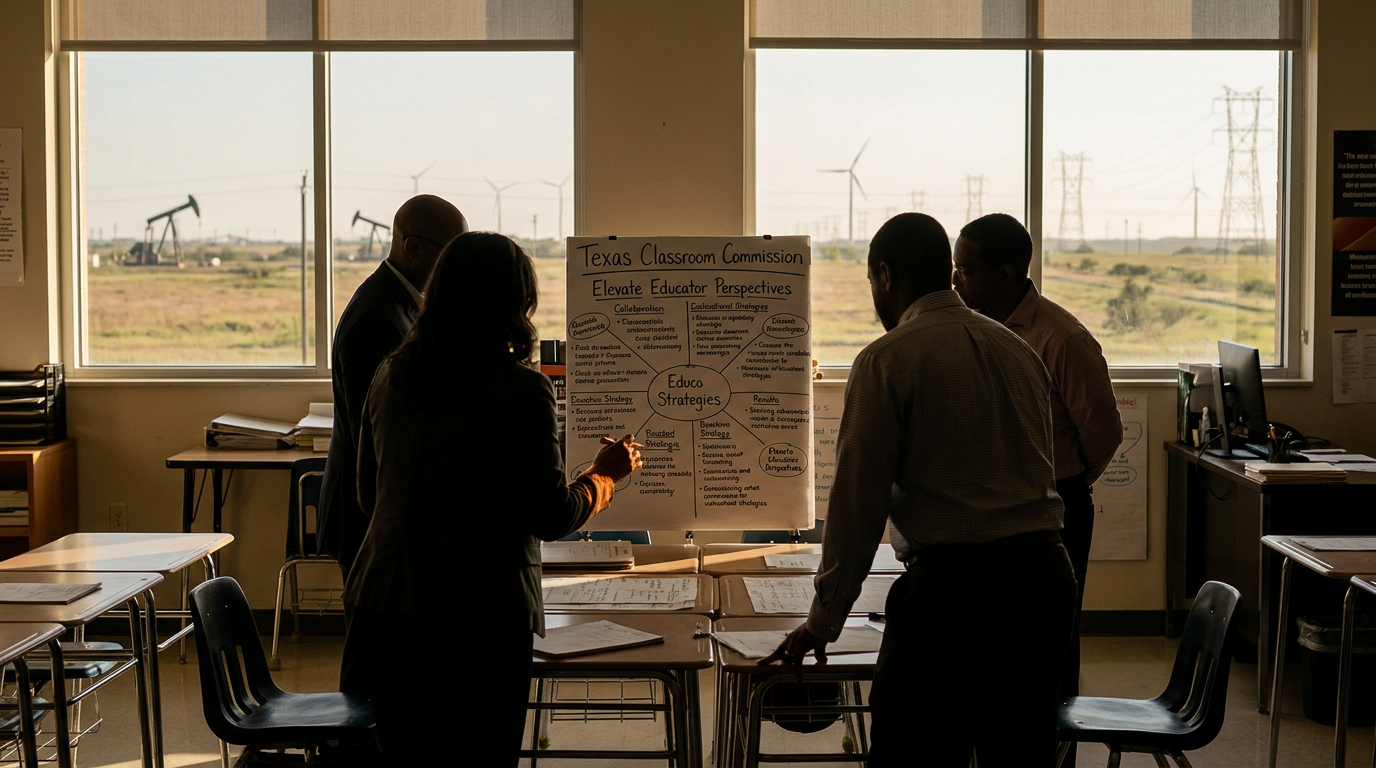
Governor Greg Abbott officially introduced the Texas Classroom Commission on July 7, 2026, marking a strategic shift in how the state develops public education policy. By orgranizing a body comprised primarily of active, high-performing educators, the administration aims to bridge the gap between legislative mandates in Austin and the daily realities of school campuses across the state's 1,200 school districts. This initiative follows a series of legislative sessions characterized by intense debate over school funding, parental rights, and teacher retention. The commission is designed to serve as a direct pipeline for classroom-level insights to reach high-level decision-makers. Historically, Texas has utilized specialized task forces to address specific crises—such as school safety or learning loss post-pandemic—but this commission represents a broader, more permanent effort to institutionalize teacher feedback within the executive branch's policy-making apparatus. At the helm of this new body is Courtney Boswell MacDonald, a former educator with significant experience in both classroom instruction and educational advocacy. MacDonald's leadership is intended to provide a credible link between the professional teaching workforce and the Governor's office. The commission’s mandate involves identifying innovative strategies to bolster student achievement while simultaneously refining the classroom environment to keep high-quality teachers in the profession. As Texas continues to experience rapid population growth, the pressure on the public school system to scale effectively while maintaining high standards has never been greater. The Governor's office asserts that placing practitioners at the center of the conversation is the most viable path toward securing Texas's position as a national leader in K-12 education quality.
Texas relevance
The creation of the Texas Classroom Commission is directly relevant to every community in Texas, from the urban centers of Houston and Dallas to the most remote rural districts in the Panhandle. Despite significant budgetary allocations over the last several legislative cycles, many local districts continue to struggle with teacher vacancies and the rising costs of operations. By centralizing the voices of Texas teachers, the state is acknowledging that localized expertise is essential for statewide success. This commission will likely influence future budget requests for the Texas Education Agency and shape the legislative agenda for the upcoming session, impacting how local tax dollars are utilized for school programs. For Texas parents and taxpayers, the work of this commission provides a new layer of accountability and a potential shift toward more pragmatic, results-oriented educational reforms.
Leadership and Mission of the Commission
Courtney Boswell MacDonald brings a background that blends the practical hurdles of teaching with the strategic perspective of educational leadership. Her appointment suggests that the commission will not merely be a symbolic advisory board but a functional working group tasked with generating data-driven recommendations. MacDonald's primary objective will be to synthesize the diverse experiences of educators from across the state—ranging from special education specialists to career and technical education instructors.
The mission of the commission goes beyond simple advising; it is tasked with redefining the 'Texas standard' for education. By focusing on 'practical, classroom-informed recommendations,' the group aims to cut through the theoretical jargon that often dominates educational policy. Their work will focus on three core pillars: enhancing student performance levels, improving the professional experience for educators, and optimizing the physical and digital learning environments in which Texas students spend their formation years.
Historical Context of Texas Education Funding
The establishment of this commission comes on the heels of several historic investment rounds by the Texas Legislature. Recent sessions have seen billions of dollars funneled into the Foundation School Program, alongside targeted increases for teacher pay and updates to the school finance formula. However, the distribution of these funds has often been a point of contention between state leaders and local school boards, especially regarding the 'recapture' system known colloquially as Robin Hood.
Governor Abbott, alongside Lieutenant Governor Dan Patrick and Speaker Dustin Burrows, has maintained that financial investment must be paired with structural reform to be effective. The Texas Classroom Commission represents the 'human' side of that structural reform. While the legislature handles the numbers, this commission is expected to handle the 'on-the-ground' implementation strategies that ensure those dollars actually result in better reading and math scores for Texas children.
Impact on Teacher Retention and Recruitment
One of the most pressing issues facing the Lone Star State is a tightening labor market for qualified teachers. Many districts have reported significant turnover rates as educators leave for the private sector or retire early due to burnout. The Texas Classroom Commission is explicitly tasked with making the state a more attractive place for educators to build long-term careers. This involves looking at more than just the base salary; it includes looking at administrative burdens, standardized testing pressures, and classroom autonomy.
By involving 'exemplary' teachers in the process, the state is essentially vetting its own policies against those who are most affected by them. If the commission can identify specific stressors that lead to teacher burnout, the Texas Legislature may be more inclined to pass targeted relief measures. This strategy is seen as a way to preserve the state's intellectual capital and ensure that the next generation of Texans is taught by the most capable professionals available.
Innovation and Student Achievement Goals
The ultimate metric for the success of the Texas Classroom Commission will be student outcomes. Texas has set ambitious goals for literacy and numeracy benchmarks, aiming to close achievement gaps across different demographic groups. The commission is expected to highlight 'innovative solutions' that have already proven successful in isolated pockets of the state, with the goal of scaling those successes statewide.
Innovation in this context could range from new instructional technologies to modified school schedules or personalized learning paths. Because the commission members are active in their respective fields, they can provide real-time feedback on what technologies or methods actually work in a modern classroom versus what looks good on a vendor's sales pitch. This grounded approach is intended to waste less time and fewer resources on ineffective educational fads.
Future Legislative Implications
While the commission operates under the executive branch, its findings will almost certainly serve as the blueprint for the next legislative session. Advocacy groups and lobbyists will be watching the commission's reports closely to see which way the political winds are blowing regarding school vouchers, curriculum standards, and merit-based pay. The commission’s ability to remain focused on 'classroom-informed' solutions will be key to its credibility among lawmakers on both sides of the aisle.
The collaborative nature of the commission—bringing together the Governor, Lieutenant Governor, and Speaker's interests—suggests a unified front heading into future policy battles. If the commission can build a consensus among educators, it provides a powerful shield for politicians looking to pass significant reforms. Conversely, it puts the onus on the teaching community to provide constructive, viable alternatives to current systems rather than simply opposing changes from the sidelines.
Ensuring Localized District Input
Texas is unique in its geographic and economic diversity, meaning a solution that works for a high-wealth district in the Austin suburbs might not be applicable to a Title I school in the Rio Grande Valley. The Texas Classroom Commission is expected to account for these nuances by selecting members that reflect the state's varied landscape. This diversity of perspective is crucial for creating policies that are equitable and functional for all students, regardless of their zip code.
As the commission begins its work, the process of gathering testimony and data will be paramount. Public meetings and structured feedback loops will likely be employed to ensure that teachers who are not on the commission still have a way to contribute their ideas. This 'bottom-up' approach to governance is a hallmark of the Abbott administration’s latest efforts to modernize the state's most critical infrastructure: its schools.
Analysis
The launch of the Texas Classroom Commission appears to be a calculated move to harmonize the relationship between the state executive and the teaching profession. For years, teacher associations and grassroots groups have argued that policy is often made 'to' them rather than 'with' them. By appointing a former educator like MacDonald to lead a commission of 'exemplary' peers, Abbott is signaling a willingness to prioritize professional expertise over purely bureaucratic or political considerations. This could be particularly impactful in the realm of teacher compensation and professional development, areas where current systems are often criticized as being too rigid. If the commission can successfully translate classroom challenges into actionable law, it may defuse some of the political tensions that have historically bogged down education reform in the Texas Capitol.
Source attribution
This story was reported using a public release from the Office of the Governor. Keep TX Red rewrote the coverage independently and links to the official statement for verification.
Frequently Asked Questions
- Who is leading the Texas Classroom Commission?
- The commission is led by Courtney Boswell MacDonald, a former educator with experience in both the classroom and educational policy advocacy.
- What is the main purpose of this commission?
- The purpose is to gather 'exemplary' teachers from across Texas to develop practical recommendations for improving student success, teacher experience, and the overall classroom environment.
- How does this affect current Texas school funding?
- While the commission does not directly set the budget, it will provide the Governor and Legislature with the necessary information to direct future investments more effectively into areas that teachers identify as high-priority.
- Will the commission include teachers from all parts of Texas?
- Yes, the initiative is designed to bring together educators from diverse regions across the state to ensure that recommendations account for the needs of both urban and rural school districts.
Official Sources
Take the next step
Browse the Newsroom →Read more about Keep Texas Red → Our full guide to what Keep Texas Red means and why Texans support it.
Get Texas updates delivered weekly.
Independent Texas reporting on politics, policy, and daily life. One email a week. Unsubscribe anytime.
Keep TX Red Newsroom
The Keep Texas Red Editorial Staff produces nonpartisan explainers, policy breakdowns, and educational resources to help Texans understand how their government works. All content is reviewed for accuracy and updated regularly.
About Keep TX Red →