Toyota Announces Massive $3.6 Billion Expansion for San Antonio Assembly Plant
Toyota Motor Manufacturing Texas to double its San Antonio footprint and add 2,000 workers through a $3.6 billion capital investment projects.
Editorial disclaimer: Opinions and analysis on Keep TX Red are editorial content — not statements of fact. See our editorial standards.
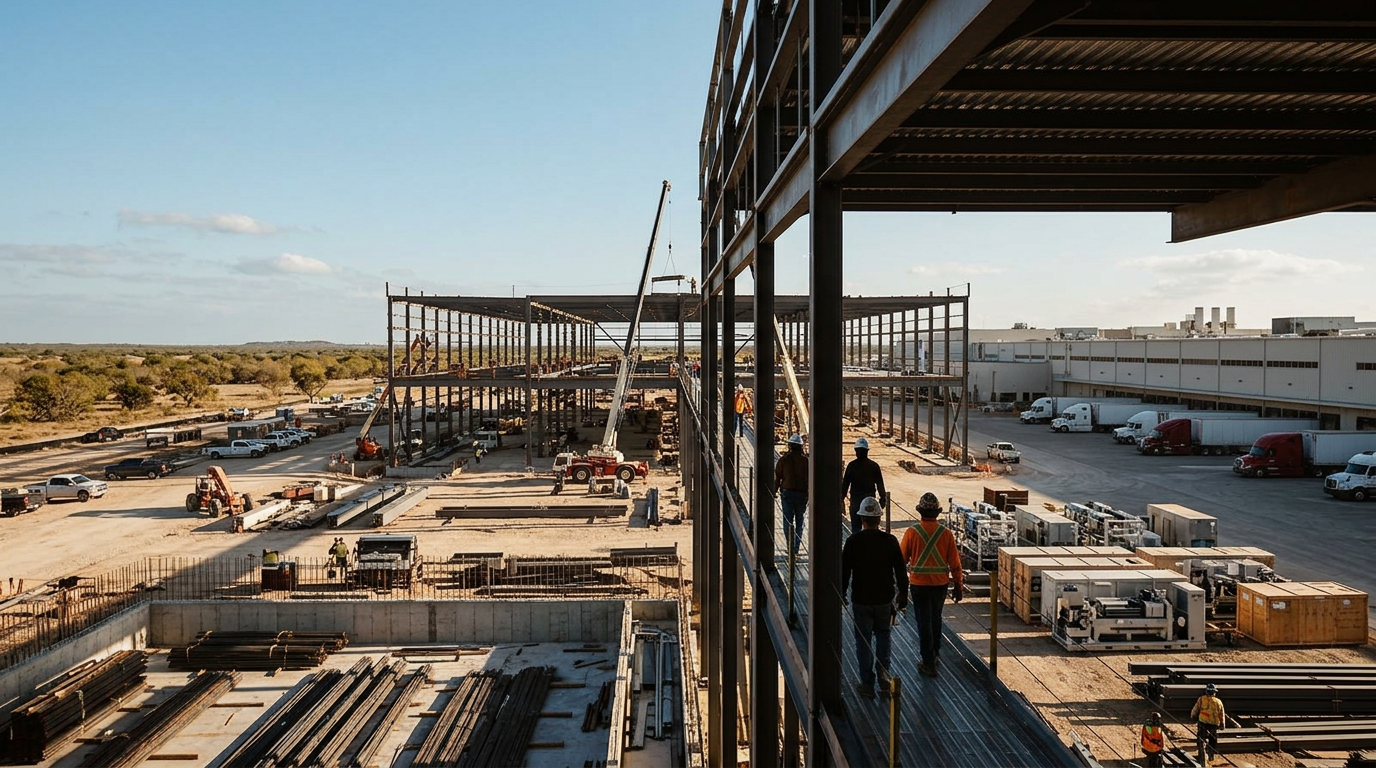
Toyota Motor Manufacturing, Texas, Inc. has officially committed to a massive expansion of its current production capabilities within the San Antonio area. This development involves the construction of a second vehicle assembly line, effectively doubling the physical manufacturing footprint of the company's existing South Texas operations. The project represents a capital investment of approximately $3.6 billion and is expected to generate 2,000 new high-paying jobs for the region. Historically, Toyota has maintained a significant presence in Texas since its San Antonio facility first opened in the early 2000s, serving as a hub for full-sized truck production. This latest move signals a long-term commitment to the Lone Star State as a primary manufacturing engine for the company's North American market, following a trend of major automotive and technology firms shifting larger portions of their supply chains to Texas soil. The industrial landscape in Texas has seen a rapid transformation over the last two decades, moving from a heavy reliance on raw energy extraction to becoming a global leader in high-tech manufacturing and logistics. Prior precedents for such expansion were set by the arrival of Tesla in Austin and the continuous growth of the aerospace industry in North Texas, creating a competitive environment where the state's regulatory climate and lack of income tax attract the world's largest corporate entities. This Toyota expansion is one of the single largest private investments in the San Antonio area's history, highlighting the city's role as a vital player in the state's economic diversification strategy. By doubling the site's footprint, Toyota is moving beyond simple assembly toward a more integrated, large-scale production model that can adapt to changing consumer demands and new technologies in the automotive sector.
Texas relevance
The impact of this announcement on San Antonio and the broader Texas economy cannot be overstated. By adding 2,000 new jobs, Toyota is providing a substantial boost to the local workforce in Bexar County and surrounding areas, including Atascosa, Comal, and Guadalupe counties. These positions typically come with competitive wages and benefits that support the local middle-class economy and increase consumer spending in the region. Furthermore, an expansion of this magnitude requires a massive ancillary support network, meaning local parts suppliers, logistics companies, and service providers will likely see increased demand for their services. This creates a multiplier effect where for every one job created on the assembly line, several more are supported in the surrounding community. Texas remains the central focus for this growth due to the state's proactive use of economic development tools, such as the Texas Enterprise Fund and the newly established JETI program, both of which were instrumental in securing this deal against international competition.
The Evolution of Toyota Manufacturing in Texas
Since the first Tundra rolled off the line in San Antonio in 2006, the facility has become a symbol of industrial modernization in the region. Originally, the plant was seen as a bold experiment to see if the South Texas workforce could handle the rigorous quality standards required for global vehicle assembly. Two decades later, that experiment has proven to be a resounding success, leading to several previous expansions and the introduction of the Sequoia production line.
The newly announced second assembly line represents the most ambitious phase of growth since the plant's inception. It signifies that Toyota views San Antonio not just as a branch office, but as a critical hub for its future global operations. The physical doubling of the footprint suggests that the company is preparing for a new generation of vehicle platforms that require more sophisticated tooling and larger floor spaces than the current facility provides.
This growth also reflects the stability of the Texas workforce. Unlike other regions that have struggled with labor shortages or industrial decline, San Antonio has maintained a steady pipeline of skilled workers through partnerships with local community colleges and trade schools. This human capital is a primary reason why Toyota felt confident enough to commit billions of dollars to a single site expansion.
Understanding the JETI Program and Financial Incentives
A key component of this deal is the use of the Texas Jobs, Energy, Technology, and Innovation (JETI) program. This is one of the state's newest economic development tools, designed to replace older incentive structures with more transparent and performance-based requirements. By qualifying as a JETI project, the Toyota expansion benefits from school district property tax valuations that are capped for a set period, making the massive capital outlay more feasible in the short term.
In addition to the JETI benefits, the state has offered a $20 million grant through the Texas Enterprise Fund (TEF). The TEF is often referred to as a 'deal-closing' fund, used to tip the scales in favor of Texas when a company is considering multiple locations across the country or the globe. This cash infusion is tied directly to job creation targets, ensuring that the company only receives the full benefit if it delivers on its promise of 2,000 new positions.
The $50,000 Veteran Created Job Bonus is a smaller but culturally significant part of the package. Texas has one of the highest concentrations of military veterans in the United States, and the state government has made it a priority to transition these individuals into civilian technical roles. By incentivizing the hiring of veterans, the state is leveraging the unique discipline and technical training found in the military to bolster its industrial output.
Local Economic Impact and Infrastructure Needs
The expansion is expected to have a transformative effect on the South Side of San Antonio. Areas that were historically overlooked for major industrial development have become economic engines, and this $3.6 billion project will further accelerate that trend. Local leaders are already looking at infrastructure improvements needed to support the increased traffic and logistics requirements that come with doubling a factory's output.
Expected improvements include road expansions near the facility and potentially new utility upgrades to handle the high energy and water demands of a second assembly line. While the company will bear much of the cost for internal upgrades, the city and county will likely coordinate on peripheral projects to ensure that the surrounding community can accommodate the influx of new workers and heavy transport vehicles.
Housing demand is also expected to rise in the southern part of Bexar County. With 2,000 new employees looking for homes near their workplace, local developers and city planners are facing the challenge of ensuring that the growth is sustainable and that the local housing stock can keep pace with the rapid employment gains.
The Competitive Landscape of Global Auto Production
The automotive industry is currently in a state of high flux, with companies re-evaluating their global footprints in the wake of supply chain disruptions and shifting energy policies. Toyota’s move to expand in Texas is a strategic hedge against instability elsewhere. By centralizing more of its production in a state with a reliable power grid and proximity to both Mexican suppliers and the Port of Houston, Toyota is building a more resilient supply chain.
Texas has become the centerpiece of the 'Southern Auto Alley,' a corridor of manufacturing that stretches across the southern United States. While Alabama, Tennessee, and South Carolina have all seen growth, the sheer scale of the Texas market and its regulatory advantages often move it to the top of the list for massive investments like this $3.6 billion expansion.
This announcement also puts pressure on other manufacturers to consider Texas for their future needs. As the ecosystem of parts suppliers grows thinner in the traditional 'Rust Belt' and thicker in the South, the gravitational pull of the Texas manufacturing sector becomes harder for global CEOs to ignore.
Environmental and Technological Considerations
While specific details on the vehicle models to be built on the new line have not been fully disclosed, the industry trend is moving toward hybridization and electrification. The expansion of the San Antonio plant may include the necessary infrastructure to produce advanced power-trains or even full electric vehicles in the future. Modern assembly lines are designed for flexibility, allowing manufacturers to pivot between different types of engines based on market demand.
Toyota’s investment also likely includes upgrades to the plant's efficiency and environmental footprint. Modern factories utilize significantly less water and energy per vehicle produced than those built even a decade ago. As a major consumer of local resources, the plant's ability to implement 'green' manufacturing processes will be a key part of its long-term viability and relationship with the San Antonio community.
Furthermore, the integration of advanced robotics and AI-driven logistics within the second line will likely set a new benchmark for manufacturing technology in the state. This requires a more specialized workforce, which is why the state is emphasizing the value of the 2,000 new jobs as high-skill, high-wage roles rather than simple manual labor.
Analysis
The decision by Toyota to double down on its San Antonio facility is a significant win for Governor Abbott's economic policy framework. It demonstrates that the state's strategy of utilizing large-scale financial incentives—like the $20 million Texas Enterprise Fund grant and the JETI program—continues to be effective in attracting 'pillar' industries that offer long-term stability. While some critics argue against the use of corporate subsidies, the scale of this $3.6 billion investment suggests that the long-term tax revenue and employment gains will far outweigh the initial public costs. Additionally, the inclusion of a Veteran Created Job Bonus highlights a strategic focus on integrating Texas's large veteran population into the high-tech workforce. This story reinforces the narrative that Texas is the premier destination for manufacturing, providing a clear contrast to states with higher regulatory burdens and tax rates.
Source attribution
This story was reported using a public release from the Office of the Governor. Keep TX Red rewrote the coverage independently and links to the official statement for verification.
Frequently Asked Questions
- What types of jobs will be created by this expansion?
- The expansion will create 2,000 new positions, ranging from assembly line technicians and robotics operators to engineers, logistics coordinators, and administrative staff. These are described as high-quality manufacturing roles that offer competitive pay and benefits.
- What is the JETI program mentioned in the announcement?
- The Texas Jobs, Energy, Technology, and Innovation (JETI) program is a state incentive system that provides property tax authorizations for projects that create jobs and bring significant capital investment to Texas. It is designed to attract large-scale industrial and technology projects.
- How long will it take for the expansion to be completed?
- While a specific completion date for the second assembly line has not been provided in the initial announcement, projects of this scale typically take several years to fully build out and reach operational capacity.
- Why did Toyota choose San Antonio for this expansion?
- Toyota cited the favorable business climate in Texas, the existing success of their San Antonio operations, and the state's economic development incentives as primary reasons. The location also offers strategic access to North American supply chains.
Official Sources
Take the next step
Browse the Newsroom →Read more about Keep Texas Red → Our full guide to what Keep Texas Red means and why Texans support it.
Get Texas updates delivered weekly.
Independent Texas reporting on politics, policy, and daily life. One email a week. Unsubscribe anytime.
Keep TX Red Newsroom
The Keep Texas Red Editorial Staff produces nonpartisan explainers, policy breakdowns, and educational resources to help Texans understand how their government works. All content is reviewed for accuracy and updated regularly.
About Keep TX Red →