Legacy of a Texas Giant: Former Ways and Means Chairman Bill Archer Passes Away at 98
Former U.S. Representative Bill Archer, a cornerstone of Texas fiscal policy and longtime Chairman of the Ways and Means Committee, has died at 98.
Editorial disclaimer: Opinions and analysis on Keep TX Red are editorial content — not statements of fact. See our editorial standards.
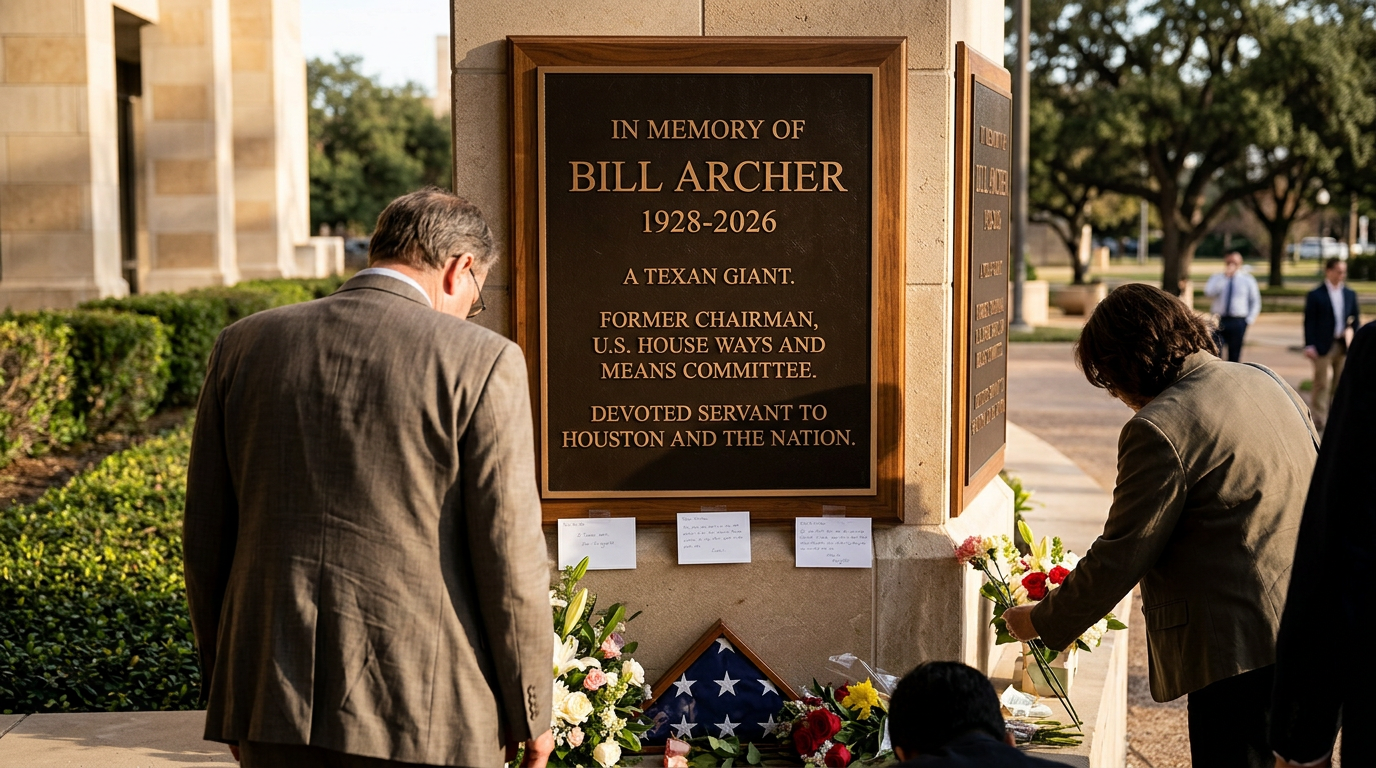
The political landscape of Texas and the nation mourns the loss of former U.S. Representative Bill Archer, who passed away recently at the age of 98. Archer, a native of Houston, served for three decades in the United States House of Representatives, carving out a reputation as a meticulous policy expert and a titan of fiscal conservatism. His tenure in Washington was defined by his leadership of the powerful House Ways and Means Committee, where he wielded significant influence over the American tax code, trade agreements, and social security policy. Archer’s approach to governance was characterized by a stoic dedication to the principles of limited government and market-based economic solutions, earning him respect from both sides of the aisle during his extensive career. Historically, Archer entered the federal stage during a transformative era for the Republican Party in Texas. Succeeding George H.W. Bush in the 7th Congressional District in 1971, he represented a shift toward the business-friendly, fiscally rigorous brand of conservatism that would eventually dominate the state's political identity. Before his rise to federal prominence, Archer served in the Texas House of Representatives, providing him with a foundational understanding of state-level legislative mechanics. This background allowed him to bridge the gap between regional needs and federal policy, ensuring that the interests of Houston’s burgeoning energy and medical sectors were prominently featured in national economic discussions.
Texas relevance
Bill Archer’s impact on Texas cannot be overstated, particularly concerning the economic development of the Houston metropolitan area. As the representative for West Houston’s 7th District, he was instrumental in securing the infrastructure and federal support necessary for the region to blossom into a global energy capital. His commitment to deregulation and tax reduction paved the way for Texas to experience decades of inward migration and corporate relocation. For Texans today, Archer’s legacy is visible in the state's robust economic resilience and its position as a primary engine of the American economy. He set a precedent for Texas congressional members to seek positions on key financial committees, a strategy that remains central to the state's influence in the nation's capital.
Early Career and Legislative Roots
Bill Archer’s journey into public service began in the heart of Texas. After serving in the U.S. Air Force during the Korean War and earning a law degree from the University of Texas at Austin, he established a legal practice in Houston. His foray into politics started at the local level, serving as a councilman and mayor pro tem in Hunters Creek Village. These early roles instilled in him a localized perspective on community management and fiscal responsibility that would later define his federal career.
In 1966, Archer was elected to the Texas House of Representatives as a Democrat, though he soon found his values aligned more closely with the emerging Republican platform of the era. He switched parties in 1969, becoming a key figure in the slow but steady GOP ascendancy in the Lone Star State. This transition was indicative of the broader realignment occurring across the South, as voters and politicians alike migrated toward the Republican Party’s emphasis on individual liberty and fiscal restraint.
Succeeding a Future President
The turning point in Archer’s career came in 1970 when George H.W. Bush vacated his seat in Congress to run for the U.S. Senate. Archer won the race to succeed him, taking office in early 1971. He quickly distinguished himself as a tireless worker who preferred the quiet labor of committee rooms to the spotlight of the press gallery. For thirty years, he defended the 7th District with consistent electoral victories, often winning by margins that made the seat one of the safest for Republicans nationwide.
During his early years in Congress, Archer focused heavily on energy independence and local infrastructure. He understood that Houston’s growth was inextricably linked to the health of the oil and gas industry. By advocating for favorable tax treatments for domestic energy production, he helped insulate the Texas economy from the volatility of international markets, providing a foundation for the state's long-term prosperity.
Chairman of the Ways and Means Committee
Archer reached the pinnacle of his legislative power in 1995 when he was named Chairman of the House Ways and Means Committee following the 'Republican Revolution' of 1994. This committee is widely considered the most powerful in Congress because it controls all revenue-raising measures, including taxes, social security, and trade agreements. Archer used this platform to push for significant tax cuts, which he believed were essential for stimulating investment and job creation.
His most notable accomplishment was the Taxpayer Relief Act of 1997, which included the creation of the Roth IRA and the reduction of capital gains taxes. Archer believed that the tax code should encourage saving rather than punishing consumption. He was also a fierce advocate for free trade, playing a vital role in the passage of legislation that expanded American export opportunities. His ability to navigate complex negotiations with the Clinton administration resulted in historic bipartisan agreements that helped balance the federal budget for the first time in decades.
A Vision for Fundamental Tax Reform
Throughout his tenure, Archer was known for his 'big picture' vision of the American economy. He famously advocated for pulling the federal income tax out 'by its roots' and replacing it with a national sales tax or consumption tax. He argued that the current system was overly complex, intrusive, and burdened with perverse incentives that discouraged productivity. While he did not see this vision fully realized, his advocacy elevated the conversation regarding fundamental tax reform to a national level.
Archer’s commitment to this cause was rooted in a belief that the government should not know how much money a citizen makes, but rather only what they choose to spend. This philosophical stance resonated with many Texans who favored a more private and less intrusive relationship with federal authorities. His influence persists in current debates over the Flat Tax and the Fair Tax, as modern reformers frequently cite Archer’s work as a primary inspiration for their proposals.
Post-Congressional Life and Legacy
After retiring from Congress in 2001, Archer remained active in the Houston community and served as a consultant on trade and tax issues. He lived to see the various iterations of tax reform that moved through Washington, often providing counsel to younger generations of Texas lawmakers. His longevity allowed him to witness the full transformation of Texas into a reliable red state, a process he helped facilitate through his decades of service.
Tributes from across the political spectrum have highlighted Archer’s integrity and his deep knowledge of policy. Many former colleagues remember him as a man of his word whose primary interest was the long-term fiscal health of the United States. His death marks the passing of a statesman who understood that sound economic policy is the bedrock of a free society. Archer is survived by a large family and a legislative legacy that continues to shape the economic reality of both Texas and the nation.
Analysis
Bill Archer represented a now-vanishing breed of ‘Policy-First’ legislators who prioritized the minutiae of the tax code over the performative aspects of modern politics. His leadership as Chairman of the Ways and Means Committee (1995–2001) coincided with the first balanced federal budget in a generation, a feat largely attributed to the fiscal discipline he championed alongside the Gingrich-led House. Archer was an advocate for the complete abolition of the federal income tax in favor of a consumption-based tax, an idea that remains a cornerstone of conservative economic thought today. His retirement in 2001 marked the end of an era of profound stability in the 7th District, and his death serves as a reminder of the intellectual depth that Texas representatives have historically brought to the national stage.
Source attribution
This story was reported using a public release from the Texas Congressional Delegation (Google News). Keep TX Red rewrote the coverage independently and links to the official statement for verification.
Frequently Asked Questions
- What was Bill Archer's most significant achievement in Congress?
- Bill Archer is perhaps best known for his chairmanship of the House Ways and Means Committee from 1995 to 2001. During this time, he was instrumental in passing the Taxpayer Relief Act of 1997, which introduced the Roth IRA and cut capital gains taxes, contributing significantly to the first balanced federal budget in several decades.
- Which Texas district did Bill Archer represent?
- He represented the 7th Congressional District of Texas, which covers parts of western Houston and its suburbs. He held this seat from 1971 until his retirement in 2001, taking over the position formerly held by George H.W. Bush.
- What was Archer's stance on the federal income tax?
- Archer was a vocal critic of the federal income tax system. He famously advocated for 'pulling it out by the roots' and replacing it with a consumption-based tax system, arguing that a sales-based tax would be more efficient, less intrusive, and better for the national economy.
Official Sources
Take the next step
Browse the Newsroom →Read more about Keep Texas Red → Our full guide to what Keep Texas Red means and why Texans support it.
Get Texas updates delivered weekly.
Independent Texas reporting on politics, policy, and daily life. One email a week. Unsubscribe anytime.
Keep TX Red Newsroom
The Keep Texas Red Editorial Staff produces nonpartisan explainers, policy breakdowns, and educational resources to help Texans understand how their government works. All content is reviewed for accuracy and updated regularly.
About Keep TX Red →