Legislative Oversight Review Investigates Hill Country Flood Disaster and Camp Mystic Safety Protocols
A new Texas legislative report examines the catastrophic flooding that claimed 139 lives, focusing on emergency protocols at Hill Country summer camps.
Editorial disclaimer: Opinions and analysis on Keep TX Red are editorial content — not statements of fact. See our editorial standards.
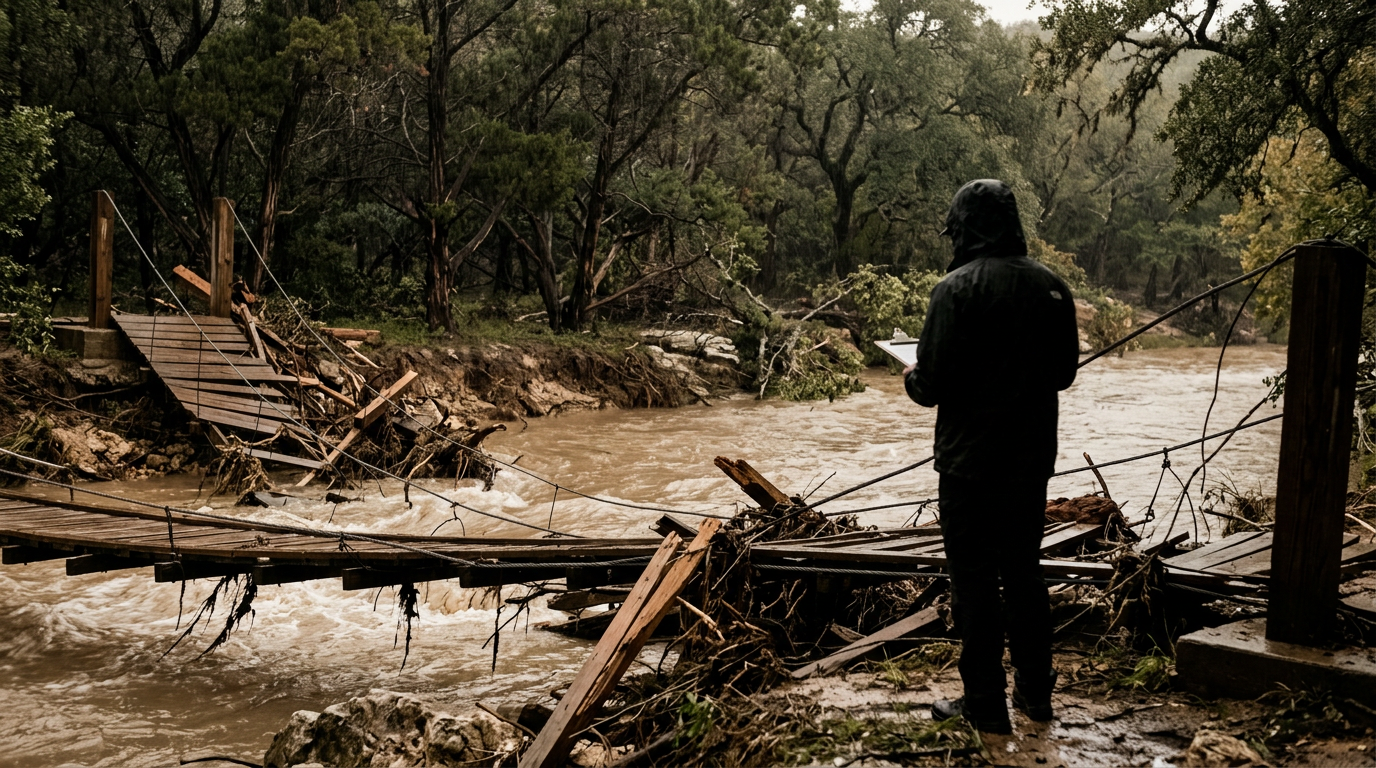
One year after the devastating floods in the Texas Hill Country resulted in the deaths of 139 individuals, a comprehensive legislative report has been released detailing the specific events and failures that occurred at Camp Mystic. The report serves as a formal autopsy of the administrative and physical responses during the height of the crisis. Historically, the Hill Country has been known as 'Flash Flood Alley' due to its unique topography and thin soil which allows for rapid runoff into the Guadalupe and Frio river basins. This latest investigative document attempts to bridge the gap between historical weather patterns and modern emergency communication failures that contributed to the triple-digit death toll. The narrative provided by the investigators suggests that while the weather was an act of nature, the resulting casualties were exacerbated by systemic gaps in warning systems and structural vulnerabilities at seasonal residential facilities.
Texas relevance
This investigation holds immense weight for all residents of Central Texas and the Hill Country, particularly those in Kerr and Real counties. The findings directly influence how Texas state agencies, including the Texas Commission on Environmental Quality (TCEQ) and the Texas Division of Emergency Management (TDEM), will regulate summer camps and recreational facilities located in flood-prone valleys. Texas families who traditionally send their children to these iconic summer institutions now face a new reality regarding safety disclosures and evacuation plans. The legislative recommendations included in the report are expected to drive new bill filings in the upcoming session, potentially mandating upgraded siren systems and mandatory evacuation zones for all licensed youth camps operating within the 100-year floodplain of the Guadalupe River.
Failure of Communication Networks
The investigative report highlights a critical breakdown in the communication chain between state meteorologists and local camp administrators. During the initial hours of the deluge, the rapid rise of the water levels outpaced the delivery of cellular alerts, which were already spotty due to the rugged terrain of the Hill Country. Investigators found that relied-upon radio frequencies were jammed with traffic, preventing Camp Mystic staff from receiving the urgent evacuation orders issued by county officials.
Furthermore, the report identifies that the 'last mile' of communication—the physical notification of campers and staff across sprawling acreage—was largely dependent on manual processes. In the absence of a centralized, automated siren or PA system, precious time was spent manually locating groups in remote cabins. This delay meant that by the time the magnitude of the surge was understood, the primary egress routes were already submerged under several feet of moving water.
Structural Vulnerabilities and Land Use
A significant portion of the legislative document focuses on the physical placement of permanent structures within the camp's boundaries. Many of the historic cabins at Camp Mystic, some dating back several decades, were located in areas now identified as high-risk drainage zones. The report suggests that the lack of modern hydrological mapping contributed to a false sense of security regarding these structures, which were ultimately unable to withstand the hydrostatic pressure of the floodwaters.
Investigators are calling for a comprehensive reassessment of land use permits for all recreational facilities throughout the Guadalupe River basin. They argue that historical 'grandfathering' of old structures has allowed camps to operate without the same rigorous flood-proofing requirements demanded of new residential developments. The recommendation moving forward involves a mix of structure elevation and, in some cases, the mandatory relocation of sleeping quarters to higher ground.
The Human Cost and First Responder Challenges
The data within the report provides a sobering look at the challenges faced by Texas search and rescue teams. Because the flood occurred during the peak of the summer camp season, the number of people requiring evacuation far exceeded the capacity of local volunteer fire departments and sheriff’s offices. First responders were forced to make impossible choices regarding which areas to prioritize as the waters rose simultaneously across multiple counties.
The report also details the psychological impact on the survivors and the community at large. With 139 verified fatalities, the event stands as one of the deadliest natural disasters in modern Texas history. The document suggests that the lack of a standardized roster system for transient camp populations made the accounting of victims significantly more difficult for the Texas Department of Public Safety in the immediate aftermath of the storm.
Regulatory Shortcomings and Oversight
One of the more stinging sections of the report critiques the current state of oversight for youth camps. Unlike schools or daycare centers, summer camps in Texas have historically enjoyed a high degree of autonomy. The legislative committee found that previous inspections focused heavily on hygiene and counselor-to-camper ratios, while largely ignoring environmental disaster preparedness and emergency drill efficacy.
Legislators are now proposing a centralized state database that would track natural disaster compliance for all seasonal camps. This would involve mandatory annual flood drills and the installation of river-level sensors that link directly to a statewide early warning network. The goal is to move the burden of tracking weather threats away from overworked camp directors and into a more robust, state-managed monitoring system.
The Role of Topography and Soil Saturation
Geological experts cited in the report explain that the 2026 event was a 'perfect storm' of saturated soils and intense localized rainfall. Because the Hill Country sits atop a limestone karst system, the ground reached its absorption limit within minutes. This turned the local creeks into torrents, moving boulders and debris that acted as battering rams against camp buildings.
Looking toward the future, the report emphasizes that climate variability in Texas may lead to more frequent occurrences of these extreme 'rain bombs.' As a result, the state is considering a redesign of how it calculate flood risk, moving away from the 100-year flood model to a more dynamic system that accounts for rapid urbanization and changing environmental conditions in the Edwards Plateau region.
Analysis
Opinion: The findings regarding Camp Mystic point to a larger, uncomfortable truth about the intersection of tradition and public safety in Texas. For decades, the rustic nature of these camps was a selling point, but the report suggests that this lack of digital connectivity and modern infrastructure may have cost precious minutes during the flood. While some may view new regulations as bureaucratic overreach, the scale of the loss—139 lives—makes it politically and morally impossible for the state to ignore. The legislature is likely to use this report as a catalyst for a 'Water Safety Revolution' in the Hill Country, moving away from voluntary guidelines toward strict, enforceable emergency mandates that prioritize rapid communication and early exit strategies.
Source attribution
This story was reported using a public release from the Texas Standard. Keep TX Red rewrote the coverage independently and links to the official statement for verification.
Frequently Asked Questions
- What specifically did the report find wrong at Camp Mystic?
- The report identified that the camp lacked a centralized automated warning system, relied on outdated manuals for emergency notification, and had sleeping quarters located in areas highly vulnerable to rapid river rises. It also noted significant delays in receiving official evacuation orders due to poor cellular reception in the canyon areas.
- Will this report lead to new laws in Texas?
- Yes, legislative leaders have indicated that the report's findings will serve as the foundation for new safety regulations. These may include mandatory water-level sensors, requirements for backup satellite communication systems, and stricter building codes for recreational facilities in the Hill Country.
- How many people died in the flooding mentioned in the report?
- The report confirms that 139 people lost their lives across the Hill Country during the catastrophic flooding event one year ago, making it one of the most lethal hydrological events in recent Texas history.
Official Sources
Take the next step
Browse the Newsroom →Read more about Keep Texas Red → Our full guide to what Keep Texas Red means and why Texans support it.
Get Texas updates delivered weekly.
Independent Texas reporting on politics, policy, and daily life. One email a week. Unsubscribe anytime.
Keep TX Red Newsroom
The Keep Texas Red Editorial Staff produces nonpartisan explainers, policy breakdowns, and educational resources to help Texans understand how their government works. All content is reviewed for accuracy and updated regularly.
About Keep TX Red →