The Rise of the Texas Megacenter: How Buc-ee's Defined a New Era of Roadside Retail
Texas-born Buc-ee's continues to lead the national shift toward massive travel centers as competitors like Dolly Parton enter the supersized market.
Editorial disclaimer: Opinions and analysis on Keep TX Red are editorial content — not statements of fact. See our editorial standards.
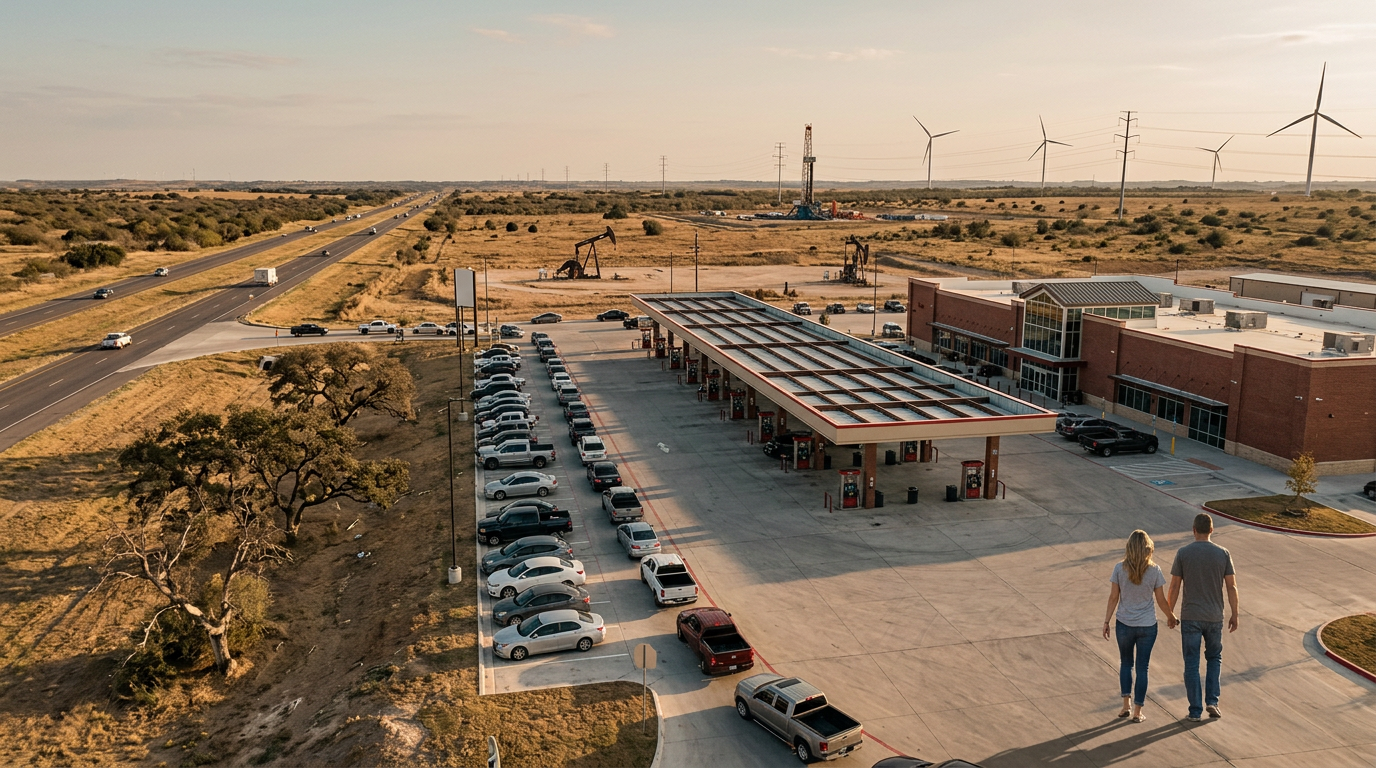
The traditional American gas station is undergoing a radical metamorphosis, moving away from cramped aisles and basic snacks toward massive, destination-style retail centers. Historically, the convenience store industry survived on low margins and quick turnover, but a new model pioneered in the Lone Star State has fundamentally changed consumer expectations. This shift is characterized by building footprints spanning tens of thousands of square feet, hundreds of fueling positions, and an emphasis on high-quality food service and unique merchandise rather than just petroleum products. This movement is not just about size; it represents a cultural shift in the American road trip experience where the stop becomes the destination rather than a necessary inconvenience. Historically, Texas has been the primary testing ground for these sprawling complexes, with the state's vast highway networks and high-volume traffic providing the perfect environment for scaling up retail operations. Leading this charge is the iconic Texas institution Buc-ee's, which has spent decades perfecting the art of the 'megacenter.' From its humble beginnings in Lake Jackson, the company has expanded its reach across the South, consistently out-pacing competitors in both scale and brand loyalty. Now, other entities are attempting to replicate this success. Iconic figures like Dolly Parton have entered the fray, signaling that the 'mega-sizing' era of gas stations is no longer a niche curiosity but a dominant market trend. These facilities are designed to capture more of the traveler’s wallet by offering everything from branded lifestyle apparel to gourmet brisket, effectively blurring the lines between a grocery store, a restaurant, and a traditional filling station.
Texas relevance
Texas is the undisputed birthplace and current epicenter of the travel center revolution. The state's unique geography—vast distances between major metro areas like Houston, Dallas, San Antonio, and Austin—created a specific demand for reliable, high-capacity rest stops. Buc-ee's, headquartered in Brazoria County, has used Texas as its primary launchpad, setting world records for store size and fueling positions within the state's borders. The economic impact in Texas is substantial, as these mega-facilities often serve as the largest employers in rural counties, providing hundreds of jobs per location and generating significant local tax revenue. Furthermore, the Texas 'bigger is better' ethos has become a global export, as the success of these stores attracts national developers and competitors who look to the Texas model as the gold standard for modern roadside infrastructure.
The Buc-ee's Blueprint and Market Dominance
Buc-ee's has reached a level of cultural saturation that few other retail brands can claim. By prioritizing clean restrooms, massive selections of fresh food, and an absence of 18-wheelers, the chain carved out a specific niche for family travelers. The company’s growth strategy involves building on massive acreage along major interstate arteries, ensuring they are the most visible and accessible choice for long-distance drivers. This strategy has proven so successful that the brand has become a tourism draw in its own right, with families planning their routes specifically to include a stop at a 'Texas-sized' beaver-themed location.
The success of the Buc-ee's model is rooted in its operational discipline. Each store requires a massive staff to maintain the standards consumers have come to expect. This workforce is often paid significantly higher than the industry average, a move that ensures the 'experience' remains consistent across hundreds of miles of territory. As the company expands into states like Alabama, Florida, and Tennessee, it carries the Texas brand of hospitality with it, effectively marketing the Lone Star State's culture to the rest of the country.
New Competitors Enter the Arena
The extreme profitability of the megacenter model has not gone unnoticed by other major players and entrepreneurs. Most notably, a new partnership involving country music legend Dolly Parton is looking to bring a similar large-scale experience to the market. This new venture, 'Dolly’s HomeShop,' aims to blend the charm of a southern general store with the high-capacity needs of modern highway travel. While focused on the Appalachian region and Tennessee, the design philosophy mirrors the Texas approach: create a themed, immersive shopping environment that happens to sell fuel.
Other established chains like Wawa, QuikTrip, and Sheetz are also increasing their square footage and expanding their menus to compete with the Texas giant. However, few have managed to match the sheer scale of the Buc-ee's footprint, which frequently exceeds 70,000 square feet. The 'mega-sizing' trend has forced these legacy brands to reconsider their urban-centric models and look toward the rural highway interchanges that Buc-ee's has dominated for years.
Economic Impacts on Rural Texas Communities
The construction of a mega-travel center is a transformative event for small Texas towns. When a facility with 100+ gas pumps and a massive retail center opens, it creates an immediate surge in local employment. Beyond the initial construction jobs, these centers provide long-term career paths for local residents, often offering benefits and wages that outstrip local retail competitors. This helps to stabilize the tax base for local school districts and municipal services in areas that might otherwise see economic stagnation.
However, the presence of such a dominant force also pressures smaller, independent gas station owners. These local 'mom and pop' shops often struggle to compete with the volume pricing and brand recognition of a mega-retailer. The trend toward consolidation means that while the total number of fueling stations might decrease, the total capacity and economic output of single locations are skyrocketing, reflecting a centralized shift in Texas commerce.
The Future of Fueling and Electric Vehicles
One of the underlying drivers of the mega-sizing movement is the looming transition toward electric vehicles (EV). A traditional gas station is designed for a five-minute transaction, but EV charging currently requires a significantly longer stay. By building massive stores with numerous amenities, retailers are preparing for a future where customers will spend 20 to 45 minutes on-site while their vehicles recharge. Buc-ee's and its new rivals are essentially building 'dwell centers' that can accommodate this new consumer behavior without losing revenue.
In Texas, where distances are great and range anxiety is a real concern for EV owners, these massive hubs serve as critical infrastructure. By integrating charging stations into a facility that also offers gourmet meals and high-end shopping, retailers solve the problem of 'en-route boredom.' This forward-thinking approach ensures that the travel center industry remains relevant even as the dominant fuel type of the American vehicle fleet begins to shift over the coming decades.
Infrastructure and Urban Planning Challenges
Scaling up to the size of a modern travel center requires more than just land; it requires significant infrastructure investment. These facilities put immense pressure on interstate off-ramps and local feeder roads. In many cases, developers must work closely with the Texas Department of Transportation to fund road improvements, dedicated turn lanes, and signalization to manage the thousands of vehicles that visit these sites daily. The logistics of supplying these stores—which move staggering amounts of fuel and food—requires a sophisticated supply chain that operates 24/7.
Environmental considerations are also at the forefront of the mega-sizing era. Large-scale installations must manage significant runoff and implement advanced leak detection systems for underground storage tanks. As these centers grow, so does the scrutiny regarding their impact on local ecosystems. Texas regulators and developers are increasingly focused on balancing the economic benefits of these massive retail hubs with the need for responsible land use and resource management.
Analysis
The 'mega-sizing' of travel centers is more than a retail trend; it is a strategic response to the shifting landscape of American energy and automotive habits. As electric vehicles gain a foothold, the 'grab and go' model of a five-minute gas stop is becoming less viable. By creating destinations like Buc-ee's, retailers ensure that even if a traveler needs thirty minutes to charge a vehicle, they have an immersive environment in which to spend time and money. For Texas, this trend reinforces the state's dominance in the energy and logistics sectors. While some critics argue that these massive footprints contribute to sprawl, the consumer demand remains undeniable. The entry of celebrities like Dolly Parton into this space validates that 'Texas-sized' convenience is now a high-value commodity that other regions are desperate to emulate. We are likely seeing the end of the traditional dirt-lot gas station as regional ecosystems begin to favor these consolidated, high-efficiency retail hubs.
Source attribution
This story was reported using a public release from the Buc-ee's (Google News). Keep TX Red rewrote the coverage independently and links to the official statement for verification.
Frequently Asked Questions
- Why are gas stations getting so much larger?
- Retailers are moving away from low-margin fuel sales and toward high-margin merchandise and food. Larger facilities offer more amenities, attracting more customers and preparing for the longer stay times required for electric vehicle charging.
- Is Buc-ee's the largest gas station in the world?
- Buc-ee's currently holds records for some of the largest travel centers globally, including their Sevierville, Tennessee, and Luling, Texas, locations, which feature tens of thousands of square feet of retail space.
- How do these mega-centers impact local economies in Texas?
- They provide hundreds of jobs and significantly boost local tax revenue, often becoming a primary economic hub for the rural areas where they are situated along highways.
Official Sources
Take the next step
Browse the Newsroom →Read more about Keep Texas Red → Our full guide to what Keep Texas Red means and why Texans support it.
Get Texas updates delivered weekly.
Independent Texas reporting on politics, policy, and daily life. One email a week. Unsubscribe anytime.
Keep TX Red Newsroom
The Keep Texas Red Editorial Staff produces nonpartisan explainers, policy breakdowns, and educational resources to help Texans understand how their government works. All content is reviewed for accuracy and updated regularly.
About Keep TX Red →